
This Global News Podcast episode covers a day of breaking news, starting with the suspected hacking of emergency alert apps in Ukraine and Russia, which sent false warnings about nuclear and chemical attacks. It also looks at the end of a humanitarian ceasefire in the occupied city of Oleshky, and at the final day of campaigning before the US midterm elections, with reporting from Ohio and Kansas.
Listeners will hear testimony from people inside Iran after a year of protests and crackdown, learn about suspected cyberattacks that disabled supermarket freezers in Europe, and hear Sudan's complaint against Ethiopia over drone strikes. The episode ends with a Florida plane crash and a Finnish criminal investigation into a Google data centre site.
In this episode Charlotte Gallagher, Barbara Pletoshe, Cyril Amrouski, Dan Johnson, Geshbin Mohammad, Ione Wells, Miranda Bryant, Oleksandr Mereshko, Shona McCallum, Stephanie Prentiss
This Global News Podcast episode on Ukraine and Russia's hacked emergency alert apps was made with the technology HappyScribe built to transcribe video to text.
Ads in this audio differ from the text. Tap the sentence you're hearing to follow along.
Synced: the text now follows the audio.
This is the Global News Podcast from the BBC World Service. Hi, I'm Charlotte Gallagher, and at 15:00 hours GMT on Monday, the 2nd of November, these are our main stories. Both Ukraine and Russia say their emergency alert systems have been hacked, with citizens receiving false warnings about imminent nuclear attacks. We hear from Kyiv. Sudan says Ethiopia is supporting its rival, the Rapid Support Forces, by allowing the paramilitary group to use it as a base to launch drone attacks.
Also in this podcast: it's the last day of campaigning in the U.S. midterm elections. We get the latest from Ohio, one of the key battlegrounds. After a turbulent year in Iran that began with protests and a brutal crackdown by the authorities, the BBC has had rare access to people in the country.
I treated old people, middle-aged people, and teenagers. They were shot with the intent to kill, in the head, in the neck, in the genitals.
And a suspected cyberattack on freezers and fridges affects supermarkets in seven European countries. We start in Ukraine, where for years a mobile phone app has been used to give people as much warning as possible about incoming drones and missiles from Russia. But on Sunday night, that app appeared to have been hacked after citizens received false notifications, including alerts about nuclear and chemical attacks.
The Ukrainian Central Intelligence Agency urged people to use other sources of information to clarify the threat of airstrikes. Olena lives in Kyiv.
The first thought was, oh my God, I'm not prepared for this. I'm prepared for blackouts, for cutting central heating, but not for a nuclear attack.
Russia also said its early warning system had suffered a similar attack, with Moscow's emergencies ministry saying hackers posted false information on the app, which is designed to warn the public of incoming drone attacks and other threats. The head of the Foreign Affairs Committee in the Ukrainian parliament, Oleksandr Mereshko, was asked if Ukraine was behind it.
There is no official confirmation as yet, at least. But, you know, we're acting in the fog of war. And I understand that there is a partisan guerrilla movement inside Russia called Atash, which claimed responsibility for this. But there is no official confirmation. In such cases, we don't confirm or don't deny.
I've been speaking to our correspondent in Kyiv, Dan Johnson.
This started just before 11:00 p.m. local time with the app that normally warns people about drones and missiles, saying there was a threat of nuclear radiation, that there was also reports of chemical attacks, and even that there was urban warfare and fighting in the streets of Kyiv. These are the most extreme forms of threat that can be reported through that system. But the fact that they all came in very quick succession, I think, will have given many people the impression that something wasn't quite right here and that this didn't stack up.
Those alerts were in place for more than an hour before the all-clear messages followed. But the Air Force issued a statement around the same time, saying that this was the result of a cyberattack or hacking of the system, that there was no genuine threat of nuclear warfare and that people shouldn't panic. But the fear will be that this has now dented people's confidence in that system.
And, Dan, how crucial are these apps, and do people normally respond to them when they get the warnings of the missiles and the drones?
This is essentially a backup system that issues alerts through the phones with a siren and then a message saying what that sort of threat is. But there are still sirens that sound in the streets here, which give people a warning. And that side of the system, we understand, wasn't affected last night. The authorities say that this wasn't the entire system that was hacked. It was just that somebody was able to send these alerts without there actually being a threat present.
But they were genuine, realistic-looking alerts that will have unnerved people. And there were a number of them that were sent from right across the country. So this will have affected millions of people's phones. But, as I said, the fact perhaps that so many alerts came in quick succession of so many different threats may have indicated to most people that they didn't actually need to worry about this. The fact that there have been so many genuine alerts because there have been so many regular Russian attacks has led some people to essentially ignore these alerts and not always run for shelter.
And the authorities have been at pains to try to get people to take action. They introduced two levels of alert recently. So there's now a yellow alert, which is a less severe warning, and a red alert, which indicates a higher level of danger. That's to try to get around that sort of fatigue. The hope will be that this incident doesn't dent that confidence even further.
And interestingly, Dan, Russia also saying that their app was targeted. What more do we know about that?
Yes, the Russians have a similar system. And the Ukrainian Air Force was very quick to point the finger at Russia being responsible for this cyberattack, saying that it was the result of enemy interference. But within a few hours, Russia's equivalent app was reporting a similar sort of problem with alerts going out to people on its system. I've seen the wording of one of those and messages that were created and sent on the system that were quite apparently not genuine because the language in them is very sort of immature and jokey, warning people that there are nuclear missiles heading towards Russia, but saying that they need to stock up on food, get to their basement, and be prepared to survive in their basements for perhaps three weeks.
Now, whether the two things are connected, whether the Ukrainians have managed to hack the Russian system in response to what they thought was Russian hacking of theirs, that's not clear. Or whether there was some third party here that managed to hack both systems, it's unclear. And whether both systems are now up and running properly is also not apparent at the moment.
Dan Johnson in Kyiv. The apparent cyberattack came on the same day the humanitarian ceasefire in the Russian-occupied Ukrainian city of Oleshky officially ended. Hundreds of Ukrainians were evacuated in a rare pause in fighting, which was partly brokered by Melania Trump. The ceasefire ended at midnight Moscow time. Cyril Amrouski is a journalist in Kherson near Oleshky.
The first explosion literally happened about a few seconds after the end of the official ceasefire. We did hear some explosions. Some people feared that there would be a very massive attack on the city during the night. That did not happen. However, we could hear the artillery shots. We could hear some drones as well. So the attacks have resumed. And also, the Ukrainian military command did say that Russia used that moment to basically put more troops in the city of Oleshky, come closer to the Ukrainian positions so that they could attack more often and more dramatically the Ukrainian side.
Cyril Amrouski. It's the last day of campaigning before the U.S. midterm elections. Americans will choose members of Congress, which is made up of two parts, the House of Representatives and the Senate. Now, polls suggest the Democrats have a good chance at winning at least partial control of Congress, which would act as a check on Donald Trump's power and could upend the last two years of his presidency. Let's hear more from our State Department correspondent, Tom Bateman, who's been speaking to early voters in the key battleground state of Ohio.
Come on, people, we can do it.
Yes.
What's making you
vote today? What are you voting about?
Because there's so much going on. People are dying. People are starving. They're starving. You don't know whether to buy gas or get a piece of baloney, a slice of bread. You know it's rough, and it's getting worse. And the thing is, is I don't want nobody going to war because every time you go to war, that means you're taking the money from us.
Well, I'm walking down a line of voters here in the state of Ohio, the Franklin County Board of Elections. And this line stretches about as far as we can see. There are thousands of people here waiting to get into the brick building for early voting. And we're told by officials here that the numbers are way up on what they were in terms of early in-person voting compared with four years ago. These are the kind of levels somebody told me you'd expect in a presidential, not a midterm election. And that tells you just how closely fought this particular state is.
The Republicans here hold both the Senate seats, the governor's mansion. But the Democrats think they can break that monopoly, particularly in the race for the Senate seat available, J.D. Vance's old seat, and in the race for the governor's mansion between the Democrat Amy Acton and the Republican Vivek Ramaswamy. That race has been overshadowed by this incredibly acrimonious row over the Republican attack ad, which included the mother of the Democratic candidate calling her own daughter a liar.
And some of the Republicans have shunned that particular ad. It just goes to show just how bitterly fought the state of Ohio is going to be.
Ione Wells has been to one of President Trump's final rallies in Kansas and sent this report.
What's striking is how Donald Trump has been closing this midterms campaign by doubling down on personal attacks, selling a message of fear, not focusing very much in his speeches on what the Republicans can offer. At his rallies in Florida, in Iowa, in Kansas, the message was that Democrats will open the border, will bankrupt your family, take away your guns, mutilate your children. He introduced video montages of Democrats criticizing ICE and supporting transgender rights. He also went after particular individual Democrats by name, even those from states that he wasn't visiting, the first being James Talarico, the Democratic Senate candidate in Texas.
He spent a chunk of his rally in Florida calling him Talarico and saying that he's obsessed with transgender children. Texas was once solidly red Republican, and now the seat is in play, and it would be a big upset if Talarico won. Then there's Abdullah El-Sayed, the Senate candidate in Michigan. This weekend, in rallies and comments to reporters, President Trump repeatedly has been claiming that Abdullah El-Sayed hates Jews and Black people and is a jihadist in the Muslim Brotherhood, an unfounded claim which there's no evidence for.
Bernie Sanders condemned that rhetoric this Sunday as over-racism. In the room at the rallies, which were pretty full, MAGA supporters cheered on his words. But there has been disquiet among some Republicans that this ever-more inflammatory language could land badly with more moderate voters. The things that Donald Trump is promising voters, like $5,000 for every American adult if Republicans win, notably only came right at the end of his speeches. He is facing a backlash over the cost of living. Prices are up, particularly gas, since the war in Iran. And these rallies appear to have two aims, to change the subject from that and also to scare Republicans into turning out to vote.
That was Ione Wells reporting from Kansas. Iran has seen a year of turbulence, with widespread protests, a brutal crackdown by the authorities, and the start of the U.S.-Israeli war on the country. Now, BBC Panorama has secured rare access to people inside Iran whose lives have been changed forever by those events. Geshbin Mohammad reports.
For millions of Iranians, the past year has been one of protest, repression, and war.
I worked in sales. I sold cosmetics.
For Samira, it began with plans for her 16-year-old daughter, who loved blogging and making videos. But those hopes have gone.
I couldn't even scream. I just stared at Sevda, lying there lifeless. Her eyes kept staring at me. I didn't want her eyes to close.
Sevda was killed during anti-government protests on the 9th of January. In the days that followed, Samira says she was told by the Iranian authorities to say her daughter was killed by terrorists. Instead, she says she told the truth, blaming the authorities for Sevda's death. The consequences were severe.
They summoned me to the intelligence office, and they threatened me in every way imaginable.
Samira says she had no choice but to flee, crossing the mountains out of Iran. She's now in hiding.
Whenever I looked outside the hospital, more and more people were being brought in.
Iranian authorities say more than 3,000 people were killed in the protests, including members of the security forces. Milad works as a medic. His voice has been disguised.
I treated old people, middle-aged people, and teenagers. They were shot at with the intent to kill, in the head, in the neck, in the genitals. A massacre is what I witnessed.
He says hospitals struggle to cope with the numbers arriving for treatment.
One word sums up life in Iran: fear.
Hamid, a Kurdish Iranian, fled Iran after his relative Nasser was arrested, imprisoned, and sentenced to death. Before Nasser's execution, he left this message.
This may be the last time you hear my voice. I'm about to be executed. Don't just hear the word execution and move on. Today it's my turn. Tomorrow it will be someone else's. That fear that I feel in his voice extends into my soul as well.
The past year has brought loss, prison, and exile for some Iranians. But for Samira, her own tragedy has also brought a grim new sense of purpose.
I'm a one-woman army taking on the regime.
And powering that defiance is the memory of her daughter.
I will never forget you as long as I breathe.
The Iranian embassy in London told Panorama peaceful and legitimate protests had been hijacked by foreign powers, including the U.S., which promoted violence, provided weapons and equipment, and compromised public security.
Geshbin Mohammad reporting. Still to come in this podcast.
It's just a vast expanse of mud. It does look like an enormous gaping wound of nature.
A row over data centers in Finland as a Google subsidiary is accused of breaching environmental laws. This is the Global News Podcast. Dozens of supermarkets across Europe have been hit by a suspected cyberattack affecting their fridges and freezers. Shops were hit in seven countries, with the largest number in Belgium and Luxembourg.
Thousands of euros' worth of food had to be thrown away, according to local media reports. It's not clear who's behind the attack, which follows a similar one last month that affected hundreds of French supermarkets. Our senior technology reporter, Shona McCallum, told us more.
Supermarkets across Europe have been targeted in what appears to be a wave of cyberattacks, but unusually, it's their fridges and their freezers that have been affected. We know at the moment dozens of stores in Belgium, Sweden, Ireland, and elsewhere have reported problems. In one Swedish supermarket, the temperature of the freezers were turned up to 50 degrees Celsius. So obviously, instead of keeping the food frozen, they were all heating up and thawing out. And it's meant that thousands of euros' worth of food has been thrown away.
And some stores have also had to close.
And has there been any reasoning given for this hack? I mean, are people wanting a ransom? Why are they doing it?
Well, it does follow similar attacks in France last month, where hundreds of French supermarkets were hit and hackers took controls, again, of the same refrigeration systems. There were some even reports of fires, supermarkets losing huge amounts of money on that one. And the interesting thing is that, obviously, refrigeration systems now are often connected to the internet. So it means that engineers can monitor the temperatures, carry out maintenance, and not actually visit the store. But obviously, that creates an opportunity for hackers.
We know that in France, it was some of the affected equipment that was running outdated software. And that's now, we know, a security vulnerability. So that gives the hackers an opportunity to potentially access the controls and the temperature settings. So I think we are seeing this story emerge today, perhaps kind of ringing true of what happened previously in France.
And what is the answer to this? Is it just updating the software, or does something more need to be done?
Well, there are some fairly straightforward business steps that can be taken. First of all, make sure your systems aren't accessible from a public internet. Engineers can still access them remotely, but make sure everything is secure. Install the security updates. So changing any weak passwords, replacing older equipment that can no longer be updated, all that kind of basic computer hygiene that we talk about time and time again. And in fact, French cybersecurity authorities have specifically warned businesses to check their refrigeration systems.
And so supermarkets across the continent have been doing that. But I think the bigger challenge is, and where we're seeing more connected equipment to the internet, there's more vulnerabilities potentially being exploited. And so I think businesses probably should be treating the security of everyday equipment just as seriously as the security of computers.
Shona McCallum. Sudan has complained to the UN Security Council against Ethiopia over drone attacks, which it says were launched from Ethiopian territory. It said the strikes were carried out by the Sudanese army's rival in the long-running civil war, the paramilitary Rapid Support Forces. Ethiopia has previously described accusations like that as baseless. Drones have become the weapons of choice in the war between the RSF and the National Army, now in its fourth year. So what evidence does Sudan have?
I spoke to our Africa correspondent, Barbara Pletoshe.
Sudan is claiming that Ethiopia is supporting the RSF, the Rapid Support Forces, by allowing the RSF to use its territory to launch drone attacks. And it says the evidence is based on satellite imagery and also technical flight data that has been extracted from drones, which were shot down by the army and then investigated. And this showed that their launch coordinates corresponded to locations inside Ethiopian territory. Officials have also said that Ethiopia had become a hub for supplying the RSF with weapons and military equipment and facilitating the passage of foreign fighters and mercenaries.
Now, some of those things came through in an international media investigation earlier this year done by the Reuters News Agency, in which it said there had been a training camp set up for RSF fighters in Ethiopia and that it was becoming a hub for supplying weapons. But Ethiopia has always denied that. It hasn't responded to this latest statement, which was based on a report that the Sudanese government had compiled about the number of attacks it says have been carried out since this year.
But the Ethiopian government has denied previous such allegations.
And given that Ethiopia has its own long-running conflict between the government and separatists, how much has the war in Sudan affected the situation there?
So yes, Ethiopia has a long-running conflict with a group called the Toghryd People's Liberation Front, which is the TPLF. That was settled in a peace agreement in 2022. But that's been unraveling, especially in recent months. So what the Ethiopians do is they accuse the Sudanese army of backing rebels linked to the TPLF. Now, there have been reports for some time that Toghryd rebels are helping the army within Sudan with its own civil war. But that's from a presence that predated the war.
That is, there was a contingent of Toghryd rebels who had been there previously. What's happening now is you're getting reports that forces that are aligned with the TPLF have been using corridors near the Toghryd-Sudan border. So Toghryd is very close to the Sudan border, and they've been using operational corridors as part of their conflict. So it does look as if the war in Sudan is increasingly intersecting with the one in Ethiopia.
Barbara Pletoshe. Investigators are on the scene of a plane crash in South Florida after a private jet crashed, killing all nine people on board. A recording from a Miami air traffic control center shows the crew initially managing turbulence and asking for help rerouting.
722 Bravo Delta 350, moderate turbulence.
So Roger, say outside air temperature?
Negative 47 degrees Celsius. We're managing the ice, but it is moderate turbulence. We're direct report.
Less than a minute later, the person speaking says the plane is suddenly descending at a rate of 3,000 meters per minute. Stephanie Prentiss is following developments.
We've had it confirmed this was a Learjet 60. So that's a small to mid-sized jet. Takes about seven passengers. It had taken off from Austin in Texas, and it was en route to the Bahamas when it came down very quickly in a residential area in Palm Beach County. Now, it crashed right next to a busy main road and a housing development. It caused significant damage. It does seem nobody on the ground was hurt. We can listen to Florida's governor, Rhonda Santis, who's been at the scene.
Obviously, this was a cataclysmic plane crash. It looked like a missile going down. It left a big crater on the side of the road. There was a lot of debris that was spewn as a result of this crash. As of now, we don't have any reports of anyone who was on the ground apart from the people in the plane who were killed or injured as a result of debris. But the debris was significant, and it went over a pretty significant distance.
So around 600 people who were living nearby, they've been evacuated, and the area is all closed off as investigations are underway.
And Stephanie, what happens next with the investigation?
So we know it's being led by the National Transportation Safety Board. Related agencies are supporting. We don't know who was on the plane. It's registered to a company in Delaware. It has records of commercial use. This could be a charter. It could be a private journey. In the longer audio from the air traffic control, the crew member describes dealing with ice, with turbulence, very quickly makes a mayday announcement, but 35 seconds after that tells air traffic control, "We're out of time." So the agencies will be looking at what caused the aircraft to lose control, why it happened so quickly, possibly analyzing audio from the cockpit voice recorder, if that can be recovered.
That will, of course, take time. But an update is currently scheduled from the NTSB later on today.
Stephanie Prentiss. Finally, this week, police in northern Finland launched a criminal investigation into suspected breaches of environmental law at the building site of a planned Google data center. The authorities say a subsidiary of the U.S. tech giant cleared a quarter of a million trees in Muhos and conducted drainage activities before environmental impact assessments had been completed. Work at a second site 100 kilometers away has also been halted for the same reason.
Google apologized for clearing the land, saying it believed it had complied with the law. Now the company says it will cooperate with the police investigation. The Guardian's Nordic correspondent, Miranda Bryant, has just come back from visiting both sites.
The scale is just vast. It's not just the trees that have been removed and everything that lived in it, but also the topsoil. It's just a vast expanse of mud. The best way to describe it is that it does look like an enormous gaping wound of nature. When it comes to Google, yeah, they've suffered enormous reputational damage in Finland by this entire thing. In terms of kind of how data centers were viewed before this and afterwards, the difference is huge.
It's really drawn attention to what is happening across Finland, which has 145 data centers at various stages of planning at the moment. And this is the biggest investment in Finland, full stop, of its kind ever. Locally, there is obviously some support because it's in rural northern Finland, and these are areas that are suffering from depopulation, aging populations, unemployment, and the current government has presided over deep cuts across many areas.
So the promise of jobs is not a small thing. But the responses that I heard when I spoke to people included concerns over the local streams that had gone brown from the water coming off the site, noise pollution, and, of course, energy costs because having a data center move in next door dramatically affects the cost of energy locally. And the other thing that is important to mention is Finland has invested heavily in renewable energy, and data centers could dramatically impact how much renewable energy there is and how much they need to produce in order to serve the data centers.
That was Miranda Bryant. And that's all from us for now. If you want to get in touch, you can email us at globalpodcast@bbc.co.uk. You can also now watch our podcast. Just search for the Global News Podcast on YouTube. This edition was mixed by Holly Smith, and the producer was Marianne Straughn. The editor is Karen Martin. And I'm Charlotte Gallagher. Until next time, goodbye.
Ukraine reported late on Sunday that an air alert app had been compromised - with citizens receiving several false notifications about chemical and radiological threats. A few hours later, the authorities in Russia said a similar app had been hacked after fake messages appeared about nuclear warheads being launched towards the country. The apparent cyberattack came on the same day the humanitarian ceasefire in the Russian-occupied city of Oleshky officially ended.
Also: Monday is the last day of campaigning before the US midterm elections - we speak to voters in a key state. In Florida, investigators are on the scene of a plane crash that killed nine people and left a burning crater in a residential area. The BBC secures rare access to people inside Iran whose lives have been changed after a year of widespread protests, a brutal crackdown by the authorities and the war with the US and Israel. Dozens of supermarkets across Europe - particularly in Belgium and Luxembourg - have been hit by a suspected cyberattack affecting refrigerators and freezers. Sudan has complained to the UN against Ethiopia over drone attacks which it says were launched from Ethiopian territory... and police in Finland have launched a criminal investigation into possible breaches of the country’s environmental laws at the site of a planned Google data centre.
The Global News Podcast brings you the breaking news you need to hear, as it happens. Listen for the latest headlines and current affairs from around the world. Politics, economics, climate, business, technology, health – we cover it all with expert analysis and insight.
Get the news that matters, delivered twice a day on weekdays and daily at weekends, plus special bonus episodes reacting to urgent breaking stories. Follow or subscribe now and never miss a moment.
Get in touch: globalpodcast@bbc.co.uk
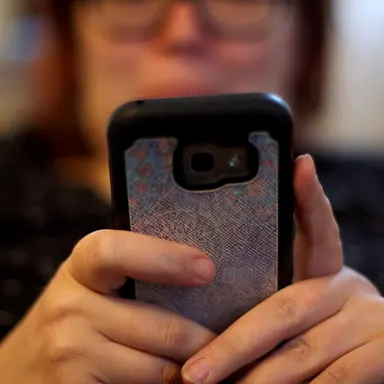
Photo: A woman holding a mobile phone.
Credit: PA