
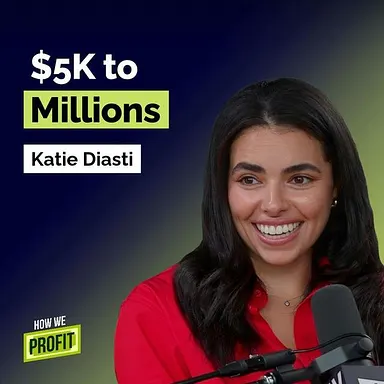
Every line of this episode of Young and Profiting (YAP) with Hala Taha: Entrepreneurship and Self-Improvement Podcast was transcribed with HappyScribe technology. See also: Zoom AI notes.
Ads in this audio differ from the text. Tap the sentence you're hearing to follow along.
Synced: the text now follows the audio.
Today's episode is sponsored in part by Northwest Registered Agent, Whatnot, Mod, and AG1. Northwest Registered Agent gives you the tools and guidance to build a complete business identity. Start using free resources at northwestregisteredagent.com/yapfree. Whatnot helps sellers grow through live shopping, community, and real-time connections with buyers. Search Whatnot, W-H-A-T-N-O-T, in in the App Store, download, and you can start selling right away. Mod connects qualifying patients with licensed medical providers for modafinil to support sustained energy, focus, and alertness throughout the day. Visit mod.com for a free consultation and get 10% off your first order plus free shipping with promo code PROFITING. See their website for important safety information. AG1 Next Gen supports your nutritional foundation with vitamins, minerals, pre- and probiotics, and superfoods. Go to drinkag1.com/profiting and get a free immune support bundle with your first subscription order. As always, you can find all of our incredible deals in the show notes or at youngandprofiting.com/deals.
We thought we had 6 months of inventory of our tampons, like ready to go in stock. We sold through it in 3 weeks.
Oh my God.
And it was wild. We actually had an over 3,000-person waitlist to get our next batch of tampons. Like, talk about thinking it was funny to like preorder pads. We were like, now we have a waitlist for tampons. Like, this is wild.
Oh my God. My guest is Katie Diasti, founder and CEO of Viv. Katie turned a college class project into a period care brand generating more than $3 million in revenue this year.
This year we'll do about like $3 to $4 million. We've grown 3x year over year for the past several years now. Wow. Across the board, we still have like an over 70% margin across SKUs.
Oh, wow.
And I think that's essential as a brand, and it's almost like a death wish to not have high enough margins because—
So you did your first product run at $3,500. How did you get your first customer?
Before our product even arrived, I brought samples and empty boxes and I sold pre-orders of pads that hadn't even existed yet. Recently, we just closed our seed round of $2 million and now we are profitable. We had all this traction.
And how has starting on Amazon actually helped you
I think Amazon is like a requirement for being in retail doors successfully. I think it's very risky and actually bad practice to try to launch in retail doors without—
What's up, my Young and Profiting family? I'm coming to you from Amazon's annual seller conference in Seattle, where I'm sitting down with entrepreneurs who are building and scaling businesses in Amazon store. This episode is part of our Amazon Seller 3-part miniseries on How We Profit, our weekly format where real entrepreneurs share real numbers, real margins, and the real story of how their businesses actually works. My guest is Katie Diasti, founder and CEO of Viv, and today we're breaking down how she built a physical product business with very little capital and how selling in Amazon Store is helping Viv grow more efficiently with with a lean team. Let's get into it. Katie, welcome to How We Profit.
Thanks. Excited to be here.
I am so looking forward to this conversation. You are just so inspiring. It's so cool to me that you started this as a school project in college and turned it into a real company that's selling on Amazon. To kick us off, what is Viv? What do you exactly sell?
So Viv is a better for you, better for the planet period care brand. We really think of Viv as that cool big sister that you need in your life to help guide you through all of your menstruating years, but also that fun new pop in the aisle that this category has needed for a really long time.
Yeah. So basically it's period products. And so you're selling tampons and what are all the different products you're selling?
Yes. Yeah. So we make pads that are biodegradable and bamboo-based. We make 100% organic cotton tampons, and we have a new technology. It's the safest tampon on the market. And then we make menstrual cups and discs that are all easier to use.
Hmm. It's so important what you're doing because for so many years we were sticking up crazy things like with tampons and, and like organic tampons. It's organic cotton. I feel like that's very important for women's health. Why was that so important to you? Like innovating in this space?
I was always really interested in like hygiene brands and how a lot of beauty and wellness and hygiene brands spoke to women. And I felt like it was in a lens of like thriving off our insecurities. And I've always been very passionate about women's health. I have a lot of people in the medical field in my family and was like just trying to reduce plastic waste in my own life and seeing so many fun things in like the food and beverage aisle. And I was so cautious of like what I was consuming.
Mm-hmm.
But realized in like one of the most sensitive, absorbent parts of my body. Like, I just didn't care or know about what products I was using. Um, and so when I was going down the period aisle, I would always feel like so anxious and awkward and would try to get out of there so fast.
Yeah.
And so I wanted to really rewrite that narrative for, for young people, but for everyone, and to make like having a period a more fun experience than what we've known for so long. Um, and learning that like traditional period care has the same toxins you'd find in Roundup weed killer. It contains—
Oh my God.
So much plastic waste. Like a regular pad can take 800 years to break down.
Oh my gosh.
And we didn't know that.
Yeah. It's bad for you and it's bad for the environment.
Yes, exactly.
Take us back to Boston College. When you first thought of this idea, you were doing like a college project, an entrepreneurship class or something like that.
Yes.
Tell us about that.
Yeah, it was a classic, like entrepreneurship class. I did not know anything really about entrepreneurship at the time. I had a full-time corporate job, like ready-to-go offer signed in fall of my senior year because I was in undergrad business school and I thought that's what you had to do because I saw all of my peers around me doing that. And I was like, oh my God, crap, I gotta get a job because everyone has a job so early.
Yeah.
And just signed the first job offer I had. And then I was in this class and it was very much find a problem and come up with a solution for it. Um, And I was, you know, branding marketing student in the business school. I loved studying brands and how they could like start to be the voice of people when like other things in our world were not. And I was also volunteering several nights a week at a women's shelter in the Boston area. And one of my many roles there was passing out pads and tampons to women that came in. And so I was very passionate around like menstrual equity, who had access to period care and like what that does to our lives and like how that can help women like thrive and go to school and like do so many things, which was so important to like me and my, my story. And so I was like, okay, a problem. All these learning about all the issues with period care, of the toxins, the plastic waste, and that everything was hideous and I wanted to hide it under my bathroom sink. I just thought, what a fun idea for a class project.
Like, let me build a period care brand that has all the things I've ever dreamed of.
Yeah.
In one. And then I became so obsessed with it. I was doing extensive research. I would go to my old marketing research professors and like build out surveys with all the tools we had on campus. I would host like period market research parties in my dorm.
Period parties?
Yeah, literal period parties. And I'd have my friends like talk in a circle about all the things they hated about their products and like really became an expert on period care and like what people wanted and I gave my final and that I— my professor was incredible. She brought in all these entrepreneurs from the Boston area that I looked up to and they gave us all this feedback. And I was like writing down all the notes even though I should have been done like off senior spring, like whatever. I was like, I'm not done with this. Like there was something in me that was like, I need to keep doing this in some way. And here we are many, many years later.
So you never took that job?
I— nope, I reneged my offer before I even got there. Amazing. Pushed my start date back like 4 times and was like, no, I'm all in.
So we were talking offline that you're Egyptian.
Yes.
How did your family take the news that you're like, I'm— out of all— it's like bad enough that you're not becoming a doctor, right?
Right. Yeah. My brother's a doctor.
Yeah. All my siblings are doctors. I know how it is. But then you're like, I'm going to start a period care brand. And they're probably like, oh, like there's a word in Arabic called ayb, which means like—
Yes.
That's embarrassing, right? Yeah.
I think that's, that's one of the things that fueled me is like, I was taught that they were like, this isn't something you talk about. Mm-hmm. It's shameful. And I was like, wait, no, it's not. And it's so interesting. I'm, I'm first gen, like my, my, the first one born in the US of my family. And, you know, growing up it was like, okay, what stable career path are you gonna have? Because we just risked so much. Mm-hmm. To like come to this country and like give opportunity for you. Yeah. And it's been so fascinating because my mom's a veterinarian. She raised me as a single mom for most of my life and My grandma helped raise us too. And my grandma was actually not allowed to go to school just because she was a girl in like her little village in Egypt. Oh, yeah. And so their whole thing is like, education is freedom. And if you can help educate people and you get educated, you can like do anything in life, right? And so that's always been like something so instilled in me. But then they saw how hard I was working and my mom was like, you know what?
I couldn't do stuff like that. Like, I didn't have the privilege to like try to start a company because it was so risky. And she was like, but I'm giving you that privilege to do it. So go live the dream I couldn't, right? And it's like, they're my biggest cheerleaders ever. It's like—
That's so good.
The best.
Something that's so inspiring to me about your story is how little startup capital you actually had. I think you started the business with like $3,500 or $5,000 or something like that. Talk to us about the first bit of money that you got, what you did with it, and how you made it work.
Yeah, so a few days after I graduated from Boston College, I jumped into an accelerator program, and we got $5,000 to build a company, which, you know, that this was 2019. So today it's, you can't really do a lot with $5K. Yeah. Especially at a product phase like this.
But in 2019, that was not that long ago.
Yeah, yeah, it really wasn't. And I was like, okay, what can I do with literally nothing? And I think it really built in me a lot of like discipline and really understanding all of my numbers, knowing where every cent goes in our business and like truly understanding what it was like to have to build a profitable company.
Yes.
Um, and I think in entrepreneurship you have to be really comfortable with like not following the rules and not following the status quo. And that was because I had to, right? Like I didn't have the money to just like, okay, that's the price, here you go. It was, having to get so creative. And I would be negotiating with manufacturers as like a recent college grad that knew nothing about building a CPG brand. And they were like, okay, our minimum quantity is a million units per absorbency of tampon. And I was like, well, how about you give me a few hundred and I try it out? And we just had to get so creative. And, um, I think that made us better as a business of how scrappy we were. And it also led us to content and building community first. I went to every event, pop-up market, farmer's market show in the Boston area that had the word like women, brand, anything like that in the title. So I was like, okay, a potential customer is there and they can learn about my story and they can learn about Viv and then find Viv one day.
Mm-hmm. hopefully stores, which now we're in. And I took that like scrappy grassroots approach, um, when first starting.
Yeah, fam, you know October hits different. The season shifts and suddenly when your alarm goes off in the morning, your body's like, absolutely not. But when you have the business and a million decisions waiting for you, you cannot start the day already feeling behind. And that's why AG1 has earned a real spot in my morning routine. AG1 Next Gen is a daily foundational nutrition drink with 75+ ingredients including vitamins, minerals, prebiotics, probiotics, and superfoods. AG1 Next Gen is backed by 4 separate gold standard clinical trials and key nutrient levels improved within 3 months of consistent use. Plus, it's formulated to support immune defense, which is really important this time of year. Yeah, fam, if you want to start your mornings off right, go to drinkag1.com/profiting and for a limited time get a free immune support bundle including a bottle of omega-3 fish oil and a bottle of vitamin D3 K2 with your first subscription order of AG1 Next Gen or AG1 Pro. That's drinkag1.com/profiting. drinkag1.com/profiting. Hey, young improfiters! You know, hiring reminds me a little bit of dating. You can get a lot of potential candidates, But you still might not find your right match.
And when I'm hiring at YAP Media, I don't have time to just hope the right person sees our job posts. And Indeed Sponsored Jobs helps me get in front of the right people. Sponsored Jobs boost your job posts in the search results so you can reach the people who actually help your business thrive. Plus, you only pay for results. Spend less time searching and more time actually interviewing candidates who check all of your boxes. Less stress, Less time, more results. When you need the right person to cut through the chaos, this is a job for Indeed Sponsored Jobs. And listeners of this show will get a $75 sponsored job credit to help give your job the premium status it deserves at indeed.com/podcast. Just go to indeed.com/podcast right now and support our show by saying you heard about Indeed on this podcast, Young and Profiting. That's indeed.com/podcast. Terms and conditions apply. Need the right hire fast? Then this is a job for Indeed Sponsored Jobs. Hello, young and profiteers. If you're running a business, getting website traffic is only half the battle. The real key to profiting is turning those visitors into paying customers. And I know checkout friction can quietly kill your sales.
That's why I always say serious entrepreneurs build on Shopify. Shopify is a commerce platform that helps you launch and run an online store without needing to be super technical. You can build your storefront, manage your business, and make it easy for people to buy. And here's the major advantage: Shopify Checkout with Shop Pay converts up to 36% higher than the competition. With Black Friday coming up, now's the time to get your store ready and simplify your checkout experience. If you're ready to launch your business before Black Friday, Go to shopify.com/profiting to start your free trial. That's shopify.com/profiting. Go to shopify.com/profiting today to hear your first— Yeah, that's so smart. It's like basically when you are constrained, it actually makes you think more creatively.
Yeah.
And I know a lot of founders, like I interview founders all the time. I find that people who get investment before they have sales, they have this like inflated sense And they end up spending a lot. They end up hiring more than they need to hire or not killing products fast enough or not being scrappy like you, like in terms of like negotiating because it's like they have the money so they don't negotiate as much. So I think that was probably something that really helped you early on. Mm-hmm. I'd love for you to tell us a story, uh, get like really concrete with it. Your first product run, how much it was supposed to cost. Mm-hmm. And how you got away with doing it for so little.
So the first product we ever launched was our pads. And that was something that was really important to me because I was like a go-to pad user for so much of my life and I hated the ones that existed. And that was like my main mission. It was like find a better pad. I was studying all these fibers and we realized that like bamboo is a really great fiber. It like reduces a lot of agro waste. It grows best naturally, but it's also softer and more absorbent. So it makes so much sense for something like a pad.
Yeah.
And I was going to all these different manufacturing partners and they were like, okay, if you want a custom label or branding on your pad, that's going to be another higher MOQ. If you want boxes, that's another higher. And I was like, what if I bought like bulk product and like found boxes and had them packed myself so I can control the MOQ?
What's an MOQ?
So an MOQ is a minimum order quantity. And the MOQs in our category are really, really high. They're used to working with bigger players, so it could be Hundreds of thousands to a million units, like per type of absorbency in our space. And so we knew we had to get really creative and we were able to do so with our first run being $3,500. And I thought that was a crazy amount of money.
So you just got like the pads and then you were like packing up pads in boxes to start?
Yes, I had like 25 case boxes arrive at my apartment. And it was a little walk-up in Boston. My cousin came over and helped me carry them all up the stairs, and I got all these boxes and we hand-packed them into boxes. And that was our first ever product that we sold. And I, I shipped every product out of my little apartment for like the first 6 months.
Incredible story.
Yeah.
So talk to me about where you went from there. So you did your first product run at $3,500. How did you get your first customer?
I went to these farmers markets in Boston to like try to meet everyone. And before our product even arrived, I brought samples and empty boxes and had this sign that we like made at Staples that said like sustainable period care, which at the time no one had ever heard of. Like that was not a thing that was talked about.
It's becoming a thing now.
Yes. Now the category is exploding, which is overdue and really exciting. And we're definitely seeing that like momentum. But in 2019, it just like wasn't a conversation that was happening yet. Um, and So many people would stop and be like, huh, this is interesting. And I sold pre-orders of pods that hadn't even existed yet. And I was selling like hundreds of pre-orders. And that was something that was actually like a metric point for me to renege my job offer was if I can sell like X amount of pre-orders, then I'll feel comfortable not going to that job. And, um, we like surpassed that within like a couple days of launching those pre-orders.
So cool. That's so cool. Who knew that you could get preorders for pads?
Yeah, it was crazy.
Like any business idea that you have that actually is solving a problem is something that's achievable. And I feel like a lot of people wouldn't necessarily go that route in terms of like preorders for pads, but you really were getting scrappy to make sure that this would be successful. Yeah. So where are you distributing now? Like walk us through your journey of like where you started, where you're going.
Yeah, things look quite a bit different now. Now we have warehouses and 3PLs, not me packing from my apartment. We are sold in 2,000 retail doors across the US. We have— we're sold on Amazon and our website, direct-to-consumer. So a very omnichannel brand. We also are sold in like— we're available in universities, gyms, and have an interesting like B2B side of our business. But yeah, now our distribution is like very omnichannel.
Oh my gosh. You started on Amazon first though.
Start on Amazon first.
Which is such a great case study for Amazon in terms of like building a brand and really helping you launch that. So what made Amazon the right place for you to launch?
We realized that people were going to Amazon, one, to buy things, and that's where people go to buy things. And then 2, we couldn't fulfill at the rate with just, you know, a scrappy startup team. that we wanted to. And in this category, like, you need your products really fast and you want the product fast because people aren't always planning ahead for the period. It's like, oh, I have this right now. And so we knew that was going to be an unlock for us of like, how fast can we get it into our customers' hands? Which Amazon does exceptionally well. It gets people their products quickly.
Yeah. How has Amazon helped you save money and resources through Amazon Fulfillment, which I feel like you're teasing right now?
Yeah, yeah. I mean, being available FBA, one, it's you know, the team capacity and the way we hire and the way we allocate resources can be on what we do best, which is creating content, building a brand, building community, marketing. And we can leave the fulfillment and packing of orders to Amazon's team. And that has been so great for a lean team like ours that can really prioritize what we do best.
What are your biggest categories? Like, what is your best sellers?
It's so cool because it's actually quite different across channels, um, for us, which we love. Our cup and discs have had a lot of success on Amazon. Our product is so differentiated, like it has a pull tab, so it's easier to take out. It has a dark color and it's competitive on price at the same time. And so it's been really great for Amazon because when you stack us up next to all of our legacy competitors, It's a no-brainer to pick ours.
It kind of makes sense because pads and tampons, you might wanna like, you get them like when you're going grocery shopping, it's something you need every month, right? Yes. So you're getting it when you're like, oh, I'm like, you know, I should probably pick this up. Whereas the cups are more of like a longer-term thing.
Yeah.
How do you see that like kind of breakdown in terms of, you know, products and what you're trying to push? If, if one is repeat every month, that's obviously a lot more revenue than one purchase.
Yeah, it's so interesting because it is more of like you're learning a lot about a cup or disc before you make that purchase decision. And Amazon's a great platform for that because you can educate so much right on that product page and see reviews and see videos. And it can be something where they can like learn and compare while tampons and pads, you know, might take someone more to switch to a different product. But once you have— we use a lot of subscribe and save deals. Yeah. And that really Creates a lot more loyalty, creates convenience for our shopper, and also brings that repeat revenue in, which is always great for a business. Um, so it's been nice seeing both, but we honestly view period care more like a skincare routine. Mm-hmm. And we have noticed that our cup and disc shoppers are still going to need a tampon or pad once in a while or all the time, right? Like, People are really mixing and matching to fit. Every cycle feels a little bit different. Every day of the cycle feels a little bit different. And we also see people like the first postpartum period back versus like needing to go to a swim meet versus a long day of meetings.
It's, you are changing it up. So we find that when people might learn about our cup first, then they come back and will subscribe to tampons. Yeah.
Let's talk about education. Let's talk first about education on Amazon. I know that Amazon has this like A+ content feature. Yeah. And you can get really Descriptive. Um, help us understand how you're educating people on Amazon. Like, what are the best tactics that you're using?
We really like leaning into our UGC videos and seeing what's performing well on our socials and then bringing that into our A+ content onto Amazon. And so a lot of our most viral content is simply how to use a tampon, what is a menstrual cup, how do you clean a menstrual cup? Like, these very product educational but also like health ed educational videos. And I think a lot of it has been our tone in videos and our approach. We wanna feel like we're like reaching for your hand through the screen and holding your hand through this process, 'cause it can always be intimidating trying something that's new in this space. And so we get that and we wanna make our product line and our brand feel as approachable as possible. And so getting to have that human element on a platform like Amazon is really helping us win over that customer.
Yeah.
And we get to tell our story, right? Like on our brand page, It's a picture of me and my founding team, like sitting on a couch holding our first sign. Mm-hmm. And like, we show you the journey and like who is really behind this.
Yeah.
Um, to show that like the care that goes into creating the products.
Yeah. Hello, young and profiteers. If you're running a business, getting website traffic is only half the battle. The real key to profiting is turning those visitors into paying customers. And I know checkout friction can quietly kill your sales. That's why I always say serious entrepreneurs build on Shopify. Shopify is a commerce platform that helps you launch and run an online store without needing to be super technical. You can build your storefront, manage your business, and make it easy for people to buy. And here's the major advantage. Shopify Checkout with Shop Pay converts up to 36% higher than the competition. With Black Friday coming up, now's the time to get your store ready and simplify your checkout experience. If you're ready to launch your business before Black Friday, go to shopify.com/profiting to start your free trial. That's shopify.com/profiting. Go to shopify.com/profiting today to hear your first— What's up, YAP fam? You guys know we love reading on this show, so I'm always excited when I find a book I genuinely think is worth sharing. Life at the Speed of Play: Launch Products People Love by Mark Pincus is one of those books. Mark is a legendary Silicon Valley entrepreneur and investor, and this fast-paced, 170-page book is his playbook for testing ideas quickly, navigating uncertainty, and figuring out what's actually worth pursuing.
One of my favorite concepts is what he calls the abyss, those moments when you feel stuck or unsure of what's next. Instead of fearing uncertainty, he shows you how to use it as a tool for discovery. Right now, Mark is doing a buy one, get one offer for YAP listeners. Go to getmarksbook.com/yap, buy one copy for $32, and get a second copy free. So you can keep one for yourself and give the second to a friend, future co-founder, or someone who needs a little push. What's up, YAP fam? If you're building a personal brand, you already know how hard it is to stay consistent with content when you're also trying to actually run your business. I love creating content, but realistically, I'm not trying to sit in front of the camera every single day. I need time to work on my business. But the problem is consistency matters. The more people see your face and hear your voice, the more familiar you become. That's why HeyGen has been such a great tool for me. You can record just 15 seconds of footage, create an AI avatar of yourself, and use it to make videos on demand.
So instead of constantly filming from scratch, you can create more content, stay visible and keep showing up without making your entire life be about generating content. And you guys know I'm always looking for tools that give entrepreneurs more leverage. HeyGen is definitely one of those tools. 30 million people already use it, from solo founders to 85% of the Fortune 100. Your first 3 videos are free at heygen.com/profiting. That's heygen.com/profiting. P-R-O-F-I-T-I-N-G, heygen.com/profiting. And then in terms of social media, that's been huge for you. Yeah. I'd love to spend some time there. What platforms are you focused on right now and what has been your strategy for social?
Yeah, our social's been amazing for us. I think it's been helpful that like we are our target customer and that we get,
mm-hmm. Yeah. You are literally your target customer.
Yeah. And it's, and I'm really thankful for that because I wasn't afraid to like hop on TikTok and like use Instagram in a way that brands weren't in the early days. And we were on TikTok before TikTok Shop existed. Like we would see these, a video go viral of the cup and see those sales translate to Amazon. And we were like, okay, this is really interesting that like having off-platform, off-Amazon content can really help drive Amazon sales. Mm-hmm. And, um, we were then like, let's keep utilizing this, right? Like, it doesn't— it's so native to us to just like pick up the camera and film a video and tell our story. And so we started doing that, but then we would get so many young people in our comment section, particularly on YouTube and TikTok were like 2 platforms that we had a, a lot of dialogue on. Mm-hmm. Like people were supporting each other in the comment section, which I feel like is a key. sign that you have a community, right? It's like, it's not only the brand talking to customer, it's the people talking to each other. Yeah. And we're really seeing that, especially on like how to use the tampon videos, what it's like to get your first period.
And we had so many teens asking follow-up questions in the comment section, and we would just reply to those in video format and be like, I'm here to help you, and I wish I had something like this when I was their age. And so let's
So basically you're getting feedback from the conversations in the comments in terms of what content you're going to put out next based on everybody's questions. Did you get feedback on the products you needed to launch and, and just information about how you should innovate your products?
We did. We got— that's actually how quite a few of our SKUs were created, were based on the comment section on our social media, especially around our cup and disc products because it was so new to so many people. online at the time. And so many people are like, I'm a beginner, this is my first cup ever, like I'm brand new, this video is really helpful. And we're like, wow, we are becoming like the beginner cup because it's easier to take out, it's a little less intimidating. And so we actually created a whole, um, 2 SKUs, the Cup Starter Kit and the Disc Starter Kit, that has like a wash because we got so many questions on how to clean the cup.
Yeah.
We have a storage pouch because like Can you take it with you? And then we made this like extensive booklet how-to guide that feels like you're texting your friend that answers like all of our pro tips for using a cup, like how, where we like to remove the cup. And we have a whole like how-to video page that feels like you're FaceTiming a friend when you're using it for the first time.
And it's really cool because basically, like we just mentioned, how often are people buying cups that don't use them?
Maybe once a year.
And so the wash, at least they're buying something from you all the time, right? So it gives you like some recurring revenue in that way.
And that was something that was really helpful from like the Amazon's data as well, is we were able to see that so many people were buying like a basic non-pH disruptive soap to go with the cup, and they were buying a storage kit or a pouch to put it in, and they were kind of like trying to DIY what the cup starter kit is. And we're like, wait, we can do this. We can help them and make sure it's like the safest, best product. And so we launched a wash to go with the cup, and that's been doing great on Amazon.
And I'm sure you can bundle offers and stuff like that.
Exactly. Yeah, the whole experience.
So Amazon has Seller Assistant, which gives you data analytics, and I know that you use that. So what information have you gained from Amazon to make different decisions for your business?
One of my favorite things about the Seller Assistant tools is that you can really figure out your profitability per SKU and like really understand what SKUs need more support, which ones need more marketing and education, which ones we can double down on in terms of budget and keywords. And it makes it much smarter of like how you're actually spending your ad dollars, which has been incredibly helpful for us. Our cup and disc SKUs are higher margin and they have a— they're very profitable, but we'll see higher movement velocities of tampons and pads. And so it's like, okay, how can we increase trial? How can we bundle things together? in ways that shoppers already are doing. And so that's been a really great way to use it. And even in the fundraising process, when I was pitching investors, we would get these really nuanced questions about our Amazon shopper, around like our subscribers. And I was able to put a lot of those into Seller Assistant and send them back the answer.
Oh, amazing. There you go.
Yeah.
How helpful.
Yeah.
So, Katie, let's go back to social for a minute because I know that you've gone viral quite a bit. You've got a huge following right now. And you had a post one time early on that got 2 million views, and then you got so much demand that you actually couldn't fulfill. You weren't ready for that demand. Tell us about that story and the pros and cons of going viral.
Yes, every, I think every brand founder, brand wants to go viral. That's the goal, especially when you're putting out so much content. And then when it really happens, it's like, oh crap, what do we do? True chaos. Um, and You know, it's— there are so many positives that came out of that, but also so many like negatives, and it really tested us operationally. So this is around summer of 2024, and a lot of new studies were coming out around arsenic and lead found in a lot of traditional period care. And we were realizing that every other brand was like crickets to respond. And one of the pros, I think, of being an emerging brand is that you can be really nimble and respond quickly to things, especially trends. And new education that comes out. And so we use that to our advantage. It was like a Saturday morning, I'm writing a statement, I'm pulling all of our test reports, I'm pulling all of our heavy metal testing. And we created an Instagram post and put it out and sent an email to all of our community because our, you know, customer support, our DMs were filled with like, is this going to kill me?
Is this going to give me like— is this lead? And we're like, well, we need to educate people on how Viv is different. And Because of that response, we had so many creators, doctors, news writers, like all talking about Viv as that safe alternative.
Amazing.
Yeah. And it was so much so that when you would Google like safest period care of 2024, it was Viv is the safest period care.
Amazing.
And that led to so much new search volume. We thought we had 6 months of inventory of our tampons, like ready to go in stock. We'd sold through it in 3 weeks.
Oh my God.
And it was wild. We actually had an over 3,000-person waitlist to get our next batch of tampons. Like, talk about thinking it was funny to like preorder pads. We were like, now we have a waitlist for tampons. Like, this is wild.
Oh my God.
And it— the thing that we could lean on was our relationships with our manufacturing partners, which like being one of the smaller players in the space, like You feel like you don't have much power, but that's why like years of building those connections will then come into hand, come handy, because usually it's, you know, 6 to 9 month lead times. And we were able to turn that around in like 2 to 3 months instead, which felt like a lifetime.
Yeah.
When you're in it.
And those people had to wait. There was no, there was not really any alternative. So it's like you were able to do a waitlist, which is super cool.
Yes. Yeah. Yeah. We knew exactly how to like keep our community engaged and like kept education up and kept informing people of like, here's when it's going to be back. And
yeah,
and actually used it as like a news story. Like we were like, oh my gosh, like also like with all of the writers that were talking about our products, we went back and we're like, look at the demand we have for a product that's out of stock and created a new news cycle out of it. And I think that's something we've learned is like The news is going to move really fast. As a brand, you need to put what you think's important and recreate that news cycle over and over again to get your story across, because it's like 1 second on a scroll for a consumer.
That's so smart. And how did you get the publications to like pick up that new news story? Was it just things you put on social, or did you reach out to them and like, hey, follow up on this?
Both. I think it's so important to like build relationships with the writers that like talked to you once when the very beginning, first ever launch. It's like, don't like have one conversation with someone and be like, sayonara. Like I'm always following them on Instagram and making sure that they know about our latest products.
That's so smart.
Engage with people. Like I think relationship building is like a lost art in business today that still needs to happen.
Hello, Young and Profiters. If you're running a business, getting website traffic is only half the battle. The real key to profiting is turning those visitors into paying customers. And I know checkout friction can quietly kill your sales. That's why I always say serious entrepreneurs build on Shopify. Shopify is a commerce platform that helps you launch and run an online store without needing to be super technical. You can build your storefront, manage your business, and make it easy for people to buy. And here's the major advantage. Shopify Checkout with Shop Pay converts up to 36% higher than the competition. With Black Friday coming up, now's the time to get your store ready and simplify your checkout experience. If you're ready to launch your business before Black Friday, go to shopify.com/profiting to start your free trial. That's shopify.com/profiting. Go to shopify.com/profiting today to hear your first— What's up, YAP fam? You guys know we love reading on this show, so I'm always excited when I find a book I genuinely think is worth sharing. Life at the Speed of Play: Launch Products People Love by Mark Pincus is one of those books. Mark is a legendary Silicon Valley entrepreneur and investor, and this fast-paced 170-page book is his playbook for testing ideas quickly, navigating uncertainty, and figuring out what's actually worth pursuing.
One of my favorite concepts is what he calls the abyss— those moments when you feel stuck or unsure of what's next. Instead of fearing uncertainty, he shows you how to use it as a tool for discovery. Right now, Mark is doing a buy-one-get-one offer for YAP listeners. Go to getmarksbook.com/yap, buy one copy for $32, and get a second copy free. So you can keep one for yourself and give the second to a friend, future co-founder, or someone who needs a little push. So people go viral all the time and that doesn't necessarily translate into sales. Yeah. So what were your like best hacks of getting people to actually go to Amazon and purchase?
Yeah, I think it's really important for people to know what they're supposed to be looking for. And it's something that's really top of mind right now. We, we just launched a new tampon innovation called Cotton Lock.
Mm-hmm.
And it's the first ever like anti-shed tampon to exist.
Anti-what?
Anti-shed tampon.
Okay.
So it's the first tampon that prevents fibers from shedding inside the body.
Mm-hmm.
And all other tampons on the market can leave fibers stuck inside the body. And so we're now creating all this content, but we're like, okay, how do they find from that one, one video they see, they're like, oh my God, fiber shed, what? And then like, I need to find a better tampon. And then they scroll, move on. Like, what are those? key things that they heard that when they go search into, oh, I gotta buy tampons this month, like, I'm gonna look and see if that like Fibershed option is available. It's like, what are people picking up? And like, what are the few words and keywords you're really like shouting out there that they can then find within Amazon?
That's really smart. So you're making sure that like you're clearly saying Viv, which is easy to remember, right? And you're always saying that you're on Amazon and you're saying the keywords so people remember. Are you doing any sort of like links or targeting or paid ads or anything like that to We're
doing quite a bit more with like attribution links, which has been interesting, especially with follow-up with press. If we have, you know, going into fall Prime Day or other Prime Day sales, it's like, okay, like we just told you this really cool story about our new innovation and this new patent and technology and our fundraise, but here is a way that like you can make money and we can make money that is also getting our brand out there.
And you're using like Amazon's affiliate links?
Yeah.
That's great. That's super smart. So speaking of Amazon, what are you learning from Amazon's data in terms of the products? Like, is there the way that people are searching or what they're buying with your product that's influencing your decisions at all?
I love what this sounds so funny. I love like doing keyword analysis and looking through like what led someone to our brand and led to a checkout. And it So
it's like a user journey, basically. You're studying the user journey.
Yeah, like this many people, um, like converted because they were looking for a dark-colored menstrual cup. And it's like, oh, interesting, like the color of our cup was the factor for some shoppers. And then some people were switching because they were looking specifically for a compact applicator that's an organic cotton tampon. It's like they wanted the compact. And it's like, it allows us to understand what key factors of our product people love and care about, or what they're remembering to search. And so it's actually developed, you know, more of our product, more of our pack sizes as well is so key on Amazon. It's like, okay, if so many people are always buying 2 or 3 boxes at a time, do we need to be increasing our own profitability by creating a pack size that is just the equivalent to 3 boxes?
That's, that's really interesting. So basically like having like a bigger— like once somebody is already sold on the product, they're willing to buy more at a time because you don't want to be like ordering something off Amazon every month. But talk to me about Subscribe& Save.
Yes.
What's your tactics there?
I love Subscribe& Save. I think it's been interesting because previously we didn't have a large promo strategy around Subscribe& Save. We just, you know, threw it on there. We're like, yeah, people subscribe. And then as soon as we started increasing the promotion of that first month, we saw so many more subscribers and they stay very loyal on Amazon within Subscribe& Save. And so as long as you're like, in stock, ready to fulfill, like that's a really loyal shopper that has really, really high retention. And so it's been incredible for our business, but having those coupons attached to it has been key for conversion.
Well, this is How We Profit, so we got to talk numbers a little bit. How big is the business today?
Oh gosh, so we've done over $3 million in revenue. This year we'll do about like $3 to $4 million. We've grown 3x year over year for the past several years now.
Wow. That's incredible. And what are your biggest costs like? What is the most costly part of your business?
It's, it's so interesting because I think, you know, naturally we're spending a lot on inventory because we care a lot about the quality of our product and we have a lot of like safety that we want and testing that we want to see as a brand that we don't want to, you know, compromise on. Freight, shipping, those kinds of things are where Costs can really add up and really eat into margins as a business. And so something we've had to like really learn how to optimize.
What's your most profitable product?
Our cups and our discs are our most profitable products right now.
Also the most expensive though, you were saying?
Yes.
So they're expensive to make, but you can charge more for them?
They're pretty— our margins are high, so they're not super expensive to create.
Okay.
It's a medical-grade silicone. So product-wise, but because it's reusable and we were saying You know, our competitors are charging $40 to $50 for one cup. We're charging on Amazon $20 for a cup.
So it's still really cost-effective for the user.
Yes. So cost-effective for the user, but allows us room for both Amazon margins and ensuring that, you know, we're still profitable with the cost of paid ad, with the cost of selling on the platform and fulfillment. And for when we're in retail doors, like we knew that we were going to be selling Viv in more places than our direct website. And so we wanted to build in margins that allowed us to win and allowed us to sustain being a business.
Yeah. So like tampons and pads to me is like kind of like a commodity. I imagine that it's like very low margins and you've got to do a lot of volume. So like, how do you think about the sales for that? Like, what is your strategy?
Yeah, it's interesting too because, you know, we've built like in personal care, they're great margins compared to other categories. It's all of our— across the board, we still have like an over 70% margin across SKUs.
Oh, wow.
And the I think that's essential as a brand, and it's almost like a death wish to not have high enough margins because it's something where like we know we can, as we scale or with potential exits, like we can become more accessible in price over time, but you can't like go up on price after your certain set price. So that's been really key for us.
Let's talk about funding. So you started off with like less than $5,000.
Yeah.
At a certain point you got investors. Was that when you went viral? Is that when you approached investors or like when did you decide you needed investor money?
Yeah, we've had a really interesting approach to funding. I knew as a first-time founder, as a young woman and, you know, so building in period care, talking to like old men investors about period care, I was like,
I
have a lot stacked against me for raising money in a traditional way, naturally from baseline, right? And I knew I needed to prove that I could get traction in some way before pitching a single investor. And I have something I would think I'm, I'm glad I started my company like so young and willing. I was a sponge, like I just wanted to learn from everyone. And there's a, you know, the classic saying when you're raising money, like if you want money, ask for advice, and if you want advice, ask for money. And I didn't even realize I was doing it because I genuinely needed the advice, I needed the expertise. And I was seeing all these other brands raising money, and I was like, they haven't even launched yet. They're not selling from their apartment.
They're not packing orders. Yeah. Yeah.
And I was like, what do I— I remember talking to a lot of my mentors who have built brands, who have had really cool exits, have sold their companies to L'Oréal. And I was like, what do I need to do to raise money? And they were like, here's the— here's what you need to have. fixed up. And also, when you're ready, I want to be your first angel check. Amazing. And I realized, like, a lot of the people I was building connections with wanted to be my supporters because they were seeing me from 0 to 0.2 to 0.5. Like, they were seeing the journey. And
yeah,
there's a phrase that, like, you're a point on a graph for an investor. So if you can keep showing them that progress, like, I— to some people I was like here, but to them I had grown from like way up and I was just constantly seeing this like rocket ship because I was keeping them updated. I was sending update emails for the sake of sending update emails. Mm-hmm. 'Cause I was like, I hope someone cares and wants to listen. And that paid dividends. So whenever we were ready to launch tampons, we knew we needed more capital because of like the extensiveness of that SKU, needing more FDA approval. And that's when I was like, okay, let's raise some money. Um, and we raised initially $500K. We launched the tampon products, we started to scale, we started getting some retail interest. And as we were getting more retail interest, I was like, oh my gosh, we need more money. And our current investors, the same group of people, were like, let's keep going and continue to reinvest in our company. And we would just use different milestone markers like, okay, now we're launching nationwide at Whole Foods.
The same investors like, I'm in again
and
continue to back us. And then recently we just closed our, our seed round of $2 million. And that was a new approach because You know, now we were profitable, we had all this traction, we could show like a clear path forward for scale, and we were really like buttoned up, healthy company to be able to raise money. It's still incredible.
You probably weren't like that scared of raising that money because you're like, I'll be able to make that back, no problem, given all the traction. Yeah,
and I knew what I was going to do with it, you know. It's like I knew where I wanted every dollar to go and how it would get come back to us as a business and I think if I had raised, you know, millions of dollars pre-product, pre-launch, probably would've spent a lot of it in the wrong ways. Mm-hmm. And yeah, now I know exactly where we should spend it.
Yeah. And you've been such a scrappy founder. I think one of your biggest advantages is that like you built a community, you were able to grow a following, go viral. A lot of people start a business and they're like, okay, paid ads, I'm gonna pay for an influencer. I'm gonna— you like built it yourself. Do you feel like that's like a huge advantage that you have over other period companies?
I always make this like joke that like if a founder has never touched cardboard, then like they're really disconnected from their, their customer, their shop, or their community. And I think the fact that we've like literally packed the box and like sent handwritten notes in like the first hundreds and hundreds of orders and like have felt what it's like to be like, oh my gosh, interesting. People keep buying 2 liner boxes and with this product, like. When you're doing that, you have such a different sense of your shopper. And we did— I did customer support myself for way too long, like truly too long. But I learned so much and I think that is the reason that we're going to win.
Yeah, I think the other like lesson from your story is how big you are on relationships and follow-up and communication. Like, I love when you were just saying, like with your investors, you would send them like updates even though like nobody told you to do that. And people don't understand like how big of a marketing channel like email is, like even an email newsletter and how top of mind and bigger you seem to people who get your emails. Mm-hmm. So I just think that was super smart. And then what you said about the PR follow-up. So I think that's a big lesson for everybody tuning in. Yeah. Help me understand, like with fulfillment, do you feel like you'd be able to scale in the way that you're scaling right now if you didn't have that capability with Amazon?
No, I think having strong fulfillment partners and like warehousing partners and operational partners is so, so key in wanting to scale a business, which like, you know, we grew that both internally and within Amazon, right? And it's like now our internal operations team can help use Amazon to scale and also do so in a cost-effective way so that we can spend more on acquiring a customer than just getting them their product. Yeah, I think Amazon Fulfillment FBA was so key on like reaching a new customer that we wouldn't have had access to before.
And how has starting on Amazon actually helped you then enter retail?
It's so interesting. I think Amazon is like a requirement for being in retail doors successfully. I think it's very risky. and actually bad practice to try to launch in retail doors without having a strong enough direct-to-consumer business.
Really?
And an online community that's ready to go shop in stores. Today, retail buyers need you as a brand to bring in all of the customers to that aisle. And you're not only the supplier and the product on shelf, and you're also like a media company, and you're the ones bringing in traffic to what was probably previously like a slow aisle. And for us, it was bringing in a new demographic that they didn't really have in the period aisle that wasn't spending enough time there. It's
like,
how do we get this new demographic to spend more time in the period care section?
So if you were doing it all over again, you would start on Amazon first?
Absolutely. 100%. I would build up my Amazon so much that I could go to any retail buyer and say, look at my Amazon number. We, to this day, I was just telling someone this in the conference and they were asking about Amazon and retail. And we get screenshot data back from some of the biggest retailers in the country and saying like, hey, this is what we saw, like this SKU do, like let's have a conversation. But it's like, this is what it's doing on Amazon. So let's talk.
That's so good. So more than 60% of sales on Amazon is actually from independent sellers. What is something that somebody who's thinking about starting on Amazon might not realize that Amazon does to support their sellers?
Yeah, I think people look at Amazon when they're an emerging brand and think, oh, that's like too big for me. Like, that's too scary. Like, that's too big of a beast to tackle, where you do have a lot more control over your storefront and it's only going to lead positives because it's like you're now searchable for the first time in a way that Takes so much more capital to get people to your direct website. Like, no one is searching a direct website, right? They're going to other platforms to buy things. And so if you want to, like, have more ease and discoverability, like, being on Amazon does that for you.
Yeah, I mean, that's like such a big marketing rule. Don't create demand, channel demand, right? So you're getting all the demand from people on Amazon who are already searching for these types of products.
Yes. And we had so much support. I think it's been interesting to see like how you get a rep and people will like talk to you and like people will, if you have issues, like you can ask support. Like if you're a solo founder, like building in silo, like the thought of that is amazing.
Yeah. And you're at Amazon Accelerate right now, so you're with all these peers that are doing the same thing as you. You're probably learning so much from the sessions and from other sellers that are here. What is like the biggest takeaway from the conference so far?
Ooh, it's so cool because I love coming and learning about how other sellers are utilizing more of the tools to save them time. And I'm really big on like optimizing our time right now as a team. And there's so many things out there that I'm like, wow, we're manually doing that. Like, why are we doing so? And talking to some of my brand friends that are walking around, they're like, oh my gosh, yeah, you got to be using like this seller-centric, like, whole, like, prompt to be able to understand, like, all the elements of your business. Um, but having community amongst other founders has been, like, I think, a key for success. Like, you need to be able to talk laterally with other people who are in the same boat as you rather than, like, always thinking you have to network up.
So my final question to you for our young improfiters out there tuning in who want to copy you, they want to build their own consumer brand, they want to start on Amazon first. What is your best piece of advice to build a scalable, sustainable, profitable business?
One, have your margins zipped up. Know your numbers really well, but also like build something you actually care about and that you wake up every day and you're like, I need this product and this company to exist. Because starting companies is really hard if you don't actually care about what you're doing, it's going to be impossible.
Yeah, I totally agree. Katie, this has been awesome. We learned so much from you. Thank you so much for joining us on How We Profit.
Thanks for having me.
And that's how Katie and Viv profit. Katie's story is a reminder that scrappiness can really get a business off the ground, but growth forces you to build differently. When demand took off, Katie learned how quickly inventory and fulfillment can become bottlenecks. Selling in Amazon's store has helped Viv take some of that operational pressure off the team so Katie can stay focused on building the brand and making smarter decisions about where to grow next. And Viv is part of a much bigger story. More than 60% of sales in Amazon's store come from independent sellers, most of which are small and medium-sized businesses. Amazon provides sellers with tools and services designed to help entrepreneurs grow. To learn more about how Amazon is helping independent sellers succeed, visit sellingpartners.aboutamazon.com. I'm your host, Hala Taha, and I'll see you in the next one.
Katie Diasti turned her business school class project into Viv, a sustainable period care business, with just $5,000. When manufacturers demanded massive minimum orders, far beyond her budget, she negotiated a $3,500 production run and hand-packed orders from her apartment. As demand grew, she turned to Amazon to reach more customers and handle fulfillment. Today, Viv has generated over $3 million in revenue and expanded into 2,000 retail locations. In this episode, recorded at Amazon Accelerate 2026, Katie shares how she uses Amazon's seller tools to drive repeat sales and build a profitable business with product margins above 70%.
In this episode, Hala and Katie will discuss:
(00:00) Introduction
(00:58) Introducing Viv: Clean, Sustainable Period Care
(03:28) Turning a College Project Into a Business
(07:39) Launching a Startup With Just $5,000
(13:42) How Amazon Drives Sales and Subscriptions
(19:14) Using Social Media and Amazon Insights
(24:12) Turning Viral Attention Into Product Sales
(30:11) Using Amazon Data to Drive Repeat Sales
(32:16) Viv's Revenue, Costs, and Product Margins
(34:54) Raising $2 Million After Proving Profitability
(39:54) How Amazon Supported Viv's Retail Expansion
(44:49) Building a Profitable, Sustainable Product Brand
Katie Diasti is the founder and CEO of Viv, a modern period care brand sold online and in 2,000 retail locations across the U.S., including Whole Foods and Sprouts. Named to Forbes' 2024 30 Under 30 list and recognized as one of Women in Retail's 25 Most Inspirational Female Leaders in 2024, Katie has led Viv to raise over $3 million in funding and achieve over 70 million in social media reach.
Sponsored By:
This episode is sponsored by Amazon and recorded at Amazon Accelerate 2026, Amazon's annual seller conference. More than 60% of sales in Amazon's store come from independent sellers, most of which are small and medium-sized businesses. Amazon provides tools and services to help these entrepreneurs grow their businesses. To learn more about how Amazon is helping independent sellers succeed, visit https://sellingpartners.aboutamazon.com.
Resources Mentioned:
Katie’s Company, Viv: vivforyourv.com
Katie’s Amazon Storefront: bit.ly/KD-Storefront
Amazon's Seller Tools: sellingpartners.aboutamazon.com
Amazon Accelerate EP1 with Lisa Curtis: youngandprofiting.co/Amzn-EP1
Active Deals - youngandprofiting.com/deals
Key YAP Links
Reviews - ratethispodcast.com/yap
YouTube - youtube.com/c/YoungandProfiting
Newsletter - youngandprofiting.co/newsletter
LinkedIn - linkedin.com/in/htaha
Instagram - instagram.com/yapwithhala
Social + Podcast Services: yapmedia.com
Transcripts - youngandprofiting.com/episodes-new
LinkedIn Creator Club - Skool.com/linkedin-creator-club
Disclaimer: This episode is a paid partnership with Amazon. Sponsored content helps support our podcast and continue bringing valuable insights to our audience.
Entrepreneurship, Entrepreneurship Podcast, Business, Business Podcast, Self Improvement, Self-Improvement, Personal Development, Starting a Business, Strategy, Investing, Sales, Selling, Psychology, Productivity, Entrepreneurs, AI, Artificial Intelligence, Technology, Marketing, Negotiation, Money, Finance, Side Hustle, Startup, Mental Health, Career, Leadership, Mindset, Health, Growth Mindset, Passive Income, Online Business, Solopreneur, Networking