
Every line of this episode of Young and Profiting (YAP) with Hala Taha: Entrepreneurship and Self-Improvement Podcast was transcribed with HappyScribe technology. See also: note taker for online meetings.
Ads in this audio differ from the text. Tap the sentence you're hearing to follow along.
Synced: the text now follows the audio.
Today's episode is sponsored in part by Northwest Registered Agent, Whatnot, Mod, and AG1. Northwest Registered Agent gives you the tools and guidance to build a complete business identity. Start using free resources at northwestregisteredagent.com/yapfree. Whatnot helps sellers grow through live shopping, community, and real-time connections with buyers. Search Whatnot, W-H-A-T-N-O-T, in the App Store Download, and you can start selling right away. Mod connects qualifying patients with licensed medical providers for modafinil to support sustained energy, focus, and alertness throughout the day. Visit mod.com for a free consultation and get 10% off your first order plus free shipping with promo code PROFITING. See their website for important safety information. AG1 Next Gen supports your nutritional foundation with vitamins, minerals, pre- and probiotics, and superfoods. Go to drinkag1.com/profiting and get a free immune support bundle with your first subscription order. As always, you can find all of our incredible deals in the show notes or at youngandprofiting.com/deals.
Nobody goes onto Amazon or walks into a grocery store and is like, what is the most impactful plant I could buy? What's the best product for the mission? No, they're saying, you know, what is the best product for my health? What's the product that's gonna taste good? What product will my kids like? Will my husband eat?
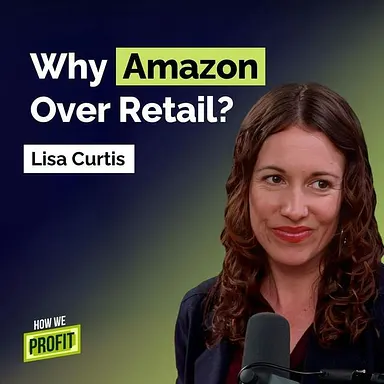
Lisa Curtis, founder and CEO of Kuli Kuli Foods. Lisa built a national superfood brand around moringa, an ingredient most Americans had never heard of when she started. Today, Kuli Kuli generates more than $10 million in annual revenue, and its Amazon business does about $1 million a year, and that's been doubling year over year. The mission doesn't matter if you're not profitable.
I like to say no market, no mission. That is what we live and die by. And so really we've transformed our marketing over the years to be much more about what are the functional benefits? What
did you do to make Moringa something that people felt like they were willing to try and made it more like accessible to people?
We were in front of our customers doing constant events, constantly sampling, constantly talking to people, constantly learning from them. And that has really been the way of like almost our customers educating us.
Okay.
And then us using that to like—
When you were creating this category, how did you get like your first customers? first big retailer to accept your product?
I stayed up all night making these bars by hand. I walk in, single best sales meeting of my life.
Wow.
That buyer, you know, looked at me, looked at these like handmade bars, and she was like—
What's up, YAP fam? Hala here, coming to you from Seattle at Amazon Accelerate 2026, which is Amazon's annual seller conference. Today's conversation is part of a special How We Profit series featuring entrepreneurs who have found success My first guest today is Lisa Curtis, founder and CEO of Kuli Kuli Foods. Today we're breaking down how Lisa created demand for an unfamiliar product, finally reached profitability after a decade of building, and now how she uses customer behavior and feedback in Amazon's store to decide what products to launch, improve, and scale. Lisa, welcome to How We Profit.
Thanks for having me. I'm excited to be here.
I'm excited to be here too. We're here in Seattle together. You're the first of many interviews that I'm doing with Amazon sellers, and I'm just so impressed with what you've built with Kuli Kuli. So for those who don't know, what is Kuli Kuli exactly?
Yeah, so Kuli Kuli is a superfood brand. So we source amazing ingredients, maybe ones you haven't heard of before, like moringa, baobab, and others directly from small farmers. We really rely on ancient wisdom and we translate that ancient wisdom into modern wellness products. So you can find our powders, capsules, and gummies all over Amazon and in 11,000 stores nationwide.
Wow. And you essentially like created a category with moringa. Like nobody knew what that was. So this is like your, your first flagship product. What is moringa exactly?
Yeah, so this is, this is kind of my baby here. Um, so moringa is an amazing plant. It's actually a tree, grows all over the tropics, and the leaves are incredibly nutritious, packed with protein, calcium, iron, and vitamins. What we hear from our customers is that when they take moringa, they feel like they have steady energy and better digestion. So it's not caffeine, but it's really all the vitamins, the B vitamins that are giving you that energy, and it's really rich in fiber as well.
Yeah, I mean, I literally had not heard about it, so it's like you still have a lot of education to do. So we'll talk about that in a bit. But first, how did you discover it? Take me back to Niger.
Yeah, so I joined the Peace in Niger, West Africa, way back in 2010.
Hmm.
And so I was placed in a really small village, if you can imagine, like no running water, no electricity, was living in a mud hut. It was very, very different than, than this Seattle center. And felt like I was just feeling really tired and really sluggish off a diet of mostly carbs. And so I asked some women in this village health center, you know, what can I eat to give me more energy, to give me more nutrients? And they literally pulled these moringa leaves off a tree, mixed them into a local snack called kuli kuli, and said, eat this. This kuli kuli moringa will transform your health. And I was like, kind of skeptical. I was like, what is this? Tree leaves? Like, I don't know. But I was feeling awful and I'm like, whatever, I'll try anything. And so I did. And it had like such a transformational impact on me and just really opened my eyes to the fact that there are all these plants that are used medicinally all over the world that most Americans have never heard of. Yeah. But they can do so much to transform our health and transform the communities that grow them.
So that's really what Kuli Kuli is all about.
Really cool. And from my understanding, you actually use like local communities to help you get these superfoods. Talk to us about that and why you decided to source that way.
Yeah, so we source directly from small farmers, about 4,000 farmers in total. And so that, you know, on its own, just like that sourcing model has a huge impact. but we also reinvest 10% of our profits into those communities.
Wow.
And we do it in a really special way. We don't go in and say like, hey, we're going to build you a school, or we're going to build you whatever. We say like, hey, where would a $5,000 to $10,000 grant make an outsized impact in your community? And you would be amazed, like $5,000 to $10,000 in the US doesn't go that far.
Yeah.
But in rural Uganda, it funded clean drinking water for 800 kids.
Wow.
In Mozambique, it built a solar installation that powered an entire village. That's so awesome. So we do a lot of cool stuff that, is really, you know, the fuel for me and what keeps me excited about Kula.
I could ask you a million questions about that, but this is how we profit.
Yeah, yeah, let's talk about profit. Let's talk about profit.
Yeah, let's talk about numbers. So what are your biggest distribution channels? How do you just distribute everything?
Yeah, so right now we're in, you know, Whole Foods nationwide, we're in 4,000 Walmart stores, and we're on Amazon. So those are kind of the big distribution centers for us. We're also in thousands of natural food stores.
So you basically started in retail first and then you went into Amazon, I think in like 2018. What made it the right time to start selling on Amazon? What was like the turning point for you?
Yeah, I mean, honestly, I wish we had started selling on Amazon sooner and I wish we'd started ramping on Amazon sooner because I think so many people are going to Amazon to find products like ours. And I also think there's like a big opportunity for us to tell our story way more than we can tell on like a retail shelf. But for us, we just started to follow the consumer. You know, I think when we started way back in 2014, there were not a lot of people who were buying food products off Amazon. That has totally changed.
Now more people are doing that?
Yeah, Amazon for supplements is growing 4x retail. Wow. So this is where the market's headed. This is actually the first year in history that there will be more supplements sold online than in all of US retail.
I can even think about it with my own experience. Uh, I never bought supplements on Amazon, and now I always buy my supplements on Amazon because it's like you actually see reviews and you can really understand like if it's a good product or not. So it's more trustworthy now.
You know, that is exactly the thing about supplements is people really want to understand that they have a trusted, high-quality product. And so that is, you know, we take a lot of care. We test everything 3 times before we sell it. We go straight to the source, test the soil, you know, inspect the processing method. And I think we're able to tell that story online in a really compelling way, which is, you know, why we've been doubling every year on Amazon.
Yeah, that's absolutely amazing. So, uh, what are your biggest, like, product categories?
Yeah, so we really play in that, like, broad category of superfoods. Um, within that, we have a few different formats. So Moringa is obviously a big, you know, category for us. Yes. In US retail, we're about 70% of the market for moringa.
Wow.
So we are huge.
Yeah.
On Amazon, we're just getting started. We're like fairly small right now, but I am determined over the next 2 years that we're gonna be at least 70% of the market for moringa on retail. And then we have, you know, gummies, capsules, and then we also have lattes, like instant lattes. You can just add hot water. So in each of those categories, we're kind of competing in a different set.
Yeah. What did you learn in terms of like how people actually wanted to consume moringa? Like, did you find a certain product worked the best?
Yeah. You know, so that's really been part of our whole core DNA is like listen to our customers, listen to how they're using it, and then develop products from there. So we started with the pure moringa powder, which, you know, I still use every single day. I don't drink caffeine. I'm like not a coffee person at all. This is where I get my energy from is moringa. I
gotta try it.
You gotta try it. You gotta try it.
I'm addicted to coffee.
Seriously. I mean, you could pair it with coffee. You don't have to give up your coffee. But then we started hearing from a lot of our customers that they were mixing moringa powder with matcha and like making their own latte. And this was like reading lots of Amazon reviews about this. And it's like, oh, we should just make that easier for them. We could make them a delicious matcha moringa latte.
Yeah.
So we launched that. And then we started hearing from folks that like, hey, you know, I'm traveling a lot. You know, post-COVID, people like travel started to pick up and it's like, I want, I want to bring my moringa with me. How do I do that? Can you guys do capsules? Um, so we launched our moringa capsules.
Really cool. What would you say the breakdown is between retail and e-commerce? And is it primarily, it's mostly Amazon, your e-commerce, right?
Yeah, we really focus on Amazon. We don't, we do some on our own website, but for us that's more of like a brand storytelling platform. And Amazon is really where we push revenue. Um, I mean, right now we're, Over 80% retail. So I think there's like a huge opportunity for us.
So you're really just getting started with Amazon.
We are just getting started. Yeah, it's kind of wild cuz it's like I've been running this business for 12 years and in some ways we're like building a new business within.
Yeah.
To really go hard after e-commerce.
What's up, YAP fam? If you're building a personal brand, you already know how hard it is to stay consistent with content when you're also trying to actually run your business. I love creating content, but realistically, I'm not trying to sit in front of the camera every single day. I need time to work on my business. But the problem is consistency matters. The more people see your face and hear your voice, the more familiar you become. That's why HeyGen has been such a great tool for me. You can record just 15 seconds of footage, create an AI avatar of yourself, and use it to make videos on demand. So instead of constantly filming from scratch, you can create more content, stay visible and keep showing up without making your entire life be about generating content. And you guys know I'm always looking for tools that give entrepreneurs more leverage. HeyGen is definitely one of those tools. 30 million people already use it, from solo founders to 85% of the Fortune 100. Your first 3 videos are free at heygen.com/profiting. That's heygen.com/profiting. P-R-O-F-I-T-I-N-G. hejenn.com/profiting. Yeah, fam, you know October hits different. The season shifts and suddenly when your alarm goes off in the morning, your body's like, absolutely not.
But when you have the business and a million decisions waiting for you, you cannot start the day already feeling behind. And that's why AG1 has earned a real spot in my morning routine. AG1 Next Gen is a daily foundational nutrition drink with 75+ ingredients including vitamins, minerals, prebiotics, probiotics, and superfoods. AG1 Next Gen is backed by 4 separate gold standard clinical trials and key nutrient levels improved within 3 months of consistent use. Plus, it's formulated to support immune defense, which is really important this time of year. Yeah, fam, if you want to start your mornings off right, go to drinkag1.com/profiting and for a limited time get a free immune support bundle including a bottle of omega-3 fish oil and a bottle of vitamin D3 K2 with your first subscription order of AG1 Next Gen or AG1 Pro. That's drinkag1.com/profiting. drinkag1.com/profiting. Hey, young improfiters! You know, hiring reminds me a little bit of dating. You can get a lot of potential candidates But you still might not find your right match. And when I'm hiring at YAP Media, I don't have time to just hope the right person sees our job posts. And Indeed Sponsored Jobs helps me get in front of the right people.
Sponsored Jobs boost your job posts in the search results so you can reach the people who actually help your business thrive. Plus, you only pay for results. Spend less time searching and more time actually interviewing candidates who check all of your boxes. Less stress, Less time, more results. When you need the right person to cut through the chaos, this is a job for Indeed Sponsored Jobs. And listeners of this show will get a $75 sponsored job credit to help give your job the premium status it deserves at indeed.com/podcast. Just go to indeed.com/podcast right now and support our show by saying you heard about Indeed on this podcast, Young and Profiting. That's indeed.com/podcast. Terms and conditions apply. Need the right hire fast? Then this is a job for Indeed Sponsored Jobs. So I really wanna pick your brain in terms of category creation. Yeah. Because you essentially took something that nobody heard about in the US and you started selling it, and there was probably a lot of education that was required. Uh, so help us understand, like, what did you do to make Moringa something that people felt like they were willing to try and, and made it more like accessible to people?
Yeah, it's been a journey. Let me tell you. I mean, when we first started, the way that we would get it out there And I honestly think this is like good for any brand to do, whether or not they do retail or if they're just, you know, on Amazon, is like we were in front of our customers doing constant events, constantly sampling, constantly talking to people, constantly learning from them. What did they like? What did they not like? How are they using it? And that has really been the way of like almost our customers educating us.
Okay.
And then us using that to like update our packaging, to update all of our infographics on Amazon, to update all of our messaging, say like, oh, okay, this is what customers like about moringa. It's like steady energy and digestion. Like, let's ensure that every single piece of content we put out there talks about that.
Help us understand on Amazon, like, what features enable you to actually educate people? Like, what are you using to maximize the, the way that people can find information about your product?
Yeah, so I am obsessed with AI. I think the world is like changing So fast. And, you know, last month was the first month there were more bots searching the internet than humans.
Oh my gosh.
And so when you think about education, it's like, it's not for humans anymore. We're educating bots. And how do you educate bots well? And so we actually just did a huge project to redesign all of our Amazon PDPs to really be focused on like, how do we work within Alexa, Seller Assistant? Like, how do we ensure that You know, we are answering customers' questions in the way that they are typing them into Claude, Gemini, ChatGPT, because it's really different. Like, people aren't— search bars are going away.
Yeah.
So that's something that I'm super excited about. And Amazon has done some really awesome updates even this morning at the conference.
Oh, really?
Yeah.
What did they do?
So there's a new updated Seller Assistant, which is basically powered by Anthropic, so powered by the folks behind Claude. And not only can you interact with it through Amazon, you can also take all your Amazon data and plug it into your own Claude CoWork, which is awesome because we run our entire business on Claude CoWork. So I'm super excited about that.
Yeah, that's really cool. So in terms of Amazon Search Analytics, how has that like changed the way you think about your products or what new products you're going to be putting out or? Anything that you need to change in terms of how you market your product? Like, what have you learned from that?
Yeah, I'm really obsessed with this Product Opportunity Explorer. So there's a cool feature, again, AI-powered, but you can look at all of the things people like and don't like about your competitors. There's like AI summaries. You can look at your own products and then you can look at like potential products that you could launch. And you can also see what, to your point, what people are searching and how they're finding you. So one of the things we learned recently, so the ube latte, um, that's behind you. Okay. We found that people weren't like— people were searching for ube and they were finding ours as a latte, and they were— that was not the use case they were looking for. They were looking for it as a baking product. So we're actually relaunching it in new packaging as an ube mix. Same exact product, but like repositioned to tell consumers that, yeah, you can make muffins with this. You can, you know, Put this into Beaked, and we literally wouldn't know that if we hadn't just like looked at in Amazon Insights and found that.
And then you also use Amazon Vine, which is like feedback and reviews, right? Yes. Tell us about how that works and what you learn from it.
Yeah, so Amazon Vine is really critical. Every time we launch a new product, we do Amazon Vine reviews. It's almost like the most enthusiastic of Amazon customers that do it. It's kind of crazy to me. We always get these like very long, deep, Detailed reviews. Um, but it's, it's a really good way for us to, A, get reviews on our listings and also get like early signals of like what people, you know, what these kind of super consumers like and don't like. And one of the things that we do is we always launch with a pilot run. Okay. So we launch with like a smaller amount. So like call it like 5,000 units and we'll launch that on Amazon. We'll start to get reviews. We'll see what's resonating. We'll see what's not resonating. And then Often we'll make tweaks. Often it's mostly packaging tweaks, but sometimes we even make product tweaks.
Yeah.
And then that's before we do the like, you know, 50,000-unit run.
Walk us through like a real example of that.
So I will walk you through our sea moss and blue spirulina gummies. Okay. These are ones that I just love. And honestly, if you want to try them, they are so good.
I'll try one.
I'm hungry. Yeah. Okay.
Okay.
So one of the things we found when we—
Oh, these are good.
I know, aren't they so good? Um, so one of the things we found when we first launched these is we had people who were really concerned about the color because it is a natural color and it is like—
They didn't like the green?
They didn't. They, they came out a little bit darker than like what they had expected.
Okay.
And so basically we, and this was just like 2 months ago. These launched nationwide with Whole Foods and then launched on Amazon at the same time. And so we went back to our co-packer and said like, hey, we actually need to match this like blue-green that's on pack, and that is critical for the success of this product. And so after the pilot run, everything else—
Because people were like reviewing like, oh, these are like pitch black, or—
Yeah, these, these gummies are too dark, they don't look like the pack. Um,
oh wow.
Yeah, so it's like things you might not Yeah. But like, you know, you're—
Because it didn't change the quality of them, but they perceived quality of it.
Perceived it like not being the same as what was on the front of pack.
That's so interesting.
So it was a fascinating—
So you've expanded into sea moss. You started with moringa. What other superfoods are you doing now?
Yeah. So these, um, have sea moss and then baobab, which is one of our core superfoods. Um, so you might not have heard of baobab, but I bet you've seen it because—
I've heard of it in like hair oil. Yeah, I use hair oil.
Okay, so it is great for hair and skin, both as a topical and as an ingestible. It's like, it's kind of like the nature's beauty fruit.
Okay.
And it's the tree that you've probably seen in The Lion King. It's the really cool, this like upside down sort of gnarled looking tree that Rafiki hangs out in. That's a baobab tree.
Got it.
The thing that is crazy for me about baobabs, so I first came across it about 4 years ago. I went to Zimbabwe. I was talking with all these women who had like, just like beautiful skin, and I was like, what do you guys do? 'Cause I need to get in on that. And they like literally picked this like gourd up off the forest floor and cracked it and opened it, and there was this like tannish white powder, and they're like, try it. And it tasted really good. It was like kind of tangy. And they're like, this is what we do. Like, this is the secret. Like, this has vitamins A, vitamins E, vitamin C.
Mm-hmm.
It's like really good for skin health. It's great for gut health. It's 50% prebiotic fiber. But they were like, 98% of this just rots on the forest floor because nobody knows about it.
Wow. I
was like, well, let's make some people know about it. Yeah,
that's so cool. So basically, like, when you want to go look for a new superfood, do you just like go to different— like, how does— what's the process like?
No, it is like literally we like go to like the most rural parts.
Like you have an idea of like, okay, I want to explore baobab or I want to explore sea moss or, or by— you
find it by accident. We like ask. people. We're like, what are the plants that you use that are like great for your health, great for your skin, you know, great for your digestion? Like, what are you guys using and how do we partner with you to grow more of them and to introduce them to the US?
Would you say that local sourcing gives you like a cost advantage, or is it something that you're sacrificing for your mission?
You know, it's a really good question. I actually think that direct sourcing gives us both a cost advantage and more impact, right? Because we're cutting out the middleman.
Yeah.
Um, because often if you were, you know, to buy moringa or buy baobab in the US and you're, you know, maybe just adding in with a bunch of products, you're gonna buy it from like a commodity broker who bought it from somebody else who bought it from a farmer. So at the end of the day, you're paying markups along the way. Yeah. Versus we really go direct to source, which gives a lot more money to the farmers and a lot more money to us.
Yeah. And it gets you to like have this great marketing strategy of, of this mission where people feel like they're not only going for the product, they're going for the mission. Were there any early situations where you were talking too much about the mission but not the product itself?
Oh my gosh, yes, you hit it on exactly. So I'm like a bleeding heart Peace Corps volunteer. Like I came out of this and I was like, oh yeah, you guys should totally try this product cuz it's like great for women in Africa. And everybody's like, I'm not gonna buy a product that's great for the world.
Yeah, but they're like, it sounds good, maybe I'll get it once.
Yeah, exactly. So that is something that's really been hammered into me over the years is like, nobody goes onto Amazon or walks into a grocery store and is like, what is the most impactful plant I could buy? Or what is the most impactful product I can buy? What's the best product for the mission, for the world? No, they're saying, you know, what is the best product for my health? What's the product that's gonna taste good? What product will my kids like? What will my husband eat? Whatever. So for us, we really tried to like get granular on like, what is the benefit to Americans? What is the benefit to Americans who don't give a blank about the sourcing and the impact and the fact that it's all made in upcycled plastic water bottle packaging? Like, they don't care about that. Like, what is the benefit to them?
Yeah, the mission doesn't matter if you're not profitable.
Yeah, I like to say no market, no mission.
I love that.
So yeah, totally. That is what we live and die by. And so really we've transformed our marketing over the years to be much more about what are the functional benefits to you as the customer.
Yeah. What's up, YAP fam? If you're building a personal brand, you already know how hard it is to stay consistent with content when you're also trying to actually run your business. I love creating content, but realistically, I'm not trying to sit in front of the camera every single day. I need time to work on my business. But the problem is consistency matters. The more people see your face and hear your voice, the more familiar you become. That's why HeyGen has been such a great tool for me. You can record just 15 seconds of footage, create an AI avatar of yourself, and use it to make videos on demand. So instead of constantly filming from scratch, you can create more content, stay visible, and keep showing up without making your entire life be about generating content. And you guys know I'm always looking for tools that give entrepreneurs more leverage. HeyGen is definitely one of those tools. 30 million people already use it, from solo founders to 85% of the Fortune 100. Your first 3 videos are free at heygen.com/profiting. That's H-E-Y-G-E-N.com/profiting. Heygen.com/profiting. Hello, young and profiteers. If you're running a business, getting website traffic is only half the battle.
The real key to profiting is turning those visitors into paying customers. And I know checkout friction can quietly kill your sales. That's why I always say serious entrepreneurs build on Shopify. Shopify is a commerce platform that helps you launch and run an online store without needing to be super technical. You can build your storefront, manage your business, and make it easy for people to buy. And here's the major advantage. Shopify Checkout with Shop Pay converts up to 36% higher than the competition. With Black Friday coming up, now's the time to get your store ready and simplify your checkout experience. If you're ready to launch your business before Black Friday, go to shopify.com/profiting to start your free trial. That's shopify.com/profiting. Go to shopify.com/profiting today to hear your first— What's up, YAP fam? You guys know we love reading on this show, so I'm always excited when I find a book I genuinely think is worth sharing. Life at the Speed of Play: Launch Products People Love by Mark Pincus is one of those books. Mark is a legendary Silicon Valley entrepreneur and investor. And this fast-paced 170-page book is his playbook for testing ideas quickly, navigating uncertainty, and figuring out what's actually worth pursuing.
One of my favorite concepts is what he calls the abyss, those moments when you feel stuck or unsure of what's next. Instead of fearing uncertainty, he shows you how to use it as a tool for discovery. Right now, Mark is doing a buy one, get one offer for YAP listeners. Go to getmarksbook.com/yap, buy one copy for $32, and get a second copy free. So you can keep one for yourself and give the second to a friend, future co-founder, or someone who needs a little push. How important is repeat business? Like subscribe and save is a feature on Amazon. Is that helping you like forecast? And, and is that something that you feel like if you just got more people to subscribe and save that it would be very helpful for you?
I mean, especially given the business we are in. Yeah. And given our whole mission as a company is real nutrition that you can feel. And so our goal, and, you know, what makes you be able to feel it is longevity. Like you need to be able to take it over time to continue to feel the impact. So we, you know, again, we're small, but we have about 3,000 subscribers today. That's about 20% of our Amazon sales are through subscribers. I wanna get it to 40. I think we can be there in the next year or 2. Um, we're really, really pushing it. And I think we've seen even in just like the messaging that we're doing around it, an increased uptick where people are like, oh yeah, like if I continue to take these moringa capsules, like it's gonna make, continue to like improve my energy, improve my digestion.
Hmm. How much is your annual revenue right now and how much of that is Amazon?
Yeah, so annual revenue, We're, you know, over $10 million in revenue.
Oh, wow. Congratulations.
Thank you. Um, and Amazon is still pretty small, so we'll do about $1 million in Amazon this year. Um, but we have some pretty big goals. I think we can be a $10 million brand on Amazon by 2029. That's our internal goal. It's like, we're going hard.
Some of your products like sea moss, I feel like is really popular right now. And I feel like it's just like kind of leaning into what people are actually looking for and How are you learning what people are looking for so you know, like, what superfoods to go after next?
Honestly, TikTok.
Really?
Trends start on TikTok. And so that's one of the things we've been building up a lot with the idea, not so much as like we need to have a huge TikTok shop presence, but like TikTok is where trends start. And if we can be playing more on TikTok, then we can drive sales to Amazon and we can also drive sales in retail.
Yeah. So, it's like basically taking people from social platforms, driving them to Amazon. How do you do that effectively today?
So, we had a video, this sounds totally ridiculous, but I was in Tanzania with one of our moringa farmers and was answering like a TikTok question of somebody who was like, what does moringa look like? Do you eat the leaves or do you eat the flowers? And so, I just filmed a little video of me at the farm showing, you know, What Moringa looks like, showing how it's grown, showing these women harvesting it. It got 2 million views.
Wow.
Within like a week. It was wild. And it totally spiked our sales on Amazon. It spiked our sales, you know, in Whole Foods, Walmart, Sprouts, like everywhere.
Yeah.
I was like, wow, how do we do more of that?
And as you start going viral on social media, it's super important to be on Amazon because it takes out like the, like where people live factor. Totally. Because anybody can buy it on Amazon. And with retail, it's like, just depends on what's Like local to you on in store, right?
Yeah, exactly. And we do see like a strong correlation of like when we spike on TikTok, we spike on Amazon.
So are you just like putting your link on the, on the post or are you DMing people who engage? Like how are you doing it?
Yeah, so we have just built up a whole social team. So we have one person whose job literally is just TikTok affiliates and DMs, just like living in DMs. and talking to affiliates and sending out creator briefs on like the type of content that we wanna create. Then we're, you know, running all those videos, we're looking at what performs well, and then we're listing them as ads if they perform well.
How does the data that you get from Amazon as a seller help influence the products that you wanna put out, whether it's like going into a new superfood, whether it's like bundling certain products or upselling to certain products? Like, how does that influence you?
It's huge. I mean, again, back to like, listen to your customers, and Amazon is the best best way to have a direct connection with thousands and thousands of customers and really get those insights. So one of the things we realized is like there are a lot of people who buy our moringa powder that actually wanted a much bigger size, which to me, I was like, a lot of people don't know what this is. We should start it, you know, start small. Yeah, blah, blah, blah. But like, no, there are a lot of fanatics out there who were like, no, I want like
bulk. Yeah.
Bulk. And so we started selling bulk. We made a larger size and then we made a 2-pack of that larger size. And that has done phenomenally well for us on Amazon.
How did you like, give me like, how did you discover that? Like, what was the process of discovering that?
That was another one where we used the Product Opportunity Explorer and we looked at like some of the questions people were asking us of like, do you have a bigger size? We were also looking at what our competitors were selling and we were seeing all these like 1-pound bags that were doing a lot. And we're like, oh, Okay, we could do that.
So it's like leaning into like these superfans rather than like trying to get all these new people to learn about moringa and buy it in small amounts. You're like, well, let's just lean into the people that are really wanting it and wanting to buy bulk.
Yeah, I mean, you know, there was like $50 million of moringa sales on Amazon last year. So it's, you know, the niches get reaches kind of thing. Like you can do a lot.
So let's talk about how you've actually funded this brand, because it's super interesting and different from most folks that I talk to. So you actually started with crowdsourcing?
Yeah. So if you can imagine, I was 22, came back from the Peace Corps, had never worked at a business, let alone started a business, and started talking to investors and they were like, no.
They're like, get out of my face.
They're like, get out of here. No way. So what we ended up doing is all of our first funding came from an Indiegogo crowdfunding campaign. At the time, it was the, like, best performing food campaign they'd ever had.
Wow.
It was really cool. It was 800 people from, like, 90 different countries all backing us. So cool. Which was really, yeah, it was an amazing way to start. And that gave us enough money to do our first production run. Then we launched with Whole Foods in Northern California. And then we actually did a second crowdfunding campaign in 2016 when we launched nationwide with Whole Foods.
Cool. And then you started getting investors?
Yes. So we've raised a little over $10 million in investment, and we also got a $4 million working line of credit, so debt as well.
So more recently, you, you're not going to give up equity for investment, you're going the debt route.
Yeah.
Why is that?
Well, we, I think one of the cool things about being a social enterprise is that, you know, there are lots of different types of organizations that wanna align with you and wanna support you. So we actually found a family foundation that is willing to lend to us at an extremely low interest rate because our mission matches theirs.
I love that.
And so that's a really great way for us to like be able to grow and scale. And, you know, we are a profitable business. So really what we're trying to fund is like the inventory.
When did you launch your business? What year?
Launched it in 2014.
So you launched in 2014, and I read that you weren't profitable until 2024. So 10 years, is that right?
Yes. Yes. It takes a while.
How,
how,
well, I know that when it comes to raising money and investing, you're more judged on growth than profitability. So is that really the reason? Like you were just reinvesting, reinvesting, focusing on growth? Yeah. And then at what point were you like, okay, like we need to be profitable? What was like the story behind that?
Yeah, so we were investing heavily in growth to your point. I also think we were like, in many ways, like failing our way forward. Like there were a lot of products we launched that we killed. There were, you know, some people we hired, we fired. Like we've learned a lot. I've learned a lot about how to run a business over the past 12 years and made a ton of mistakes. And I'm, you know, the first to own up to that. And I think what we found was that like having some investor capital to be experimenting with really helped us then get to scale and like figure out the things that were working and then double down on those.
Yeah. Help us understand some of the big mistakes that you made. Like, was it not, you know, cutting products fast enough?
Yeah. I mean, oh my gosh, so many mistakes. So one of my biggest mistakes was when we first launched, we launched with this one women's cooperative in West Africa and all of our sales for like the first like 2 years were from them. And, you know, all of our marketing was around them too. We like had pictures of the farmers, et cetera. And then we got the call from Whole Foods. They wanted to launch us nationwide. Like, okay, amazing, let's do it. And so then about like 3 months before our national Whole Foods launch, I get the call from this cooperative in Ghana. There'd just been a huge wildfire and the entire farm had burned down.
Oh my gosh.
Yeah. So talk about a lesson in supply chain diversification. Yeah.
So you need a backup, right?
We needed a backup. Yeah. So like we thankfully managed to find this family farm in Nicaragua that had some moringa on hand. They were able to supply us. But it was this like big moment for me where I was like, wait, all of our brand has been about West Africa and it's been about women's cooperatives. Like, is this okay? Can I do this? Yeah. Um, and then I kind of went back to like, no, like what we're trying to do is provide super healthy products that transform people's health and also support small farming communities. And we can do that outside of West Africa and we need to have multiple suppliers to make this thing actually work and scale. Um, so yeah, we pulled off the national launch by like The skin of our teeth.
Oh my gosh.
Um, but it was definitely a big lesson. I think another lesson, and this one is like a little bit harder to share, but I'm gonna do it anyway because I think it's important for other founders to learn.
Yeah, let's do it.
So I started this company with my childhood best friend. We grew up together. We like, we're kind of like sisters. And it got to a point in the business where we were fighting. Yeah. Like sisters. And it was really, really damaging to the business. And so Probably the hardest thing I've ever done was firing her.
Oh my gosh.
Our families live 5 houses apart from each other. Our, you know, our parents are friends. It felt impossibly hard, but I did it. And honestly, she's now in a better place. I'm in a better place, and we're finally friends again.
I'm so happy that you guys are friends again. It's so hard, you know, with business partners. It's really like a marriage. It is.
It is.
And it's getting a divorce. Totally. When you break up, it's really hard.
It's so tricky.
I'm more of a person of like founding companies on your own, 'cause I just think having co-founders is just way too tough.
It is hard, but it's also great in some ways. I mean, I love building with people. Like, I'm such an extrovert, I'm such a collaborator. I like want people to bounce ideas off of all the time.
Was she your co-founder?
Yeah.
That's tough.
Yeah.
That's tough. What does coulis coulis mean? I feel— I wasn't— Oh yeah. I wasn't planning on asking you that, and then I was like, what does that mean?
You gotta ask. You gotta ask. Yeah. So kind of going back to that, like, Peace Corps days in West Africa, um, so there's a traditional West African snack called coulis coulis. It's actually a peanut snack. And so that's what these, like, wise women mixed Moringa into, that how they gave it to me and how they told me to take it every day was this, like, peanut moringa snack. And so actually Kuli Kuli's first product was that same snack.
And then you learned nobody wanted it that way. And then nobody wanted it. Yeah, nobody wanted it that way. Did you ever think about changing the name?
We did, but consumers like really liked it. They like really gravitated onto this like Kuli Kuli moringa, like Kuli Kuli. And we, we kind of kept it as this sort of symbolic of like—
Like your brand story.
Yeah, we're like, Bringing, you know, bringing these like amazing plants to transform health and like how do you do that? And kind of that, you know, that gesture of like it started with a snack that transformed my health and how do we do that for other people?
So you guys are sourcing locally and you're technically a B Corp.
Yeah.
For people who don't understand what a B Corp is, can you really break it down and some of like the pros and cons of having a B Corp? And did you think about that like very heavily before you decided you're gonna go that route?
Yeah, so I'm glad you want— asked to break it down because it is confusing.
Yeah.
So B Corp is a certification in the way like organic, non-GMO is a certification.
Oh.
In addition to that, we're also a benefit corporation. So in the same way there are LLCs, there are C corporations, there are also benefit corporations. So we're a benefit corporation registered in Delaware, which actually means that we were able to write into our corporate DNA that our goal as a company is not just to maximize profit, it's also to maximize impact. So we put people, planet, and profit on the same level.
Okay.
And so, for example, like, if we didn't have that, a shareholder could sue us because they're like, you're sourcing from small farmers, you're paying too much, or your packaging is all, you know, upcycled plastic, you're paying too much for that, you're not maximizing profit.
Got it.
And so it was really important for us to, like, put that into our corporate DNA. And it was really interesting when we first started fundraising. There were actually some investors who were like, no, I don't want that. I was like, cool, well then we're not the brand for you. You know, you got to find the people who believe in your company. And for us, that also means really believing in our mission.
Yeah. Speaking of believing in your company, when you were creating this category, I know that you started in retail. How did you get like your first big retailer to accept your product?
Yeah, it was wild. So if you can imagine, you know, I'd gotten back from the Peace Corps, was like literally living in my childhood bedroom. Um, with my parents and was like making these bars by hand. I had a day job, but like, this was like my nights, weekends side project. And I was doing consumer research at farmers markets, like testing, selling, like trying to get feedback. And there was someone from Whole Foods who came by, just someone who worked there. And they were like, oh, this is really cool. Like, you should present this. And so she helped me get a meeting with the buyer at Whole Foods.
Amazing.
It was so cool. I stayed up all night making these bars by hand. I walk in. single best sales meeting of my life.
Wow.
That buyer, you know, looked at me, looked at these like handmade bars, and she was like, you know, we don't have anything with moringa, and I think this is going to be big. Like, you're in. I was like, is this the way it's going to go? Are they all going to be this easy? They were not all this easy, but it was a good one.
But it got your foot in the door, and a lot of the times I've learned from other How We Profit episodes, it's like once you're in a big retailer like Whole Foods, it's like a lot of people will just follow suit. Like actually people will go monitor the aisles of like these big stores and then reach out to brands they don't have. Is that right?
Yeah. I mean, for us, I think the biggest thing was like we had been so scrappy and it was a clear signal to investors. So we had like scraped together like half a million dollars and then Whole Foods said, we're bringing you in. And then Whole Foods said, we're launching you nationwide, like less than 2 years later. And so we were able to raise, you know, $5 million, like, very quickly to make all of that happen.
Yeah. When it comes to, like, scaling that fast, like, since you're sourcing locally and it's, like, farmers, is it hard to scale like that? Do you have to just find, like, many communities? Like you were saying, you need backups. Like, how does that work?
Yeah. I mean, that has been a big focus throughout our journey is, like, how do we find
enough,
enough, enough small farmers that, like, actually meet our quality standards? Like, how do we put in, you know, all the right protocols and testing to ensure that everything hits our quality standards? So it's, it's been a big investment of time and energy and resources, and we have an amazing operations team that like really handles that.
So is the product and packaging also done locally?
So the first stage of processing is done locally.
Okay.
Um, so that it's kind of similar to tea. It's like you harvest the leaves, you wash them, you dry them, you mill them into a powder for Moringa. For baobab, it's already powdered, so you're kind of receiving that powder. And then we do like a kill step here in the US, just make sure everything's totally safe, good to go. And then we do, you know, transform it either into gummies or into lattes or into capsules.
So I know that more than 60% of sales in Amazon stores come from independent sellers. What is something about Amazon that like the average small or medium-sized business would not realize?
You know, I think it— you probably wouldn't realize like how much Amazon really creates tools for you as a seller to succeed. And it's been really cool to be at this conference and to like learn about all these new upcoming features. And, you know, every time one of these Amazon executives announces a feature, they're like, We heard from you, we listened to you. And I think that feedback is like really ingrained into Amazon's culture. And I think that shines through in like the products they build. It's because small businesses are asking for them.
And are you using Amazon's fulfillment?
Yes.
How does that help you? Like, how does that help you save money? Cost efficiencies?
Yeah. I mean, before that we were like shipping stuff out of our office and it was like awful. It was like, you can't run a business and also like be, you know, running a shipping operation. In my opinion, it's just too So it's really nice to be able to like ship in pallets to Amazon and then Amazon handles everything from there. So it makes it way, way more efficient.
So basically you're shipping all your products to one location and then Amazon fulfillment is distributing that out.
Yeah.
And you don't have to worry about any of that. Exactly. And is there— there's no cost associated? Like, how does that work?
I mean, there is cost. Yeah. There's cost associated with it. We pay for that.
And you have to have a certain amount of product, I think, to also have that stuff.
Yeah. And you have to like really watch your inventory levels and make sure that, you know, you replenish before you out of stock. I mean, out of stocking on Amazon is like the worst thing in the world because you, you know, it's all about like the flywheel and like how you keep going. And if you out of stock, it really sets you back. We learned that the hard way.
How do you prevent that from happening?
I mean, honestly, we have now been prioritizing keeping Amazon in stock over retail. So we will out of stock our retail customers to keep Amazon in stock because It's hit us so hard that like we must have Amazon in stock at all times.
Okay. One of my last questions to you, you're here at Amazon Accelerate 2026. What is the, you know, most innovative thing that you've learned that you can't wait to get started once you get home?
Yeah. I mean, I'm so excited about the new Seller Assistant. It's basically like a, you know, a Claude inside of Amazon that knows everything about your business, knows everything about Amazon, and can help you set up and run automations. So running automations around your ads, running automations around reporting. It's like an Amazon thought partner in your pocket, which I think is gonna be really transformative for our business.
It sounds like it. So for all of our young and profiters out there tuning in who wanna copy you, they want their own consumer brand, doesn't have to be superfood, but they wanna get into this, they wanna do retail, they wanna do e-commerce on Amazon. What would you say is like your best What's your best piece of advice for a sustainable and profitable brand?
Yeah, my best piece of advice— I'm gonna give 2. I'm gonna cheat.
Okay, yeah, go for it.
Is one, listen to your customers relentlessly, innovate, and kill stuff if it doesn't work. And then the second one is just keep going. Like, startups don't fail, founders quit. If you can keep yourself— like, build in good wellness habits, like sleep enough, eat healthy, you know, do everything To keep yours, you in a good place and you'll be able to grow your business.
Amazing. Well, Lisa, thank you so much for joining us on How We Profit.
Thanks so much for having me. This was amazing.
And that, YAP Gang, is how Lisa and Kuli Kuli profit. What stood out to me is that Lisa didn't just create demand for an unfamiliar superfood. She learned to follow the customer. That meant moving beyond the mission alone and focusing on why someone would actually want the product, and then using real customer behavior to decide what to build next. And we saw that clearly in how Cooley Cooley sells with Amazon. Lisa has used customer reviews and search behavior to uncover demand for larger product sizes, reposition existing products, and test new launches before committing to much larger production runs. Today, Cooley Cooley's Amazon business is around $1 million in annual sales, and it's been doubling year over year. That's especially relevant because more than 60% of sales in Amazon's store come from independent sellers. Most of which are small and medium-sized businesses. Amazon provides sellers with tools and services designed to help entrepreneurs grow. To learn more about how Amazon is helping independent sellers succeed, visit sellingpartners.aboutamazon.com. I'm your host, Hala Taha, and I'll see you next time.
Lisa Curtis built Kuli Kuli into a $10M+ superfood business, but it took ten years to become profitable. Her biggest turning point came when she shifted focus from leading with the mission-driven messaging that makes up the core of the business to highlighting how her products directly benefited customers. That lesson now shapes Kuli Kuli's growth in Amazon's store, where sales are doubling year over year. In this episode, recorded at Amazon Accelerate 2026, Lisa explains how entrepreneurs can use Amazon's seller tools to understand customer demand, refine products before bigger launches, and drive repeat sales.
In this episode, Hala and Lisa will discuss:
(00:00) Introduction
(00:57) Discovering Moringa and Founding Kuli Kuli
(04:33) Expanding From Retail Into Amazon's Store
(08:58) Creating Demand Through Customer Feedback
(10:09) Amazon AI Tools and Product Testing
(15:24) From Superfood Sourcing to Repeat Sales
(20:37) TikTok Virality and Amazon Customer Insights
(25:04) Crowdfunding and Ten Years to Profitability
(30:55) Kuli Kuli's Mission and Retail Breakthrough
(36:32) Amazon Fulfillment and Inventory Management
(38:48) Amazon Seller Assistant and Founder Advice
Lisa Curtis is the founder and CEO of Kuli Kuli Foods, a Certified B Corporation specializing in sustainably sourced superfoods like moringa and baobab. She founded the company in 2014 after serving in the Peace Corps in Niger and has grown it into a brand sold in 11,000 retail locations nationwide and in Amazon's store. Before founding Kuli Kuli, Lisa drafted political briefings at the White House under President Obama and served as a United Nations Environment Programme Youth Advisor. She has been recognized on Forbes' 30 Under 30 and Inc.'s Top 100 Female Founders lists.
Sponsored By:
This episode is sponsored by Amazon and recorded at Amazon Accelerate 2026, Amazon's annual seller conference. More than 60% of sales in Amazon's store come from independent sellers, most of which are small and medium-sized businesses. Amazon provides tools and services to help these entrepreneurs grow their businesses. To learn more about how Amazon is helping independent sellers succeed, visit https://sellingpartners.aboutamazon.com.
Resources Mentioned:
Lisa’s Company, Kuli Kuli Foods: kulikulifoods.com
Lisa’s Amazon Storefront: bit.ly/LC-Storefront
Lisa’s Website: lisamariecurtis.com
Amazon's Seller Tools: sellingpartners.aboutamazon.com
Active Deals - youngandprofiting.com/deals
Key YAP Links
Reviews - ratethispodcast.com/yap
YouTube - youtube.com/c/YoungandProfiting
Newsletter - youngandprofiting.co/newsletter
LinkedIn - linkedin.com/in/htaha
Instagram - instagram.com/yapwithhala
Social + Podcast Services: yapmedia.com
Transcripts - youngandprofiting.com/episodes-new
LinkedIn Creator Club - Skool.com/linkedin-creator-club
Disclaimer: This episode is a paid partnership with Amazon. Sponsored content helps support our podcast and continue bringing valuable insights to our audience.
Entrepreneurship, Entrepreneurship Podcast, Business, Business Podcast, Self Improvement, Self-Improvement, Personal Development, Starting a Business, Strategy, Investing, Sales, Selling, Psychology, Productivity, Entrepreneurs, AI, Artificial Intelligence, Technology, Marketing, Negotiation, Money, Finance, Side Hustle, Startup, Mental Health, Career, Leadership, Mindset, Health, Growth Mindset, Passive Income, Online Business, Solopreneur, Networking