
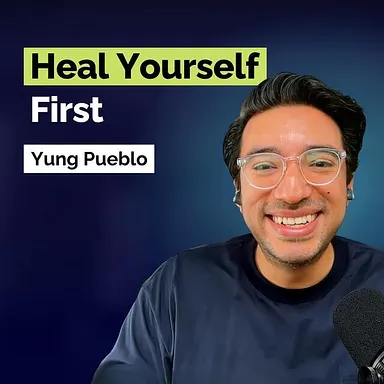
“Yung Pueblo: The Power of Self-Healing to Thrive in Business and Relationships | Mental Health | YAPClassic” was turned into text by HappyScribe’s speech recognition. Related tool: Google Meet transcription.
Ads in this audio differ from the text. Tap the sentence you're hearing to follow along.
Synced: the text now follows the audio.
Today's episode is sponsored in part by HeyGen, Shopify, Life at the Speed of Play, and Indeed. HeyGen helps you create AI avatar videos without constantly being behind the camera. Get your first 3 videos free at heygen.com/profiting. Shopify is the global commerce platform that helps you grow your business. Start your $1 per month trial at shopify.com/profiting. Life at the Speed of Play by Mark Pincus helps entrepreneurs quickly test ideas and find the ones worth pursuing. Get 2 books for the price of 1 at getmarksbook.com/yap. Indeed helps you attract, interview, and hire all in one place. Get a $75 sponsored job credit to boost your job's visibility at indeed.com/podcast. As always, you can find all of our incredible deals in the show notes or at youngandprofiting.com/deals.
Collectively, misery has gone out of style. I grew up really poor. I was being so deeply imprinted with sadness, and what I ended up doing was try I would try to numb myself so that I wouldn't have to be aware of my own pain. But when I started meditating, there was this idea of internal liberation, literally the freedom from misery, the misery that we cause ourselves. And then when you— life changes dramatically after that.
If we're dating, how do you think we should choose the person?
It's not so much about the other person, but it's about how you feel when you're with them.
How can we tell if somebody's actually ready to be in a loving relationship?
A lot of that is—
You have 3 million followers. What tips do you have for entrepreneurs that are trying to become creators on Instagram or any platform?
Tip number one is—
Hey, YAP fam, are you ready to truly thrive instead of just survive? My guest in this YAP Classic has a beautiful ability to help people find their inner strength. Diego Perez is a poet, speaker, and bestselling author widely known online by his pen name, Young Pueblo. His work has helped millions rethink healing, self-love, and emotional maturity. And in this conversation, he shares how inner peace can change the way we handle stress, build businesses, make decisions, and show up in our relationships. So stay right here, YAP fam, and listen up. I give you Young Pueblo. Diego, welcome to Young and Profiting Podcast.
Thank you so much. I'm so happy to be here.
I'm so pumped to be here. I've been waiting for this interview for a long time. And so offline, I was just asking you like, can I call you Diego? And you're like, yeah, of course. And I ask that because your pen name on social media is Young Pueblo, and that means young people in Spanish. I didn't really know what it meant before I was researching for this. Why did you decide to move through the world with that pen name? What does it mean to you, and how does it relate to all the work that you do?
Yeah, it took on a lot of meaning, um, over time. You know, I initially put that name together just because it was like an honor to my Ecuadorian roots, uh, because I was born in Ecuador but grew up in the United States. And as I started meditating, I started realizing that I'm really immature. I have a lot of growing to do. And, um, but I've also been a big fan of history. I've been studying history, you know, since I could read. And, um, I saw that humanity as a whole, like, we don't know the basic fundamentals that we try to teach children.
Mm-hmm.
You know, we, when a child is like 3 or 4 years old, we're trying to teach them how to clean up after themselves, how to share, to not hit each other. to tell the truth, to be, you know, generally kind to each other. And these are things that individuals may have mastered, but as a human collective, we haven't mastered these things at all. So the name Young Pueblo, to me, it's more so a reminder to me personally to just remember that humanity is in this like moment of maturing and a great transition.
Yeah, it's so interesting. When I read that, I was thinking, we think we're so tech savvy. We've got AI coming out. We're, you know, driving in cars, going in the air in airplanes, but then we don't even have control over ourselves. And we have no idea how to control our minds. Yeah, exactly. So it's so interesting. So you're saying young people, like humanity is young, and there's so much room for improvement.
Totally, totally. And I think that it's interesting to me that there is— there are so many people, like literally millions of people out there who are meditating, millions of people who are, you know, using different forms of therapy. And it almost feels like collectively, like we're Just, you know, like misery has gone out of style. Like we're exhausted by misery and we're like, okay, I want to figure out how to feel better, whether that's in my mind or in my body.
Yeah. And I know that you're doing so much good work now and you're so popular on social media. You've got so many bestselling books, but before you were this famous young Pueblo, you were an activist. And I'm actually very into activism. I'm Palestinian. So like, I really respect that. That's how you came up. So talk to us about what kind of work that you did in the activism world.
Yeah, so I was really fortunate, you know, so I grew up in Boston and I grew up really poor. You know, like when I think about what my major trauma was, it was like literally just struggling through poverty with my family. And, you know, my mom, she worked cleaning houses. My dad, he worked at a supermarket. So we were like stuck in a very classic American poverty trap. And I was fortunate to get connected with this like youth organizing group called BYOP. And that was based in Boston. And what we did was, like, basically just learn how to organize ourselves, like, literally bring people together around a common cause.
Mm-hmm.
And then we would go to different schools and, like, ask students, like, what do you want to change about your school? And they would either, you know, focus on changing different policies. Like, one time we had a citywide campaign where we changed the guidance counselor policy. Like, one time we— another citywide campaign where we helped all the young people in the city you know, get free passes so that they can go to school. And, you know, 'cause there were so many young people who were impoverished in the city of Boston that it costs money to take the transit system. But it was really empowering to see like, if there's something that we want, we can organize around it and make it happen. And that was a great lesson to learn at like 15, 16 years old.
Yeah. And so you were doing all this work externally trying to help other people, but inside you weren't having inner peace. You were broken inside. And you had some self-destructive habits. So talk to us about that.
Yeah, I think that was the interesting part where, like, we, you know, our— like, when I was in high school, like, growing up, the group that I was with, BYOP, like, we were constantly winning. Like, we would win campaign after campaign. And I internally still did not feel good. And when I went to university, when I got there, it really came to a head where, you know, growing up and seeing that, being a part of that constant struggle, it was so challenging that I was oblivious to the fact that it was placing such big imprints on my mind.
Hmm.
Like, you know, I was being so deeply imprinted with sadness, with anxiety, with a scarcity mindset, and I had no way of processing my emotions. You know, this is a very pre-wellness world. Like, when I got to university, it was 2006 to 2010. And what I ended up doing was I could feel the tension in my body. But what I would try to do was How can I avoid it as fast as possible? And the best way was to drink and to smoke and to do different drugs and just like try to numb myself so that I wouldn't have to, you know, be aware of my own pain.
And at a certain point you felt burnout and you found meditation. So talk to us about your first retreat and how that changed your approach to life.
Yeah, so, um, I was really fortunate that one of my best friends who I used to be crazy with, like I was, you know, we were crazy together in college and, um, And he went and he was traveling through India and did a silent 10-day meditation course. And he ended up writing an email to me and a few other friends all about love, compassion, and goodwill. And I was like shocked, you know, because this is the same person I used to party with all the time. And now he's trying to talk to me about the importance of love and goodwill. And but it was at such a good moment because I knew that I was done with the drugs. I wanted to build a new life for myself. I wanted to just like kind of reset my life and really focus on, on growing. And, um, when I got to that silent 10-day course, it was very challenging. Like, I found it quite difficult. It was the summer of 2012, and, um, it was hard to like always be there because you're there, you're silent, you're just in, you're feeling whatever's coming up. And I could feel the tension, the anxiety, all those, all those the things that I used to run away from.
But I noticed that when the retreat was over, my mind felt lighter, like undeniably lighter. And I was shocked by it. I was just like, is this real? Like, is this really— do I really feel better? So I ended up— I just kept going back and it's been, it's been wonderful. So I started with 10-day retreats and now, you know, I'll go away still to 10-day courses, but also, you know, 20, 30, 45 days long. Mm-hmm. And I've put a lot of energy into really you know, investing in my mind.
And this is specifically called Vipassana meditation. Can you explain how it's different from other types of meditation?
Yeah. So there's, there's a— this is one of the many different types of Vipassana. And so Vipassana, this one is taught by Esseng Goenka, and it's— he's an Indian man of Burmese descent. And he basically was given this technique by another man, U Ba Kyin. And it basically originates from the Buddhist teaching. And what was— what's really powerful about it is that Vipassana teaches you how to see reality as it is. And one thing that became really clear when I started meditating was that I'm not actually looking at reality clearly. What's happening is that all the things that I felt in the past, they're really clogging up my perception. They're making me see the present through the lens of the past. And that makes it really hard to make good decisions, to like, you know, be able to really connect with people. And I think that's, that's one of the powerful things is that if you can train the mind, because when I go to these retreats, it feels like I'm going to the mental gym. You know, we're literally cultivating the qualities of awareness, cultivating non-reaction, cultivating compassion. And then when you make these qualities that are, you know, within everyone's minds, but they're not necessarily strong, you have to make them stronger.
Um, life changes dramatically after that.
So if I understand it correctly, a lot of it is based on Detaching yourself from your own emotions so that you can see the world clearly.
It's almost like, I would say even a little more subtle where it's like you are feeling your emotions without reacting to them. And you are, it's almost like you're creating space to just observe them as opposed to, as opposed to suppressing it or letting the emotions swallow you up. So there's a very subtle middle ground. It teaches you that things aren't just black and white. you know, there's a gray area.
So you talk a lot about internal liberation, right? Inner peace. Can you first explain to us, like, what do you mean by that? Like having inner peace, liberating yourself?
Yeah, that's a great question. You know, and it's cool too, talking with you about it, 'cause you have the context from the activist background. So there's always this idea of liberation, right? Constantly where so many groups of people have come together to like, you know, either make certain values true or to like break the chains of oppressors and whatnot and just, you know, recreate their history. I was always fascinated by that idea. And when I started meditating, there was this idea of internal liberation, right? Mm-hmm. Where it's like literally the freedom from suffering, the freedom from misery and the misery that we cause ourselves. And a lot of that, that's what sort of shocked me because it's true. When you're moving through life, sometimes there are, there are people who hurt you and that affects you deeply. But ultimately, the person who hurt you is not going to heal you. And what's really causing a lot of tension in your mind is your own perception and your own reaction to that heaviness that's inside you.
Hmm.
So I'm grateful that this, you know, I've been walking on this path because it really ultimately helps you stop all that craving, all that aversion, and just helps you Observe and act as opposed to react.
Hey, young and profiters. As an entrepreneur, my days are absolutely jam-packed and I usually start my day off with a coffee or an energy drink, and then by 3:00 PM I'm crashing. And that's why I wanted to tell you about Mod. Mod connects qualifying patients with licensed medical providers who could prescribe a once or twice daily modafinil drink designed to help keep you energized, focused, and alert throughout the day. Here's the thing, YAP fam, energy drinks with caffeine temporarily block Adenosine, which is a chemical that makes you feel tired. Once the caffeine wears off, it all comes crashing down at you at once. Modafinil works differently. It engages multiple pathways in your brain, and it helps you achieve a steady energy and alertness for 10 to 12 hours. Modafinil was invented in the 1970s and has been used in high-stakes situations where concentration and alertness are critical, including by soldiers, pilots, and astronauts. Visit mod.com— that's mod.com— for a free consultation and get 10% off your first order plus free shipping with promo code PROFITING. That's promo code PROFITING at mod.com. See their website for important safety information, and we thank Mod for sponsoring the pod.
What's up, YAP fam? If you're building a personal brand, you already know how hard it is to stay consistent with content when you're also trying to actually run your business. I love creating content, but realistically, I'm not trying to sit in front of the camera every single day. I need time to work on my business, but the problem is consistency matters. The more people see your face and hear your voice, the more familiar you become. That's why HeyGen has been such a great tool for me. You can record just 15 seconds of footage, create an AI avatar of yourself, and use it to make videos on demand. So instead of constantly filming from scratch, you can create more content, stay visible, and keep showing up without making your entire life be about generating content. And you guys know I'm always looking for tools that give entrepreneurs more leverage. HeyGen is definitely one of those tools. 30 million people already use it, from solo founders to 85% of the Fortune 100. Your first 3 videos are free at heygen.com/profiting. That's heygen.com/profiting. heygen.com/profiting. Yeah, fam, you know October hits different. The season shifts. And suddenly when your alarm goes off in the morning, your body's like, absolutely not.
But when you have the business and a million decisions waiting for you, you cannot start the day already feeling behind. And that's why AG1 has earned a real spot in my morning routine. AG1 Next Gen is a daily foundational nutrition drink with 75+ ingredients including vitamins, minerals, prebiotics, probiotics, and superfoods. AG1 Next Gen is backed by 4 separate gold standard clinical trials and key nutrient levels improved within 3 months of consistent use. Plus, it's formulated to support immune defense, which is really important this time of year. Yeah, fam, if you want to start your mornings off right, go to drinkag1.com/profiting and for a limited time, get a free immune support bundle, including a bottle of omega-3 fish oil and a bottle of vitamin D3 K2 with your first subscription order of AG1 Next Gen or AG1 Pro. That's drinkag1.com/profiting. drinkag1.com/profiting. And how do you feel that helping other people get this inner peace, liberating themselves, how do you feel that's going to help transform the world so that there's more peace and people are less harmful to each other and we have a thriving society that's not so violent?
Yeah, violent, the key word, right? What I'm really hoping, and I think what I've seen in myself and in others, is that if you really focus on the internal dynamic, because this happens often to a lot of people who are activists and are out there trying to change the world for the better, is that it quickly leads to burnout because you're not healing the, you know, the tension and the rough parts of your own ego. And I like the historical example of the French Revolution where, like, there were people who had really powerful ideals, wanted to, you know, create a republic, like, give people power. And then once they, you know, killed the king, like, a massive— like, a massacre happened, right?
Mm-hmm.
And it's interesting where there is always a chance that if you're working towards something that is good, but if you don't heal yourself, you end up recreating the thing that you were once fighting against. And power has this ability to— it almost functions like a magnet, and it just pulls out the rough parts of the ego. And you see this historically where it's like people are trying to change the world for the better, and then they get power and it's like, whoa, what happened to that person? Mm-hmm. And I think that's why these 2 things need to kind of move side by side where You're dealing with your issues, you're cultivating your self-love. Because if your self-love is real, if it's actually real, it's not just about you. It opens the door to unconditional love for all beings, right? It's not perfect unconditional love, but it opens that door. And I think that's really important for people to realize is like, once you start really observing yourself and you see that struggle, you know, wow, other people are struggling just like me, and you start having more compassion for them.
Yeah, it's so interesting. Somebody told me a quote yesterday. I don't know why it's reminding me of this, but I was talking about, uh, getting wealthy. And I was like, you know, people who get a lot of power get a lot of wealth. I feel like they end up, you know, making bad decisions, becoming like worse people. Mm-hmm. And then that person told me, well, when you get wealthy, you just become more of who you are. Uh, so if like you were generous, you might become more— It's an amplifier. It's like an amplifier. Yeah.
So
it's just interesting to think like people who get power, um, you know, if they aren't self-aware, And they don't have compassion, it's like that can just compound into something really negative.
It's really true because then you, you can just, you can make anything you want happen. Mm-hmm. And then that could just bring out all the evils.
Okay, so talk to us about your journey on Instagram. So you have 3 million followers. You weren't a marketer before you started Instagram. Mm-hmm. Talk to us about how you first got the idea to start sharing what you were learning on Instagram.
I love that we're going into this, honestly, because I don't get a chance to talk about this often. So it's, it's a really interesting journey. And also, so I've been following your page for a while, and I love the way you market. So before I get into all this, because I want to hear your insights as well, Thank you. My journey with Instagram, like, I felt intuitively like after I had meditated a few courses, I knew that I wasn't like perfectly wise or perfectly healed, nothing like that, right? But I knew that stuff was changing inside me and I felt better. So I thought, okay, let me reflect, because I could feel my intuition pushing me like, you should write, you should, even though you don't know everything, just reflect, like reflect openly. And I was really inspired by the first-generation Instagram poets.
Mm-hmm.
Because the first-generation Instagram, they like, they weren't, they weren't like long-form writers, they were poets. And And it was, you know, RM, Drake, and Rupi Kaur. And they were, you know, sharing their stuff in simple black and white images. So I thought to myself, I'm like, oh, let me just go out there and reflect. And I knew that I had a very different message from them because they all— they each have their own unique message. But let me also adopt that format of that simple black and white imagery. And, and it was really powerful. I think once I started sharing, it was awesome, like sharing little poems or main themes from what I was writing about. And people would write in the captions. And that was back in the day where like the— it almost felt like the Instagram conversation was healthier, you know, like people were just like really kind to each other. And it, it took time. Like it took time for, I think between 2014 to 2017, like that whole time it took me That's when I got up to 100,000 followers. It took 3 years. And, and then something happened in 2017 where it just like really started picking up.
And it was a big jump, I think, from 2017 to like 20— I would say like 2019, where it got up to like 500,000. And then it just, you know, kept growing from there.
What do you think that turning point was? Do you think it was people was— people were ready to receive that type of information and it was just becoming more in trend to talk about self-healing and things like that?
Yeah, I think it was definitely a lot of right place, right time. I was also interested in the topics of self-love. I was also interested in letting go. Like, I wanted to, you know, add my part to the conversation. And I noticed that right off the bat, people are looking for other— for things to share. Mm-hmm. So if you ever want to grow a page, the main thing that you have to do is just create shareable content.
Yep.
And that's very different from just like taking a picture of your face. Like, people aren't going to share that. Or taking a picture of your trip to Paris. Like, people aren't going to share that. But if you bring forward, you know, whatever knowledge you have, whatever thing that you're reflecting on, and you put it together, then there's a chance for people to, you know, share it in their story or share it on their grid. And that's where things really grow. And I think What really kept things growing was, um, the consistency of it. You know, I would post every day, once a day for, for years. And I think the only day that I skip is like Thanksgiving and Mother's Day because everyone's posting. So, you know, no one's going to see anything.
Yeah. Yeah. I feel like consistency is so huge for you. So consistency in terms of the frequency, in terms of what people can expect from your page with your topics, in terms of the format that you typically post. And I love that you're not like just chasing trends and the algorithm. And something that I always teach, I'm a big influencer on LinkedIn and I teach LinkedIn a lot.
Cool.
I, I always say, you know, it's not about the algorithm, it's about human behavior. Like human behavior always beats the algorithm. And like you said, being highly shareable. And when you're talking about things like self-love and writing poetry, uh, and posting things that make people reflect. They wanna share it with their own thoughts. They wanna share it with their own stories. It triggers their emotions. It triggers them to comment. It triggers them to write their 2 cents, right? So it's like these universal emotions that you're tapping into that's really triggering people to engage. So I just think what you've done is absolutely incredible.
I think that's, that's when you know that you've created a good piece of content. Like, cuz I, I write poetry a lot less now. Like now I just, I'll, you know, put together whatever my main ideas are or any thoughts that come to mind. But when I noticed something that's really interesting is when I release something on Substack, I'll write an essay like a full, you know, somewhere between like 500 or 800 words. But very quickly I'll share it and then people will take that essay and turn it into content. Like they'll, they'll literally, you know, they'll quote you, but then they'll just take pieces of it and then they'll, they'll expand on it from their own perspective. And it's like if you put something out there that inspires someone else to create content, it's good.
Yeah. And I feel like having a signature style can be, you know, a really great advantage because people almost take it like it's like a habit. Like, oh, I'm getting Young Pueblo's, you know, quote of the day and this is what I share every day and this is my favorite creator and I know exactly what to expect. People think they need to like change it up all the time. And while there is some like sensory adaptation in social media, if you have really good meaningful content, sometimes just doing the same thing over and over again will make you, uh, become a habit for people.
Yeah, it even comes down to like changing fonts is a big deal. Like, you got to be really careful because it's, it's part of, it's part of your brand. And that's how people recognize you because they're recognizing you almost subconsciously because there's, there's like literally what every one of us experiences on a daily basis is that there's a war on our attention. Everyone is battling for your attention. So as someone's scrolling, they'll like almost like subconsciously quickly recognize even before they even see your name, they're like, oh, the font and everything. They're like, oh, this is something that I normally would give 5 seconds to. And, and then they, you know, give you their time. I even got to the point where I was with a particular font for, I think from 2017 to like 2020. And then that phone was falling apart. The app that I got, the the font from, like, I couldn't, you know, I couldn't get the actual font. And I was like, dang, I need to, I need, I just need to let it go. And I had to make the jump and it took a little while for people to get used to it.
But my thing is like, there are always going to be dips. Like, it's fine. It's totally natural. You're not, your algorithm is not going to be like perfect all the time. It's going to have highs and lows. So you just deal with it. And then over time, you know, if you're still giving value to the audience, they'll respond to that.
What other tips do you have for entrepreneurs that are trying to become creators on Instagram or any platform?
Tip number one is that you have to be ready to be consistent at a relentless level. Like, there's just no way around it. It's, it's just, you're not going to, you know, no one gets big from one post. That's just like totally an illusion. It's like a bunch of tiny little victories. And even when you have a massive celebrity who shares your stuff, that's great. But what's much more valuable is someone who shares your stuff, who has 200 people who follow them.
Mm-hmm.
And having a lot of people who have smaller accounts who support you like that, that feels really key. So I think sometimes we have this idea where like, if this one giant celebrity shares my stuff, it'll change everything. It really won't. Like, you know, like it helps, but it's not everything. So you have to be ready for consistency and then you have to learn sort of 15 to 20% of your knowledge base that you feel really good about sharing, that connects with an audience and makes that audience excited. Because for each one of us, like, right, like I mentioned earlier, like, I really love history. I don't write about history. That's not going to excite anybody. You know, I'm also not like a professional at it. So that's not my strength is, you know, putting out self-reflective material. And I think finding like what is your 15, 20% that you want to share And then see if you can, you know, turn that into a product.
Yeah. Hey, young and profiters. As an entrepreneur, my days are absolutely jam-packed and I usually start my day off with a coffee or an energy drink. And then by 3:00 PM, I'm crashing. And that's why I wanted to tell you about Mod. Mod connects qualifying patients with licensed medical providers who could prescribe a once or twice daily modafinil drink designed to help keep you energized, focused, and alert throughout the day. Here's the thing. Yeah, bam. Energy drinks with caffeine temporarily block adenosine, which is a chemical that makes you feel tired. Once the caffeine wears off, it all comes crashing down at you at once. Modafinil works differently. It engages multiple pathways in your brain, and it helps you achieve a steady energy and alertness for 10 to 12 hours. Modafinil was invented in the 1970s and has been used in high-stakes situations where concentration and alertness are critical, including by soldiers, pilots, and astronauts. Visit mod.com— that's mod.com— for a free consultation and get 10% off your first order plus free shipping. With promo code PROFITING. That's promo code PROFITING at mod.com. See their website for important safety information, and we thank Mod for sponsoring the pod.
What's up, YAP fam? If you're building a personal brand, you already know how hard it is to stay consistent with content when you're also trying to actually run your business. I love creating content, but realistically, I'm not trying to sit in front of the camera every single day. I need time to work on my business. But the problem is consistency matters. The more people see your face and hear your voice, the more familiar you become. That's why HeyGen has been such a great tool for me. You can record just 15 seconds of footage, create an AI avatar of yourself, and use it to make videos on demand. So instead of constantly filming from scratch, you can create more content, stay visible, and keep showing up without making your entire life be about generating content. And you guys know I'm always looking for tools that give entrepreneurs more leverage. HeyGen is definitely one of those tools. 30 million people already use it, from solo founders to 85% of the Fortune 100. Your first 3 videos are free at heygen.com/profiting. That's H-E-Y-G-E-N.com/profiting. Heygen.com/profiting. Hello, young and profiteers. If you're running a business, getting website traffic is only half the battle.
The real key to profiting is turning those visitors into paying customers. And I know checkout friction can quietly kill your sales. That's why I always say serious entrepreneurs build on Shopify. Shopify is a commerce platform that helps you launch and run an online store without needing to be super technical. You can build your storefront, manage your business, and make it easy for people to buy. And here's the major advantage. Shopify Checkout with Shop Pay converts up to 36% higher than the competition. With Black Friday coming up, now's the time to get your store ready and simplify your checkout experience. If you're ready to launch your business before Black Friday, go to shopify.com/profiting to start your free trial. That's shopify.com/profiting. Go to shopify.com/profiting today to hear your first— I feel like you're touching on something really important. It's like lasering in on key topics because we were talking about algorithms. That's actually how you train the algorithm.
Yeah.
So for example, my show is really broad. It's all about entrepreneurship, which doesn't work in my favor on Instagram because I'm talking about finance, then I'm talking about entrepreneurship, then I'm talking about marketing, then I'm talking about— if I only talked about sales, Instagram would know exactly who to send my content to all the time. So picking a focus and being really strategic, you don't need just one. Um, but picking things that you focus on, on social media. Yeah. 3. Yeah. Uh, is really important. Uh, how do you think about monetizing your audience? You know, you come across as somebody so authentic, like you don't even wanna make money off your audience, right? So how do you think about it?
I'm trying to be really careful about it. I think there's, um, you know, I monetize through selling books. Like, that's my primary, you know, that's how I make my money through, through the year. And I also like, I'm in the process of building businesses as well, which is like a different thing. It's almost like separate to the Instagram. Like, I can help promote these things, but I'm not like directly monetizing through them. So I've never been big on selling courses or like anything like that simply because I understand why some people get a bad rep where they, you know, sell a course for like $6,000. Like, no, you know, very few people have $6,000. And then are you really giving them enough value for something that's that expensive. So to me, I'd rather reach more people and make sure that if I'm ever asking them to pay for anything, like, that it's the minimum amount. Mm-hmm. Because I'd just rather have more people come. So like, if I have an event, I make sure that the, the, to buy the ticket, it's the minimum amount. Like, you know, and, and some cities are more expensive than others.
Like, you know, in Boston, the tickets are $39. In New York City, they're $60. That's just like, because that's the market. But, um, but I'm not like charging $200 a ticket or anything like that. I think to me, just especially coming from my background, like accessibility has always been really important. And like economics is almost like the first like trend of accessibility where it's like, you know, can you even pay to get in? And same thing with the Substack. You know, if you want to sign up for my paid Substack, it's $5 a month. And I just rather have more people. And I think What I've learned is that if I give away a lot of good quality things for free, people will be interested in buying the book. You know, like I'm near, I'm getting closer to selling almost like 2 million books. And
a
lot of that is because of, you know, I give so much away for free on Instagram.
Yeah. And when it comes to monetizing, you have so many different levers. Like for you, you're like, okay, I'm going to go with volume. I want to increase my impressions and charge really little. And I can make the same amount of money if I just reach more people. So I love, I love that approach. So let's talk about So self-healing for entrepreneurs. Um, like I told you, we've got a lot of entrepreneurs listening. What are some initial signs that you need to work on your inner healing?
I think if you are always responding to people with tension in your voice, right? Like if you're always like just different levels of stress where you're going from really stressed to like a little bit stressed, and if you're finding difficulty in the joy of creating, like if you're not really connecting with that joy of creating, because I think that's why a lot of entrepreneurs build businesses where it's like you see a gap in the market and then you think to yourself, oh, like how fun would it be to build this thing? Like it's not just for the paycheck at the end or for like the moment when you sell your company. I think the actual process of creation, it can be so fun. And I think in terms, if you look at really high performers, Right? Like someone, you could, there's just so many people like Sam Altman, he meditates like so many others, you know, who are, you know, people who were VPs at Google that created all the products that we use today. Like a bunch of them meditate, you know? So there's a lot of people are finding different ways of taking care of themselves because there's a big relationship between tension and creativity.
So, if your mind is really, really tense, you're not going to be as creative as you can be. But if you are able to process that tension, then your creativity is going to go up.
Another thing that you talk about is emotional maturity. And I think being an emotionally mature leader is really important. So, talk to us about what qualities make up an emotionally mature leader.
I think the immediate quality is to not be, like, impulsively reactive. Like, if you hear someone say something you don't like, You're not like, no, that's wrong. You know, you, you take a moment and you actually can step outside of your perspective to be able to see more of like, why are they seeing things in that way? And also, if you're a good leader, you're hiring people who are like smarter than you in specific areas. Mm-hmm. So if they're coming at you with a specific view that you don't agree with, then you should be able to lean on the fact that like, oh, actually maybe I'm not understanding something. And, um, to be able to really check in. But I think that quality of not being immediately impulsive, reactive, and being able to step outside of your perspective to see the perspective of another, that's real emotional maturity in business.
I feel like entrepreneurs, um, a lot of us have a lot of success and it builds an ego, right? We feel like we're so smart. We've always made good decisions. We've made millions of dollars or whatever it is. It's really hard to Kind of put our ego aside. What are your recommendations to realize we have an ego and when we feel like, oh damn, like my ego is out of whack right now, to kind of step out of it?
I think especially if you're an entrepreneur, I mean, you have to be really careful because the ego just makes the mind so cloudy. And just because you've had a few wins doesn't mean everything else that you're gonna have is going to be a win. And I think one of the ways to combat that is by honestly hiring really smart young people, because as you get older, like, you know, being able to build a really successful business in your 20s or your 30s, are you still understanding that the world that you like, the way that you saw it back then, it's going to change radically when you're 50 and you're trying to build another company.
Mm-hmm.
So I think tapping into people that you can trust, I feel it feels really important, but I think the ego, like, Like it just makes things rougher and it can push you through hard moments, but it's not going to make the best product possible.
Another thing that entrepreneurs have to do is make good decisions, right? Every day we're faced with decisions. We've gotta make fast decisions. Can you talk to us about how trauma can actually impact the way that we make decisions past trauma?
Yeah, it's funny. I was talking to one of my mentors the other day and he was just like, You know, going through all these different, you know, famous entrepreneurs and like, he was like, everybody is trauma-based. Like everybody is like coming at what, you know, they're attacking a problem because there's some lack of safety. You know, something happened when they were younger. And then as we were talking, I was listening, I was listening and I was like, oh wow. And I realized to myself, I'm like, my greatest trauma was growing up in poverty. You know, like, I'm glad that my mom and dad had a good relationship, but my relationship was literally like with them was often seeing them fight because they were arguing about how to pay the rent. And there was a moment when, when I was about 13, 14 years old where it hit me that like, I have my back up against the wall. No one's ever going to come save me because my family just doesn't have money. So I need to figure this out. And that's when I felt this, like, impulse to just get more savvy, put more effort into the, you know, the jobs that I was working in back then.
And even when I think about writing, I write to help people, but I also write to help my family. Mm-hmm. Because I know that my mom and dad are counting on me. Like, these are, these are people who are, you know, I'm fortunate enough that I have this ability to, like, you know, to speak to a lot of people, to have a big audience. But that's also a responsibility to take care of my family.
That's beautiful. I love that. And I have a quote that I wanna read.
Sure.
So you say, when chaos is all around you, the wisest choice is to create peace within you. So as you know, entrepreneurship is so uncertain.
Yeah.
It's so stressful. It's so chaotic. If we're feeling like, man, this is a bad day, I have all these fires, what is some way to just bring us some instant peace? Or what are some practices we should do every day to bring some inner peace?
Yeah, there's 2 things that are really important. You know, even if you don't, even if you don't have a therapy practice or even if you don't meditate, it's still really important to understand how short the walk is from gratitude to happiness and or from gratitude to peace. Mm-hmm. So reminding yourself that even if you're in a dark moment, even if your company feels like it's going to fail, there's still a few things to be grateful for. There's still so much that's been accomplished. The other aspect too that's valuable outside of gratitude is even intellectually embracing the truth of impermanence, right? Like a lot of what I do when I meditate is I'm learning how to literally feel impermanence in the body. But even at the mental level, you can understand that like this hard moment, it's going to pass, it's going to change. We've already gotten over so many hard moments before. This is another one that we can face and overcome. But I think reminding yourself, because when we get caught in the storm, like our logic kind of goes out the window and we're like, oh my God, this storm is going to last forever.
Like, it's going to be terrible. It's going to end everything. But no, you're probably going to be fine.
And impermanence means that it's just temporary. Like just realizing things are temporary.
Temporary, changing.
That's really, really good advice. Just remembering that this is like a storm that's going to end just like the weather. Exactly. So, um, another thing that entrepreneurs specifically struggle with is, uh, people that are high achievers, they've got emotional attachment to success. They might even describe themselves if somebody's like, who are you? Like, oh, I'm the CEO of XYZ company. Oh, I know. Yeah. This is, this is my identity. And then when the company fails, they're, they fail. If it's successful, then they're successful. So how can we detach ourselves and why is that healthier?
Yeah, I think it's, it's, it's hard because like a lot of times, like when people go into And you see this a lot in Silicon Valley where it's like we create companies almost for, you know, we go into it with a love to create, but then it becomes like a social status game. And it's like, who knows who, who has accomplished this? Like, who sold at a higher valuation? And, you know, those are important facts, but that doesn't define if you're a good person or not. That doesn't define if, if I want to talk to you or not. You know, like, Mm-hmm. there's so many people who have like, you know, negative assets and they're amazing human beings. So I think it's just, it's really important to understand that like your value and your happiness as a human being is just not fully connected to what you've accomplished. And I think it's dangerous territory to walk on. It's almost like walking on a, you know, a pond that's like frozen over. And like when you're walking around with that mentality, it's so easy for you to just fall into the water. 'Cause it's an illusion.
Like it's, you know, it's fake.
And it's really important to have things outside of your business, like relationships, right? And really healthy, strong relationships, which is a great segue to your new book, How to Love Better. So what was your goal with writing that book?
Oh, that book, this one's been really special 'cause I've, I sort of forced myself to hold off on writing it because I wanted to spend some more time cultivating my, sort of like my craft as a writer and just becoming clearer, developing better chapters, like just really honing the message. But the inspiration from the book really came from, you know, when I went to those first few meditation retreats, like I went because I needed to save myself. Like I felt like I needed to overcome the sadness. I needed to, you know, just deal with myself and start a new life. But I was shocked to see how the moment that I went in to go and save myself, like I was cultivating these qualities of patience, of you know, better understanding, of compassion, of listening to myself. And then when I got home and I'm like talking to my wife, these are the exact skills that were missing in my relationship.
Mm-hmm.
And that I, because I spent time cultivating them, I was then able to offer them and almost like it started a new chapter of harmony that wasn't there before. And to me it was, you know, kind of shocking 'cause like I went into meditating to save myself and then I did help myself. But I also, you know, almost like reignited my relationship with her. Mm-hmm.
It's kind of like what I'm hearing is like step one, you've gotta heal yourself. And once you heal yourself, you can show up better as a partner and potentially heal your relationship. So let's dig on those qualities that you were just talking about. You actually list in your book 3 overarching qualities: kindness, growth, and compassion. Can you talk to us about those qualities and how they help us in relationships?
Yeah, those are 3 really big, important green flags because kindness, it's really valuable to understand that whoever you're in proximity to, like whoever you're closest to, you know, that could be your roommate, your partner, family members, they're going to see the best of you. And they're also going to see the worst of you.
Hmm.
And part of that is because we feel vulnerable with them, like we can actually open up with them. And that's really good. But sometimes when the relationship is long-lasting, there come points where there's— you're just, you know, you're not bringing that same gentleness. You're not bringing that same kindness as you did when the relationship first started. So it's important to know that, like, when someone approaches you, they are honest with you and they can tell you that they're feeling down, but they're not taking it out on you. Hmm. The other element of that is the compassion. And similar to what we were talking about for entrepreneurs, it's a very specific type of compassion where you can step outside of your perspective and see the perspective of another. Because in all, you know, whenever you want to solve an argument, it's that specific compassion that helps you see each other because you can actually take a moment to see your partner's perspective and then they can see yours. And then you understand where you each are coming from. And the last element is growth. Like if you're in a relationship it's going to show you the best of you.
And it's also going to show like where you need to put energy into, you know? And I think that's one thing that I saw right off the bat when I was, you know, first with my wife was like I needed to improve my ability to listen. And over time, you know, putting energy into that and then all these other qualities that I've been, you know, have had to develop to be able to bring more harmony into the relationship.
Mm-hmm.
I think growth is just something that we don't really have a choice but to embrace if we want to have a happy relationship.
And I know that when it comes to getting along with others, some of the biggest obstacles to that is attachment and control. So can you talk to us about what attachment does to us and how that actually leads us to want to control things that we can't control and how that can spiral into something that we don't want?
It's really, you know, it's really hard too, because like, it sometimes feels like attachment is love, but it's not. You know, attachment is literally the craving for things to exist. In a very particular way. And, you know, it's like having the people that you love act in these ways, have these beliefs, you know, they agree with you on these critical things, but life is not always going to be like that. And when you have these big attachments, all these cravings for things to exist in particular ways, they will manifest as control in daily life. And that's when you get things like, you know, parents demanding children to like, This is what you need to study in school and you don't really have another option. Or partners sort of control, trying to control another partner. And that's when you get selfishness. That's when you get manipulation and these sort of, these types of behaviors that squeeze the life out of a relationship.
Talk to us about how you think of alignment, because let's say you're a couple and one wants to have kids and one doesn't. Is that control or trying to control or attach? I think It's— I feel like you need to have similar values, right? So talk to us about that.
Yeah. Yeah, that alignment's really important. And honestly, that alignment should hopefully come earlier on. And I think I've seen this struggle happen in, you know, relationships of friends that I've seen where they would literally break up because they just waited too long to have the conversation about whether they wanted to have kids or not. And then they found out that, like, you know, they're actually on very different pages. I think the alignment has to come from honesty, and it has to come from, you know, from the beginning where it's like you start dating, and then once you feel the reality of the magnetic connection, you let them know, hey, I'm interested in setting up something serious with you and like having a serious partnership. And then as you go along, you keep revealing more and more of your values and seeing where they match and where they differ. And if they differ, Is it tolerable? Is that okay with you? Because I think that's one of the nice things is that my wife and I, we don't agree on everything. And that's, you know, part of the good part of our relationship is that we have different views.
But on the key important things, there is a ton of alignment and that helps us, you know, have a value system because just the same way as you as an individual, right? You have these 3 different guides that you have inside of you. Where you have your values, you have your intuition, and you have your nervous system. And they really help clarify what direction to take when you're moving forward. But this— you have the same thing in a relationship where, like, you know, your nervous system should be very relaxed around your partner. Your intuition should feel like they— it wants to be next to your partner, and your values have that alignment.
If you feel like you are in a relationship And you feel like you are trying to control things because there maybe is no alignment with the things that you want. And so you're trying to like control the way things are going. What do you recommend people do? Like, how can they let go of wanting to have so much control?
Yeah, I think instead of trying to have control and instead of just coming from a place of expectations and attachments, you want to double down on commitments. And commitments are very different. It's you clearly lining out how you would like your happiness to be supported, how you, you know, what your needs are and what your wants are. And then your partner is then taking a look at what you've laid out, and then they're telling you, you know, actually, this sounds pretty good to me. I can volunteer. I voluntarily commit to trying to do X, Y, and Z for you. I'm not going to be perfect at it. I'm going to make mistakes, but this is something that I can do to do my part in this relationship and vice versa. You know, so being honest and communicating how you would like to be supported and also checking in with that, you know, not just expecting that what we talked about 2 years ago is going to be the same now. That's also going to change. But I think you want to double down on commitments because then there's no coercion. There's no manipulation, there's no control.
It's like you're just telling your truth. They share your truth and you're like, oh, I can do this for you. This sounds really good to me, you know?
So give us some examples of like what— so you're basically saying tell people how to love you, right?
Yeah.
So give us some examples of like what you could say to your partner.
Yeah, I think, um, like one clear thing is, you know, my partner made it really clear that she loves when I'm, you know, in charge of the dishwasher. She loves when Um, I'm helping with the compost. There's something about like me taking care of the compost, which feels like the biggest thing that I could do for her. And like, I would have been oblivious to that if she had not told me. And then when she tells me like, this is important for me, I'm like, great. Like, I can do that for you. Like, if that makes you happy, I don't want to do it. But if that makes you happy, I'm down, you know, because that feels sweeter to me. So being able to communicate with that. Like, I would have never been able to read her mind, but she just made it clear. And it can be as simple as something like that or something like— one of my favorite stories is from my wife's mom and dad, where when they were having an argument pretty soon after they got married, this was back, you know, when they were younger. They're in their 70s now.
But my wife's mom was saying how her husband was like, they were arguing about something, but his tone, his tone became really loud. And to her, it felt like he was screaming.
Hmm.
So she told him, she was like, I want to have so many arguments with you. I want to be married to you for decades. And I know that marriage comes with arguments, but please just talk to me. Like, don't raise your voice because then I feel threatened. I feel, I feel scared. And he was like, Great. But you know, in that moment, she like said, this is how I want to be supported. Can you do this for me? And he was like, of course, like, for him, he wasn't— for him, it didn't even feel like screaming. You know, it wasn't actually— he just was a little louder. But that's how he grew up in his house. So you can't make those things clear without communicating about them.
I love this topic of arguing, because like you said, every relationship is going to have arguments. So my first question is, reacting emotionally. How can we avoid like kind of like blowing up, especially to your point, some people just grow up in households where like you're fighting with your brothers, you're fighting with your sisters, your parents have blowups, it's just like generational kind of. So talk to us about that. Totally.
I think, um, there's a very practical thing that you can do. And you can do this whether you're in a relationship with someone or you just have roommates. My wife and I, we started noticing when we were meditating that Like our minds just did not want to take any accountability, right? My, like, I think for the first part of our relationship, we were just like, whenever one of us would feel tension, we would just try to put the blame on the other person. Even, even if it was illogical, even if it made no sense, it was like, how do, how do I make this tension in my mind your fault? And this happened over and over and over. And then we realized, we were like, wait, actually, Me feeling down in this moment has nothing to do with you. You know, like sometimes it does. Sometimes, you know, we say something and we need to apologize. But we were noticing like 70% of the time, I'm like just looking for reasons to fight. And what we found to counteract that was, let's like when we wake up, let's just tell each other how we feel.
Mm-hmm.
Like, you're just like, you know, in a very passive way, just like tell each other You know, I feel, I feel good right now, or I feel heavy, or like I didn't get a lot of rest, like I woke up really tired, or, you know, I feel a little angry. And just knowing these bits of information, because you're naming it, the person who's feeling it is naming it, and your partner's hearing it, for you, that makes you aware of how your mind is, you know, where your mind is at. And then your mind doesn't jump into just like creating more narratives. to make it worse. And then your partner also knows, oh, you know, let me give them their space. Let me treat them a little more gently. Let me like, you know, figure out, is there anything I can do to make your day easier? But that makes you— that gives the both of you the information you need to work with the situation.
Mm-hmm.
And we do that, you know, one time in the morning and then one time in the early afternoon. And honestly, that's been so helpful because then I know If I hear stress in her voice, it's not really about me because she already told me that she was feeling stressed. And, you know, and vice versa.
Yeah. So you do that whether or not you're arguing or not. You just—
No,
just daily check-in. That's so interesting.
Just daily. And it's not formal. It's not like, oh, let's sit down and check in. It's not like that. It's like, it's easy. It's just, you just say it without someone even asking you. And whenever she tells me whether, when there's a big shift in her mood, I'm like, amazing. Like, thank you for giving me the information I need to be successful. You know?
Totally. What about if your partner is always bringing up stuff from the past?
You got to learn how to forgive. I think especially when you see someone— because this happens, right? Like you have a very difficult moment, you resolve it, the person genuinely apologizes, and they start showing changed behavior where they change the thing that was the problem before. But then your mind will keep, like, this is, this is the problem with heavy emotions is that when you're feeling anger, the mind wants to make it bigger. It wants to invite other people into the anger by, by either saying something mean to them or by telling them the reason that why you're angry so that they can be angry with you. But then other times, if there's no one around us, the mind will just go back and back and back in time to pull something out. And it'll grab the last biggest argument, even though it's resolved. It's like it just comes back. And I think you have to repeatedly learn how to let go, especially if the other person is like, you know, I haven't done that in years. Or like, I don't, you know, that's not even— I'm not trying to live my life like that anymore.
But it's quite challenging.
So I know you've been with your wife, sounds like, for a long time. How many years have you been together?
We've been together for— it's hard because it changes every year, but we've been together for— we'll be 10 years married this summer. And I think that means we've been together for 17 years.
Wow.
Yeah.
So you really weren't involved in this online dating world.
Nah, nah. Missed it.
You missed it. I remember I was in a really long relationship and then we broke up and like getting on the apps was so strange to me and I didn't even know how to swipe right or swipe left. Like I kept doing it wrong. So talk to me about your perspective of how the world is dating today. Like, I don't know if you have single friends or what you've witnessed.
Yeah, I think it's, it's challenging out there because I feel like a lot of people are playing coy. Like, you know, there, there's a, there's a few things happening that I see often where one is sometimes people are sort of spoiled for choice. And this happens in a lot of major cities where it's just like you're dating like 8 people and but you're not really giving any of them a really serious focus. And that makes it really challenging to see, you know, you can like sort of have a very superficial interaction with somebody and never realize how amazing they actually are. I think the other thing too that happens is that people look for incremental improvements in their partners. So, you know, you'll be dating someone that's like for 2, you know, for 2, 3 months, and then you end up dropping them because you're looking for someone who's like 2% more attractive. Or 2% more peaceful, or, you know, just because you don't necessarily want to deal with an argument that comes up, you just kind of toss the relationship away. And I hear this all the time from friends, but it's, it's challenging because our society, you know, the way all the apps are with, you know, either dating apps or just all apps in general, right?
They're all set up to just make your life easier. Mm-hmm. Like we live in a DoorDash, Uber society. And we expect that from our personal growth and from our relationships to— for it to just be fixed and easy. It's just not going to be like that. So we need to be really careful about like wanting things to be slightly better, and then we end up dumping something great for the chance of something better that is just like an illusion in our minds.
Yeah, I feel like a lot of single people are in this, like, like you said, there's just too much choice. So if we're dating, and we're going on all these dates, how do you think we should choose the person, right? When there's so many options, and so many good options too? What do you think are the criteria that we should be looking at?
I think one of the main things is, it's not so much about the other person, but it's about like, how you feel when you're with them. I feel like it's really important to know, because I think when I look back to my wife and I, You know, when we got together, I think if we both had checklists of what we wanted in a partner, neither of us would have checked anything off.
Mm-hmm.
Like, we were just like the opposite of what, you know, of what we were both looking for. And but what we did both feel was like this deep, like magnetic pull towards each other where we were— it was easy to text each other. Like, we wanted to be in contact. We wanted to find times to hang out. And life wasn't really getting in the way. But I think having that mutual connectiveness with a person is very important. I think also clarity is really important. Just being honest, like if you're really feeling someone, let them know because they might have no idea. You know, you might have gone on a few dates and not know that, you know, you're actually really hoping to build something with them. But it's— I think it's really tough out there and you have to really kind of trust Your intuition and your nervous system. And then, you know, see more than just like what's on the face and the body. Like, do they have emotional qualities? Like, do they have an emotional skill set? Like, how do they treat other people besides you? You know, when they're— when you're like out together, like, how is their kindness there?
Are they reactive? Like, how do they deal with a difficult moment? I think that's always like a very telling time is like when you see someone handle a challenge that's unexpected. How do they do it? Like, do they do— are they calm through it or are they super chaotic?
I also feel like we need to make sure that the person is ready for love, right? And I think you talk about that in your book. How can we tell if somebody is actually ready to be in a loving relationship?
I think a lot of that is, is just simply being growth-oriented. I think that's one thing that's really nice about the time period that we live in is You know, the wellness world has developed so much, but we have seen the value of our person, you know, putting energy into our personal growth. But then we need to take a look at, you know, finding a partner who also values growing but doesn't necessarily have to grow in the same way. And I think once you can understand that, like, even though myself and this other person don't necessarily grow in the same, you know, use the same tools, like maybe they meditate and maybe you use therapy. But if there's still that inclination to grow, then you're going to be able to overcome tough moments together.
Since you brought up growth, there's this concept you talk about, the paradox of growth in your book. Can you tell us about that?
Yeah, I think it's challenging that, you know, you need to simultaneously accept your imperfections and you need to accept yourself for who you are and then also understand that You know, I have a lot of growing to do. Like, I can be an imperfect person, but I can simultaneously say, okay, I'm not going to expect perfection from myself, but it would be valuable for me to slow down instead of making decisions really fast, for me to not jump to conclusions and just like understanding where your pain points are, because often our pain points are self-created, right? Like we're causing our own tension, but where are you causing yourself tension and how can you relieve that?
What's your advice to anybody out there right now that's single, that's dating, they're looking for their right partner? What's your best advice to them to find the love of their life?
I think one of the things that, like, no matter what, if you find someone, you really are going to find them through proximity. So you do have to put yourself out there, whether that's online or whether that's in person. You know, you're not going to build a connection without proximity. So put yourself out there and then just like be the realest, like version of yourself. Like, don't worry about like trying to build a facade or trying to create a version of yourself that's more likable. You know, that's going to create superficial interactions. Like instead, just be you, go out there. When you do find someone that you're connecting with, focus on them, tell them that you're interested, and then see if there's enough there to build a relationship.
Diego, I love this conversation. I loved learning about all of your work and your new book. I end my show with 2 questions that I ask all of my guests. And this can be anything that you want to talk about. It doesn't have to be about the topic today, whatever just comes from your heart. So, what is one actionable thing our young and profiters can do today to become more profitable tomorrow?
Ooh, that's a really good one. I think, um, if you're an entrepreneur or you're like working on building businesses, it's really important to know that you need really good partners. And when you're sort of starting a business with someone, These days, I think it's less about working for an exact amount of time. It's less about like, okay, I'm going to put in 40 hours, or this is what I can, you know, how many hours I can put in for this project. It's not so much like that anymore. It's more what can you deliver to the project? So, you know, I do my Young Pueblo work, but I also have a venture capital company that I'm a part of, that I'm a partner in, and I co-founded. But But I don't, um, so much say like, oh, I can work 10 hours a week or 20 hours a week or 30. It's, it changes, you know, sometimes when we're fundraising, there's tons of work. When we're just, just assessing companies and making investments, it's slightly less work. And it's more so like, what can I deliver to the group? And if they want, if, if that feels valuable to them, then they accept, you know, your partnership without saying, oh, I'm going to work X amount of time.
You just, you just make sure that you overdeliver and everyone's going to be happy. So like that, because I've noticed something about my, you know, a lot of like my friends and mentors in Silicon Valley where, you know, they're building like 3 companies at a time and they're doing a fantastic job. But it's not like they're working, you know, 120-hour weeks. They're just like, this is what they deliver to each situation.
That's really smart. So it's kind of like leaning in what comes natural to you, what you know you could do effectively and contribute and has nothing to do with like trading time for money. That's not— Yeah, no. Yeah.
You never want to trade time for money. That's the worst. You just want to, you want to deliver and, you know, make sure you get your equity and then build it as big as you can.
Love that advice. And what would you say your secret to profiting in life is? And this can go beyond like financially profiting.
I think my, my secret is like, no matter what, I make my growth come first. And that really is like meditating. So like for last year, I started the year off from January to February meditating for 45 days. It was a totally silent meditation course. And even though my, you know, my agents were upset and like, you know, people who like wanted— who I'm working with, they wanted more of my time.
Mm-hmm.
It was actually much more beneficial for me to take that time, meditate. And then when I came out, everything was better. You know, I was able to be productive at a whole nother level. And similarly, after this book launches, I'm going to I'm gonna go away to meditate for 20 days, um, in April to May. And I'm like thrilled for that. And I think when I look at a lot of people who are really, really highly productive, they take time to cultivate themselves. And that's really important if you're gonna keep producing.
You're inspiring me to go on a silent retreat. My business partner does them all the time and I'm, I've been inspired by him, but I feel like it's, it could be such a great way to kind of just dive in, take like a 10-day retreat. Is that what you recommend for people who've never done it before? Like maybe just go
Yeah, I think, I think if you're listening and you're interested, definitely go check it out. And I think if it sounds like it's— if it sounds like too much or too long for you, there's other, other styles. You know, there's a lot of different meditation styles out there. So you kind of just have to meet, you know, find the thing that connects with your intuition and is challenging but not overwhelming. And, and I'd say for you, like, you know, you're a very creative person. Mm-hmm. So like, imagine like when your mind is even lighter and like, 'cause I was not introduced to my creativity until I started meditating. And I see that all the time. Like, you know, some— I know people who meditate who are like McKinsey consultants or like people who are artists and they paint. And no matter what field you're in, you just start producing at a whole nother level. I had one, one friend who, you know, she's a, she's a producer and like creates, you know, TV shows. And like after she finished her retreat, she was crushing it.
Really?
Yeah.
I'm excited. I feel like
Yeah,
I would love to like unlock a whole new layer of productivity and creativity. Diego, this has been such an awesome conversation. I feel like I personally learned so much. I feel like everybody who tuned in got so much value. Where can everybody follow you, learn more about what you do, get your books and all of that?
You can follow me on Instagram @yung_pueblo, Y-U-N-G underscore P-U-E-B-L-O, and my new book, How to Love Better. It's in bookstores. Um, you can also find it online on Amazon, and I'm also on Stubbs. Um, you can follow my newsletter if you want to read my longer articles. And yeah, thank you so much. This has been so much fun.
Amazing. I'll put all those links in the show notes. Thank you so much for joining us on Young and Profiting Podcast.
Long before Yung Pueblo wrote about self-healing, he was trapped in a cycle of anxiety, scarcity mindset, and using substances to numb his emotions. Everything changed when a 10-day silent Vipassana meditation retreat helped him face the feelings he had spent years avoiding. That inner work eventually strengthened his marriage, sparked his creativity, and shaped the personal growth message he shares today. In this episode, Yung Pueblo shares how unresolved emotions affect relationships, decisions, and leadership, and how entrepreneurs can manage stress and ego rather than let them take control.
In this episode, Hala and Yung will discuss: used this file
(00:00) Introduction
(01:34) The Meaning Behind the Pen Name "Yung Pueblo"
(03:43) His Early Roots in Youth Activism
(05:15) Healing Trauma Through Vipassana Meditation
(09:33) The Power of Self-Healing and Inner Peace
(13:20) Building an Audience of Over 3M Instagram Followers
(19:58) Growing and Monetizing Your Social Media Audience
(23:56) Self-Healing for Entrepreneurs
(32:08) How to Love Better in Relationships
(41:45) Managing Emotions and Letting Go of Resentment
(45:26) Navigating Modern Dating and Finding Love
Yung Pueblo, whose real name is Diego Perez, is a No. 1 New York Times bestselling author, poet, speaker, and meditation practitioner known for his insights on self-healing, emotional growth, and healthy relationships. His books have sold more than two million copies worldwide, and his work has been translated into more than 25 languages. In 2025, he was named a TIME100 Creator. He is also the co-founder of Wisdom Ventures, an investment fund focused on scaling compassion.
Sponsored By:
Indeed - Get a $75 sponsored job credit to boost your job's visibility at Indeed.com/profiting
Shopify - Start your $1/month trial at Shopify.com/profiting.
Northwest Registered Agent - Get a complete business identity with Northwest. Visit northwestregisteredagent.com/YAPFree and start using free resources to build something amazing.
HeyGen - Create AI avatar videos without constantly being behind the camera. Get your first three videos free at HeyGen.com/profiting.
Life at the Speed of Play - Learn how to test ideas quickly and identify the ones worth pursuing with Mark Pincus’s book. Get two books for the price of one at getmarksbook.com/yap.
Whatnot - Grow your business through live shopping, community, and real-time connections with buyers. Search Whatnot, W H A T N O T, in the App Store and start selling today.
MOD - Connect with licensed medical providers for modafinil to support sustained energy, focus, and alertness. Visit MOD.com for a free consultation and get 10% off your first order plus free shipping with code PROFITING. See the website for important safety information.
AG1 Next Gen - Support your nutritional foundation with vitamins, minerals, prebiotics, probiotics, and superfoods. Get a free Immune Support Bundle with your first subscription order at DrinkAG1.com/PROFITING.
Resources Mentioned:
Yung Pueblo’s Book, How to Love Better: amzn.to/3ETRMH1
Yung Pueblo’s Newsletter: https://bit.ly/4kbbEW2
Yung Pueblo’s Instagram: instagram.com/yung_pueblo
Active Deals - youngandprofiting.com/deals
Key YAP Links
Reviews - ratethispodcast.com/yap
YouTube - youtube.com/c/YoungandProfiting
Newsletter - youngandprofiting.co/newsletter
LinkedIn - linkedin.com/in/htaha
Instagram - instagram.com/yapwithhala
Social + Podcast Services: yapmedia.com
Transcripts - youngandprofiting.com/episodes-new
LinkedIn Creator Club - Skool.com/linkedin-creator-club
Entrepreneurship, Entrepreneurship Podcast, Business, Business Podcast, Self Improvement, Self-Improvement, Personal Development, Starting a Business, Strategy, Investing, Sales, Selling, Psychology, Productivity, Entrepreneurs, AI, Artificial Intelligence, Technology, Marketing, Negotiation, Money, Finance, Side Hustle, Startup, Mental Health, Career, Leadership, Mindset, Health, Growth Mindset, Wellness, Biohacking, Motivation, Manifestation, Brain Health, Life Balance, Positivity, Happiness, Sleep, Diet