
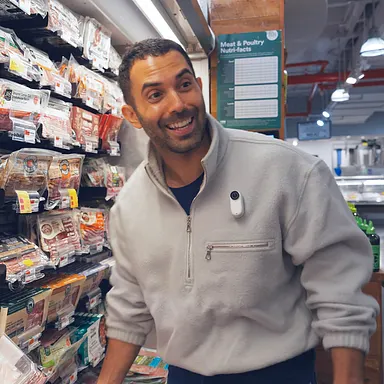
Rachel Abrams follows New York Times Cooking contributor Andy Baraghani as he tries to cook a full Thanksgiving dinner for four under $100 despite high grocery prices. The episode walks through his menu, which swaps turkey for braised chicken legs and replaces stuffing with a herby Persian rice with a crispy bottom, alongside a spoon salad and tarte tatin.
Baraghani explains how he chose what to splurge on, such as butter and fresh herbs, and where to save, and how he handled shopping and cooking in a single day. Listeners also hear his views on dry brining, hosting and making a table feel special without spending much.
In this episode Rachel Abrams, Andy Baraghani
This episode's transcript, about Andy Baraghani's budget Thanksgiving dinner, was made with the technology behind HappyScribe's AI note taker.
Ads in this audio differ from the text. Tap the sentence you're hearing to follow along.
Synced: the text now follows the audio.
Every year they revisit turkey recipes, find new takes on classic desserts, and this year, with grocery prices through the roof, they wanted to see if they could cook an entire Thanksgiving dinner in one day for less than $100. Depending on where you live, maybe that seems like a lot to you, and maybe that seems like very little, but nonetheless, they gave Chef Andy Barraghani, a contributor on our food desk, a crisp $100 bill and sent him on his way to see what he could do with it.
I'm going to need a little patience because there are some things I might want and not want. I have to be under $100, so that's the goal.
Okay, so we have a budget.
And so today I speak with Andy Barraghani.
Roger, I think we have a problem.
On how he fared making Thanksgiving for under $100 and how you might too.
I think what I'm going to give up is one pomegranate, because I think they're expensive. How much are they?
One is $3.49.
Oh, that's expensive.
It's Sunday, November 22nd. Andy Barraghani, welcome to the Sunday Daily.
Thank you so much. I'm so happy to be here.
We are so thrilled to have you. So when you first heard that you were going to be assigned to cook dinner for four people for under $100, Andy, what was your reaction?
Uh, bring it.
Bring it?
Yeah. Mostly because I thought, I love parameters. I think it also it's a good exercise, and I felt confident, even in a city like New York where things are so expensive, and we certainly didn't go to a grocery store that was that was cheap.
Where did we go?
We went to Whole Foods.
Okay. Just to be clear, because that's close to your apartment, or because.
Close to the apartment, and they allowed us to shoot there, so.
Hey, that's totally fair. And so, okay, so you go to Whole Foods, you accepted the challenge. Before we get into this whole experience that you had, planning and shopping and cooking on a budget, I want to get a little bit of a sense of what Thanksgiving was like when you were growing up and your household. Was it traditional Thanksgiving? Did your family put their own spin on it?
Grew up in the Bay Area in California, and first-generation Ryan American. My mother's an incredible cook. Grew up eating Persian food. I mean, it was definitely like a Persian-California hybrid of Thanksgiving. We had we had a turkey, but it was kind of smothered in this kind of yogurt, pomegranate molasses marinade. And then we had a very odd stuffing.
What do you mean by odd?
It was a lot of, like, pomegranate seeds and just a lot of mixed carrots and all this things that I wouldn't put in a stuffing at this moment.
I feel like you were making a grimacing face like you didn't really like it.
I didn't like it. No, no, no. It didn't feel right. But we also always had rice. Rice is a huge part of Persian food, so we always had rice. Some kind of orange vegetable that was very sweet. Usually it was candied carrots that were just like butter, maple syrup, brown sugar that were just cooked low and slow for a very long time until they became very sticky. I remember canned cranberry sauce, which I still have a soft spot for today. And then a kind of mix of Persian cream puff desserts and a pumpkin cheesecake that my aunt would make.
Did you develop like, I'm curious how you think about sort of like the Thanksgiving table today. Can you just give us a little flavor, if you will, of your own philosophy for how to kind of set the menu?
Well, I think for me, and I think for a lot of people, it's not about just the turkey or it's not about having an apple pie. It's very personal. It's a very.
Like yours was.
Exactly. There's a lot of traditions for each family. And I think for me, I think Thanksgiving food can get a little bit too sweet traditionally and rich and fatty. And I think a lot of my food I would describe as bright and textured and herby and spiced. And so how do I kind of bring those flavors to, let's say, you know, a mashed potato or turkey or and also introduce dishes that, you know, you wouldn't necessarily think would be on a Thanksgiving table.
Okay, so what were your list of dishes that you were planning to make?
Okay, so I knew I wanted to do, like, braised turkey legs. I didn't want to do a whole turkey because not only did I have $100, but also I had to make everything in one day, which is not something I recommend. A rice dish that would be instead of stuffing, kind of a riff-off of, like, polo and tadhik of what I grew up on. An orange vegetable, likely a squash, and make it sweet, either with, like, honey or maple syrup. And then, like, English-style roast potatoes, a cranberry and celery salad, and tart tatin.
It's just a super simple dessert made with apples, caramel, and puff pastry. And I was, I think, I think a dip, a dip with some kind of crunchy vegetable.
Can you talk a little bit about when you were trying to think about making this for a budget, what were some things you said to yourself, I can't skimp on this because this is an ingredient that really adds flavor or whatever that you need. I just wonder if there's some overarching sense of things that you can skimp and things that you shouldn't skimp, perusing their shopping list.
I would say I really think of, like, what are the foundational ingredients that I typically go for and what I would say, like, a lot of people go for, I would spend a little bit more money on. I think most people wouldn't think to spend a lot of money on butter, but really good butter, it's going to make a big difference. It's so much more flavorful using just fresh lemon juice versus lemon concentrate. Fresh herbs versus dried herbs, they're going to make a big difference. I think sometimes there's, like, a little bit of a price difference, but they're bringing so much unique flavor to the dishes.
Okay, so you knew what you were not going to skimp on, like the fancy butter, the fresh lemons, the herbs. And you also knew, because of your budget constraints, that you would not be lugging home a whole turkey. So basically, altogether, it sounds like you had a very solid plan in terms of your menu.
Absolutely. I think, like, once I had a sense of, like, what are the flavors I want for my Thanksgiving meal, that's what kind of helped me kind of start what my ingredient list is and how to strategize, like, oh, what these dishes are going to be.
So basically, herbs, spices, good fats. That's what I'm hearing for the.
Citrus and citrus.
And citrus.
Yeah, yeah.
Well, we're going to take a quick break, and when we come back, we will see what it's like when your dream menu meets grocery store prices in New York City in 2026. We'll be right back.
Okay, Andy, let's get into the details here. How did it go?
Well, I went in being open and flexible. If you don't find one ingredient, you kind of have to figure out what's best to kind of swap for it.
So we're going to get our basket. Start in the produce section.
Off I went to my favorite section.
Which is?
The produce aisle.
And why?
I don't know. I just love vegetables.
Vegetables.
Oh, no. I mean, it's I mean, if you see me, it's my husband has to kind of pull me away.
We're not doing organic lemon today. No, that's not going to happen.
So I went and I looked at if it was going to be squash or sweet potatoes. I went with squash and.
Why?
Well, price.
$1.99. Honey squash is $1.66. Let's go with the honey nut squash.
So I bought two or three of those. They were really cute and small. Another thing that I did that I thought was really smart, rather than buying a bunch of rosemary, a bunch of sage, and a bunch of thyme, I saw, you know, you'll see these kind of packets. Poultry blends are called.
See, this is the secret. So do, like, a poultry blend and you get that trio.
Rather than buying three separate bunches, I just bought a pack that had a mix of them.
So I'm going to I'm going to invest in this.
And then.
Is that the only celery?
Something happened where I thought, hmm, this celery cranberry salad, like, it's going to be messy. Something about this cranberry is going to stay in the celery and it kind of it wouldn't look pretty.
Let's just hold on to celery. I'm rethinking the cranberry moment. Sorry, celery.
I just couldn't visualize it.
I'm mixing the cranberries.
And so I went with pomegranates.
Now look at those pomegranates. How do I make that work?
Wait, okay, but pomegranate seeds are so expensive. How much were pomegranates? Do you remember?
I don't know if it was like a two-for-one deal, but I think I was able to get away well, the checkout aisle was hard. I'll just put it that way. I definitely had to give a pomegranate back, so.
You did?
Yeah, yeah, yeah. I don't know if I got away with having two or three pomegranates that I wished, but yes, they are not cheap.
They're not cheap. And also, presumably, though, pomegranates are cheaper than pomegranate seeds.
Yes, because, you know, someone did all the work for you.
Right. Thinking about the Thanksgiving table, right?
Yes, yes.
Were you planning to have, like, any kind of separate cranberry anything?
There was a moment. I had a few different ideas because the cranberry moment is really about bringing that kind of hit of acid. That's really what it is. It's like the sweet-sour flavor that you're not really getting anywhere else.
Said I'm going to make that acidic, crunchy thing of my what I think we need here.
But what did end up happening was I thought, oh, why don't I do a kind of fall spoon salad.
Fall spoon salad with pomegranates and cucumbers and hopefully have some leftover herbs.
And just explain what that is.
A spoon salad is a salad that you could just kind of shove in your mouth with a spoon. It's all about kind of cutting everything up in tiny pieces. So I thought, oh, it should be made up of pomegranates, cucumbers, walnuts, and herbs and fennel. Oh, fennel, yes.
Fennel. Fennel will do a lot. Okay, let's move on to the meat.
You had already known you weren't going to buy a whole turkey, right? The plan was just to buy the turkey legs?
I hoped.
I don't see turkey.
You know, I didn't find turkey.
You didn't find turkey.
It's hard.
There was a moment that I didn't see any turkey.
Hi. How are you?
And then I asked.
You're going to get turkey legs?
Someone who was working there who was very helpful.
Don't have them fresh right now.
Maybe they're in the back.
I need a little chicken in the back.
Okay, that'd be amazing.
Give me one minute.
Okay, okay.
Yes. Checked in the back.
We're manifesting. We're manifesting for whole turkey legs.
I felt it. I had a good feeling.
You sensed it.
I sensed it.
Your turkey raider.
And then, no.
Okay, okay.
We have chicken legs.
Okay.
I know that's not the best.
It's okay. No.
Chicken legs.
Did they tell you why? Was it just because you were shopping in early October?
I imagine. They didn't tell me why, but I suspect that it was just too early in the season. So I made the decision to just, instead of turkey legs, I went with something that is just as delicious, arguably more delicious.
Okay, we're going to go with chicken legs.
Chicken legs. I want to pause here because for anybody listening thinking, what the heck, $100 and you didn't make turkey? I got to make a turkey. I did actually look up the average cost of a turkey in the United States because I was so curious whether this budget would be feasible for most people.
I definitely would.
So I did actually look this up. And according to the American Farm Bureau Federation, guess how much turkey was per pound last year?
$3.
$1.34.
Wow.
Yeah, $1.34. So if you wanted to buy a 16-pound turkey in the United States, the average cost was a little over 20 bucks. Now, obviously, everything has gotten more expensive this year. If you live in a city like New York City, if you live in a big city where costs are higher, it's going to be a lot more, of course. But I just want people to know that just because you swapped out chicken does not mean that this $100 could not actually feed a Thanksgiving table.
Well, I'll say this. Like, well, one turkey is great and people should be making turkey throughout the year. It's a great protein. I love turkey. But there wasn't any turkey. Went with chicken legs. And, you know, my same thought was you can braise chicken legs. You can slowly cook them. They're forgiving. There's a good amount of fat. And I can make them ahead of time and kind of reheat them that evening. So that's why I went with chicken legs.
Then they're going to be beautiful and we're going to make them elegant. And you know what? Smart buy.
Okay, so you've got everything in your shopping cart. You think it's going to be under $100. You go to the checkout line.
How are you?
I'm good. How are you?
Good. I'm going to need a little patience because there's some things I might want and not want. I have to be under $100, so that's the goal.
Okay.
I was pretty confident because what my husband says, I'm really good at that, is that I'm good at preparing just enough food.
No leftovers.
Yes. I'm not saying that's a compliment, but he says that it's.
Is that a way of saying I'm kind of hungry?
But that doesn't exactly work with Thanksgiving, which is, you know, the leftovers are a big part of the meal.
Yeah, totally.
And during checkout, I think I got pretty close, but I did go over.
I'm going to put this aside. I don't think I need these. I don't think I need these.
And it was over only by, I believe, like, a few dollars, maybe like $3, $4. Thought, all right, what do I need to kind of pull back?
Okay, so we know that the pomegranate got thrown overboard. What else?
Do I need the dip?
Oh, yes. I had a dip plan. I wanted to have, like, an appetizer for everybody. And then I thought, you know what? The dip is extra.
All right, let's remove the yogurt and the pepperoncini. And I think we just add this back in and then we're good to go.
Okay.
Okay, so.
That's it.
You spent a total of, do you remember?
So $96.44.
Ah.
That was a good deep breath.
Thank you.
$96.44.
I should have got on a chocolate bar to treat myself.
You could have put one of those pomegranates back in.
Oh.
All right, grocery shop is successful. Now your job is to figure out how to actually start making this stuff.
Exactly. Yeah.
Okay, we're going to take another quick break. And when we come back, we're going to talk about how you cooked all this food, which I actually got to see firsthand and also eat. Spoiler alert, it was delicious. I love this New York Times Cooking, New York Times The Daily crossover.
I love it too.
We'll be right back.
Okay, so Andy, you successfully got all of your ingredients for less than $100. You got beautiful pomegranates. You got your poultry blend herbs, your chicken legs because there was no turkey. And now I want to hear how it all came together. So first of all, how much time did you have to cook this meal for four people, including for me?
Well, I think we got back around maybe 11:30, 12:00, and dinner was going to be at 6:30.
Okay.
I would say I got probably closer to four and a half hours.
Because?
I had a wonderful guest, the guest being you.
Okay, where do you want me to be? You don't want me in, like, watching, you know, like those cooking shows with, like, you know.
Or someone's, like, standing over, like, hovering over you.
I mean, you had to entertain a reporter that was constantly distracting you by being, like, what are you making? What's the order? Can you say it again? But for most people, I think people have, like, guests if they're cooking, right? They have family in town. They have friends over. Do you want people to help you? Should I have offered to help?
No. Being able to be a host that understands how you want to run your kitchen is very important. Whether you want people in your kitchen or out of your kitchen, who you want to be there to help you, who do you not want there to be to help you, and how to kind of give tasks appropriately.
What is the polite way to say, "Get out of my kitchen. You're in my way"?
Do any of you need a drink? And that it's like, "Let me get you a drink." Okay, why don't we go to the living room? I'll let me I have a few things to work on and then I'm going to just finish up the cooking and then I'll meet you guys there. And then that's, I think, a way to kind of.
Like that.
That's my way.
That was so elegant. I feel like, yeah, people, I hope people took notes on that. Okay, so we've talked about the shopping list. We have talked about the menu. And now I want to talk about the actual order that you cooked things in.
Yes.
Okay, well, first I want to know, what are you doing right now? What are you watching? What was your thinking about what order to make things in and what you could do ahead and what you had to do, like, sort of right before we sat down?
I'd say let's get our chicken seasoned.
The very first thing I knew right away was I wanted to season the chicken legs. I thought, if I can season the chicken legs as early as possible, they're just going to be more delicious.
Okay, salt, sugar, black pepper, paprika, and my secret weapon, some onion powder.
Okay, just to say, though, I think that most people will probably opt for turkey this year, right, if they're going to entertain. And so I do want to ask you about your turkey cooking methods, in no small part from my own knowledge. I am obviously not a chef. The one time I did try to make a turkey years ago to entertain, I was probably like 22 years old, which doesn't really excuse what I'm about to tell you, but I brined it in a black trash bag. And I have to say, it tasted incredible.
Yeah.
Tell me, Andy, in your many years of cooking professionally, have you ever used something like that?
No, I have not. But also, I grew up in a household where we did a wet brine, which is what I imagine you did, combining water and salt and maybe some sugar and herbs. But for now, you know, over 15 years now, I really do a dry brine, which is my preferred method.
Dry brine.
I'll make the case.
Yes. Okay, make the case for a dry brine.
Well, you kind of made the case already that why we shouldn't be doing a wet brine. I think, like, the idea of getting a big trash bag or doing in an ice chest, I think a dry brine, all you need is a mix of salt, sugar, some black pepper, some spices, and you just sprinkle it all over the turkey and just place it in the fridge, ideally, depending on the size, 12 hours up to even 36 hours uncovered. And that salt will absorb and it will just make the turkey that much more delicious.
And you're really flavoring the meat. And you get crisp skin, which is very difficult to get when you have a wet turkey, a wet bird coming out of a dry brine, a wet brine.
I seem to have memories of, I'm going to admit another thing I'm just recalling that I've done very shamefully for Thanksgiving. I have, like, a memory of blow-drying a turkey to make sure that I started with a dry turkey. How important is it to start with a dry bird or is this just something else I found on Instagram?
I feel like this feels like an '80s holiday comedy movie where you're breaking out the hairdryer. It's like, it's not necessary. You do not need to whip out the hairdryer, the brush, anything for your turkey.
You know the brush.
You really just need a rim baking sheet, a bowl, some salt, some sugar, black pepper, and a refrigerator.
Whatever. I prefer my salon for my bird to spawn.
Give her a blow out. Give me the bird a blow out.
Okay, moving on to another Thanksgiving essential, potatoes.
The potatoes, I had to kind of prep.
We are getting into potatoes.
Where peeled, boil them, and that could happen ahead of time. So I wanted to knock that out because once I roast them, I kind of want to serve them.
They're a little roughed up, but that's fine. These will be great. You want that kind of rough texture for English potatoes.
So what is an English potato versus an American potato?
Well, English roast potatoes are boiled and then roasted at a high heat.
Okay.
And they're the potatoes you would have for, like, an English roast dinner.
The squash, I cut them, scoop the seeds out, and then place them in a roasting pan with some butter, a generous amount of honey.
I need a little more honey.
Some herbs, and then I believe a little bit of turmeric and water. The water is really important in that dish just because it prevents the honey and butter from burning.
But I do think, like, with the orange wedge for Thanksgiving, like, give it the sweet treatment. And I like double-downing on the sweetness.
And then I place it on the oven. And I cooked that pretty early on just because I could always reheat that and it was easy. It wasn't going to fall apart.
And remind me what you're using this rice for.
I knew instead of a stuffing, I was going to do a rice dish.
For tonight?
I am going to par cook it and then I'm going to steam it with some herbs, some dill, parsley, and some butter, some dried sour cherries, and scallions. Yeah, I need scallions.
Tell me about the logic there because stuffing is, like, one of people's favorite Thanksgiving foods. I love it from a box. And if you told me there wasn't going to be stuffing, I'd be sad, but I love rice. So how did you think about that trade-off?
Oh, I'm still sad that I didn't serve stuffing. I'm like, it's my favorite. But I knew that making a stuffing would require, I think, slightly more ingredients than I wanted. And so I thought, oh, I can get away with rice and also we have this kind of nice, beautiful, in Persian we say tadik, this kind of burnt crust underneath. And it has texture and then I could make it herby and maybe throw in some dried fruit in there. So it does this have kind of a little bit of a stuffing feel to it.
I actually feel like this might be something important to just pause on for a second because for people listening who are trying to figure out how to make their money go farther, obviously, you can do that a very cheap box of stuffing that you can make. Like, stoveburst is obviously probably the most famous one. But for people who are thinking, I don't want to make it from a box, but I really need to make my money go farther at the grocery store this year and I want to do something that feels a little fancy, even if it's not going to cost a lot, you settled on rice because you felt like, I can make this my carby side dish and have it be elevated and still stick with a budget.
Absolutely. I also knew that it can hold. Like, I think when stuffing comes out of the oven, you want to eat it while it's warm. Not that it's bad at room temper or cold, but it's.
Right.
I definitely thought about the menu of, like, some things need to be hot, some things can be room temp. And but with the rice, once it was kind of tender and done and fluffy, I just kept the lid on and it was fine. So it was very forgiving in that way. So it was totally okay to kind of serve them, let's say, 20, 30 minutes later.
You're making me think of an etiquette question.
Yes.
What is the etiquette from a professional host, professional chef, about people coming to your Thanksgiving with a dish they are contributing and they need it warmed up?
Well, I think that has to do with communication. I think if they feel strongly about bringing something that needs to be heated up, the host should be aware of that. They shouldn't be surprised.
Ahead of time.
Yeah, they shouldn't be surprised.
I have a take on this.
Yes.
I don't think you should bring things that need to be warmed up.
I mean, I definitely don't think so either. But that's not going to but people will continue to do so. And I think the only thing that we could say is, like, please communicate to the host and it better be delicious.
Better be delicious. Better be freaking worth it if you're going to come into my kitchen and stress me out with your oven needs. Okay, we have a couple other items left. Tell me about the salad. You are now chopping cucumbers. Are those what are those called? English cucumbers? Persian cucumbers?
These are Persian cucumbers, yeah.
Persian cucumbers. Okay, and what are you making?
I am combining the fennel, the pomegranates, just kind of salad elements ahead of time. I won't dress them until closer to dinner time. But.
And I should say, just at a certain point, you brown the chicken. You put it in the oven to cook while you're preparing other things. But I do want to talk about something you did with the chicken that I thought really just added to the presentation. So describe, Andy, how you prepared the chicken legs.
I employed a technique called to French to French the chicken legs where I kind of separated the skin from the bone of the drumstick. And.
But only a little bit. Just a bit.
Only a little bit.
When we were going to have the turkey legs, I'm like, ugh. And then I thought, oh, I'm going to French it and that makes it a little bit more fancy. Like, it just little things. And that's free.
And that's free. The presentation of this is.
That doesn't cost you anything.
And what about the dessert?
I got to do the tarte tatin. This is very me to avoid the dessert.
The dessert, I prepped the dessert where I peeled the apples, I mandlined them.
Well, apples are falling apart. Luckily, they're being cooked.
And I made my caramel, spiced with a little bit of ground cardamom, added my apples, and then rolled out my puff pastry, my store-bought puff pastry, and then popped in the oven. But that was already pretty much done and out of the oven before we sat for dinner.
Don't put it anywhere, please. You know what? I'm going to start plating.
I brought you two kinds of wine. I brought you a drinkable wine. And I also brought you some leftover mani chevets because I used it to cook something earlier in the day and I just thought maybe.
I would argue those are two drinkable wines.
Too many.
I mean, you have to you can drink mani chevets.
You know, I have an argument with my friends about this every Passover because my family and I, we love drinking mani chevets and I have friends that just think it's the most repulsive thing you could possibly drink because it's basically just like sugar water with some alcohol in it. But.
Do you want to serve a glass of mani chevets?
I want to wait for the good stuff.
Let me just I said you can drink it.
You didn't say you would like it. So it was me just to set the table, if you will. It was me, your husband Keith, your friend Ava.
So Keith, do you cook in this kitchen? Do you cook?
No, I don't. He doesn't.
You don't?
No.
He doesn't have to.
I married him, so I didn't have to.
So do you always Andy, do you always do the cooking at home?
Yes.
We talk about the elements of presentation that don't require any money. Like, if you don't want to spend money on flowers, if you don't have a nice centerpiece that you want to use, like, what are some things you can do to elevate the table for free or for very little maybe?
Honestly, like, candles, even small candles, photo candles. I think, like, using a few of them when it's a big group, bigger than four, obviously, like what we typically do for Thanksgiving, let's say 10, 12, 15 people. I do like assigned seating. I think of that Curb Your Enthusiasm episode of, like, who's a middler? And so it's very important of, like, who has the middle seat and who can kind of be able to work all sides.
You have to be able to carry the conversation. You have to be interesting. You're the point guard there. You're distributing the ball.
So I think just even whoever has the nicest handwriting just makes individual place cards. And then plating. I think using larger platters is an easy way. I think you want some negative space. I think rather than having everything feel too tight, I find that having a large shallow platter where you have, like, the food can kind of spread a little bit and breathe kind of makes it a little bit more beautiful.
Just to be clear, this is talking about serving family style.
Yes.
We're not talking about individual plates of food.
Oh, no, no, no. We're not individually plating for Thanksgiving. We're doing just big platters of food. I also think, like, you know, when you have something that's, let's say, a brazy, dark, slowly cooked, brown cut of meat, for example, well, it likely wants something that's, like, green to kind of bring some color and kind of bring it back to life, I like to say. So a sprinkle of parsley or another herb will make it a little bit prettier.
All right, I come bearing food.
Oh, my gosh. Okay.
Potatoes.
The potatoes, the perfectly brown potatoes.
Did you get a sense of what we liked the best? Like, what did you think were the best dishes?
Oh, the rice. I thought the rice was great.
That was so good. Crispy rice is one of my favorite things to eat.
It was a kind of bit of a hybrid of two Persian rice dishes, sabzi polo and al baloo polo. Sabzi polo just means, like, this kind of herby rice, this green rice. And then al baloo means sour cherries. So I kind of did a mash-up of the two and it was made with dill and dried sour cherries and a little bit of cinnamon. You had this fluffy, herby, slightly, like, sweet sour rice and then this crunchy tadik, the burnt crust on the bottom, which had that kind of, like, stuffing feeling of, like, that crisp texture.
I love the tadik. I love tadik, just generally speaking. I think my one of the favorite things that I ate at your table was that salad, though, because I was just, like.
Yes, I love that.
Because only just because I feel like I'm something out of, like, a Dilbert cartoon where he's talking about, like, every bite having the right flavors on it. And I will say that this was a moment at your dinner that really struck me as something that, like, anybody could take home as advice, this spoon salad idea. The thing that made that salad so good, beyond just ingredients that I liked, was that the philosophy is that every mouthful had every piece of it, which seemed like a technique. Again, if you're trying to be budget conscious, like, cutting up your food in such a way that every mouthful has a piece of what you want to eat, that feels like something that people can do at home that doesn't cost a thing.
Absolutely. I think it's just, like, a little bit more work. The way I think of a spoon salad is, like, use sturdy, crunchy vegetables. And the dressing was super simple, just lemon juice and olive oil.
What are the biggest lessons, Andy, that you think people should take away from the meal you cooked for us and apply in their own homes this holiday?
Well, one, I say this with any kind of cooking. I think, like, it's you can do all this planning, all the thoughtful shopping and organization, but you also bring your senses to the kitchen. Really kind of look at things, taste things. That's also a way of just becoming a better cook of understanding what tastes right, what doesn't, if it needs more salt, more acid. And I think it's okay. It's okay if the turkey isn't totally hot. It's okay if the stuffing isn't perfectly golden brown on top.
I think people, again, are just happy to be fed, which is my way of saying, please, someone invite me so that I can be fed.
Well, you know what's so funny is, like, people spend so much time talking, thinking about the menu, stressing out in the kitchen. I come from a family where, like, Thanksgiving is a source of stress before you sit down at the table just because my dad, who does most of the cooking, gets really stressed out about, like, making sure that everything is right. And he spends a lot of time and money and effort making it. And I'm always telling him, Dad, nobody flew in here for the food.
100%. I think while cooking and the food is a big part of Thanksgiving, the most important thing is bringing people together. However kind of small of a group or big of a group, it is, I think, one of the most generous things you can do is to host. And the food is great and nice. And even if it's a store-bought stuffing, I think people are just happy to come together and be welcomed in someone's space.
So cheers, everybody.
Cheers. Thank you so much for inviting us and the New York Times and all of our listeners into your home.
Any day. Any night.
Well, Andy Berigani, this has been such a pleasure talking to you.
Oh, thank you so much.
Happy Thanksgiving. I'm going to get to the dishes and have one more glass of wine. Thank you, everybody.
If you'd like more of Andy making his $100 Thanksgiving, you can watch a whole video about it on NYT Cooking. Today's episode was produced by Tina Antolini and it was edited by Wendy Doerr and Elissa Dudley. It contains music by Marian Lozano and Rowan Nimisto. And was engineered by Rowan Nimisto. Special thanks to Adam Centrella and the NYT Cooking team. That's it for the Sunday Daily. Good luck with your shopping. Happy cooking. I'm Rachel Abrams, and we'll see you tomorrow.
Thanksgiving might be the most exciting, and stressful, day of the year for home chefs and pros alike. This year, Andy Baraghani, a contributor to NYT Cooking, was presented with an added challenge: Cook Thanksgiving dinner with a budget of just $100. His response? “Bring it.”
Our host Rachel Abrams tags along to see how far Baraghani can stretch his budget despite soaring food prices. His thrifty Thanksgiving menu doesn’t taste it, thanks to clever strategies at the grocery store and in the kitchen.
On Today’s Episode:
Andy Baraghani, a chef, cookbook author and contributor to NYT Cooking. He just opened his first restaurant, Ditto.
Background Reading:
Watch “Andy Baraghani’s $100 Thanksgiving”
Thanksgiving recipes from NYT Cooking
Photo credit: The New York Times
For more information on today’s episode, visit nytimes.com/thedaily. Transcripts of each episode will be made available by the next workday.
Subscribe today at nytimes.com/podcasts or on Apple Podcasts, Spotify and Amazon Music. You can also subscribe via your favorite podcast app here https://www.nytimes.com/activate-access/audio?source=podcatcher. For more podcasts and narrated articles, download The New York Times app at nytimes.com/app.
Hosted by Simplecast, an AdsWizz company. See pcm.adswizz.com for information about our collection and use of personal data for advertising.