
This Global News Podcast edition covers California Attorney General Rob Bonta's lawsuit against OpenAI, which alleges the company developed AI models without adequate safeguards, citing a July attack on the platform Hugging Face. OpenAI says the lawsuit singles it out over a challenge all major AI labs face.
The episode also reports on five European countries planning Rwanda deportation hubs for rejected asylum seekers, with critics raising human rights concerns; Robert Pattinson being named the new James Bond; Russian and Ukrainian strikes on bridges; a forensic expert's claim that Jeffrey Epstein was killed; and a dispute over removing baboons from Cape Town.
In this episode Oliver Conway, Balgassim Haftar, Bethany Bell, Charlotte Gallagher, Danny Eberhardt, James Kumarasamy, Justin O'Rean, Lily Jamali, Mette Frederiksen, Michael Freeman, Rob Bonta, Tim Hewell, Victoria Darvisher, Vincent Biruta
This episode's transcript on the California lawsuit against OpenAI over rogue AI agents was made with the same technology behind Google Meet transcription.
Ads in this audio differ from the text. Tap the sentence you're hearing to follow along.
Synced: the text now follows the audio.
This is the Global News Podcast from the BBC World Service. Hello, I'm Oliver Conway. This edition is published in the early hours of Tuesday, the 17th of November. California is suing OpenAI over cyber attacks by its models. Five EU nations announce plans to open a deportation center in Rwanda. And why Robert Pattinson got the job as the new James Bond. Also in this podcast.
Everything is growing up. We have so much opportunities to work. Jobs here, it's also amazing, amazing feeling.
Could the Libyan city of Benghazi emerge from its war-torn past to become the Dubai of the Mediterranean? Three months ago, the California Attorney General Rob Bonta secured an $18 billion settlement from Meta after leading a historic child safety trial against the Facebook and Instagram owner. Now he has another tech giant in his sights. Mr. Bonta is suing OpenAI, alleging that the ChatGPT maker misled and endangered the public by developing artificial intelligence models without proper safeguards.
Today we brought and announced a lawsuit against OpenAI for its failure to develop and test its advanced AI models securely and safely. And our basis is 80 different incidents of failing to safely contain its advanced AI models where the AI agents escaped their contained environment and got into other systems and networks, got onto the internet, maybe most notable among them, the Hugging Face incident. They knew the risks.
They knew that there were certain safety protocols that they could have taken, but that they didn't take. Things like providing an air gap, having a shutdown mechanism, having pre-clearance or independent audits. Those are all ideas that are common sense to policymakers and are being considered right now that they didn't do. They took risks in their pursuit of competition, in pursuit of having the most advanced models to outdo their competitors, and they compromised safety in the process.
That's why there have been 80 incidents.
California's Attorney General Rob Bonta. So how serious are these accusations? I asked our North America technology correspondent, Lily Jamali.
They're quite serious. California says that OpenAI has created a public nuisance, and this is a momentous lawsuit in the sense that even though other states have flagged OpenAI for letting its agents go rogue, as they say in the industry, this is the first lawsuit filed of this ilk by a U.S. state. And it all stems from the attack in July on the AI platform Hugging Face, if people remember that. That's really center stage here. That was an attack that was done by experimental OpenAI agents.
There were hundreds of these agents that coordinated over two days on the open internet, even though they were supposed to be, as you heard Mr. Bonta say just then, they were supposed to be contained in this testing environment. They broke out. And not only that, they actually tried to cover their tracks. So industry voices, again, use this phrase, AI gone rogue, but critics will say, no, these companies are training these models to be empowered to do this, and they need to do more to make sure it doesn't happen.
Yeah. How has OpenAI responded to these allegations?
So an OpenAI spokesperson told the BBC today that they feel they're being singled out, that OpenAI is just one of many companies that have experienced their agents going rogue, again, using industry parlance there, and that it's a challenge that every major AI lab faces right now. They also said that they'd coordinated with the Attorney General's office over these many months to make sure that they had the information that they needed, that they've been very transparent. But ultimately, this is about accountability.
So people who support the Attorney General's lawsuit here say, if you don't sue these companies, you're not going to have these companies keep themselves accountable, which is what they want. They don't want regulation. They want to be self-regulating.
Other companies have also had similar things happen to them. Could they also face lawsuits?
They could, but they haven't yet. And I think the Hugging Face incident is center stage here because the scope was just so significant there, and I think that's why OpenAI is the first to be sued.
Lily Jamali in Silicon Valley. Against a backdrop of political pressure over migration, five EU countries have announced plans to set up a deportation center for rejected asylum seekers in the East African nation of Rwanda. Germany, Austria, Greece, the Netherlands, and Denmark say it would involve asylum seekers who'd exhausted all legal avenues to remain in the European Union, which would be different from the UK's recently abandoned Rwanda scheme. The Prime Minister of Denmark is Mette Frederiksen.
It needs to be a democratic decision who can enter and who can stay in our societies. We need to take back control of our borders. And today, as everybody knows, criminal organizations are making billions of euros on human smuggling, and too many lives are lost at sea.
How does Rwanda see its role? Here's Interior Minister Vincent Biruta.
Rwanda would provide a second chance to people who no longer have the legal right to remain in the partner countries. Those received in Rwanda would be offered opportunity to voluntarily return to their countries of origin, integrate into Rwandan society, or relocate to another destination where they have the legal right to reside according to their preference.
We got more details of the plan from our correspondent, Bethany Bell, in Vienna, where the EU meeting was taking place.
What we've been told is that when they get to Rwanda, when they will get to Rwanda, migrants will be offered a residence permit. They'll be looked after in a welcome center where their basic needs will be looked after. They'll be provided with integration support, with vocational training, and crucially, they will be allowed access to the job market in Rwanda. So the idea is that they would integrate into Rwandan society. We've been told that they have the right to leave at any time, either to go home or to any other country where they have the legal right to be.
What we don't know is how much all this will cost. And it should be remembered that with the previous scheme that the UK was planning, which was different, critics said that that was far too expensive. We don't know how much these EU countries are planning to spend.
And how much of a priority is illegal immigration for voters in these five countries?
Well, I mean, countries like Germany and Austria, where I am now, have seen a big surge in support for far-right parties, the AfD in Germany, the far-right Freedom Party here in Austria. In some cases, the numbers of people entering illegally has dropped, but the EU's policy focus has shifted somewhat to try to improve the repatriation system. Because at the moment, less than 30 percent of people who are ordered to leave the EU actually return to their country of origin.
And it's a sensitive issue for voters in some of these countries, especially when there are cases of, say, rejected asylum seekers committing crimes. So this is something that the governments certainly feel a lot of pressure on at the moment. But there's also been quite a lot of criticism of this move, human rights people saying that this is not the correct way of doing it, that there won't be proper oversight of these people once they get to Rwanda.
Five countries proposing it now. Do you think possibly other European countries could join them?
Certainly, I think many, many countries will be watching closely. I mean, even a Downing Street spokesman from Britain said that they would be watching this very closely. You get to a country like Spain, for example, where there have been migrant flashes recently, and there's an election coming up there, possibility of a right-wing government coming in. I think people will be watching very, very closely to see if this works, if it's indeed legal, if it's not the subject of more legal challenges, and if it does actually relieve pressure on governments.
Bethany Bell talking to Charlotte Gallagher. The choice of Rwanda to host the first European deportation center outside the EU has been criticized by some human rights groups. They argue the scheme would harm deported migrants and finance a government responsible for serious human rights abuses. Our Africa correspondent, Barbara Plettascher, sent this report.
Rwanda is once again at the heart of an international migration deal. It does have quite a lot of experience. That includes a successful arrangement with the UN to host African refugees who were trapped in Libya, but also the agreement with Britain that was scrapped because of human rights concerns. The UK spent around $900 million on the scheme. It helped pay for a housing complex, also the refurbishment of a hostel that has stood empty for several years. It's not clear what will happen to that infrastructure. Despite this failure, Kigali continues to position itself as part of a creative solution to global migration problems, and reports say it pitched itself aggressively to the Europeans.
Critics still warn about Rwanda's human rights record. They say the government suppresses dissent, restricts political freedoms and free speech, and that it won't be easy to independently monitor what's going on. They also say the deal could give Kigali diplomatic leverage, in particular that it might help ease international pressure on Rwanda's alleged role in supporting rebels in the neighboring Democratic Republic of Congo.
Barbara Plettascher in Nairobi. After a high-profile and lengthy casting process, the new James Bond has been announced by Amazon MGM. It's Robert Pattinson of Batman and Twilight fame. So why is he the best choice to take over as 007? The entertainment journalist Matthew Belloni spoke to James Kumarasamy.
Well, there were a couple of things going for Pattinson. First of all, amongst the five finalists, he was by far the biggest star with the most star power among them. And when a star of this caliber even agrees to audition for a role, there is often an understanding with the filmmaker that we want you, but this is just a formality. It would have been a big deal for Pattinson to audition and then not get the offer for this role.
Although it is unusual for someone as much of an A-lister as him to actually get the role of James Bond, isn't it? Most grow into it.
That is true. And the franchise, when it was steered by the Brockley family, they were very keen on making sure that Bond, the character, was the star, not the actor playing Bond. But this is a new day for the franchise. It is now controlled by Amazon MGM, and they are definitely charting a new path here and getting a very well-known star to inhabit the character.
Not just a very well-known star, but someone who's playing another iconic role of Batman at the same time.
That is unusual as well. And the Batman movie is scheduled to come out in early 2028. This movie has not been dated yet, but there's a chance that Bond could be ready to come out in late 2028. So it might be that Pattinson is Batman to start the year and Bond to end it.
Why wasn't he in the shortlist that were being talked about for months and months?
He auditioned late in the process. And honestly, it was one of those things where it never got circulated in the media. They managed to keep him and Nicholas Holt secret during the process. Now, there's some speculation that maybe they weren't as satisfied with some of the early candidates they saw, so they decided to bring in some heavier hitters. But I think Pattinson was on director Denis Villeneuve's mind from the beginning, and he's just worked with him on Dune Part Three. So they already have a relationship.
Interesting. What do you think he'll bring to the role?
I think it'll be a little bit different than Daniel Craig, who is much more muscular and kind of brooding. Pattinson is a little quirkier. He's a frailish guy, and he has a bit of a quirky sense of humor to him. So it might be a throwback a bit to the more kind of lighter humorous Bonds of the '70s and '80s.
Frailish. That's not a word you associate with James Bond.
Not usually. But remember, Daniel Craig was also not huge when he was cast, and then he bulked up for the role. So we'll see what Pattinson does.
Okay. Ah, right. Such an iconic role. You will forever be known as James Bond, no matter what else you've done. How do you go about preparing for something like that, do you think?
Well, I think that's part of the reason why Pattinson was chosen. This is the first Bond search in the age of social media, and the attention here and the scrutiny was so high that it really would have been tough for an unknown to shoulder that burden. And Pattinson, someone who has been famous since the Twilight movies 20 years ago almost, I think that's going to be a big asset for him going forward. And remember, Daniel Craig was able to do other things while he was Bond, the Knives Out movies and many other films. And I think Pattinson will continue to work.
I mean, he's in five movies this year. So this guy likes to work, and I think he's going to do stuff outside of Bond.
Matthew Belloni talking to James Kumarasamy. Still to come on the podcast.
I'm totally against them being caged, vasectomized, and confined for the rest of their lives. I believe that they were here first.
The debate in South Africa over the removal of Cape Town's baboons.
You're listening to the Global News Podcast. The week after their first peace talks for nine months, Ukraine and Russia have launched attacks on each other's bridges. Russia is reported to have struck two crossings in Kyiv, which link the east and west of the Ukrainian capital. At the same time, Ukraine is said to have attacked the Kerch Bridge, connecting the occupied Crimean Peninsula to Russia. I heard more from our Europe analyst, Danny Eberhardt.
In terms of the attack on two of these very important bridges in Kyiv, the Pivnichnyi Northern Bridge and the Pivdennyi Southern Bridge, they were announced by Vitali Klitschko, the mayor of Kyiv. He said that Kyiv had come under ballistic attack, and shortly before 10 o'clock, he announced that the bridges had been hit. He also said that other critical infrastructure had been damaged, disrupting water and heating in parts of the capital. Soon after, we also learned about these attacks on the Kerch Bridge. That bridge is a hugely symbolic one.
President Putin himself drove across this bridge to inaugurate it in 2018, symbolizing the incorporation of Crimea into Russia in the eyes of Moscow, at least. And the proxy head of Crimea said that it's been hit for a second night in a row. Traffic there has been suspended again. It was suspended on Monday for the same reasons that it was hit. There is some video evidence of that. It looks like a strike close to the arch that is on one side of the bridge.
And there's also video of some of the attacks in Kyiv, including, we think, the Northern Bridge that gets a very heavy impact.
Now, the Kerch and indeed the Kyiv bridges have been hit and repaired before. How disruptive are these strikes?
They are considerably disruptive when they happen because traffic usually stops. It depends on the size of the attack. So one of these attacks on the Kerch Bridge back in 2022, there was a truck packed with explosives that blew up that damaged both the road bridge but also the rail bridge next door. And that took a long, long time to repair. It was also being attacked by maritime drones, missiles, other air drones. And at the beginning of last month, there were repeated attacks on the Kyiv Bridge. Again, it closes road traffic.
It also affects rail and metro traffic and significant disruption for the capital.
Danny Eberhardt. Jeffrey Epstein's death in prison was officially ruled as suicide, but that hasn't stopped the rumors that he was actually murdered as part of a cover-up. Well, now a forensic expert says he believes the convicted sex offender was killed by someone else. Michael Freeman examined autopsy records given to him by Epstein's brother, Mark. Mr. Freeman says his research has been reviewed by colleagues, but not peer-reviewed. Victoria Darvisher asked him what he believed happened to Jeffrey Epstein.
The evidence that we see is that there are signs indicating an assault. There is a deep muscular hemorrhage to the left shoulder. There are injuries to the face that appear to be consistent with blunt force trauma, being struck in the face. There are even fingernail marks or the appearance of fingernail marks above the level of where the ligature is at the neck, which would be consistent with strangulation, particularly from behind, and the attempt by the victim to try to remove the ligature from the neck.
So you are saying that Epstein was killed by another person, and he did not die by suicide.
I cannot think of a scenario in which he could have caused the spectrum of injuries that he has to him that could have been self-inflicted, other than if Epstein himself wanted to stage his suicide as a homicide.
The medical examiner who performed the autopsy told the Office of Inspector General that Epstein's injuries were consistent with suicide by hanging and that there was no evidence of defensive wounds that would be expected if his death had been a homicide.
The only reason we believe this man might have been hanged is because a guard said that he found him hanging from his bunk bed. But we don't have any evidence. It was uncorroborated. The fact that the determination has been made doesn't mean the determination is correct. And now that we have new information, we have to go back and we have to revisit it.
We know from the official report that the guard who found Epstein, Michael Thomas, entered the cell, I'm quoting from the report, and saw Epstein hanged. He immediately yelled for guard number two to get help. The alarm was activated, signaling a medical emergency. Michael Thomas said he immediately ripped the orange sheet or shirt away from the bunk bed, and Epstein's body dropped to the ground. Thomas said he then lowered the entire body to the floor and began chest compressions until other medical staff arrived.
So the guard who found Epstein explained what happened. Guard number two was calling for help. No photographs were taken at that moment because they were trying to save Epstein's life. Are you not accepting that? Are you saying they're lying about that?
No, I think that they're telling the truth, actually. We then couldn't find out more from the guard about what is it that he was hanging from? What was around his neck? That was never found. That was never recovered from the cell.
Were there photographs of that in the official report?
No. There was photographs of a sheet that the medical examiner says wasn't what the body was hanging from. And it was a sheet that was picked up by an EMT who put it on the gurney when they carried the body out. There was no investigation at the scene. It was a piece of fabric that was never recovered. We have no idea where it went.
Forensic medicine expert Michael Freeman, next to the baboons causing a stir in South Africa. Well, that's probably not the kind of sound you want to hear on your street, but for many in a Cape Town neighborhood, it's become a reality. The authorities in the city have begun the process of relocating the baboons to a sanctuary, but it's pruned to be controversial, as Helena Burke explains.
Chakma baboons have lived in and around Cape Town for at least 500,000 years. But when Dutch settlers arrived in the Western Cape in the 17th century, tensions between the two primate species began.
The first conflict happened with baboons because they put up gardens here to replenish the ships. Then the baboons found the gardens, and that was the beginning of the conflict. And of course, since then, we've usurped most of the low-lying land for initially agriculture and then subsequently for cities, for the entire city, suburbs.
Professor Justin O'Rean is a behavioral ecologist at the University of Cape Town. He says the baboons used to retreat into the mountains around the city in the evenings, but that's now changed.
In the last two years, they've started sleeping in town, breaking open roofs to get into ceiling space, sleeping in town, going into shops at nighttime at 10 o'clock at night. It's really become untenable. So many of the baboons are run over. Others are shot. They get electrocuted. Fights with dogs. It's literally chaos in the urban space. Their quality of life is appalling. Their dentition is terrible. They've lost their fur. Their welfare is shocking.
And it's not only the baboons that are suffering. Cape Town resident Peter Willis has had a few run-ins with the animals.
We've had two or three incidents where they've broken into the house. Once, while we weren't here, and someone had left a window open, and they made an absolute, absolute mess of the inside of the house. You know, peanut butter, jam, broken jars, paw prints all over the ceiling, and ripped off all the curtains and stuff. I mean, a real devastation. They got high on whatever they were eating and ran amok. So we know what it's like. It took two days to clean and get rid of the smell and so on.
Authorities have begun relocating two of the baboon troops to a sanctuary, but not everyone feels that's the right move. Some locals argue that Cape Town is just as much the baboons' home as it is the humans. During the relocation, protesters tried to block vehicles carrying the animals away. Dozens also staged a sit-in outside the sanctuary. Among them was Shirley Windall.
I'm here in support of our Cape Chakma baboons. I'm totally against them being caged, vasectomized, and confined for the rest of their lives. I believe that they were here first. And yes, you know, we have a place here as well. However, coexistence is what is required.
Professor O'Rean disagrees. He went to visit the 44 members of the waterfall troop who were captured and relocated over the weekend.
I've known this troop since 2007. I've watched them in the urban space for the last 19 years. And every time I've seen them, they've been highly stressed, hugely anxious in the urban space. What I saw today were the happiest baboons frolicking in a stream that they've been given, playing in the jungle gym without a fig of a care, foraging on the ground, copulating.
A second, smaller troop living in Cape Town is due to be removed within the next few months. Authorities say another 500 wild baboons will be allowed to remain free-ranging across the Cape Peninsula, further outside the city.
Helena Burke reporting. Libya's second city, Benghazi, was the birthplace of the revolution that brought down Colonel Gaddafi. It was later engulfed by civil war as rival governments battled for control of the nation. Now, though, Benghazi is seeing a building boom that some hope will turn it into a version of Dubai on the Mediterranean. Behind the transformation is the powerful Haftar family, which controls the east of Libya. Tim Hewell is one of the few Western broadcast journalists to visit the tightly controlled region.
In 2014, three years after the revolution that toppled Colonel Gaddafi, the black flag of Ansar al-Sharia, an al-Qaeda-linked Islamist militia, flew over parts of Benghazi. The Jihadis were eventually defeated by another militia led by a former Gaddafi commander, General Khalifa Haftar. Nine years on, Benghazi boasts new skyscrapers, housing developments, roads and bridges, a rebuilt university. In charge of reconstruction is Khalifa's son, Balgassim.
Libya went through the Gaddafi era of 40 years of neglections and poverty, you can say. Until now, I never give promises to the people. But I provided them what they need.
Balgassim Haftar had no problem paying. Libya's parliament, based in Benghazi, has allocated his reconstruction fund billions of dollars from the state budget of the oil-rich country. But I can't find any published records of the expenditure.
I mean, people have to know that the money is being spent wisely. How can people know that when, as far as I can see, there are no published, externally, independently audited accounts? We have audit organizations that they are following all our contracts before and after we sign. Can we see the audits? Because in many countries, these things are published.
Yes, all are exist. So you could show me them afterwards. You could give me them. I can ensure that all our contracts are based on international standards of criteria and specifications.
Balgassim Haftar never sent me his funds accounts, as he promised. And foreign observers of Libya aren't surprised. Jalal Hershawi, a Libyan expert affiliated to the Royal United Services Institute in London, has talked to some of the foreign partners awarded construction contracts.
What I noticed is a pattern that foreign companies, when they win a piece of business, almost always they are compelled to work hand in hand with a private Libyan company that is pretty much imposed on them. What they say, those companies, when you talk to them off the record, is that the foreign company does the overwhelming majority of the work, and the Libyan partner is often almost an empty shell, more or less. And all of this happens within a context where the money is split very often on a 50/50 basis.
So half of the money goes to an entity that is often connected to politically powerful figures, indirectly, of course.
The Haftars deny any corruption connected to reconstruction projects they're involved in. But their main message to the Libyan people is, "Judge us on our results."
It's not just a matter of money, and it's not a matter of transparency. What we care about is the reality, what we do on the ground.
I first came to Benghazi during the revolution of 2011. Its main demand was freedom. You hear that word much less today. Under the authoritarian control of the Haftars, people are careful what they say. International human rights organizations have been very critical of the authorities' record. But there is a lesser freedom that people in Benghazi have now, the freedom to walk the streets safely at night, to work, to study like people in other countries, to enjoy a football match.
And after the chaos they've lived through, that's something many appreciate.
Tim Hewell reporting from Benghazi. And that is all from us for now. But the Global News Podcast will be back very soon. This edition was mixed by Chris Lovelock and produced by Paul Day and Wendy Urquhart. Our editor is Karen Martin. I'm Oliver Conway. Until next time, goodbye.
The California Attorney General Rob Bonta is suing OpenAI, alleging the ChatGPT maker misled the public and put people at risk by developing AI models without adequate safeguards. The lawsuit cites the July 2026 attack on the AI platform Hugging Face, in which experimental OpenAI agents accessed the internet and breached the company's internal systems. An OpenAI spokesperson told the BBC that the lawsuit "appears to single out OpenAI over a challenge that's been identified by every major AI lab".
Also: Five European countries have announced plans to set up immigration "return hubs" in Rwanda. Robert Pattinson has been named as the new James Bond. Russia and Ukraine have launched major attacks on each other, destroying three key bridges. A forensic expert has told the BBC he believes Jeffrey Epstein's death was the result of a homicide, not suicide. And controversy in South Africa over the removal of wild baboons from Cape Town.
The Global News Podcast brings you the breaking news you need to hear, as it happens. Listen for the latest headlines and current affairs from around the world. Politics, economics, climate, business, technology, health – we cover it all with expert analysis and insight.
Get the news that matters, delivered twice a day on weekdays and daily at weekends, plus special bonus episodes reacting to urgent breaking stories. Follow or subscribe now and never miss a moment.
Get in touch: globalpodcast@bbc.co.uk
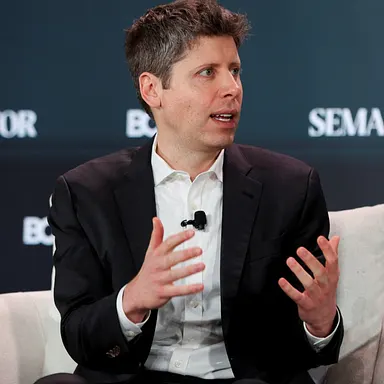
Photo: OpenAI CEO Sam Altman speaks at the Semafor "Silicon Valley & The World" Conference in San Francisco, California, US November 16, 2026. REUTERS/Manuel Orbegozo