
This Global News Podcast edition covers a range of world stories. Ukraine's President Zelensky welcomed a US push to include European countries in the next round of peace talks with Russia, after envoys Jared Kushner and Steve Witkoff briefed him in Dublin.
Nvidia's Jensen Huang faces a congressional appearance after resigning amid scandal over affairs and suspected spying. Schools across Italy were evacuated over hoax bomb threats, and Haiti's security forces say they retook the capital's main stadium from gangs.
The show also looks at a US soldier's rebuke of Pete Hegseth, Pakistan's rapid shift to solar power and its grid costs, and a Tokyo congress seeking matcha quality standards.
In this episode Ankur Desai, Alfie Habichen, Lily Jamali, Tom Bailey
The transcript of this episode on Ukraine peace talks and Nvidia's Jensen Huang was made with HappyScribe technology, the same technology behind AI meeting minutes.
Ads in this audio differ from the text. Tap the sentence you're hearing to follow along.
Synced: the text now follows the audio.
This BBC Podcast is supported by ads outside the UK.
Welcome to the Haunted Library. Join me, Colin Morgan, as I read "Frankenstein" by Mary Shelley, a story of science and ambition, loneliness and longing, and what it truly means to be human. Listen to the Haunted Library wherever you get your podcasts, or find us on YouTube.
The Global News Podcast from the BBC World Service. Hi, I'm Ankur Desai, and in the early hours of Friday, the 13th of November, these are our main stories. After meeting Donald Trump's envoys in Dublin, Ukraine's President Volodymyr Zelenskyy has welcomed their efforts to have European countries included in the next round of peace talks with Russia. Jensen Huang agrees to appear before Congress as questions grow over a sex and suspected spying scandal. And we'll tell you why a soldier has been rewarded for reprimanding the U.S.
Defense Secretary. Also, in this podcast, "Panic in the Classroom," thousands of schools across Italy again receive seemingly empty bomb threats, and how matcha do you love green tea.
I've been getting this matcha five days a week. Actually, I feel like seven days a week. I'm hooked.
Because I've tasted matcha, and it tastes like grass. So that tells me that you can't be trusted as a person because you're actually lying to yourself.
The viral drink now has its own conference in Tokyo with the aim to keep standards and quality up. Now, for the last two years, Europe has been largely sidelined in talks with Russia to bring peace in Ukraine. But after President Trump's envoys met President Putin in Moscow on Thursday, Russia agreed to give the Europeans a seat at the table. That's been welcomed by Ukraine's President Volodymyr Zelenskyy, who was given an update from Jared Kushner and Steve Witkoff in Ireland at a meeting of European leaders.
And this is important, that Europeans next time, next meeting, Europe will be a negotiating team, in, not some way, not separately. They will have a voice. This is important for us because the war is in Europe. We will be a member of EU in the future, and that's why it's very important. And for prosperity and for security guarantees, it's very important to have Europe.
Kaja Kallas, the EU's top diplomat, questioned Russia's commitment to peace but welcomed involvement from Europe.
I think after the almost two years of talks between U.S., Russia, they have now realized that Europe is a big player here because we are the ones who have been supporting Ukraine, and we are the ones who have put sanctions in place, and we have the frozen assets. So clearly, without us, any agreement that is there cannot be implemented.
President Putin met President Trump's envoys Jared Kushner and Steve Witkoff in the Kremlin earlier. So what's the message from Russia? Steve Rosenberg reports from Moscow.
Is there momentum for peace? After weeks of shuttle diplomacy, the American envoys were back in Moscow. But could they persuade Russia's president to end the fighting? After this visit, would peace in Ukraine be any closer? Inside the Kremlin, Vladimir Putin greeted Steve Witkoff and Jared Kushner, now frequent guests. At the table, the Americans made their pitch: it's time for peace.
We have to solve this conflict. It's a tough conflict on both countries, and this is important work that we're all doing.
From President Putin, a warning to European countries not to send peacekeepers. In Ukraine, any foreign troops, he said, would be legitimate targets for Russia. On a Kremlin conference call later, President Putin's aide said the talks had been constructive but no hint of any concessions by Moscow and stinging criticism of European leaders. Europe, the Kremlin says, needs to decide if it wants war or peace.
Well, what struck me about that call just now was the tone, very uncompromising, both on Ukraine and on the question of European security. Not only has the Kremlin repeated an old demand that NATO move its military infrastructure back from Central and Eastern Europe, but it said there'll be more demands to come.
From Russia, the U.S. envoys flew to Dublin for talks with Ukraine's president. In Ireland, Volodymyr Zelenskyy has been meeting European leaders and receiving strong support. Back in Moscow, after nearly five years of war, you can sense the fatigue. I want this to end as soon as possible. Nina says, it's a war that no one needs. Of course, we feel it, Ilya says, so I hope that more peaceful times come.
So Russians wait, convinced they have little influence on what happens next.
Steve Rosenberg reporting from Moscow. Now, one of the most powerful men in the AI industry will appear before Congress after having been forced to resign over a sex and suspected spying scandal. Questions will be asked over Nvidia's Jensen Huang's decision to pursue an extramarital affair with a woman who's suspected of being a Chinese spy. Reports are emerging of another affair with an Nvidia executive, Kimberly Powell. His biographer, Stephen Witt, told us Mr.
Huang's connection to the firm was deeply personal.
Both his kids work for this company. In my conversations with him, he talked about his family, his wife, and his kids constantly, how much he owed to his wife. I don't know how he repairs this. I don't know if he has an identity outside of this. It's going to be very challenging for him.
Our business editor, Simon Jack, considers Jensen Huang's impact on Nvidia and what this means for artificial intelligence.
It's hard to overstate how giant a figure Jensen Huang has cut on the global economic stage. He turned Nvidia from a gaming graphics backwater into the sun at the center of the AI solar system. Elon Musk and Mark Zuckerberg would beg him for more of the company's cutting-edge chips, and he lent or invested billions in other companies.
Welcome to the stage, Nvidia founder and CEO Jensen Huang.
His impatient, energetic brand, clad all in black as he launched his latest tech, gave him a talismanic profile that rivaled or possibly even surpassed Apple's Steve Jobs in his prime. But the revelations of two affairs and question marks over links to China saw the halo slip quickly, allowing underlying concerns to emerge. Prominent among them was governance, in other words, how Nvidia was run. He ruled over an unusually flat management structure, with dozens reporting directly to him personally, a ridiculous setup, according to one senior executive.
The promotion of family members to senior posts may work in a family-run business but are questionable in a $4 trillion publicly traded company. Nvidia's role as a cornerstone lender to and investor in the rest of the AI industry, including some of Nvidia's own customers, has raised concerns about circular financing in the AI industry and has people looking for signs of contagion. The speed with which the spell he cast over an entire industry broke is a fascinating modern parable, with the lesson and the consequences still yet to be fully learned.
Well, Jensen Huang is expected to appear before a Senate committee as early as next week, alongside the U.S. Commerce Secretary Howard Lutnick, over national security concerns sparked by the former CEO's affair with a suspected Chinese spy. The turmoil that has wiped hundreds of billions of dollars off Nvidia's market value. Our North America technology correspondent, Lily Jamali, gave us more details.
The stock is down about a quarter, so like 25% wiped off the value of this company over the last 10 year 10 days, rather. And the shares slid even more today in the wake of the news of Jensen Huang's resignation. He is synonymous with this company. It's a very big deal to see someone who is so central to the company's operations leave, and somebody who is also so central to the bigger AI ecosystem here in Silicon Valley.
He's also indicated that he'll appear before Congress. So what can we expect to happen there?
Yes. So this is not confirmed by us, but there has been reporting in Politico and elsewhere that he will be appearing. This is in response to calls from both sides of the aisle, members of the House and the Senate, especially those who head committees having to do with national security. The U.S. National Security have summoned him and had threatened him yesterday with subpoenas if he didn't willingly show up. So it makes sense that he would now be testifying because they do have the ability to compel him to come and testify before closed doors.
That's possibly going to happen in the next week.
It also sounds like, as we heard earlier, Lily, that the company is running quite an unconventional way. So how much soul-searching will there be for Nvidia now?
Well, I think they are being handed over to an interim CEO who knows the company very well. What you see with the board's language around next steps is this message of continuity. They've chosen the chief financial officer, who's been in place for 13 years. She's a very familiar face. And what you saw in their note today announcing her as the interim is that she's somebody who knows this company inside and out. She knows their customers, and she's helped execute on Jensen Huang's vision.
And so it doesn't mean she'll get the job. She's not a technologist, which Jensen Huang was. But it's certainly possible she could get the top role. According to the company's board, they are searching for a new permanent replacement, either internally, and they're also looking outside the firm.
Our North America technology correspondent, Lily Jamali, reporting to Italy now, where several schools have been evacuated for a second day in a row after receiving hoax bomb threats. It comes a day after more than 6,000 schools in Italy and more than 700 in Scotland and Northern Ireland also received bomb threats. I had more from our reporter, Alfie Habichen.
This started on Wednesday when an email was sent out to almost every state school in Italy threatening an attack. Schools in Scotland and Northern Ireland also received a quite similarly worded email threatening an attack as well. And now, a day later, we've had 3,000 more bomb threats at schools in Italy. As you say, no concrete evidence of any real threat here so far, but what it has led to is panic. You've got a situation where those headmasters around Italy and those other countries left with this decision of, do you treat this as credible or not?
Do you shut the school down? And that is an enormously difficult situation to be in, hugely stressful for the parents too. We spoke to one in Rome. Here's what he had to say.
Yesterday and today were strange days. I was a parent of a four-year-old girl going to the nursery school. I've been texted on the WhatsApp group of the nursery class that I have to go to the school because the school has been evacuated. Strange feelings, I would say. I hope we are not going to get used to this situation.
Alfie, do you know who's behind this?
Well, there is one name that is appearing on a lot of these email threats. That's Mikhail Adropov. It seems to be a fake identity. It's thought to have come from an account in the Philippines that was hacked. But it is a name that has also appeared on some of these hoax bomb threats to European flights as well in the last couple of weeks. So this could be connected, or we might be looking at a copycat operation. That's where different perpetrators choose the same name. It adds a sense of coordination, adds a sense of terror.
There are also theories about this being a Russian-backed hybrid warfare operation, but the reality is we know very little about where this all really comes from. And if the authorities do, they are keeping it to themselves right now.
And as you say, Alfie, it was only a week ago that we were talking about flights being hit by bomb threats. So many people have been affected by this.
Well, exactly. If you take a step back and you think about the level of disruption that's been caused around Europe, dozens of flights making emergency landings, newsrooms evacuated, now thousands of schools affected, all of this without any real concrete proof of a threat. It's the perfect asymmetric attack, minimum risk for the attacker, maximum disruption caused for the victims. And what we're hearing from leaders like Georgia Meloni, Emmanuel Macron, or even the police in some of these countries is, it's got to be treated as just that.
It's a hoax. But it's that's easier said than done for the people who are on these planes that are having to make these quick emergency landings. It's easier said than done for the parents of the kids in those schools. They will feel a genuine sense of terror, and that may be just the objective of an operation like this.
Alfie Habichen reporting. Haiti's security forces say they've regained control of the country's main stadium in the capital of Port-au-Prince, which has been held by gangs for two years. Police said they'd handed the Silvio Cato Stadium to Salvadoran armed forces, who've been operating in Haiti outside the remit of the UN-backed gang suppression force. Our Central America correspondent, Will Grant, has the details.
Wrestling back control of Haiti's main stadium from the country's gangs represents another important symbolic victory for the Haitian authorities and a deployment of more than 2,000 Salvadoran troops. In a statement, the Haitian national police said they had taken full control of the Silvio Cato Stadium in the capital, Port-au-Prince, before passing control of the facility to a contingent of Salvadoran troops. The gang control of the stadium had forced Haiti's national football team to play their qualifying matches for this year's FIFA World Cup in Curaçao.
State television in El Salvador later confirmed that Salvadoran forces had taken up positions in and around the stadium, and the country's president, Nayib Bukele, posted a video of the operation onto social media. The step comes just days after Salvadoran military helicopters apparently destroyed a compound outside the capital, which President Bukele said was the headquarters of the powerful 400 Moasso gang. At least 20 people were reported to have been killed in the attack. 400 Moasso are known for carrying out widespread kidnappings and extortion.
A few hundred Salvadoran military personnel were posted to Haiti as part of the Gang Suppression Force, or GSF, a UN-backed international body led by soldiers from Chad and tasked with breaking the control of the gangs in Haiti. After four Salvadoran Air Force technicians were abducted by gang members in Port-au-Prince in late October, President Bukele has ramped up his deployment of troops to around 2,500. Writing in Haitian Creole on social media, he warned the gang leaders that his government had already broken up the gangs in El Salvador and would do the same in Haiti too.
His hardline strategy has gained the praise of both the Haitian prime minister and the president of the neighboring Dominican Republic alike.
Will Grant reporting. Still to come in this podcast, the energy revolution in Pakistan.
Even in small weddings here, people used to give motorbikes or other household items. Now they give a solar panel and an air cooler. It has become almost a must.
Welcome to the Haunted Library. Join me, Colin Morgan, as I read "Frankenstein" by Mary Shelley, a story of science and ambition, loneliness and longing, and what it truly means to be human. Listen to the Haunted Library wherever you get your podcasts or find us on YouTube.
This is the Global News Podcast. Now, would you call out your own boss? That's what one soldier did during the U.S. Defense Secretary's visit to a veteran's memorial service.
All visitors will maintain an atmosphere of silence and respect at all times.
Now, that's the moment the guard told off Pete Hegseth for laughing with staff whilst near the tomb of the unknown soldier, which is known for its poignant, quiet atmosphere. Well, that scolding won the soldier praise. And in a surprising turn of events, Pete Hegseth awarded Sentinel Thomas Iglesias a medal. Our Global Affairs reporter, Tom Bailey, has been telling me more.
Yeah. Pete Hegseth, a man kind of rarely out of the news. He'd been attending a veterans' day event at the Arlington National Cemetery, which is this site just outside Washington, DC. Now, after this commemoration, he and an entourage made up of his wife and several senior advisors visited this site, the tomb of the unknown soldier, which is this very, very sacred site commemorating unidentified American service members who've died in combat. Now, they visited this site and posed for pictures. And whilst they were there, the sound of laughter and talking was heard.
Now, this is a site where anyone that's been there at somewhere I've spent time, and it's a very somber and reflective atmosphere. And people are really encouraged to be very, very somber when they're in the environments of this. Now, it's guarded about 24 hours a day by a soldier from the U.S. Army's 3rd Infantry Regiment. And the soldier in question on duty yesterday took offense, really, at this noise that was coming and very loudly called out, effectively, his boss for their actions and shouted at him and his party, saying, "All visitors need to maintain this atmosphere of silence and respect at all times."
Now, a video of this quickly went viral on social media, lots of people expressing outrage, saying this was a lack of respect. And not so, said the Pentagon. They actually swiftly put out a statement defending Hegseth and the soldier as well, interestingly.
And has there been any sort of apology from Pete Hegseth?
So he's not directly apologized, but this statement from the Pentagon said that he is always honored and will always honor the sacrifices of the military to the military is made to keep Americans safe. This soldier, Thomas Iglesias, he was summoned to the Pentagon. And what's actually happened today is he has been awarded the Joint Service Commendation Medal by Mr. Hegseth. The Pentagon says this is for the execution of his duties at the tomb of the unknown soldier during these events. So clearly, no hard feelings. Mr. Hegseth has actually put out a picture on his social media of this medal ceremony with the caption, "We love soldiers.
We love standards. Well done."
And Pete Hegseth, he's certainly been under fire in recent days and weeks, hasn't he?
Yeah. So I mean, since the Republicans' drubbing, effectively, in last week's midterm elections, he's been a man under real pressure because time and time again, the answers for why people were turning away from the Republicans, people were blaming the Iran war and specifically the impact it's had on fuel costs. So people have been looking for a scapegoat, who to blame here. And the obvious candidate is the Secretary of Defense, who's spearheaded this Iran war. So there quickly rumors emerged that Mr. Trump may be looking President Trump may be looking to remove Mr. Hegseth.
But he came out firing earlier this week of a very, very robust defense of his actions and hitting out an attempt by Republican Congressman Thomas Massy to impeach him. Now, that attempt failed in Congress earlier this week. But this isn't the end of his problems because the Democrats who have taken control of Congress and they take control in January, they vowed to crank up impeachment proceedings once again.
Tom Bailey reporting. Nations from around the world are meeting in Antalya, Turkey, for COP 31. Now, one of the focuses this year is on increasing electrification and moving away from fossil fuels. One country that has seen a rapid increase in solar is Pakistan. In the space of a few years, around a quarter of its electricity is now produced by solar. But as panels spread across the country's rooftops, it's pushing up prices for those still using the national grid. So what lessons can the world learn from Pakistan?
Caroline Davies reports.
From industrialists to tiny villages, solar panels are everywhere in Pakistan.
Assalamu alaikum. This is my room.
Faisal lives in rural Punjab. He got married a few months ago. His wife's dowry stowed carefully in one room, gifts from her family for their future.
So you have all the silverware up here and the bed new as well? Four ornate wooden charpaiz, fans, sofas, and one particularly special item stored for safekeeping under the bed. And this is your new solar panel? Yes. Amazing. How many watts is this? Kidna what? 340. 340 watts? Yes.
Even in small weddings here, people used to give motorbikes or other household items. Now they give a solar panel and an air cooler. It has become almost a must.
One panel can power a fan, but for now, the rest of his electricity is from the grid.
Three families live here. The water motor runs, the washing machine runs, the iron runs. When there is that kind of heavy load, the bill is higher too. When a bill of 15 or 18,000 rupees comes, we can't afford it. It isn't just the electricity cost. Not enough money is left for our other daily expenses.
Do you ultimately not want to be on the grid? Would you try to move away so you can just get all of your power from solar?
I want solar panels over every room of the house so everything runs on solar. I'll do this in a month or two.
Wow. So you're going to have the whole roof will be completely covered?
Yes, the whole roof. I'll buy the panels from Karachi.
Pakistan's solar transformation in the last few years has been unprecedented, and none of it was planned. When electricity prices became too high and solar panels started dropping in cost, people made the switch. But it's not only households. Large-scale industries have increased their solar panels too, including Kohinoor Textile Mills in Islamabad. This factory produces material that's shipped around the world. It's been buying solar panels for years and is planning more, along with industrial-sized batteries to store excess solar energy for when the sun goes down, which means they'll be even less dependent on the grid.
Taufiq Sayeed Saigal is the company's CEO.
We can say that the state must do everything, but the state, unfortunately, today doesn't have the resources. So we can't really say that we blame everything on the state. So we need to do some of the things ourselves.
Pakistan is heavily dependent on imported fuel. Solar can help ease that. But fewer consumers on the national grid means the cost goes up for those still on it. That can encourage more to leave, which raises prices again, risking sending the national grid into a death spiral and creating a two-tier system of solar haves and have-nots. The cost is already being felt.
Just the past two years, the exodus from the grid has cost the rest of the consumers more than 500 million US dollars a year.
Awais Akhmed Laghari is Pakistan's energy minister.
This is going very rapidly. Is there a fear that this could run away from you?
No fear.
Why?
No fear at all. We've already incorporated that growth.
Are you trying to slow it down a bit to make sure it doesn't go any further?
No, no, no. We can't slow it down. It's not under our control. And we haven't ever exercised any control to slow down. The only thing that will slow it down is a more efficient pricing mechanism on the grid. And that's what we are focusing on. We are wanting to compete with this technology.
The government says the exodus from the grid is slowing. The threat is not over. Analysts say Pakistan is at a crossroads. It can be a lesson to others on the pitfalls that can befall a fast energy transition or a guiding light in how to make solar power a success.
Caroline Davies reporting from Pakistan. Sometimes a particular food or flavor seems to take off. And before you know it, it's everywhere. But while Dubai chocolate and salted caramel boomed, then quietly went away, matcha seems to be here to stay, going from a traditional Japanese tea to a multibillion-dollar global industry. But its success has come at a cost, according to Japan's International Matcha Association, who've been trying to protect it.
Stephanie Prentiss has this report.
For a simple drink made from whisking powdered leaves into water, matcha has made a powerful mark on the global food and drink industry. The vivid green tea seems to elicit a strong reaction when people first try it from.
I've been getting this matcha five days a week. Actually, I feel like seven days a week. I'm hooked.
To.
I was on a deserted island and searching for water for months. I might try it again.
But despite matcha being everywhere, from high street coffee chains to protein bars, there isn't a definition of what it actually is or any rules around its quality. Now, the first-ever International Matcha Congress has gathered more than 1,000 people from 27 countries, with everyone from farmers to policymakers having their say.
On the market today, you can get things that are not tea. Maybe they're green, but they're dyed with spinach.
Professor Kathryn Burnett is director of the Institute for the Study of Tea Culture and Science at the University of California, and she attended the conference in Tokyo.
This event was to draw people together from around the world to consider what is matcha from industry and, in my case, academia and farmers and so on, and get people to contemplate, but also to collaborate globally. And it was a resounding success.
The main result, developing an international framework to assess matcha quality based on scientific measures. Standards aside, there's also been issues with supply and demand.
I am done with the matcha shortage and skyrocketing prices. Everything is matcha now. Matcha cookie, matcha cake, matcha pan.
But according to Kathryn, shortages are being addressed with even more expansion.
Not only is Japan producing it, but outside of Japan, China, Vietnam, Taiwan, India, and soon California will be farming it as well.
Good news for fans who believe in matcha's superpowers.
It contains an amino acid called L-theanine that increases alpha brain waves. Second, matcha contains an antioxidant, which increases dopamine levels and protects neurons in the dopamine.
And probably bad news for people sick of seeing and hearing about matcha.
Matcha drinkers are liars by nature because I've tasted matcha. It tastes like grass. So that tells me that you can't be trusted as a person because you're actually lying to yourself.
Big predictions for the future. Industry forecasts suggest more steady growth, but an increased focus on matcha's origin, quality, and preserving what made it popular in the first place.
Stephanie Prentiss, spilling the tea. And that's all from us for now. If you want to get in touch, you can email us at globalpodcast@bbc.co.uk. You can also find us on X at BBC World Service. Use the hashtag globalnewspod. And don't forget our sister podcast, The Global Story, which goes in depth and beyond the headlines on one big story. This edition of The Global News Podcast was mixed by Nikki Broph and the producer was Charles Sanctuary. The editor is Karen Martin, and I'm Uncle Desai.
Until next time, goodbye.
Welcome to the Haunted Library. Join me, Colin Morgan, as I read Frankenstein by Mary Shelley, a story of science and ambition, loneliness and longing, and what it truly means to be human. Listen to The Haunted Library wherever you get your podcasts or find us on YouTube.
Ukraine's President Zelensky has welcomed efforts by Jared Kushner and Steve Witkoff, to secure European involvement at the next round of peace talks with Russia. He was speaking alongside the US envoys in Dublin, where they'd flown to brief Mr Zelensky on their earlier discussions with Vladimir Putin in Moscow. Mr Zelensky said it made sense for Europeans to be involved as Ukraine would eventually be an EU member.
Also: One of the most powerful men in the AI industry -Jensen Huang- will appear before Congress in the US after being forced to resign over a sex and spying scandal. Schools in Italy have been evacuated for a second day in a row after receiving hoax bomb threats. US Defence Secretary Pete Hegseth has awarded a medal to the guard who reprimanded his group for laughing at Arlington National Cemetery. Haiti's security forces say they've regained control of the country’s main stadium in the capital Port au Prince, which has held by gangs for two years. How Pakistan is leading the way in solar energy... and, as matcha continues to boom, a new Japanese matcha congress meets to try and stop it being a victim of its own success.
The Global News Podcast brings you the breaking news you need to hear, as it happens. Listen for the latest headlines and current affairs from around the world. Politics, economics, climate, business, technology, health – we cover it all with expert analysis and insight.
Get the news that matters, delivered twice a day on weekdays and daily at weekends, plus special bonus episodes reacting to urgent breaking stories. Follow or subscribe now and never miss a moment.
Get in touch: globalpodcast@bbc.co.uk
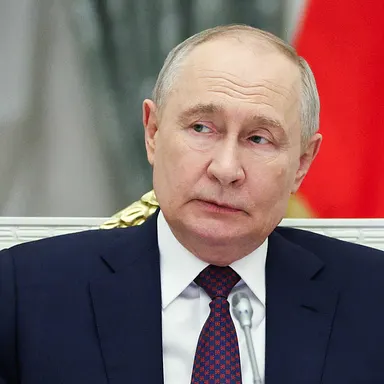
Photo: Russian President Vladimir Putin chairs a meeting in Moscow, Russia.
Credit: Sergey Builkin / Sputnik