
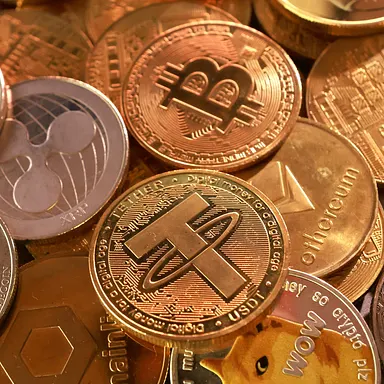
This episode examines the $6.3 billion theft from the cryptocurrency exchange Binance, which the FBI has attributed to North Korea. Host Asma Khalid speaks with journalist Geoff White, who explains how hackers reached an employee through a fake job offer and moved billions out in under twenty minutes.
The conversation traces North Korea's cyber campaigns from the Sony Pictures hack to the Bangladesh Bank theft, and considers why the regime may rely on crypto theft for revenue. Listeners will hear whether the stolen funds can be recovered, and how worried the public should be.
North Korea denies the accusations.
In this episode Asma Khalid, Geoff White
This episode on North Korea's alleged $6.3bn Binance hack was transcribed using the technology behind HappyScribe's AI note taker.
Ads in this audio differ from the text. Tap the sentence you're hearing to follow along.
Synced: the text now follows the audio.
How did North Korea become a cyber hacking superpower? Hi there, this is Asma Khalid from The Global Story Podcast at the BBC, and we are here with the episode of the week that we are sharing with you all on The Global News Podcast. Now, you all may have seen headlines recently about a $6.3 billion hack of the cryptocurrency exchange Binance. It was a massive heist that's now being investigated by the FBI. But behind this extraordinary theft might be an even bigger story: North Korea's transformation into one of the world's most sophisticated cyber powers.
The country has built a vast, state-sponsored digital crime operation, one that appears to be responsible for some of the biggest cyber heists in history, and one that is helping fund the regime. Take a listen, and we hope that you all enjoy this episode. A reminder that if you are looking for more from us, you can always subscribe to The Global Story as a podcast wherever you're listening to your favorite shows. Now, on to today's episode. Picture a classic heist: elaborate disguises, getaway cars, mass robbers making off with millions in cash or priceless works of art.
But today's most audacious theft doesn't actually look anything like that. The other week we saw what's believed to be the biggest heist in history.
Binance, the world's largest cryptocurrency exchange, says $6.3 billion is impacted by a security hack.
And not only was this theft orchestrated from the other side of the world, the FBI is putting the finger squarely at North Korea. Now, this is not the first time that North Korea has been accused of a major cyber attack. Hacking has become a central part of the country's economy and a way for it to raise billions of dollars. So how did one of the world's most reclusive nations become a global cyber hacking powerhouse?
From the BBC, I'm Asma Khalid in Washington, D.C., and today on The Global Story, the behind-the-scenes story of the biggest theft in history. There's this investigative journalist by the name of Jeff White, who's covered organized crime and technology for years.
And when we first started talking about this story as a team, one of our colleagues said, "You have to talk to Jeff." He reported this podcast series for the BBC all about North Korea's cyber warfare and hacking operations. It's called Lazarus Heist. It became a hit podcast, and he even wrote a book about it. So, Jeff, I am so pleased that you're with us today. This theft targeted the world's largest cryptocurrency exchange, known as Binance. It was a huge sum of money.
What crossed your mind when you first heard about the hack?
It's an extraordinary sum of money. It is almost certainly the biggest theft of all time if you look at one hit and one victim in one go. And it's four times larger than the raid also attributed to North Korea last year, which was already the largest theft of all time. So it's jaw-dropping.
And for those who may have just kind of seen the headlines but not known the specifics, what actually transpired here? What do we know currently about the Binance hack?
Yeah, from what Binance said itself and from what researchers and investigators have also put out, what we know broadly speaking is this: Binance is one of the world's biggest cryptocurrency exchanges. You can take your pounds and your dollars there, and you can swap them into things like Bitcoin, but also a raft of other cryptocurrencies. There are loads and loads of these cryptocurrencies. Binance will facilitate the exchange, but will also hang on to your crypto for you. So they host people's crypto wallets. These are sort of digital wallets, the virtual wallets, in which these crypto assets are held.
Hackers targeted Binance and have been targeting it for months. Their initial attempt on Binance was to try and trick one of Binance's own employees into downloading some software that the employee thought was normal software, was useful software, but actually had been virused by the hackers. And they tried to trick this individual into downloading their virus copy. Now, the employee didn't fall for that, but through that, the hackers learned enough about Binance and who worked there and how they were connected to have another go. And in September, they went back to another Binance employee, one of their software developers, with a tempting offer, a juicy job for that person.
Now, presumably bigger salary, better perks, whatever. However this happened, the employee was tempted and started working through the recruitment process for this job, which came through a legitimate recruitment site. What that employee didn't know is the people asking to hire him or her were hackers.
Oh, wow.
And they started interviewing this person. They interviewed them on at least two occasions, started building a rapport with this individual. And then comes the kicker. They said to this Binance employee, "Look, we want you for this new job, but if you're going to work there, we have to test you on this particular software because it's used in this new company. So we're going to send you a link where you can download that new software, and then we'll test you." And the Binance employee clicked the link, downloaded the software, and unwittingly downloaded the hacker's viruses. So the hackers then have a foothold on that employee's machine.
Now, I think people have an idea from the movies that you type a few commands, you press go, and there's a big green flashing thing saying, "Access granted." Have money now. It's not like that. You had to spend a lot of time as a hacker usually working out how organizations work. Every organization is unique. They have different software. It's configured differently, different teams of people. There's a lot of reconnaissance that goes on before you can normally escape with the money or the data or whatever you're after. But in this case, the hackers had an advantage. Binance had internal AI systems like a lot of organizations, big organizations do.
So the hackers effectively used Binance's own AI against itself to work out where Binance kept its money and to transfer out different cryptocurrencies. And the eventual value of that theft in dollar terms, US dollar terms, was something in the region of $6.3 billion.
And Jeff, am I correct? I was reading that this was done extraordinarily quickly.
Yes, the large majority of that $6.3 billion was stolen in under 20 minutes. The whole thing took about three hours, but this is cryptocurrency. And it's worth noting that, again, the hacks attributed to North Korea on cryptocurrency exchanges show us how fast this is. A few years ago, they stole about $625 million. That took them 1 minute 56 seconds. They then stole $1.5 billion. That took them 2 minutes 38 seconds. And now it's $6 billion, and it's taken them under 20 minutes. So the amounts are going up, and if you think about it, the time involved is actually going down.
What do we know about who was responsible and how quickly was that detected?
Well, people got on the case with this extremely quickly. One of the things about these cryptocurrencies is the movements of crypto is often public. It's publicly available on a thing called the blockchain, which tracks movements of cryptocurrency between wallets. So you can see the wallet IDs. You can't always see who's behind them, but you can also see the transactions moving between them. And so suddenly people are aware there's a big outflow of money from Binance.
And you could see that. You were saying publicly.
You could see that. Exactly.
Okay.
So Binance couldn't really sit on this and keep it secret. It's obvious this was happening. As soon as it happened, fingers started pointing at North Korea. That's for two reasons. Firstly, North Korea has got form on this. It's been accused over the years of breaking into crypto businesses and stealing huge amounts of money. In my time, I've seen the amounts of money North Korea is accused of stealing from crypto companies double roughly every two years or so. The other thing that happened was there are people who trace the movements of these cryptocurrencies, companies who specialize in that.
And they started tracking which wallets this money was moving into. And they started comparing those to wallets used in previous North Korean campaigns and found matches. And the idea is, well, it's probably North Korea because it's being put into the same wallets that we've previously seen in hacks attributed to North Korea. The last thing that we're still waiting on is what viruses and what software was used to hack into Binance. And again, as investigators compare that with previous viruses used on previous jobs, they may again get another line of attribution back to Pyongyang.
On October 31st here in the United States, we saw the FBI attribute this hack to North Korea. Subsequently, we have also seen North Korea deny this allegation. A North Korean official and the sister of the leader, Kim Jong-un, said that the accusations were another sinister attempt by the United States to damage the country's public image. Despite that kind of tip for tat, it sounds like from your vantage point, the evidence is still nonetheless pointing towards North Korea.
Yeah, it's worth noting that the US is still at war technically with North Korea. A truce was declared, but the peace agreement was never actually signed. So the two countries are adversaries, proper enemies. And so the exchange of verbal fire, if you like, between them is to be expected. It was worth saying North Korea consistently denies any connection to these hacks. But the US government, via the Department of Justice, has released hundreds of pages of its evidence that it claims supports these accusations.
A two-page response from North Korea, which is what I've had in the BBC podcasts that I've co-hosted, doesn't really cut the mustard. If you're going to refute these allegations, you've got to come out with a pretty stiff rebuttal. And we haven't seen that yet from North Korea.
So these are North Korean hackers, you're saying, and are all of the hackers essentially under one umbrella? And the reason I ask that is that I've seen different names attributed to this all, trade, traders, the Lazarus group. Can you explain that to us?
Yes, there is a certain amount of tea leaf reading goes on in these matters. Security researchers around the world are monitoring the impact of these hacks and trying to track back which groups hit which targets and how. And what happens is the security researchers see an attack, then they see another attack, and they think, well, those two attacks look similar and similar tools used. I think that's the same group. And the security researchers will give them a name. And there is a sort of bizarre science behind the naming of some of these groups. Silent Colimar and Kim Suk-hee, Trader Traitor, the Lazarus group.
The problem with that is twofold. Number one, we can never be entirely sure because, of course, it's not like the hackers send an email and say, "Oh, by the way, that was us. That was group X." And secondly, different security researchers can be giving different names to the same group. For me personally, I use the Lazarus group as a sort of convenient journalistic shorthand to cover them all.
Okay, okay. Jeff, you mentioned that this is not the first time that North Korean hackers have made global headlines. When would you say they essentially first came on the international radar?
Yeah, the moment that North Korea's hackers sort of hit the headlines globally was the famous attack on Sony Pictures Entertainment back in 2015. Sony had decided to make a film called The Interview, which was a dumb comedy. I think you describe it as about a group of journalists who go and get an interview with North Korea's leader, Kim Jong-un.
Hello, who's this?
This is the Secretary of Communication for North Korea. Our Supreme Leader, Kim Jong-un, is interested in doing an interview with Dave Skylark.
Oh, my God.
We will meet 50 kilometers west of Dingdong, northeastern China.
Did you just say China? And did you just say Dong?
I can't fast. I don't actually remember that movie. I remember the Sony hack. So I don't know how big the movie was.
The hack actually got far more headlines than the movie ever did or ever would have done, in fact. It's not a bad movie. It's quite good fun. But what makes it remarkable is there are vanishingly few movies in which a genuine, real-world sitting leader is shown as being killed or assassinated.
You two are going to be in a room alone with Kim, and the CIA would love it if you could take him out. Take him out.
For coffee?
Dinner? For kimchi?
No, take him out.
You want us to kill the leader of North Korea?
Yes.
And so in The Interview, the leader of North Korea, you're saying, is depicted as being killed?
He's shown as being killed. And not only is that a brave step, it is impossible to overstate how offensive that would have been seen as in North Korea, where Kim is regarded as like a god, akin to a god. It's not quite that simple, but revered, absolutely revered. And was also a new leader, was quite prickly wanting to cement his reputation. North Korea complained to the United Nations about the film and then, according to the FBI, decided to go on Sony and completely tear the company apart as an act of revenge.
A devastating hack, crippling one of the world's most powerful entertainment studios.
Sony Pictures Entertainment is reeling from what may be the biggest and most devastating computer hacking in Hollywood's history.
Sony Pictures Entertainment employees started seeing strange things happening to their computers. Their computers stopped functioning. They couldn't send emails anymore. They couldn't access company information anymore. And on their screens, what some of them saw was this incredibly scary logo of a sort of skull with flaming eyes and a screen saying, "Your data has been compromised."
Five of Sony's feature films leaked online, including four that have not yet been released in US theaters.
Managed to get details from inside Sony, all of Sony's internal emails. And obviously, this was industry gossip.
The hacks have already fundamentally altered the way the company does business.
The hackers then leaked it with incredibly skillful media management. They staged different releases of different tranches of this data.
The studio's co-chairman and a powerful Hollywood producer are apologizing for their stolen emails. The two use racial jokes to mock President Obama.
And in the end, one of the co-chairs of Sony Pictures Entertainment actually quit her job as a result of this remarkable moment. And as the attribution went back to North Korea, it really was a moment when people turned around like myself and went, "Wow, they can do that."
They can do a lot.
That's quite something.
Yeah. So how did North Korea go from that 2015 targeted hack on Sony, which in their view, they would say, was in response to this provocation, that movie you mentioned, The Interview? How did they go from that in 2015 to what we have now seen in recent weeks, stealing upwards of $6 billion from a cryptocurrency exchange?
Well, in hindsight, the Sony hack looks slightly anachronistic in that it seems to have been a revenge attack by North Korea. That's certainly how the US has portrayed it. Subsequent to that, North Korea's hackers are accused of just doubling down on stealing money. And it started really the year after the Sony hack with an attack on the Bank of Bangladesh, the national bank of that country.
The blame game is underway in Bangladesh after computer hackers stole the equivalent of €73 million from this institution, the central bank.
US law enforcement is now working with Bangladeshi authorities to probe one of the biggest transnational cyber theft cases in the world.
After Bangladesh Bank, you just get this drumbeat of increasingly significant hacks. And at a certain point in about 2017, North Korea starts to really discover crypto. They launched a ransomware attack called the WannaCry ransomware attack.
It looked at first like an attack just on hospitals in the UK, but it's now becoming clear that this malicious software has run riot around the world. Russia, the United States, and many points in between.
It was an attack that went around the world, shut down hospitals in the UK, astonishingly effective hack. From then on, we see them hit crypto company after crypto company. The hacking of KuCoin, that was 2020. That's $281 million. 2022, they hacked into a Vietnamese video game called Axie Infinity, a crypto-fueled video game, stole $625 million. 2025, the hacking into Bybit, again, one of the world's biggest crypto exchanges, it's $1.5 billion.
And now, 2026, the world's biggest crypto exchange, Binance, it's $6 billion. If you chart the course, you could have predicted, I think, that Binance would be a target and might get hit and hit for this amount of money.
Jeff, as I listen to you outline how North Korea has successfully hacked into so many companies over the last decade, you're painting a really sort of story of a country that is powerful at its cyber hacking activity. And yet I'm still left wondering why. I mean, that is the fundamental question I have. Why does North Korea want to do this? What is it trying to achieve?
Well, there's multiple answers to that. The most direct answer is North Korea is broke. It needs money. And the reason for that is because North Korea keeps testing nuclear weapons, launching missiles, and is then sanctioned by the international community, which means it can't buy, can't sell, can't bank, can't trade. How do you exist as a country if you can't do all of that? Well, the accusation is North Korea's task is hackers to go out and steal the money to keep it afloat. Estimates of North Korea's GDP vary, but estimates I've seen hover around sort of $20, $30 billion, something like that.
And if you think of a theft in this case of initially $6.3 billion, you're talking about a serious contributor to North Korea's bottom line. The US government's estimate of how much this contributes to North Korea is that roughly half of North Korea's missile weapons program is now supported by hacking. And if you look at the trajectory and you look at the increases of the numbers over the years, it's entirely possible with the next 5 to 10 years, most, if not all, of North Korea's GDP could be made up of hacking.
It would be the world's first hackocracy.
Wow.
You don't need much to get hacking on the go. You need a laptop and internet connection. What you do need is sort of vast amounts of ingenuity. And it has to be said, North Korea's had that in spades for decades. It's had to cope as a pariah state. So this kind of hutzpah that you need is at the heart of hacking. It's having that ability to think outside the box.
I imagine also that there is a lack of resources, a lack of just industry and technology in North Korea. And so presumably this is an industry.
I mean, look, North Korean society is almost impossible for people outside North Korea to comprehend. And I include myself in that. You can read about it, but unless you've been there and experienced it, it's extremely hard for us to put ourselves into that position. Very, very stratified. There are people who are incredibly poor, dirt poor. Famously, in the 1990s, there was a famine and many, many, many people died in that famine. Subsistence farming will still be a large practice for a lot of people in North Korea. But you do have people in the cities, and particularly the capital, Pyongyang, who lead quite a sophisticated life.
They will have things like iPads and iPhones. The difference, of course, is the government knows that they've got those. You can't get one of those into North Korea and use it, and particularly access the internet without the government knowing about it and sanctioning that use. So it's heavily surveilled. What we're doing now, communicating on laptops over mobile phones and with an internet connection, this just doesn't happen in North Korea. If you've got a computer and internet access in North Korea, the government knows about it. They're monitoring it, and they've probably given that access to you.
So what we don't have in North Korea is what we have in the US and in the UK is bedroom hackers, if you like, people who just pick up a laptop and have a go. This is inevitably state-endorsed, and a lot of it would be state-directed.
It's not renegade force, you're saying. It's state-sponsored.
Yeah.
But ultimately, how are they finding the people, the manpower? How do you ultimately train people to do this work?
Yes, well, North Korea's got a bit of an advantage there in that North Korea went communist in '48, a year before China did. And it has a command economy. It basically takes people and tells them what to do. North Korean society is extremely controlled, extremely stratified. North Korean citizens are almost from birth streamed according to their family's history, according to how close their family were to the Kim family, the ruling family of North Korea. And so they spot talent very early. If you are good at maths, you will be streamed into better classes. Then potentially you go to a university where you'll specialize.
You might at that point be given a computer and learn some computer science. And if you show prowess, you're then streamed into possibly the nuclear program, which obviously needs mathematicians and scientists. Or you might go into the military into one of the hacking units. And that would be seen as being a prestigious career, I think, in North Korea.
Jeff, I want to take you back to where we began this conversation, which is with the incredibly large attack, the hack on Binance. The money that was stolen, do we have any sense of what will happen to it? Has any of it been able to be retrieved?
Yes, well, the money stolen from Binance was stolen in various different cryptocurrencies. I imagine a lot of your audience will be familiar with Bitcoin, the main one. There are loads and loads of these cryptocurrencies. Some of them are centrally controlled. So Tether would be a good example. There's a company called Tether that controls that cryptocurrency and compressed the stop button on any Tether currency. So when Tether noticed this was happening to Binance, it seems Tether went into action and stopped a lot of that currency. And others who could do did do the same. $3 billion of the initial $6.3 billion gets frozen in that way.
And I think there's a probably strong chance that will go back to Binance. However, most other cryptocurrencies are not centrally controlled. Bitcoin, for example, there's no central Bitcoin company that controls it all and can stop it. So that money is just in the wind. It's entirely possible that if this is North Korea, they've already sold that money on to a money laundering network and said, "Look, here's $3.3 billion worth of crypto. We'll take, I'm making this number up, but $2 billion for it. We'll walk away with our $2 billion, and you now have that crypto, and you launder it, and you see how much margin you can make above the $2 billion."
Currently, investigators believe that the currencies stolen from Binance are sitting in something like 12,000 different crypto wallets and are moving from wallet to wallet in a matter of minutes, if not seconds. So tracing this money is going to be extremely difficult. In the end, North Korea's aim, if it indeed is them behind this, is to extract the money, clean it of any link to the crime, and then keep it liquid, keep it global. They need to pay people off in different countries.
They need to buy weapons parts from different countries. They need to buy in expertise. They need to pay people off. That doesn't happen in North Korea. And so having this money global and liquid and not tracked by any of the law enforcement agencies is going to be extremely handy for someone like North Korea.
If indeed this was North Korea, this Binance hack seems to have demonstrated just the sheer power of what North Korea is capable of. This time, it was a crypto exchange, and they were able to pull off this heist of billions of dollars. What targets could be next? I mean, here in the United States, we often think of hacking as potentially going after, say, power grids, water supplies. How worried should we all be?
It's a good question. And I suppose we can draw a bit of comfort in that North Korea hasn't shown signs, at least yet, of targeting critical infrastructure of that kind in the US or anywhere else around the world, as far as I'm aware. They do seem to be extremely money-focused. It is just after dollars. And North Korea's got a really long history of that. I mean, the stuff, the things that North Korea will do for a dollar would really surprise people. Dodgy Viagra, knockoff cigarettes, fake $100 bills.
They counterfeited US currency for a while. And you might think that all sounds a bit crazy, but if your GDP is low and North Korea is, by global standards, is very low, any dollars are good dollars to have in through the door. But that doesn't mean that people shouldn't be worried if they don't have crypto. It's okay. It's all just crypto bros who are getting at.
I don't have crypto money, but you're saying we should all be concerned.
Yes, look, North Korea is an unstable country, and they do keep testing nuclear weapons, and they do keep launching missiles. I have relatives in Japan, and they get text alerts saying, "There's a missile from North Korea heading over the country. You need to shelter." That's the threat that's in that region. And the second thing I'd say is look at where North Korea is in the world and what it's surrounded by. You see South Korea, Taiwan, Japan, China. And look at the equipment that we're doing this interview on, our phones, the laptops, where the chips come from, where the stuff's designed.
It's there. If North Korea pursues this path, and if it does have an extra $3 billion to throw at it, in the end, that's going to be one of the key places for this. If we see destabilization in that region, you can take the effects from the Iran war and the Ukraine war, and I would estimate, I would argue, multiply them by an order of magnitude, because that's going to be the impact if North Korea decides to do something destabilizing, deeply destabilizing that region. It is worth being concerned about this.
This is not a country that we want to get loads and loads of money by the means of hacking.
All right, well, on that note, Jeff, thank you so much for joining us on the Global Story.
No problem. Thanks for having me.
That was journalist Jeff White, host of the BBC's investigative podcast, The Lazarus Heist. Our show today was produced by Vari McKenzie and Josephine Casterly. It was mixed by Travis Evans. Our digital producer was Charlie Firth. Our senior news editor is Chyna Collins. And I'm Asma Khalid. Thanks, as always, for spending some time with us, and we'll talk to you again tomorrow.
Last week saw what could be the biggest heist in history: $6.3bn was stolen from the cryptocurrency exchange Binance. North Korean hackers are suspected of being behind the attack, which saw billions of dollars disappear in just 20 minutes. It’s far from the first time North Korea has been accused of a major cyber-attack. Over the past decade, hackers linked to the country have targeted banks, public institutions and even Sony Pictures. On The Global Story, Asma Khalid speaks with journalist Geoff White, host of the BBC investigative podcast The Lazarus Heist. He explains how this isolated country become a major player in the world of cyber-crime – and where all that money goes. The Global Story brings clarity to politics, business and foreign policy in a time of connection and disruption. For more episodes, just search 'The Global Story' wherever you get your BBC Podcasts.