
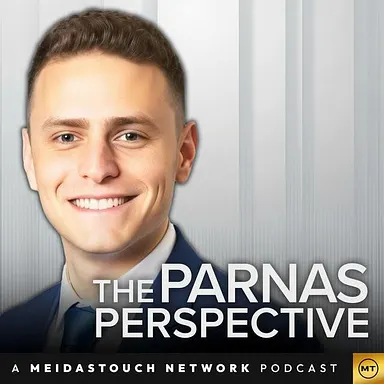
The episode covers reports that Nvidia CEO Jensen Huang resigned after affairs, one reportedly with a woman U.S. agencies believe was recruited by Chinese intelligence, which Huang and Beijing deny. Host Aaron Parnas says The New York Times reported that Trump was warned about the relationship yet still took Huang on a China trip, and critics argue that the White House chip deals and political donations need scrutiny.
The show then features an interview with Senator Ruben Gallego on immigration reform, Democratic leadership, universal health care, and calls for accountability for Elon Musk and Pete Hegseth. Listeners will hear the competing claims about Trump's motives and what the Senate could do next.
In this episode Aaron Parnas, Ruben Gallego
This transcript of the Parnas Perspective episode on Nvidia's China scandal and Senator Ruben Gallego's interview was made with HappyScribe technology, the same technology behind an AI tool that takes meeting notes.
Ads in this audio differ from the text. Tap the sentence you're hearing to follow along.
Synced: the text now follows the audio.
The President of the United States has a really, really big growing problem. The CEO of one of the most important tech companies in America resigned over an affair with a suspected Chinese spy, and the President of the United States—well, we're now learning he stood by him until the very end, until today. Trump was warned, he was briefed, Trump took him to Beijing anyway, and now the question everyone in Washington is asking: why? Make sure that if you can, subscribe, support this work, like, comment, share. Let's talk about Trump's cozy ties to Jensen Huang, because this story needs a lot more coverage, and members of Congress are demanding answers right now.
If you're catching up, here's where we are: yesterday, Jensen Huang, the co-founder and CEO of Nvidia, resigned. Nvidia is the company that makes the chips that power almost all of artificial intelligence. It's one of the most valuable companies on Earth. Huang stepped down after reports of multiple affairs; one was with a senior executive who reportedly—reported—directed directly to him. Another was with a woman named Alice Huang. She has no relation to him; she's an executive at a Singapore company called Megaspeed, and U.S.
intelligence agencies believe she was recruited by China's Ministry of State Security. Let me say that again: the man running the company at the center of America's AI race with China was reportedly in a relationship with a suspected Chinese intelligence asset. Huang denies knowing anything about her alleged ties to Chinese intelligence. Beijing denies she's a spy. Todd Blanche, the attorney general, says the Justice Department hasn't reached a conclusion yet, though he confirmed the FBI is investigating. But the scandal isn't just about Jensen Huang anymore; it's about Donald Trump.
And here's what we know now. According to The New York Times, Trump was warned at least twice about Huang's relationship with Alice Huang. The first warning came last year; the second came in the spring. Trump took no action either time. In fact, he did the quite opposite: he brought Jensen Huang with him on a state visit to China for a summit with Xi Jinping. That's not a small thing. An invitation like that is about as valuable as it gets in Washington. You cannot put a price tag on it. At first, Trump denied knowing anything about the affair or its national security implications.
But he later admitted he had been briefed by Secretary of State Marco Rubio while he was traveling to China with Jensen Huang. So he knew, and he brought him anyway. When reports of the affair first broke, Trump shrugged it off, saying that he had spoken to Jensen and that they'd be fine. He even repeated Huang's denial that he knew anything about Alice Huang's alleged ties to Chinese intelligence. And then The New York Times reported earlier this week, just two days before the resignation, that Trump personally called him and urged him to keep fighting for his job. Think about that for a second.
The President of the United States, who had been warned by his own intelligence agencies, called the CEO at the center of a Chinese spy scandal and told him not to quit. And now senators say we need to investigate the President of the United States in this relationship.
I think some of the very issues that you're trying to get to the bottom of, what is the biggest one on your list here?
Andrew, what matters to me is the blatant disregard of a clear national security risk. There's been a lot of press coverage of the drama and the peccadillos of Jensen Huang's two, three, four—however many—affairs. And while that may well be a grave concern for his family, for him, for the company, that doesn't truly concern me. What concerns me is there's press reporting that for months, clear warnings from the intelligence community that Jensen Huang, the CEO of a $4 trillion company critical to our national security and our economy, was in an intimate relationship with a Chinese spy.
And part of why I sent that request for documents to be protected and retained is that there was clearly some influence here. Secretary Lutnick, according to Secretary Bennett, was not carrying out the directives of President Trump and the core administration policy. Jensen Huang gave, I think, $26 million to the Trump administration that's publicly known. If the Trump administration was in bed with Nvidia, and the CEO of Nvidia was in bed with a Chinese spy, and that has real consequences for our national security, I think that is something well worth investigation.
That right there is significant. Trump in bed with Nvidia, Nvidia in bed with a Chinese spy. Now, why would Trump do this? Well, according to his own aides, Trump saw this as a matter of adultery, not national security. One aide told The Times that Trump dismissed the idea that Huang's entanglement posed any threat to the country. Aides also say Trump viewed Nvidia as essentially too big to fail. He saw Huang as a modern-day Henry Ford. And when reports surfaced that Nvidia's board might remove him, Trump asked confidants what would happen to the stock market.
He was worried that Huang's ouster could cause a sharp downturn. But critics say there's more to it, and this is where it gets very uncomfortable. Under Jensen Huang, Nvidia donated $1 million to Donald Trump's 2025 inauguration fund. Nvidia also reportedly pledged an additional $25 million to Trump's White House ballroom. And Huang won Trump over personally as well. He lobbied to allow chip exports to China. Trump went along with it. He let Nvidia sell certain chips to China under an unusual arrangement in which the United States government took a cut of the revenue, first 15%, then 25%.
Administration officials privately marveled at how much sway Huang seemed to have over the President. Now, Trump has solicited hundreds of millions of dollars from business leaders, from his political operations and pet projects, including the ballroom, including Nvidia. A massive conflict of interest. By the way, Trump himself also owns stock in Nvidia, and Trump continues to defend him. But the fallout is spreading in the administration. The knives are out for one man right now: Howard Lutnick.
I know the President said that he has full confidence in Secretary Lutnick. Do you think that there has to be some administration official held accountable for that? And I think he'd be the prime candidate.
I'm not sure what you mean by how Treasury is going to handle the situation. You know, we come in every day and do our job as prescribed.
There will be an oversight investigation on the administration's handling of Megaspeed, right? Those will strictly go to commerce at this point?
I believe that is a, as I said, that's a BIS function.
That's all Howard Lutnick's fault. The pressure on Capitol Hill is growing as well. Republicans want answers from Lutnick, from Jensen Huang. Here's why this matters to you. This isn't just celebrity gossip. Nvidia's chips are the backbone of artificial intelligence. Whoever leads in AI is going to shape the economy, the military, and the balance of power for literally decades. America's competition with China runs straight through this company. And the President was warned more than once that the man running it was involved with a suspected Chinese intelligence asset. He did nothing.
He brought him to China. He followed his advice on selling chips to China. He accepted money from his company for his projects. And he urged him to stay on right until the very end. This is serious. I spoke with Senator Ruben Gallego about this issue and much more. Take a listen. As always, if you can, subscribe, support this work. A quick word from our sponsor.
Before we get back to it, this video is sponsored by Mysterium VPN. If you've never used a VPN, here's the basic idea: it encrypts your internet connection so the network you're on, like public Wi-Fi at a coffee shop or airport, can't easily see what you're doing. It adds an extra layer of privacy, especially at a time when so much of our lives happen online. You know the moment when you turn on your VPN, open a website or streaming service, and immediately get an error saying it's been flagged? It happens a lot with traditional VPNs because they route your traffic through commercial data centers, and some services recognize those IPs and restrict them.
Mysterium VPN works differently. Instead of data center IPs, it connects you through people's personal home internet, called residential IPs, so you look more like a normal person browsing from your house. Results can vary depending on the service and connection, but it's another option when a traditional VPN falls short. I care a lot about people having control over how they get their information. The internet should feel like yours to use. And if you've never used a VPN before, this is a perfect opportunity to try one I personally trust. Right now, Mysterium VPN is running a Black Friday offer.
Use my link in the description and pinned comment to learn more and grab the deal. Mysteriumvpn.com/offer/Aaron. Now, back to the news.
Now, my conversation with Senator Gallego. Excited to be here with Senator Ruben Gallego from Arizona. Senator, I got to jump right in because right now a lot of people are talking about immigration reform. Arizona obviously has one of the largest Latino populations in the country. The President has been flip-flopping over the past week on possible amnesty, immigration reform. If you had it your way, what would immigration reform look like?
I mean, look, if I had it my way, you would have a process where people that were in the country legally, make them go through background checks, and you would have them pay a fine for that. And then you would start them in the process of becoming legalized. So you would go from basically having a temporary visa, and then you'd have a legal permanent residence, and then eventually, if they qualify, they'd become U.S. citizens. But right now, you know, if the President approached me and said, like, we should strike a deal, I would consider a lot of things. Because I do want to protect millions and millions of these innocent families from being separated.
And I'd be willing to listen to anything. Because, like, you know, it's heartbreaking hearing these families, you know, that are what they're going through, the fear in our communities. And, you know, I think it would be irresponsible for me not to consider all options.
Has the White House reached out at all, or at least signaled openness to working with you all on possible immigration reform in the new Congress?
We've had some reach out, and we've reached out to some people. So there has been some communication. There has been messaging that they're open to it. But then, you know, they send these different signals. Like, this is, you know, they send these messages, and then the next day they appoint Steven Miller, right? And so it's like one of these things that, like, you know, you just don't know what flavor they're going to be on that day. What are they thinking? And so, again, because there's so many families that are hurting in this world, in this country, I would still try, even though, you know, their messages are all over the place.
Now, the Senate Democratic Caucus is going to have a choice over the next several weeks as to who's going to lead. You came out previously and said you supported Chuck Schumer. That was before Chris Van Hollen announced last night. Do you still support Chuck Schumer?
Yeah, I mean, it's kind of hard to switch now. But look, Chris is a good man. Chuck has done a great job. Either one is going to do a great job. What really matters, in my opinion, just because this is all kind of insider baseball, is what we do internally as a caucus about the other things that we want to see changes, right? Other leadership changes, the demands of what we need to do with this agenda this year, right? Making sure that we stop Trump, that we figure out how to stop the abuses that come from ICE, try to claw back the money, try to, you know, bring, you know, the Medicaid cuts back, try to push forward a good agenda for 2028 when it comes to health care, you know, whether it's, you know, Medicare for All or any other agenda that really, you know, unites us and actually pushes forward.
So I think whether or not it's Chris or Chuck, there's still going to have to be a bigger conversation about what leadership looks like and what an agenda looks like for us as a caucus.
What do you say to all of the people online, especially, and a lot of Americans who are just kind of fed up with the status quo and just want something different right now in Congress?
I mean, they're not wrong. The status quo has really fucked a lot of America. And, you know, especially if, you know, I was just having this conversation with another content creator earlier. If you're younger, you know, the status quo has been horrible for you. It's hard to buy a home. It's hard to start a family. Even if you have a job, you're not really making enough to really feel comfortable. And, like, it is this feeling that everything is kind of gone wrong, even though everything that you were told that you were supposed to do for things to go right, you did, right? And so, you know, the real answer that we have to give as Democrats is to make people feel that, you know, the change is coming.
It's going to be hard, you know, obviously because Republicans are still in charge. But we have to at least make such a great effort that people see, like, the horizon, right? They see, like, oh, in 2028 or 2029, when the Democrats take control, they're going to be able to pass one, two, three. And the days of, I think, of, like, of being slow, of being not creative, of not being aggressive, I think are just not acceptable.
You talk about the Democratic agenda. Something on the top of mind for a lot of voters is health care, and specifically universal health care. Is there a path toward universal health care, or at least a vote, a path to a vote in the Senate?
I think so. I think you're going to see an reconciliation. I think we have to work out, like, what that looks like. But, you know, some of the stuff I've heard so far, and I've thought of this myself too, I think are a good idea. We should drop the Medicare eligibility age. We should make it that kids under the age of 18 are covered by, whether it's, you know, Medicaid or CHIPS, whatever it is. And we need to have some option, whether it's a public option that is heavily subsidized so nobody either, A, goes broke trying to buy insurance, or, B, goes broke because they have insurance, right?
And I like the combination of, like, a public option, something like that, you know, we heard through, like, Abdul was running on in Michigan and other kind of mixtures of that. But we need to move forward on universal health care. The health care system is broken. And even if we can't go 100% to it now, there are certain things we can do right now, like getting rid of PBMs, bringing down the cost of pharmaceuticals, you know, breaking up the big institutions and stopping private equity from taking over all of health care are just, like, the one, two, three, four things we could try to do right away.
I want to touch a bit on accountability, specifically on the Elon Musk front, because you've been really going hard on him online. Do you anticipate bringing Elon Musk to testify under oath in front of the United States Senate?
Well, I think we have to. Like, he publicly lied to us and said that he didn't slow down Starshield. It was the U.S. government. Then he said, I don't know who actually did it. Then he said, it was actually me. You can't be a U.S. government contractor and have as much sensitive information as well as, you know, be, you know, a big part of our defense apparatus and not be trustworthy. We need to know what happened, what decision-making process was there, and if this man is a threat to our national security. And if he is a threat to national security, then we need to put the guardrails in to make sure that he doesn't have his finger on the button to make these types of decisions.
Same thing is happening with Nvidia, right? Nvidia, Jensen Huang, I don't really care about his affairs. But, you know, Nvidia, along with Howard Lutnick, have been, you know, essentially trying to push selling as many chips to China all year. What was the motivation for that, right? Was it the Chinese spy? Or was it just corporate greed? Was Howard Lutnick, you know, also allowing this to happen so that way he could boost, you know, the stock market? Or is it because, you know, some of those data centers have investments from different types of friends of his, right?
All these things we need to know because, you know, we're putting a lot of trust in these, like, multi-billionaires and trillionaires. And they need to be put in check, not because we generally just want to be punitive and get our revenge. But it is dangerous that they have this much power. And we have a right as a government and for the American people to make sure that they're not a danger to America.
Something else on the accountability front. Earlier this week, the effort to potentially impeach Pete Hegseth failed in the House of Representatives. Do you think that the House should reconsider impeaching him in a Democratic House? And would you vote to convict if articles came your way?
Yeah, I mean, I think they should. There's been a couple of gross violations that I think are easy. Number one, using the United States military to go after elected officials like Mark Kelly, Elisa Slotkin. That's, you know, one right there. That's a violation. The fact that he has clearly gone around the War Powers Act and our War Powers Resolution, not answering to the fact that we, you know, killed close to 150 poor innocent Iranian students. And he's consistently lied about that. And, of course, the illegal war that's happening off the coast of Colombia and Peru, where we're droning sometimes fishermen with no accountability.
And I think this is the only thing that he'll actually answer to is an impeachment. And from everything I've seen, this is obviously you said to go through the trial portion of impeachment, but from everything I've seen, he has done impeachable offenses, and I would vote to convict him.
Senator, looking ahead to 2028, are you considering possibly a national run right now?
Look, I've been very open on this. You know, we are thinking about it, but there's just a lot of things I have to figure out before that. And one of them is very simple. You know, I am a young dad. If I run, I'd be probably one of the youngest and one of the ones, few ones with kids. You know, I have a 9-3 and a 1-year-old. And it's not easy running for office, being away from your kids. And, you know, so I have to figure out, can I make that happen? And if it's worth it in the end.
Whether or not you run, what do you think the Democratic message should be heading into the next election?
I mean, the next election, we have to really have a very aggressive message about bringing back the American dream. There's just so many people that are just giving up right now. And I think they for good reason, because they really feel like we haven't fought for them. I think, you know, we have to make sure that we're remembering who is still voting, right? If you saw this last election, what was really interesting was that the people that came swung very strongly back to us were young families, right? Young voters. And I think whenever we kind of start talking about politics, we always focus on the seniors. We talk about Medicare.
We talk about social security. Very important things. We need to secure them and everything else like that. But what about helping, you know, that young person get their first house? What about helping that young family get affordable childcare or subsidized childcare, whatever it is? What about that person to make sure they could go to college? Like, we need to actually lean into, like, you know, owning the future for America and not just trying to preserve a lot of the status quo that has been good, right? It's good that we have Medicare. It's good that we have social security. But how are we going to bring universal health care? How are we going to put somebody on the pathway to actually have a comfortable life?
Because right now, even if you're working and you have a good job, you don't feel comfortable. You feel like you're, you know, paying bills and barely making it. And the future does not look much better for that. So that's where we need to be doing. You know, there's going to be obviously some level of, like, hitting back at Donald Trump. But we need to also be really attacking the future for these families that have been hurting for a long time. Like, even before COVID, they were having problems. And now, since then, it's just gotten worse and worse.
Senator, I appreciate the time. Thank you so much.
Thank you.
Surging right now. And thanks to you. Thank you for watching this video. Thank you for sharing our content. Make sure to hit that subscribe button. We're on the road to a million subscribers. Like, comment, share, get the word out. Thank you so much again.
Aaron Parnas reports on breaking news of, including an exclusive interview with Senator Ruben Gallego to discuss what is next for democrats, what accountability will look like for Trump and others, and much more!
------------------------------------
Get Mysterium VPN with the Black Friday offer. Use my link to learn more: https://www.mysteriumvpn.com/offer/aaron
------------------------------------
Substack: https://aaronparnas.substack.com/
X: https://twitter.com/AaronParnas
Tiktok: https://www.tiktok.com/@aaronparnas6?lang=en
Instagram: https://www.instagram.com/aaronparnas/?hl=en
Facebook: https://www.facebook.com/aaron.parnas/
Threads: https://www.threads.net/@aaronparnas?hl=en