
Every line of this episode of The Daily was transcribed with HappyScribe technology. See also: notes for Microsoft Teams meetings.
Ads in this audio differ from the text. Tap the sentence you're hearing to follow along.
Synced: the text now follows the audio.
This is David.
Hi, David.
How are you?
This is Caitlin calling from The New York Times.
Hi, I'm well, thanks. How are you, Caitlin?
I'm good.
It's so good to meet you.
Thank you.
For the past few months, my colleague, daily producer Caitlin O'Keefe, has been calling up voters across Maine to hear how they're feeling ahead of Tuesday's election. Recently, she spoke to a voter named David Bessey.
Can you just tell me how long you have lived in Maine for?
Yes, we have been here for 3 years. I grew up in Waterville, Maine, and now my wife and I have retired back to my home state.
Tell me like a little bit about your political identity. Is there a political party that you've historically identified with?
Yeah, I consider myself an anti-MAGA Republican. I think that I am generally more right of center in my political views, But I think that Trump and the Trump presidency, both Trump 1 and 2, has been an absolute disaster for the country. I think the party is corrupt and self-dealing and honestly incompetent. I think that the whole Doge fiasco was a missed opportunity to really make a difference. And I think that the immigration and ICE How that has evolved under this presidency has been horrible. But I'm not a Democrat. I think that the Democrats under Biden especially really followed what amounted to an open borders policy. I think that the influence of unions on the Democratic Party is not a positive thing. I think that the Democrats kind of failed Economics 101 in general. They think that spending money is going to solve problems rather than trying to solve the problems and then think about money afterwards. And it just seems goofy to me. I can't wrap my head around why anybody would think that would be a logical thing to do. And the Democratic Party, it appears like it's, if anything, it's veering more to the left rather than to the center where I wish they would go.
Which kind of brings us to this Senate race and why I'm struggling as much as I am with it.
Hmm.
I think that Troy Jackson is really a standard liberal Democrat who's gonna fall in line with the Democratic Party. Susan Collins, on the other hand, you know, she's consistently rated one of the senators who's willing to cross the aisle. I look at Susan Collins' record and it seems to me to be pretty solid and thoughtful.
Mm-hmm.
But I think that a vote for Susan Collins has the potential to help the MAGA Republican cohort. Part of the criticism of her is that she has not done everything that she could to try to stymie a Trump MAGA presidency. And, you know, that's probably true. Could she have not voted for some of the nominations that have been made? Yeah, absolutely. I'll tell you my dream scenario.
Hmm.
My dream scenario is that it's 50-50 in the Senate with Susan Collins still there, so that things that need to get passed, she would be an important swing vote on, because I think she would be a swing vote. And would be willing to vote down things that didn't make sense to her from the Republican side and would be willing to vote for things on the Democratic side that did.
From The New York Times, I'm Michael Barbaro. This is The Daily. In this year's midterm elections, a very specific kind of Republican candidate is appealing to disillusioned voters of both parties. Moderates willing to openly criticize President Trump. The question now is whether running away from Trump and his unpopularity is enough to actually win. Today, my colleague Jess Bidgood explains how some Republicans are trying to bring back an older version of the GOP as the future of their party. It's Wednesday, October 28th. Ari, are you ready?
Yeah.
Okay.
Jess, really glad to have you here.
It's a delight to be here.
Delighted to have you here.
So in our study of Republicans who are defying political gravity, In this midterm when so many things are not going well for the Republican Party. Exhibit A, I think, has to be Susan Collins, who is neck and neck in the polls with her Democratic rival. In some polls, she's actually ahead of him in a state, Maine, where the Democrats have won the popular vote in the last at least 3 presidential races. I think even more than that. So let's talk about how Susan Collins Has done that.
So there's 2 things happening in Maine that I think explain this. The first is Democrats, and the second is Susan Collins. So let's talk about Democrats real quick. Let's just remind ourselves about the saga of Democrats in Maine this year.
Saga it was.
Going into this year, Chuck Schumer had an idea about who he thought could take down Susan Collins because she is somebody who Democrats have wanted to beat. They have been hungry to beat Susan Collins for decades. And he looked at the sitting governor of Maine, Janet Mills, who has won twice in that state, and said, she can do it. Maine voters did not agree. Instead, they got really excited about an oysterman who came out of nowhere named Graham Plattner. We've talked a lot about this—
We sure have.
—in recent months. His candidacy—
Implodes.
Implodes after he is accused of rape. And Democrats have to scramble to find somebody else. And they find Troy Jackson, who is a former Senate president in Maine, not someone who has ever won statewide. In fact, I don't think he's ever won an election with more than 10,000 or 11,000 votes.
Right.
And as our colleagues, including Nate Cohn, have found clever ways to say, he has a charisma deficit.
He does. And then, of course, there's another reason why Maine is so much tougher for Democrats than they would like. And that is a big old story about Susan Collins herself.
Mm-hmm.
She has really placed a bet that her brand of independent, fairly moderate Republicanism, one that predates Trump by literally decades, is the one that will meet the moment today.
Jess, just remind us of this Susan Collins old-school brand of Republicanism.
Susan Collins was first elected to the Senate in 1996, and—
It will be service to the people of my state that will be my highest priority as Maine's newest senator.
She is somebody who likes the nuts and bolts of governance. She has risen to be chairwoman of the Appropriations Committee. This is about as wonky as government gets.
I've secured money for the University of Maine, which just this last week has translated into a new manufacturing plant in Bangor that will produce 75 good-paying jobs.
And Susan Collins has really forged an identity for herself as somebody who brings home the bacon.
So I'm going to continue advocating tax incentives to encourage small businesses to create jobs and supporting local economic development efforts all over this state.
This is an old-fashioned form of governance, right? This is not flashy. This is not going on Fox News and saying stuff that gets super viral. Hand in hand with that was an identity as a kind of bipartisan person.
I've always worked across party lines. That has been the hallmark of my service in the Senate. That's what I'm known for.
And that was something that was really seen as a selling point.
And because of my ability to work across party lines, I have a long record of legislative accomplishment in a host of issues, whether it's homeland security.
And this was an identity and a brand that she was building for herself for 20 years. Before Trump comes down the escalator and bursts onto the scene.
And how does Collins handle the arrival of Trump, who is, by the time he's president, ferociously partisan, but also quite punitive to those who want to work with the other side? It results in him often saying, you just betrayed me, and I will now make sure you're no longer a member of Congress.
Susan Collins has often worked to maintain as much distance from President Trump as she can have.
I don't think that President Trump is going to come to Maine, and I'm not exactly his favorite, uh, senator.
She is well aware that Maine is a place that has voted for Trump's opponents when presidential elections roll around every time.
I decide my votes on what I believe is best for Maine and for America. Not on whether or not any president— and I've worked with 5— is for it or against it.
And so more than any other Republican senator over the past decade, she has broken with her party during votes on Capitol Hill.
I vote very independently.
And that is something that she is drawing on now as she runs for reelection in this She's doing this at a critical moment when President Trump's approval ratings are in the 30s. Her party is facing strong national headwinds, probably as strong as she has ever faced when running for reelection.
I have been extremely outspoken in my opposition to Canadian tariffs, and I have voted repeatedly to repeal them.
She is pointing to this record and saying to Independent voters in Maine, and even to some Democrats, I am a safe person for you to vote for.
I voted with the Democrats to bring the war to an end.
A vote for me is not a vote for Trump's agenda. It's a vote for Susan Collins, and I am different.
And there's truth to that, right? I mean, The Times did an analysis that showed vote by vote, that Collins is the single most contrary-to-Trump member of Congress. But I guess in an era where Republicans have been so loyal to the president and so rarely have broken with him, how much do you have to break with Trump to earn that particular title? In other words, how independent has Susan Collins actually been?
What Democrats would say and what her record shows is that those votes, the times when she broke with the Republican Party, rarely thwarted the president during his second term. So Democrats attack her saying, you are with the president whenever he really needs you. And it doesn't help Maine that you sometimes kind of performatively break with the Republican Party. There is this joke that I'm sure you've heard about—
The concerned Susan Collins meme.
Yes.
She's concerned about X. She's concerned about Y.
Right.
She's concerned, but she doesn't actually take action to stop the thing.
Mm-hmm.
So one big example of this is her vote for Brett Kavanaugh back in 2018. Kavanaugh, of course, goes on to vote to overturn Roe v. Wade. And there are plenty of voters in Maine and beyond that are really angry that Susan Collins helped to get him on the court. She voted to advance President Trump's One Big Beautiful Bill act. At the time, she talked a lot about having worries that that bill would take a big bite out of healthcare in rural Maine. But ultimately, she voted to move that bill forward before voting against it.
Right.
A complicated legislative thing to comprehend, but what matters is she cast the vote That helped make sure it ever had a chance to become law.
Exactly. And this has become one of the central themes within this election for her. Is she really as independent from Trump as she claims?
So despite this very real debate about whether Collins is in fact a maverick or somebody truly independent of Trump, what's clear based on everything you're describing here is that her reputation for being moderate, for being civil, her ability to keep bringing home lots of money for Maine, and her willingness to, from time to time, defy Trump has made her very competitive in a race where you would imagine that Democrats would be doing really well.
Yes. We are seeing in this moment her brand of independence— if it's not a winning formula, it's a competitive formula. And that is also what we are seeing happening next door in New Hampshire, where a former senator, John E. Sununu, is running to take back a Senate seat that he himself actually lost almost 20 years ago.
Well, tell us about that race in New Hampshire.
So John E. Sununu is a scion of a political family.
Which is why you're emphasizing the E.
Yes. Because his father, John H. Sununu was a chief of staff to George H.W. Bush and a governor of New Hampshire. His brother Chris Sununu was also a governor of New Hampshire. And John E. Sununu is running for the Senate. And from the beginning of his campaign, he too has really tried to keep his distance from President Trump. He has run a campaign in which he has said he's against the war in Iran. He has said he's against the tariffs. And you could actually hear part of his closing argument in a recent ad.
The way Chris Pappas tells it, I'm President Trump's long-lost son. I've never even met the man.
In that ad, he's really distancing himself from Trump.
When the president's policies are bad for New Hampshire, I'll oppose them. Just like I opposed the war in Iran and the trade war with Canada. That's New Hampshire independent.
He literally says that, I actually never even met the man, referring to President Trump.
Is that true?
He's never met him?
That's what he says. And we don't know of any evidence that they have met.
But saying it is quite a thing.
Saying it is quite a thing. I mean, you really have to think about the Republican Party of the past 10 years when taking even an inch of space from Trump, showing a tiny bit of disloyalty is often enough to get you run out of the party either by the man himself or simply his base of voters. And here comes John E. Sununu saying, I don't know this guy. What are you talking about?
Right. Implicitly also, I don't owe this guy.
Yes, yes. And his opponent, Chris Pappas, is a congressman from New Hampshire. He's been in the House for 8 years. And Pappas has really tried to nationalize this race. He's really tried to say, know, control of the US Senate runs through New Hampshire, and John E. Sununu would in fact be, you know, a vote for the Trump agenda. But there's something Sununu said on the debate stage recently that I found quite striking.
In 2 years, the president will leave office. And my question is, where do we go next?
What Sununu said was—
This Senate election is about the future. Not the next year, not the next 6 years, but the long-term future of the country.
President Trump is only gonna be president for another 2 years.
I'm committed to being a voice from New Hampshire that's independent, that's focused on our priorities here at home.
I'm running to think about what's next, what's beyond that.
How well is that message resonating in New Hampshire?
We know that it's keeping him in the game. New Hampshire hasn't elected a Republican to the Senate since 2010. And in some of the races since, Democrats racked up big margins. Jeanne Shaheen was reelected by something like 16 points in 2020. Maggie Hassan won by 9%age points in 2022. These are all Democrats, right? These are Democrats running against Trumpier Republicans. And here's Sununu keeping his distance from Trump. And the latest New York Times A recent Siena University poll showed Sununu trailing Pappas by about 5%age points. Earlier in the fall, another poll actually showed Sununu ahead by a couple of points. So that signals a more competitive race in New Hampshire than we've seen in a long time.
So the fact that Republican Senate candidates are as competitive as they are in these 2 New England states that like Democrats a lot starts to tell us that these non-MAGA, independent-of-Trump Republicans are onto something in this political moment where the Republican Party's brand and Trump's popularity is almost toxic.
Yes. Most Republicans running over the past couple of cycles have made a bet that the way to win is to fire up Trump's MAGA Republican base. It is to forget about moderates, to not worry so much about independent voters or Democrats who might cross the aisle and really go all in firing up MAGA voters.
Right.
The John Eastmanunos of the world and the Susan Collinses of the world, they're trying something different. They are trying to win by reaching out to voters in the middle, the ones that don't love Trump, the ones that maybe never did, and say, I have something for you. I have a more independent brand. I have a willingness to defy the president. I don't even know the guy. Come With me. It's a bet that there's enough independent voters out there, there's enough Republicans who never loved Trump, and there's enough Democrats willing to cross the aisle to either keep them in office in Susan Collins' case or to put them there in Sinu News.
We'll be right back.
So, Jess, if a potentially winning formula for Republicans in this moment, when so many voters are upset with the president, is to distance themselves from the president, there's a problem. Which is that not everyone is Susan Collins or John Sununu and can pull that off. And instead, there are lots of Republicans who are literally glued to Trump at the hip because he made them who they are, they owe him, and the voters in their state expect loyalty from them. So how's that supposed to work?
That is the key problem for a whole bunch of Republicans who are running in other purple states and even red states that are facing tough headwinds. They are looking at the polls. They are seeing Trump's low approval ratings even in their states. which have elected President Trump in the past. And they increasingly know that they need to put some distance between themselves and the president, that the alliance they made that in many cases got them to where they are— bear-hugging Trump is how you win a Republican primary, and that has been the case for 10 years— has suddenly become a little bit of a liability.
Mm-hmm.
And so you have someone like Ashley Hinson.
I am running to be President Trump's top ally in the United States Senate.
Who's running for Senate in Iowa. I know you talked about her on the show on Monday. She said last year that she would be Trump's strongest ally in the Senate.
Mr. President, I want to say thank you for your support. I will not let you down.
Now she's running ads.
I'm Ashley Hinson. Used to be that reaching across the aisle wasn't just okay, it was expected.
Emphasizing the idea that she would be bipartisan.
Because working across the aisle Bipartisanship isn't always easy, but it's how you get results.
She's making a Susan Collins-esque argument.
Right. And unlike Susan Collins, she doesn't have decades in the US Senate of demonstrating bipartisanship and bucking from time to time President Trump.
Yes. And we're seeing this kind of dynamic play out in red states around the country. One place I'm thinking about is Florida, where Representative Maria Elvira Salazar— she's a candidate running for the House there. In a district that President Trump won in 2024. About a month ago, she came out with a very striking ad.
Mr. President, some of your immigration enforcement efforts have gone too far. In July—
in it, she directly and forcefully criticized Trump's immigration policy.
Be careful what your advisors are telling you about immigration policies. The same Hispanics who helped you get to the White House in 2024 feel betrayed to That ad is speaking to concerns that Republicans have around the country.
You know, Trump ran on immigration enforcement, but Republicans are beginning to worry that that is costing them with voters, that it's become unpopular in practice. And this is the kind of concern that really hits home for Salazar, whose district is 70% Hispanic. And then there's also Kansas. This is a Deep red state, a place that hasn't elected a Democrat to the Senate since 1932. It's like the longest partisan streak in the Senate of any state. Roger Marshall, the incumbent senator, the Republican, he has been a strong Trump ally for the entirety of his time in the Senate. He was in the House before that. And even he now has found himself in the face of a strong challenge by the Democrat Adam Hamilton, having to back away from Trump in these subtle ways. Earlier this year, you saw him admonish the Trump administration for not alerting local authorities before an ICE raid that was tough on farmers and ranchers. And you saw him push back on Trump ever so slightly, saying he disagreed with a threat President Trump made to a Canadian airline. Airplane maker that operates in Kansas. And the fact that someone like him would be backing away ever so slightly is really striking.
But you can also see someone like him really working hard to thread that needle.
I do want to emphasize we need the Trump voters to come out, and that would be my appeal tonight to people. If you want the Trump agenda to continue, if you want to—
On the debate stage, stage, for example, he actually made a pretty impassioned defense overall of what Trump and Trump's agenda has done for people in Kansas.
President Trump is not always right, but I do think that we— it's great that I have a relationship that I can pick up the phone and discuss with him the pros and cons of what he's contemplating. Thank you, Mr.—
He's not ready to, you know, cut bait entirely.
Mm-hmm. So far, based on the polling that we've talked about on the show, it would seem that the efforts by these Republican Senate candidates in places like Iowa and in Kansas to distance themselves from Trump might be too little, too late, because in both of those very Republican states, the elections are extremely close. And the Republicans, I think, are startled by the very real possibility that they could lose.
Yes. I think it's hard to credibly put distance between yourself and the president when the president is so crucial to the political brand of so many Republicans today. And in a state like Kansas, you see the Democrat really trying to take advantage of that.
Mm-hmm.
Adam Hamilton, he's this pastor. He describes himself as an independent-minded Democrat. And he is working really hard to appeal to moderate Republicans in that state. that state, the kind of Republicans in Kansas who really miss Bob Dole, who never really loved Trump, who are frustrated with tariffs and the cost of diesel and the economy and the impact that various administration policies have had on farmers there. He's really reaching out and saying, I'm not a scary Democrat. I don't like socialism.
I'm like Collins and Sinunio.
Yes.
Yes, come along with me. And I was down in Kansas a couple of weeks ago in the city of Hutchinson, which is a— it's in a county where Trump won by many, many percentage points back in 2024. And Adam Hamilton filled a pretty big theater there talking about this stuff. And I talked to a lot of those voters.
Mm-hmm.
And I would say most of the voters I talked to were, in fact, registered Republicans. who were tired of having a senator that they felt voted in lockstep with Trump, weren't convinced by any very subtle differentiations Marshall had made with the president, and were there to hear Hamilton out.
Of course, we should just say, just to pop our own thesis, or your thesis, I should say, it's not mine, that there are plenty of committed MAGA Republican candidates who are still bear-hugging Donald Trump unapologetically, despite everything we have laid out here. And these are Republicans in deep red places who will almost without a doubt win their elections, and they're going to continue to carry the mantle of MAGAism forward.
Absolutely. I mean, over the past couple of weeks, we have seen President Trump tour the country, go to deep red places, and appear side by side with candidates that he and the Republican Party believe he can pull over the line. no matter the headwinds. But let's think about a place like Texas, right?
Mm-hmm.
This is a very red state. Republicans have had a very good run of winning Senate races there since, I believe, 1988. Trump threw his endorsement behind Ken Paxton, the state attorney general, a candidate who is pretty flawed. He's been impeached. He's been investigated. He's a complicated candidate. And the The bet here was that whatever his issues, an alliance between him and Trump was going to work.
Mm-hmm.
And now here we are, a little less than a week before the election, and poll after poll after poll, we've seen the Democrat, James Talarico, leading Paxton in Texas. It's remarkable. It's not something we've seen in a really long time. And it raises the question Of whether Trump's support is actually enough to pull Paxton over the line even there.
So, Jess, let me paint a scenario for you. It's a theoretical scenario where someone like Ken Paxton in Texas loses and Susan Collins in Maine wins. And the major lesson of these midterms ends up feeling like the right formula for Republicans is to really put some distance between themselves and President Trump. Does that basically ensure that the last 2 years of the Trump presidency bring greater and greater levels of Republican independence and even rejection of Trump?
I think it could. That is a big if, right, Michael? I mean, we have no idea what is going to happen on Election Day.
Right.
We have no idea if the polls are right. But if something like that happens, if Paxton goes down and Collins holds on, there are Republicans who may see that as a kind of permission slip to keep backing away. You know, one remarkable thing about the Trump era is the number of Republicans who, if you ask them in private—
Right.
—say, I don't like this guy. I don't like his politics. I don't like the way he is. who feel like they've sort of been held hostage by him, they're pretty desperate to get away from him if they think it's politically safe to do so.
And that scenario would represent the beginning of political safety.
Exactly.
It would represent the idea that suddenly stepping away from Trump is not something that voters will necessarily punish you for.
Mm-hmm.
And it's worth noting that should this happen, it comes alongside Trump becoming officially a lame duck. And every president kind of loses some of their juice when they become a lame duck.
Well, yes, historically that was true, except in the case of Trump, he exercised as much power out of office in that period in between his first and second term politically as he did during the first term, which was remarkable. We don't yet know what the singularly powerful Donald Trump is when he's a lame duck, because when he was not even president, he could determine the future of a Republican member of Congress.
It's true. It's true. And at that time, you know, he still had the ability to run again, and he did. He no longer has that ability. But the other thing we do know is that He still has the ability to raise a lot of money for Republicans. He still has control over the party apparatus. He still has control essentially over the RNC. He may yet have—
The Republican National Committee, right.
He may yet have a lot of say over who gains power in the Republican Party. And I don't think we should discount that. But if at the ballot box, we see voters rejecting candidates who were too close to him and rewarding those who kept their distance, I think we're gonna see a lot more Republican candidates wanting to follow in that model. And I think we're gonna see that become a much bigger part of the party's conversation about what comes next in 2028 and beyond.
Right. And what someone like Susan Collins and John Sununu might tell you is that that version of the Republican Party, that future of the Republican Party, is the one that resembles the Republican Party of their past. And the reality is that, as you said in this conversation at the beginning, Trump has run many of those figures out of government, out of Washington. And so there isn't really a lot of them left. And so I wonder if you agree with that assessment that this is, to some degree, a reclamation of an old Republican Party. or if it's a starting of a new post-Trump one.
I think that's gonna be the big question. I mean, it's remarkable. When we talk about Trump and the effect he's had on the Republican Party, we say he blew it all up, right? And the fact that it's even possible that Susan Collins and her political career could outlive the Trump era speaks to the idea that what came before Trump really does have more staying power than we might have thought.
Hmm.
You know, one thing that I have found really striking in recent days has happened in Ohio, where the now infamous ad from Vivek Ramaswamy, the Trump acolyte, using his opponent's mother to call her a liar, kind of dredging up the unspeakably awful details of her childhood, that has prompted a real backlash from Ohio's Republican establishment. There, too, you have someone like Governor Mike DeWine, who has had a long career in Ohio politics.
Old-school, mainline Republican.
Absolutely.
Pre-Trump.
He has done every job you can do in politics. A lot of that he has done before Trump. He remains governor today, coming up, standing up and saying, This ad is deeply, deeply troubling. Even as Trump and Trumpism has kind of changed what it means to be a Republican in Ohio, with someone like J.D. Vance becoming a senator there, and then Bernie Moreno becoming a senator there, Vivek Ramaswamy wanted to be kind of the next mold-breaking Ohio politician, dispensing with those Republicans of the past. You see those establishment Republicans really pushing back on it, saying, hey, this is not who we are. And they are willing to actually put Vivek Ramaswamy's campaign in danger to make their point.
Right.
Because what they're saying is, we're still here.
They're saying, we're still here, and we don't like this. So I don't think there's any question that Donald Trump did blow up the Republican Party. A lot of what was there before him is gone now, in part because he dispensed with those people himself. But if you look closely, there are some pre-Trump Republicans left, quietly waiting to see what happens on November 3rd. And as their party starts to figure out what comes next, They're gonna want to help shape it.
Well, Jess, thank you very much.
Thank you, Michael.
We'll be right back. Here's what else you need to know today. As vote counting began across Israel on Tuesday night, it appeared that neither Benjamin Netanyahu nor his opponents, led by Gadi Eisenkot, had immediately secured enough support to command a majority in the country's parliament. The election, the first since the October 7th assault The election, which was held after a 10-day-long ceasefire was called by Hamas, is widely seen as a referendum on Netanyahu, the country's longest-serving prime minister, and his far-right coalition. Voter turnout reached record highs and gave Israel's 2 Arab parties their strongest showing ever. Those 2 parties may now prove crucial in the coming weeks because it appears that neither Netanyahu nor his opponents will be able to form a government. Today's episode was produced by Caitlin O'Keefe, Clare Tanischeder, Adrienne Hirst, and Eric Krupke. It was edited by Devin Taylor, contains music by Romy Misto, Dan Powell, and Marian Lozano, and was engineered by Alyssa Moxley. Our theme music is by Wonderly. Special thanks to Michael Gold. That's it for The Daily. I'm Michael Barbaro. See you tomorrow.
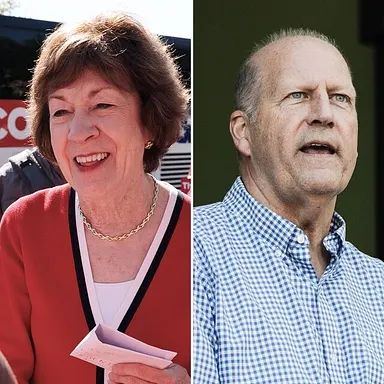
A look at candidates from President Trump’s party who are running on a platform of criticizing him. In next week’s midterm elections, a specific kind of Republican candidate is appealing to disillusioned voters of both parties: moderates willing to criticize President Trump.Jess Bidgood explains how some Republicans are trying to bring back an older version of their party.Guest: Jess Bidgood, a political journalist for The New York TimesBackground reading: A Trump backlash endangers Susan Collins, the only blue-state Republican senator.From Opinion: John E. Sununu is running a model campaign. He might still lose.Photo: CJ Gunther/Getty Images; Sophie Park/Getty Images
For more information on today’s episode, visit nytimes.com/thedaily. Transcripts of each episode will be made available by the next workday. Subscribe today at nytimes.com/podcasts or on Apple Podcasts, Spotify and Amazon Music. You can also subscribe via your favorite podcast app here https://www.nytimes.com/activate-access/audio?source=podcatcher. For more podcasts and narrated articles, download The New York Times app at nytimes.com/app. Hosted by Simplecast, an AdsWizz company. See pcm.adswizz.com for information about our collection and use of personal data for advertising.