
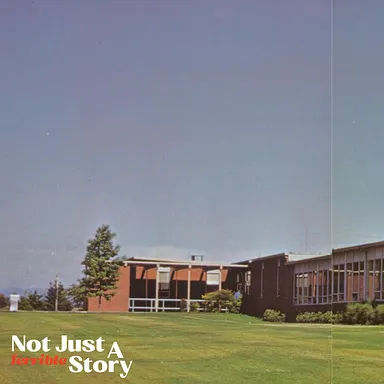
This episode of Not Just A Terrible Story examines decades of alleged educator sexual misconduct at Centennial High School in the Portland area, drawing on Oregonian archives, court records and interviews. It covers choir director Tom Iverson, who was convicted of sexual abuse years after he married a former student, and band director Darryl Dyer, whose resignation followed a student-published newspaper.
It also looks at basketball coach Jeff Stanick, whose alleged grooming of players went largely unaddressed. Listeners will hear how schools moved teachers along, why complaints were buried, and why a weak licensing settlement left families unsatisfied.
Stanick denies the allegations against him.
In this episode Katie Kline, Sydney Gladue, Billy Joe Grant, Cheryl Shakeshaft, Ezra Holmlund, Stacey Love, Tim Russell
This Not Just A Terrible Story episode on Centennial High School's alleged educator misconduct was made with the tool HappyScribe built to transcribe video to text.
Ads in this audio differ from the text. Tap the sentence you're hearing to follow along.
Synced: the text now follows the audio.
In this episode, there's brief discussion of sexual assault of minors. Please take care while listening.
Do you guys have yearbooks like this?
We're back in Portland, and Katie, Stacey, and I are poring over a 1998 Centennial High School yearbook.
So this is a senior class, I know, right?
My gosh, right here.
It's funny to look back at these.
I had those wispy bangs.
Did you?
Mm-hmm.
I want them.
Stacey threw her yearbook out years ago, so she had to borrow this one from a friend.
Um, when I borrowed this yearbook from my friend, it was pretty funny. She sent me a video and she tapped on the first teacher and was like, "Pervert," then tapped on the next, "Pervert, pervert."
As we flipped through the pages, Stacey pointed out several teachers that she heard whispers about, and even more students who were rumored to be victims.
I can show you that photo of our class. What did they call us? They called us the '98ers, but it was, like, known that that class had this, like, pack of attractive girls.
We flip a few more pages and Stacey points to a photo of her and a bunch of senior girls at a pep rally inside the Centennial gym.
When I look at that photo, I see at least four of us that were being groomed at that time. Makes me sick.
During Stacey's time in high school and the decades that followed, there were rumors about many teachers. Rumors about teachers who made sexual comments, passed notes to students, crashed high school parties, invited students over and offered them alcohol, and even pursued sexual relationships with students.
I just thought, "He's taken a liking to me because I'm a good athlete or a good student."
All three of them, very good-looking guys, just had personalities that were very magnetic, and they drew kids to them constantly.
He had one specific person he would just try to beat down over and over and over again, and that was me.
There's absolutely no reason why a student should be, you know, at his house at night by themselves.
I think they thought, you know, brush it under the rug, like, "It was long ago, no one's going to remember."
The first time they threatened me, like, "Do you know what slander is?" Oh, they had me terrified.
We're looking back at four decades of alleged educator sexual misconduct to see how the system failed Stacey, her friends, and generations of Centennial students. I'm Sydney Gladue, and this is Not Just A Terrible Story.
We found a total of 10 documented instances of educator sexual misconduct over the last 45 years in the Centennial School District. You're about to hear four of these stories, some of them alleged, some of them prosecuted, and some of them 20 years in the making. Each case tells us something different about the type of school culture where abuse thrives, like why people look the other way, why complaints get buried in bureaucracy, and why abusers stay in the classroom.
The first story is about Tom Iverson. He was the choir director from 1975 to 1985. We learned about what happened from local news coverage that my co-producer, Katie Kline, pieced together.
So I did a bunch of digging in on Tom Iverson and his story, and there are a lot of surprising parts, like, shocking, surprising.
We sat at my kitchen table and pored over her research.
And I'll tell you at the beginning that Iverson was caught for educator sexual misconduct and was no longer allowed to be around minors.
That wasn't the only consequence Iverson would face, but it would take over 20 years for his behavior to finally catch up with him. Katie started with an Oregonian article from March 2000.
Lauren Hedrick, who was president of the Centennial Education Association at the time, said he investigated Iverson for the teachers' union and was quoted as saying, "I was concerned that a teacher of ours was dating high school students." Read this part.
Hedrick said he once ran into Iverson and a girl student in a Portland area restaurant at 2:00 a.m. on a school night. I asked him what he was doing, and he said, "Just having coffee." Police were never involved then, and Hedrick said that he dropped the union's investigation because parents did not want to press charges.
According to the reporting at the time, the parents declined to file a complaint, a decision that reflected the broader cultural norms of the early 1980s. Lauren Hedrick died in 2016, so we weren't able to ask him more about his investigation and why he didn't further investigate or report to the police. It seemed to be an open secret. An Oregonian article from 2008 said that Centennial school officials told the paper they knew Iverson was dating students in the '70s and '80s. Centennial's principal at the time, Minnie Richards, also spoke to the Oregonian and said that Iverson was not confronted because parents never complained.
We reached out to several other people who worked at Centennial during this era, and only one former teacher was willing to speak with us, Tim Russell. You heard from him in episode 2. He was one of Stacey's favorite teachers and Brett's colleague. He was also the choir director after Iverson left in 1985. We called him up and spoke over Zoom.
Well, I'm sorry to say my predecessor at Centennial was known for going places and doing things with students that they shouldn't have done, ended up marrying one of his students, and ended up with a very tragic end of his life. So teachers dating students wasn't a surprise to us.
This was one of the first things Tim Russell learned when he took over for Iverson.
Minnie Richards was my principal when she hired me in '85. She said, "Tim, you just need to understand you're going to have to prove yourself." Minnie said, "I'm sorry, Tim. I can't let you go on tour. I can't let you have choir retreats." And it was, I think, my third year before she said, "Okay, I'll pass the mantle to you because we trust that you have the right relationship with the kids." And unfortunately, my predecessor kind of burned a lot of bridges for me.
In fact, it wasn't just the administration. I can't tell you how many teachers said, "Boy, Russell, you've got a big hole to dig out of," because a lot of the teachers had been on the choir tours with Tom as chaperones, and there was just a lot of monkey business going on.
We reached out to former principal Minnie Richards after speaking with Tim Russell, but she declined a comment. So we turned back to the news archives, looking for any breadcrumbs. In 2001, a former student shared her story with the Oregonian. We'll call her Sally. She attended Centennial in the late '70s. When Sally was a junior in high school, Iverson was her music teacher. She said he took advantage of her low self-esteem and unsympathetic parents to begin a sexual relationship with her. Sally also said Iverson told her he loved her, but dumped her a year later to date another younger student.
We reached out because we wanted to hear more of Sally's story, but she didn't respond, and I can't blame her. It's been years since this all happened. But Sally was not Iverson's only victim at Centennial.
Iverson married one of his students, a 16-year-old sophomore, after she became pregnant, according to Hedrick, as well as other teachers and students who asked not to be identified.
She dropped out of school because she was pregnant, and they had to travel to Idaho to get married because people under the age of 18 cannot get legally married in Oregon.
After marrying his 16-year-old student, Iverson still had an active teaching license and taught at Centennial for another three years before quietly leaving the school in 1985. He went on to teach at three different neighboring elementary schools and even became a district music director in 1997. During this time, Iverson abused at least three of his students, all under the age of 14. It wasn't until late 1999 that he was finally removed from the classroom.
That was nearly 18 years after he married his 16-year-old student from Centennial. That 16-year-old student and Iverson stayed married until 1993 and divorced after having two kids together. Reporters reached out to her about their relationship and marriage years later.
His wife and former student said she never believed Iverson did anything wrong. Quote, "I don't feel as though there was anything inappropriate."
It just sounds like during that time, a lot of people didn't believe that it was wrong.
Sitting at my kitchen table that day, Katie explained how Iverson was finally caught, based on a timeline she constructed from numerous Oregonian articles.
This abuse came to light because one student told a school employee what happened to her and it was reported, and then they found the second victim during the investigation. A month later, a third victim comes forward. His victims testify in court. One is quoted as saying, "He said not to tell anyone or he'd kill me." One of the victims testified that they had previously reported the abuse two different times. Those teachers testified that they reported to their respective principals.
One of those principals denied being told. The other said he didn't do anything because he thought the teacher was making a comment about Iverson in passing. So there's nothing in writing. The teachers didn't follow up on the reports that they made. The principals didn't do anything. Dead end.
Prosecutors still had enough evidence to successfully convict Iverson of nine counts of first-degree sexual abuse. He was sentenced to 12 and a half years in prison. Iverson died of cancer in prison in 2007, just six years after he was convicted. Tom Iverson's story is a textbook example of what experts call passing the trash. This happens when a school lets a teacher with allegations against them go teach somewhere else instead of documenting the misconduct and reporting it.
The facts of Iverson's case are part of an upsetting pattern. Administrators knew he was dating students at Centennial. Students had been reporting his sexual abuse in the Forest Grove School District for years before anything changed. From what we can tell in available records, it took the first victim speaking up repeatedly for an investigation to happen. And data shows this is often how it goes. The major case studies and research reports in this area show that offenders will often move between different school districts or states multiple times before they're reported to the police.
Studies have also found that many offenders have multiple victims. Congress has tried to prevent passing the trash through federal legislation, but there are major disparities in how this plays out state to state. In fact, only 19 states have implemented a policy to prevent passing the trash. Katie and I turned back to the stack of papers on my kitchen table. I had a story to share with her about the Centennial ban program. Well, two stories, intertwined. The first was about the band director who started in 1980, Darryl Dyer.
Dyer was known for creating an exceptional band program. So when he suddenly resigned from Centennial High School in 1995, people noticed.
When Darryl Dyer had first resigned, nobody knew why, and there were just all these whispers around the school. We only actually know anything about Darryl Dyer because of a student who broke the story in his independent publication in 1995.
Well, I love independent publications. I want to know about this.
The student was Ezra Homeland. He was actually the junior class president and very happy to divulge the full story on the phone to us. Do you have any questions for us to start off? Anything we can answer?
Yeah, what is the foundation of this project? What is the what yeah, what are you guys doing?
It was a fair question. I explained that over the past year and a half, we've been looking into cases of educator sexual misconduct at Centennial. And frankly, there were more cases than we expected. Ezra wasn't surprised.
Yeah, yeah. Wow. Ugh, go Eagles.
My first question for Ezra was how he found out about what was happening with Dyer back in 1995.
I was talking to the band kids in physics class, and then I think that's when they said, like, "Oh, yeah, Mr. Dyer's gone." And then I was like, "Oh, yeah, what's that about?" And then they started talking, and then the principal had come down and given a speech to the band kids, like, a few days later. And, like, all the band kids were like, "Yeah, that was completely phony." And then they started telling more stories and more stories, and I think that's where it started. And everyone had a little, like, "Yeah, there was something icky," or just, like, an awkward moment caught, and, like, a weird little, like, "That doesn't seem right."
Like, "Why are they alone? Why are they out by his car alone?" It seemed evidently clear that something was transpiring between them.
Once Ezra had the scoop from the band kids, he started talking to other students and even some teachers. Ezra learned the band teacher, Darryl Dyer, was allegedly having a sexual relationship with another student, a 17-year-old girl at Centennial. He published all the information he gathered into an unsanctioned, independent publication.
So I put together this two-page, old-school style, glued the paper down, glued the comics on, you know, go to Kinko's really old-school way of making a newspaper.
Ezra fittingly named the paper "Lagoons of Hazard," a reference to a Dead Kennedy song. The next morning, with about 60 copies in his backpack, he went to school and passed around his first issue.
Threw them in, like, bathrooms, dropped them around the school in every single place I could, like, put them. This is before, like, cameras, so, you know, I could get away with it. Locker room, everywhere I could. Then kids started making copies of it, so there were, like, hundreds of them in the school by, like, third period. So the whole school is buzzing with it. And I think it was fourth period or fifth period math class. That's when the school security guard came down in the class, pointed at me, and he's like, "You, come with me."
And then it was on.
Ezra remembered four school administrators in the principal's office.
They were like, "You have any idea what you've done? You have no idea the rules you've broken. You have no idea, blah, blah, blah." Threatened me with a lawsuit, threatening me with slander, threatening me with expulsion, threatening me with all kinds of things. I was like, "Uh-oh." I really thought I might have flown too close to the sun and, like, "Oh, shit, I'm in big trouble." Then they called my mom down. She had to come pick me up, and I was suspended, kicked out of class presidency.
Ezra's mom told him that he did the right thing if he thought he was telling the truth, but the reaction from school leadership had him questioning everything. Until later that night, when he got a call from an Oregonian reporter who happened to be the dad of one of his classmates. The reporter came over with a crew and interviewed Ezra about what happened.
So that article came out the next day, and then that's when everything blew up. Multiple newspapers were at my house, Channel 6, Channel 2, Channel 8. People were calling me, telling me what was happening. "The news stations are here. They're asking questions." I think the administration knew they were in trouble at that point. They weren't going to be able to sweep it under the rug.
This was big news in a small town. The story made headlines across local news outlets for weeks. There was one anonymous victim. We'll call her Jane. Jane's mom reported Dyer to the police. Here's Katie reading an Oregonian article from March 1995.
"A mother's charges against an ex-Centennial high school teacher go unsubstantiated by her daughter. The mother said her daughter has moved out of the family's Gresham home and is spending most of her time with Dyer." No! "The girl, who is now 18, has admitted she spent at least 10 nights at Dyer's house and went on a four-day vacation to Las Vegas with him. The girl's mother said she was disappointed that the criminal case was dropped but was not surprised because detectives told her they could not pursue the case without the help of the daughter."
It turns out the school knew about the allegations against Dyer even before Jane's mother reported him to the police. Dyer's own wife, Lori, had reported her husband to the school several weeks earlier in January. Jane's mother said the school never contacted her about that report. It wasn't until February that Jane's mother learned of Dyer's relationship with her daughter, and she learned about it not from the school, but from Lori, who went directly to Jane's parents. After that, Jane's mother filed a complaint with the school.
Only then did the school finally hire a private investigator. The school confronted Dyer with the private investigator's report in late February. And despite learning of Dyer's inappropriate relationship with Jane, the school did not fire him or report their findings to law enforcement. Instead, the administration struck a deal with Dyer. The school agreed not to discuss Dyer's relationship with Jane as long as Dyer resigned. But Ezra's unsanctioned newspaper upended that plan. Once the paper circulated, police caught wind of the story and launched their own investigation.
Here's Katie with more of the article.
"Authorities will not file criminal charges against the former Centennial High School band teacher accused by a student's mother of having sex with her 17-year-old daughter. Lieutenant Stan Grubbs would not comment on the specifics of the four-week investigation, but he said the reluctance of witnesses to come forward hurt the case. He said it might have helped police if school officials had notified police immediately after they conducted their own investigation."
In 1995, Dyer surrendered his teaching license. In the stipulation order, Dyer and Jane both denied any sexual contact. Dyer has not responded to our request for comment about his relationship with Jane. His relationship with Jane may have been illegal, but with the victim unwilling to cooperate, Dyer himself denying the allegations, and the school opting for a quiet resignation, nobody faced legal consequences. And that's exactly how this slipped through the cracks. Jane's mom told the Oregonian, "This system is a joke.
They are protecting him more than my daughter."
That is heartbreaking. And I feel for that mother who is trying to protect her 17-year-old kid and is, like, hitting a brick wall with every authoritative entity involved here.
We don't know if the mom and daughter reconcile. We don't know where the daughter's at today, what she feels about any of this.
And this is something that has also haunted Ezra.
The part that concerned me the most is, like, I don't know what happened to her. I don't know, like, how this affected her life. You know, obviously, she never came back to school. I think it was great that he got exposed, but I think she was, like, the true victim in all of it.
The only information we have about Jane is that her parents withdrew her from Centennial, and she was not able to graduate with her class that June. Ezra was back at school a few days after he was suspended, and he was reinstated as the junior class president. But Ezra described the whole experience as overwhelming. His 16-year-old self wasn't ready for all the attention that came with the dozens of media interviews. He even got a call from the ACLU with an offer to be a spokesperson for free speech. Ezra withdrew. He started skipping class all the time.
He said his GPA went from a 4.0 to less than a 1.0. And then he developed a strong sense of skepticism and distrust for all institutions.
I would love to take the purely moral high ground and say I did it only for, like, moral reasons. There was a part of me like, "Yeah, fuck this institution for hiding stuff from us." There's also to get at them, you know, like, "Fuck you guys."
It certainly didn't seem like the administration cared as much as Ezra. And we actually found some interesting reporting that shared some insight into the administration's perspective at the time.
This article I'm about to hand to you, I just can't wait to hear what you think about it because it's fascinating. It's called, "The High School Principal Admits the Past Few Weeks Have Been Hard But Says This Place Is Not Falling Apart."
OK. "In the past few weeks, Centennial High School principal Clark Brody lost all of his hair. It's not because of the string of front-page news stories detailing the rise and fall of three Centennial stars, the well-known band teacher who resigned amid allegations that he had a relationship with a student, the junior class president who was suspended for circulating a vulgar underground newspaper exposing those allegations, the football star who was arrested during school on accusations of selling LSD on campus.
No, Brody lost his hair on a bet after the school's basketball team tied for the league championship." So that's, like, a joke. That's, like, a setup.
They are equating a student selling drugs on campus with a student publishing an independent newspaper with a teacher having an inappropriate relationship with a student. They're equating those two things, Katie.
This is wild.
Katie kept reading.
"Student shaved his head the same week the Dyer story broke. 'It's not just because I'm stressed,' Brody said. 'I just hope it grows back.'" I mean, Brody, you should be stressed. "In the midst of it all, life goes on at Centennial. 'This place is not falling apart,' Brody said. 'I think the community can take reassurance that we don't avoid these problems.' Although things had quieted down by Tuesday, Brody said the school found another underground newspaper in a girl's bathroom. 'He knows it's not the last.'
'I am ready for spring break,' Brody said. 'That's for sure.'" The, like, light-natured comments of this is wild, where I'm hearing, like, students have to write newspapers and distribute them for their truth to be heard.
Yeah, yeah. Like, it's more an exchange of gossip than a serious introspection into what actually is happening at that high school.
That's wild.
Dyer wasn't the only Centennial band teacher with allegations against him. Like I said before, this is actually two stories intertwined. Doug Petassi was the assistant band director and boy's water polo coach. He worked alongside Dyer for five years until 1987. Here's Katie summarizing what happened.
"As a Gresham High School teacher in the 1980s, Petassi was accused of exposing himself to a teenage boy and fondling another student. A court sentenced Petassi to five years of probation after he pled guilty to misdemeanor charges."
Petassi left Centennial at some point and moved on. He got a job in sales for Pacific Office Automation. We weren't able to track down the circumstances of his departure from Centennial, and TSPC did not provide us with documents on him other than the record of his license expiring in 1988. Petassi also did not respond to a request for comment in time for the airing of this episode. The story of what he did to the two students at Centennial stayed largely hidden for almost three decades until Petassi's past resurfaced in a 2024 Oregonian article.
The headline of that article reads, "Former employees sue Pacific Office Automation CEO alleging serial sexual assault." That CEO was the former Centennial assistant band director, Doug Petassi. Three decades after Doug Petassi left Centennial High School, the news broke. His company, Pacific Office Automation, had settled with multiple employees following disturbing allegations of sexual assault against Petassi.
We'll put a link to the 2024 article in the show notes. The reporters, Noel Crombie and Mike Rookaway, exposed Petassi's alleged abuse over his 30-year career in sales. They also dug into Petassi's previous career and education. They spoke to the two students Petassi abused at Centennial in the 1980s. One of the victims from Centennial said that Petassi threatened him, saying, quote, "Nobody's going to believe you. I'm a well-respected teacher at Centennial. It's your word against mine." The two victims also talked about being ostracized and bullied by their classmates for speaking up against Petassi.
Here's Katie reading from that Oregonian article.
"He endured disturbing incidents of bullying. Someone threw rocks through the window of his home. He received death threats. Someone poured sand into the gas tank of his prized 1968 Volkswagen Beetle."
One of the victims also said.
"The new allegations swirling around Petassi suggest he, quote, 'was not only rewarded for his behavior but then put into a culture where he could grow it and cultivate it and hone it.' It's really, really terrifying to me."
Petassi denied allegations brought against him by ex-employees. He is currently suing Pacific Office Automation, his former employer. Pacific Office Automation has responded with a countersuit. Petassi's pattern of alleged behavior didn't stop when he left Centennial. "Passing the trash" is a term mostly used in schools, but hearing this story, I can't help thinking that any position of power was dangerous for Petassi to hold.
I'm just thinking of all the years of students who were in band who are not safe and that I think also of Stacey and students not knowing what's appropriate and assuming that if there's inappropriate behavior, a grown-up would stop it. If that's just the culture of the band, you have nothing from the outside to make you question it. It's not like one of those band teachers was safe and the other wasn't. I'm just, like, hundreds of kids moved through that.
Yeah.
Program year after year.
Decided what was OK based on the water they were swimming in.
There's two things that stick out for me in these stories. First, how blatantly student safety was disregarded. And second, the culture that was allowed to flourish. There were many students that could have witnessed the beginnings of this abuse, the pattern of grooming. Whether it was extra attention, favoritism, gifts, boundary crossing, and because this was the culture of the band program, this is what these students were shown was normal. And the band program wasn't exactly an exception at Centennial.
You've heard stories of educator sexual misconduct from the choir department and the English department. Former students also alleged this behavior was happening in the girls' basketball program for years.
I heard all these stories from the time I was a freshman. And these poor women now that all this is being brought back up.
Other teammates see him still as this great guy. I see him as somebody that takes advantage of people and situations.
I actually quit basketball one day. I couldn't take him trying to beat me down all the time.
Our final story starts in 1990, when Centennial graduate Jeffrey Stanick returned to teach and coach girls' basketball at his alma mater. Over his nearly 30-year career coaching basketball at Centennial High School, Stanick was removed as a coach, rehired, left, came back again, and finally retired in 2021. And then, three years later, he agreed to never reapply for a teaching license. The final stipulation TSPC published doesn't tell you the story I'm going to share with you today.
It does not even mention allegations of sexual misconduct. During the course of our reporting, Jeff Stanick declined to be interviewed for this podcast, but he did respond via email. In his statements, he pushed back against the TSPC and school district investigations we're about to detail. Specifically, he contends the investigations were flawed, arguing the institution's investigators lacked proper training and licensing and were improperly biased against him. We'll get into his response in this episode.
But let's go back to the beginning. It all started at a holiday party where several former basketball players got together in late 2021.
This is just the same story. Over and over, he does the same thing over and over and over with each girl.
This is Lindsay. She asked to be identified by her first name only. She was a star player during Stanick's tenure. She was at the party in December 2021. She told us there was about 15 former girls' basketball teammates spending several graduating classes hanging out that evening. A few of the former players who were there told us the night started off easy, just old friends reconnecting. But then, as the night wore on, the mood shifted. Small talk and casual gossip gave way to something else. One by one, some of the women started speaking openly about their coach, Jeff Stanick.
All of a sudden, they were just talking about it, and they were talking about the younger girls like, "Yeah, me too, and the hot tub." They were just, like, spilling their guts out to the group.
From the time Lindsay was a freshman at Centennial, she'd heard allegations that Stanick pursued sexual relationships with students, but she didn't know just how widespread this behavior was alleged to be.
Then they were saying names of girls that were younger than them, that he did that to, and girls that were even younger than them. There was a few people that I was surprised to find out about. It literally broke my heart that I because I knew them.
Everyone knew the rumors. But Lindsay said this was the first time she heard this many of her former teammates speaking openly about Stanick's alleged grooming and sexual abuse.
It was a lot to take in because it's so hard to just hear all these stories and just know he's just chilling, just living his life, doing his thing.
But this was just the beginning. One of the women there that night reported the allegations about Stanick to the Centennial School District.
I believe that's when the investigator came in and started questioning everybody.
At the time of that report, Stanick was coaching at Centennial one day a week. The school district hired an independent private investigator named Susan Nisbitt. Nisbitt began contacting the former students who were at the holiday party. In the meantime, Centennial reported the initial allegations to the Teachers' Standards and Practices Commission. Remember, TSPC independently licenses teachers and investigates misconduct in Oregon. At this point, the school put Stanick on leave. Susan Nisbitt spent two months investigating.
She found new allegations of inappropriate behavior and new information about complaints against Stanick dating back to the late '90s and early 2000s. The earliest complaint documented came from a dad in 1998. He contacted the district because his daughter did not want to return to Centennial to play basketball. While the dad praised Stanick's coaching, he shared that his daughter told him Stanick was having a sexual relationship with one of the girls on the basketball team and that Stanick dated players after they graduated.
The district reported the allegations to the campus resource officer, who told them this wasn't a police matter because the complaint didn't come from the alleged victim or her parents. So the district did their own investigation. And in the investigation, they spoke to exactly three people: Stanick, who denied the allegations; the assistant basketball coach, who said he didn't see anything; and the alleged victim, who we'll call Jessica.
The call kind of came out of nowhere, and it was just one question. It was, like, one question, and that was it.
Jessica agreed to speak with us on the record as long as we concealed her name and changed her voice. The call she received was from Centennial principal Kurt Heath, who was investigating the allegations. And the one question he asked.
Did Stanick have an inappropriate relationship with you? And I answered no, because I was still being harassed. When I would come home, he would be at my house, and I just I didn't want I just didn't want to go through any more of it. I was in college, and I just wanted to move on, move forward.
After principal Heath's call, the investigation was closed until 2022, when word of the holiday party got back to the Centennial administration. Jessica was there that night, and a few months later, she was on the phone with the private investigator, Susan Nisbitt, discussing her experience with Jeff Stanick.
The investigator just wanted to ask me a few questions about exactly what happened, if there was alcohol involved, if other teachers knew about it, students knew about it. And, you know, I just shared all that information that I had.
Jessica described numerous behaviors from Stanick that she now interprets as grooming. Jessica had been coached by Stanick since her freshman year of high school, and over those years, she saw what she considered his problematic behavior in real time. She told Nisbitt that Stanick supplied her with alcohol and pursued a sexual relationship with her while she was still a student at Centennial.
The grooming started before I even knew it was happening. I just thought, like, he's taking a liking to me because I'm a good athlete or a good student or a combination. It was, like, little things, you know, him helping a little bit financially, him asking me to, you know, come to his hotel room on trips, give him a massage. There's absolutely no reason why a student should be, you know, at his house at night by themselves.
I mean, that's the situation that I found myself in.
Jessica said that Stanick, 35 at the time, invited her over to talk about basketball stuff. She was in her senior year of high school, either 17 or 18. Her birthday fell right in the middle of basketball season that year. Jessica remembers that when she arrived at Stanick's house that night, he started kissing her. She told investigator Nisbitt that once their sexual relationship started, they had sex 25 times over several months.
He would have me at first park my car in the garage. But even, like, the very first time I was there, another ex-player came over and was like, "What's happening here?" And he was like, "Hey, you need to get going," and just shooed her away.
Documented in Nisbitt's investigation report, Jessica shared that Stanick took her camping and brought her on a couple road trips. She also shared that Stanick invited her to social events with other teachers from Centennial. During our interview, she told us more about this.
He even invited me to another teacher's party while I was still in school, probably barely turned 18 at the time. He was asking other teachers for favors for me, like if I was missing class or grades or whatever else. Like, he was doing all sorts of stuff behind the scenes. Specifically, like, an English teacher, he was able to change the grade because Stanick asked him. So if I missed school, he would just let the teachers know, you know, it's fine.
I don't know what he said specifically, but whatever he said seemed to make everything just go away. You're a kid, and you're like, "OK, well, I'm getting away with it." I guess I didn't really stop and think, like, why is he doing this? Like, what is in it for him? But there wasn't a bigger question. I wasn't asking myself. Like, I wasn't able, like, to take a step above and be like, "Hey, why is this happening?" Instead, I'm like, "OK, he wants to change my grade for me. Great." You're 17, 18 years old.
You're really not thinking, like, why somebody's doing something exactly. And then you start to, like, look back, and then you start to, like, put everything together. And then you start to see, OK, there was grooming, there was him asking favors for me, there was him, like, trying to get in with my family and show up at my family's house and have conversations with them and, like, make himself look like this great guy. And if your family doesn't step in and other teachers don't step in and other students don't say anything, you're like, "This might not be that bad."
I think you kind of tell yourself that.
Jessica said she eventually ended things with Stanick, but that he didn't want to take no for an answer.
You know, he wanted me to not go to college, and they then continued to have that relationship, and I was absolutely not interested in that. And then for a while, you know, he was, of course, calling and trying to contact me. But the weirder part was that he was showing up at my home when I was coming home from college. I would see his vehicle in my driveway, and I'm like, "What in the world's happening? Like, why are you here?"
This was Jessica's normal. This is what she said she had endured by the time Kurt Heath called her and asked if Stanick had an inappropriate relationship with her. In 2022, investigator Nisbitt asked Jessica why she didn't share the truth with principal Heath back in 1998. Jessica told her that she had a boyfriend who didn't know. She was overwhelmed in college, and she was scared to tell the truth. It's common for victims to stay silent when asked about their abuse. That's why experts say investigations can't rely on a single conversation. School leadership needs to conduct interviews with all potential witnesses.
Other students and faculty have multiple conversations with the victim themselves, but in this case, they only called Jessica once. There's no documentation the school district ever interviewed the dad who originally complained back in 1998 or his daughter who refused to come back to the basketball team. The investigation report from 1998 also stated that later that fall, Stanick confronted the daughter about sharing those allegations with her father. According to an internal memo from Centennial's 1998 investigation, Stanick also discouraged the school from interviewing other students who were potential witnesses.
Stanick eventually stopped contacting Jessica, and she was able to go on with her life. But the experience still impacts her to this day.
I think it's tainted the experience, and I think it's tainted the relationships with others because this seems to be just kind of a little bit of a cloud that any time I'm around those people, that cloud kind of tends to show up because it was, you know, not a positive experience.
Jessica isn't the only documented victim of Stanick's alleged sexual misconduct. In February 2000, another parent complaint about Stanick's behavior surfaced. The complaint originated from events that took place eight years earlier when his daughter was a student at Centennial. The parent said that Stanick chased his daughter around, peeked in her window at their home, and that they were at a party together. There is no evidence in the file that the student was ever contacted or interviewed about the allegations in 2000. We had a voice actor read what the school district's director of HR wrote at the time.
We shared with Jeff that the district found there was no truth to the allegations, and the investigation was closed.
Investigator Nisbitt tracked down the student in 2022. The student shared she did not have any classes with Stanick and did not play basketball, but her friend was an assistant basketball coach. We've had parts of her interview read by a voice actor.
The friend would tell me Mr. Stanick was always talking about me and mentioning my name and that he thought I was pretty and all these things. And I think that's how we ended up connecting.
The student remembers she started spending time alone with Stanick outside of school.
He would come to my house and park outside my house. I would sneak out of my house and go to his truck.
She told the investigator that she remembers the song "Feel Like Making Love" coming on the radio while they kissed in his white pickup truck.
I think when he realized he wasn't going to get me into bed, he just told me he couldn't talk to me anymore. I was upset, and I was embarrassed. I stopped going to school. He definitely changed the course of my life.
The student told her friends what happened but said nobody knew what to do because they were all 16 years old. In total, investigator Nisbitt interviewed 12 former students in the 2022 investigation. Three students reported that Stanick pursued a physical relationship with them while they attended Centennial. One student said Stanick pursued a physical relationship with her the summer after she graduated. One student saw Jessica's car parked in Stanick's driveway at night.
Three other students cooperated with the alleged abuse of their classmates, saying they either witnessed or had firsthand knowledge that Stanick pursued a physical relationship with a student. One of these students said Stanick told her about his sexual relationship with another student. In Stanick's interview with Susan Nisbitt, he denied these allegations. We've had one of his statements read by a voice actor.
My answer is not going to change. I can say it 30 more times, or we can move on to a different topic. I am going to tell you that I have not had an inappropriate relationship with anybody.
TSPC published Stanick's final stipulation order in November 2025. We've had a voice actor read it.
During TSPC's investigation of the complaints, Mr. Stanick disclosed that in 1999, he instructed an assistant coach to purchase and place a Ouija board in the locker room of an opposing team for which a former player of his played. Mr. Stanick stated that he intended the Ouija board incident to be a prank. TSPC considers the incident to constitute retaliation and/or a violation of appropriate teacher-student boundaries. Mr. Stanick retired in June 2021. His license expired on May 2, 2024, and he no longer wishes to teach.
Accordingly, he is voluntarily relinquishing his license and will not reapply in the future.
Remember, this is the only public-facing document about Stanick's teaching license. No mention of the alleged sexual relationship with Jessica or the other students from the investigation file. No mention of allegations that Stanick pursued recent graduates, provided minors with alcohol, or lied to school administration about his relationship with Jessica when they first investigated. Jessica learned that Stanick relinquished the ability to renew his expired teaching license in a text message from a distant high school friend, Stacey Love.
There's been no impact. It's just sort of it is what it is.
This hollow consequence doesn't feel like a resolution to Jessica.
It feels like it's just been so long coming that it's hard to feel like a resolution when he's done this to so many other people. And, of course, like, I have regret of I should have told more people, right, or kept going to somebody until somebody did something. Or maybe when I got that call from, you know, Mr. Heath, not have been wrapped up in college, but have said, you know, yeah, but I didn't. And so the resolution has to be as good as it can get.
In search of answers, we had a conversation with TSPC about how these final stipulation orders are created. Eric Duroc, who is the interim director of professional practices at the time we spoke, told us educators can challenge TSPC's drafted language and negotiate what's included in the facts of their final stipulation, as well as the required disciplinary action. But even so, given all the allegations contained in this investigation into Stanick, how is the language at the end so far from what Jessica and the other students say they experienced?
TSPC won't comment on the specifics of this case. Stanick did not answer a detailed list of questions regarding the allegations against him, and the documentation we do have does not provide a definitive answer. In the end, Stanick can't apply for another teaching license in the state of Oregon. Like I said earlier, we've corresponded with Stanick and his former legal representation about this settlement. Stanick did not comment on or deny any of the allegations we set forth to him in a detailed list of questions.
In emails to us, Stanick alleges there were several failures throughout the investigation and settlement process, namely having to do with Susan Nisbitt's private investigator license. Susan has held a private investigator's license since 2015. Online records show she's applied for renewal four to six weeks ahead of its expiration in 2017 and 2019. Records show that in 2021, she applied for renewal four weeks ahead of expiration. But unlike past years, the license was not renewed until nine months later.
Nisbitt conducted her interviews in Stanick's investigation while her renewal was still in process. According to the Oregon Department of Public Safety, Standards and Training, or DPSST, it is illegal for an investigator to continue providing investigative services after a license expires, even if the renewal is still pending. We contacted Susan Nisbitt and requested comment over text message. We've had a response read by a voice actor.
The licensing agency made a mistake, failed to issue the license in a timely fashion. I failed to notice. They issued it as soon as I noticed and asked them. State agencies make mistakes.
We reached out to DPSST, and they only had one complaint against Susan Nisbitt. They determined that complaint to be unfounded. This wasn't Stanick's only complaint about the investigation. He claimed Nisbitt was improperly biased against him and questioned the qualifications of the TSPC investigator assigned to the case, the hearing bylaws, and the final settlement itself. Stanick also pushed back on the fact that the complaint that triggered the 2022 investigation dates back to 1998. A complaint his former attorney told us over email he had been, quote, "exonerated" from.
But that's not how these investigations work. TSPC or the school is well within their right to reopen them if there's new evidence. Jessica was too afraid to come forward in 1998. But now she was ready to tell her story.
What happens now? What happens to him now? You know, people are having conversations, "OK, I lost his teacher license." What, you know, what does that actually mean?
Stanick's settlement is publicly available and is consistently the first or second search result in Google. But the language in this document is weak. It feels very easy to explain away in a job interview. Because he didn't face any legal consequences, none of this will show up in a background check. Nothing is stopping Stanick from coaching on a rec league or being around youth in other capacities. In fact, we heard from multiple students he now drives an ice cream truck. Stanick did not respond to our request for comment on that either.
Each of these accounts of alleged educator sexual misconduct at Centennial show a pattern that lets abuse thrive: poor documentation, fumbled reporting, teachers quietly resigning, adults and students failing to understand what grooming and boundary crossing looks like, not reporting when you see the early red flags of what could be educator sexual misconduct, and even worse, not believing and instead punishing those who speak up, sweeping it under the rug and moving on. So you might ask yourself, so what?
Centennial is one school in a small town. But it's not just Centennial. Educator sexual misconduct plays out at schools across the country every year, and administrators are failing to stop it.
It's a human condition to want to believe that bad things won't happen in my community and bad things won't happen in my school.
This is Cheryl Shakeshaft, a pioneer in the study of educator sexual misconduct. In fact, she coined the term, and she's also the one behind that landmark study we've mentioned, the one that found 1 in 10 students will experience educator sexual misconduct by the time they graduate.
It happens in all kinds of schools, in all kinds of places, in every state, in big cities, in small towns. The latest research says 17% of students have been the target of sexual misconduct. That's a huge number.
This survey data is our best measurement to begin to understand how prevalent educator sexual misconduct really is. Only a small number of cases are actually reported. We spoke with Billy Joe Grant, another leading researcher in this field.
So the Department of Education doesn't track data on how often teachers or school employees are accused or investigated for or terminated for these types of behaviors, which is kind of shocking given that we track data for the number of fire drills we do or the number of school shootings or the number of bullying incidents, but we don't track it for the number of sexual misconduct incidences.
Billy Joe Grant spent the last 10 years trying to collect all the available data she can to understand how many cases are actually reported. She compiles Google News alerts and found that nationally, about 500 educators are arrested each year for alleged educator sexual misconduct. But that number is still an incomplete picture.
They're just the tip of the iceberg. Many of these cases get handled within the school because the school doesn't want it in the paper. The parents don't want it in the paper. The victim doesn't usually want their information in the paper. And so there's a lot of incentive not to report it to law enforcement.
Each of these incidents of alleged educator sexual misconduct set a new standard for "normal" at Centennial. Each left a mark on the community, namely the student body and survivors like Stacey.
When you're in an environment and you see that everyone's accepting it at the school and the students see it and the teachers see it, you normalize it and you're like, maybe it's not that bad.
We've talked to dozens of former students from Centennial during this project, each with their own story of how alleged educator sexual misconduct shaped their high school experience. One of the students was there in 2005, the day Brett Fischer's classroom was searched, and she remembers it vividly. She asked us to keep her identity confidential.
It was a huge deal. Like, there was an energy in the school of I mean, it was buzzing. Everyone was talking about it. Everyone was like, did you hear? Did you hear? And everyone was like, what happened? What's going on? I'm pretty sure they, like, locked the hall down so they could get his computer. And everyone was kind of shocked, but also not shocked because we all knew he was with a former student.
That former student she was talking about was Stacey.
I think parents were notified of something. And so people who had parents that talked to them would come to school and then it was like playing telephone, kind of report back. And we thought it wasn't illegal, and that's why there wasn't a conviction was the mentality we had.
What did the faculty tell you or the principal about why he was no longer a teacher there?
I don't think they actually told us anything. Like, I think what we were told was he decided to move to Texas.
The only word that comes to me is escape. It was just escape. Even his attorney did not recommend that we left because he was under investigation. But we did it anyways.
That's next time on Not Just A Terrible Story. I wanted to say a quick thank you to all the reporters at The Oregonian and other local news outlets whose reporting on educator sexual misconduct over the past 45 years shaped this investigation.
If they hadn't been relentlessly reporting on these stories, so many of these details would be lost to time. And, of course, thank you to all the former Centennial students who spoke to us on and off the record for this episode. Your personal experiences show the blast zone created by educator sexual misconduct. Thank you so much for listening to Not Just A Terrible Story. We are an independent production. You can support us by sharing this podcast with a friend and leaving a five-star review wherever you are listening right now.
Or hop over to our Substack, terriblestory.substack.com. There's a lot of great free stuff over there, archival photos, resources, and stories that didn't make it into the show. And you can also get early and ad-free episodes as a paid subscriber. To get in touch, send us an email at terriblestorypodcast@gmail.com. This podcast was created and produced by Katie Kline and me, your host, Sidney Gladow. Story editing by Lacey Roberts. Show art by Casey Brunel. Original music and mixing by Sean Simmons. Additional music from Blue Dot Sessions.
Maria Paleologos is our strategic growth advisor. Thank you to our voice actors, Owen Thomas-Sayed, Allison Crawlard, Owen Cummings, Kristen Brooke, and Katherine Russell. Support provided by Reporters Committee for Freedom of the Press. And a very special thank you to Stacey Love, whose bravery, honesty, and determination made this series possible. May her truth-telling give others permission to trust their own stories, use their voices, and know that they are not alone.
If you or anyone you know is experiencing sexual violence and needs help, please visit rainn.org. That's R-A-I-N-N dot O-R-G. Or call the national hotline at 1-800-656-HOPE. Or text HOPE to 64673. If you'd like to learn more about educator sexual misconduct, check out the show notes for additional resources.
Stacie's story wasn't an anomaly. It happened in the choir program. In the band program. And people allege it happened on the basketball team. We dug into decades of archives, court records, and archival news coverage. Piece by piece, a pattern emerged—spanning forty years, multiple teachers, and countless survivors who were failed by the very people meant to protect them.
Ezra Holmlund is now a comedian, follow his work here.
Check out the Oregonian article here.
To find more of the reporting we reference through out the episode check out the Oregonian News Archives.
Reach out to our team at terriblestorypodcast@gmail.com.
For more exclusive content head to terriblestory.substack.com. Get free access to archival photos, resources, and bonus stories that didn't make the cut. Plus — get early, ad-free episodes as a paid subscriber.
----
If you or anyone you know is experiencing sexual violence and needs help, please visit rainn.org or call the national hotline at 800-656-HOPE (4673) or text HOPE to 64673.
You can anonymously report school employee boundary crossing and grooming and educator sexual misconduct to Safe Oregon. You can call or text 844-472-3367 or email tip@safeoregon.com.
If you’d like to learn more about educator sexual misconduct and get involved, there are many great organizations doing research, education and advocacy work, including:
S.E.S.A.M.E. – Stop Educator Sexual Abuse Misconduct & Explotation
Enough Abuse
The National Center for Missing and Exploited Children
American Association Of University Women
Stop Sexual Assault in Schools
Cover art photo sourced from the Centennial High School Yearbook (1966) via Internet Archive.