
This episode follows a 2005 federal search of a Portland-area home and the decades-long effort to learn why a high school teacher lost his license. Host Sydney Gladu walks through a 111-page investigation file that documents explicit material accessed on a school computer, including child sexual abuse material, along with parent and student complaints.
Listeners will hear how the school traced the activity, why no charges followed, and how a former prosecutor describes the grooming process.
In this episode Sydney Gladu, Christy Keating, Kurt Heath, Mark Porterfield, Richard Boyd
This episode's transcript on the Oregon teacher investigation was made with HappyScribe technology, the same technology behind its subtitle generator.
Ads in this audio differ from the text. Tap the sentence you're hearing to follow along.
Synced: the text now follows the audio.
Before we get started, a quick heads-up: this episode contains references to child sex abuse material and educator sexual misconduct.
And then there was a knock at the door. And I just was like, huh, that's weird. No one knocks on the door here.
Stacey's done her best to forget the sound of that knock, but it's one of those things she'll always remember. It's become a part of her, like the smell of air in late January and the gnawing feeling something wasn't right.
It's a day that I remember very vivid and clear. It was a Sunday.
At the time, Brett and Stacey lived in a small 1,000-square-foot loft in downtown Portland. She was 24. Their 4-year wedding anniversary was coming up that June. She'd only recently finished college and started her first job in design. They got home late that afternoon in 2005 after looking at townhouses in the suburbs. Brett flipped on the TV, and Stacey was sitting at the computer, tucked away in the corner.
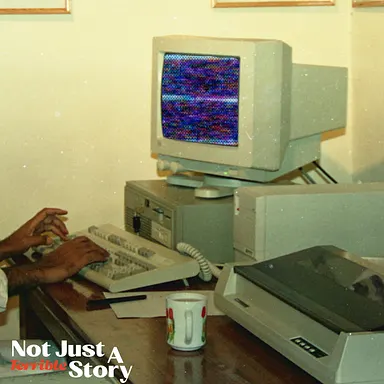
Not a laptop, like a big computer with a big tower. So I was looking at real estate online, and then there was a knock at the door.
This part happened in slow motion.
Open the door, that sight of, I don't know the exact number, it feels like more than 10 men standing there in Homeland Security gear.
They were Department of Homeland Security federal agents, alongside Gresham Police detectives.
They asked if Brett was there. I opened the door like, yes, he's here. And I just remember the oldest gentleman saying, "You need to come with me." And he and I went down to the coffee shop. I don't remember grabbing a purse or shoes. I didn't have a cell phone at the time.
Now Stacey was in the coffee shop below their loft, sitting across from a stone-faced federal agent. He said nothing, she said nothing.
And he and I order a coffee each. I think he pays for it. And we sit down at a little two-top table facing each other, and we sat there for hours. I had nothing to do except for just sit there in my thoughts.
And her thoughts were swirling that evening.
I just kept thinking, please don't let it be another ladybug. Please don't let it be another ladybug. Please don't let it be another ladybug. And I kept asking him, is there anything you can tell me?
After a few hours that felt much longer, Stacey and the agent head back up to the loft.
They were all kind of like starting to disperse and leave and walk out. And one of them whispered into Brett's ear, "She's running." Suddenly they were all gone. The door was closed. I said, what did that guy just say to you? And he said, he told me to tell you the truth. And I just said, well, what is the truth?
Stacey wouldn't get the truth for decades. It was scattered across departments, buried in documents, and hidden in plain sight.
I was getting like a 1% story, and everyone's getting a 1% story.
Twenty years later, Stacey learns the truth behind one of the worst days of her life. I'm Sydney Gladu, and this is Not Just A Terrible Story. After the federal agents leave their home, Stacey and Brett sit in the aftermath.
Computer taken from the desk, paper shuffled about, and the subtle feeling that this was not the same house she'd been walked out of a few hours before. Sitting in their loft that night, Brett swore to Stacey it was all a misunderstanding, a simple mistake blown out of proportion.
He told me that he had made the mistake of looking at pornography at school and that he was likely going to get fired.
Stacey had been suspicious for weeks. She knew something was off. And Brett's explanation wasn't good, but it was better than the worst-case scenarios running through her mind when she was at the coffee shop with the federal agent earlier that evening.
I knew that there was something deeply wrong, and I was asking whoever was in charge to show me what that was, which happened. So then I felt relief because I felt like, oh, OK, this is what it is, and it's exposed, and it's out in the open. When things are out in the open, that's the safest place to be.
After Brett told her what happened, Stacey thought she finally had the truth.
He dropped me off at my parents' house, and then he went to the district, and he resigned instead of getting fired. Basically, they gave him no option.
Within a matter of days, Brett was no longer a teacher. Two short articles are written in the local paper. Stacey remembers Brett's mom receiving a few phone calls from reporters and some cable news cameras following them. That footage has all been lost to time. They spent the weekend at their friend's house in the suburbs to avoid any heat from the press. But in the meantime, the community came to Brett's defense.
I remember some parents writing letters that were really beautiful about how much they appreciated him teaching their students and what a great teacher they thought he was. We had a home, like, recording machine and press play, and there were so many messages from his coworkers and different people within the school.
Stacey remembers listening to message after message of support.
He lay down on the ground and sobbed and sobbed and sobbed. And I remember having to console him. I think it's one of the only moments I've ever seen him truly grasp what happened and the consequences of what happened. I feel like he's someone that people cover for a lot, someone that people try very carefully not to set off, not to upset. There's some amount of, like, brushing it under the rug.
At this point, the rest of the world knew as much as Stacey did, that Brett was accused of looking at pornography in his classroom during school hours. But some of Brett's supporters raised questions about whether he'd been wrongfully accused.
I know people were making excuses. They were like, well, maybe that was just someone else in the classroom. How do you know it was actually him?
This is where the Teachers, Standards, and Practices Commission comes in. We'll call it TSPC. TSPC is an independent state agency in Oregon. They investigate allegations of misconduct, like those against Brett, while the Department of Homeland Security was investigating the potential of any criminal activity, which Brett was never charged for. TSPC was investigating if Brett was fit to be a licensed teacher. Stacey didn't know the extent of the investigation. She remembers Brett confiding in her here and there, but he mostly kept her out of it.
He had an attorney at that time. I was not involved in any of that. That was him and the attorney.
That attorney was appointed and paid for by the Oregon Education Association.
I think I was intentionally kind of kept far from it because he really didn't want me to know the details of how severe it was.
Stacey was overwhelmed by the situation. She took a deep breath and a week for herself to go with her sister to visit family in Idaho, regroup a little bit. I feel like I should point out something here. We had Stacey piece this story together over multiple sessions, creating timelines and fact-checking those timelines. She didn't just sit down and walk us through every detail in one go, because the story doesn't flow that way in her mind. I say that because I get how this might sound. She had all the information right in front of her.
She should have known federal agents don't just show up at your door. Why did it take so long for Stacey to see the reality of the situation? So I asked her that question.
I was very isolated, so I really could only take the information I could. That was my life, right? My home, my everything. Like, I hate saying this, but I do think it's important to hear. Like, I hate saying that because everything in me wants to reach back at that person and be like, oh, my God, this is so stupid. Like, you should have asked these questions. You should have done this. You should have investigated this.
She'd occasionally check the Oregon Sex Offender Registry during their marriage and after she left Brett.
I would search for his name sometimes just to be like, is he on there and he's not telling me? Is there more reported that I don't know about?
But his name has never been there.
So a lot of it was just trusting that what you were being told was the truth.
But she didn't have the truth, or at least not all of it. Brett did resign in lieu of termination for looking at pornography in his classroom, but that was only one sliver of the whole story, the only one she had until 2020.
The veil had been, you know, pulled back. And that just from my own going to therapy and living my life independently and just growing independently and, like, really looking at things with a clearer lens and not being so accommodating, I think I finally was like, what did really happen?
She can't remember what exactly sparked her deep dive, but it had been about 15 years since Brett resigned and eight years since she left him. That's when she found it, a two-page photocopied PDF dense with legaleses and official codes. It was the final revocation order from TSPC, the definitive story on Brett's resignation in lieu of termination, and it spelled out exactly why they took away his teaching license.
When you know that in your gut, you know that in your soul, but you don't have the proof for it, your body's kind of always in this, like, push and pull. But when you see evidence, evidence is evidence. It is black and white.
Now here was the truth, written in black ink on white paper. These documents don't just appear out of thin air. The revocation order was the endpoint of a detailed investigation. So we filed a request to TSPC and got their 111-page investigation file.
What is this?
This is the investigation file from the Teachers' Standard Practice Commission.
Wow. That's insane.
We went down to Portland the week before Christmas in 2024 to walk Stacey through what the investigation file revealed. She was busy getting everything ready for her kid's Christmas. But on that particularly chilly day, she took some time to sit with us in the living room of an Airbnb and go through this stack of papers.
Like, a bunch of different pages. There's some that I've, like, flagged for not to go through.
Oh, it.
But, but yeah, there's some things in here we think that maybe you could help us make a bit more sense of. Like, there's some information in here that I think is maybe a little bit not shocking, but just hard.
We sat around the kitchen table with the harsh fluorescent lights on, a big contrast to the dark, wet day outside.
But no one told you?
No, I never saw this. No one ever contacted me. The only information I got is the information he was giving me. What is that?
So, like, yes, some of the notes are illegible. Some of them are a little bit more legible.
For years, Stacey felt like this two-page PDF on the internet was the only kernel of truth she could point to. But that one kernel didn't seem to care about what happened to her. It wasn't until we flipped through the investigation file that Stacey saw anyone even think of her.
Mm-hmm. If we think that's your name, redacted probably.
I need to find out exactly what dates these two were married.
In handwriting that reminds me of my grandmother, the investigator had scribbled a note next to a redacted name, former student, question mark?
Like, they were kind of looking into you, too, which I thought, yeah, I was curious how you would fill out that.
No one contacted me.
At the time, an individual was considered a student for 90 days after they graduated or left school. So the investigator may have been trying to see if Brett and Stacey began their relationship during that brief period of time when Stacey would have still been considered a student. That wasn't the case. But since then, the law actually changed. In 2024, just five months before Stacey, Katie, and I were poring over these documents, the Oregon legislature passed House Bill 4160, which changed the definition of a student to include the individual for a full calendar year after they graduate.
It's not clear how this would have impacted Stacey's experience, but it's still an irony that sat with us as we started to read through this investigation. As we flipped through the pages, a story started to emerge about the months that led up to the search of Stacey and Brett's loft. The superintendent of schools detailed it in an official letter sent to the executive director of TSPC. It all started when the school district's director of instructional technology, Ron Hobbs, got a call about some internet activity that may have violated the district's acceptable use policy.
The district traced the computer to Room 110 at Centennial High School, Brett's classroom. After that, they waited for the computer to access these sites again. And Mark Porterfield, assistant principal at the time, walked into the room to see who was using the computer. The room was vacant by the time he got there, so he checked the hallway cameras. Here's Stacey reading from the finding of facts.
In looking at the video, Porterfield saw Brett Fisher was the only person to exit the room following the time that the website was accessed.
These inappropriate sites were accessed multiple times over multiple days. There was no doubt in Ron Hobbs' mind that the access was intentional, not accidental. Three days later, on Friday, January 28, they monitored the computer again. The plan was to see if any inappropriate websites were accessed. The administration would walk into the room to determine who was at the computer. At 1:45 p.m., the phone rang. The sites were being accessed again.
Assistant principal Porterfield unlocked the door and walked into the room.
At the moment, Mark Porterfield entered the room. Fisher was on the website christianmodel.net, but within seconds, the computer switched to a common homepage website.
The department noted that Fisher returned to the original website once Porterfield left the room. Quote, "Hobbs determined that the computer use was serious and extensive. Before school, after school, during his prep time, it was not found that Fisher accessed the sites during his instructional time."
However, it should be noted that Mr. Fisher may have had a student assistant during his preparation time. Mr. Fisher knowingly used his school computer equipment to receive sexually explicit materials. This is known to have occurred over many months of employment with the school district.
Brett was put on administrative leave, and police officers searched his classroom. District technology downloaded the use log for classroom 110. Here's Stacey reading that part of the report.
For January 25, 2005, the log showed multiple inappropriate uses, some of which were clearly pornographic in nature. The sites included adult nudity and underage males and females engaging in sexual acts. Law enforcement told Hobbs that the sites observed provide enough evidence sufficient to establish the site as child pornography.
Whoa.
We're only a few pages into this report when this bombshell surfaces. Stacey leans back in her chair, taking a few moments to digest what she's just read. Thousands of pages of pornography, including child sex abuse material, were accessed from the computer in Brett's classroom. Brett was never charged with viewing child sex abuse material.
He told me that he had made the mistake of looking at pornography at school and that he was likely going to get fired. The way it was presented wasn't thousands of pages of pornography, including child pornography. It was like, I looked at some pornography and it got flagged. So in my mind, I was thinking, okay, you looked at porn. You shouldn't have done that on a school computer. That's idiotic, but you did it. I wasn't understanding the gravity of what actually the content that he had been looking at.
The report was written back in 2005 and 2006. Back then, it was called child pornography, but experts in the field are now referring to it as child sexual abuse material, or CSAM, and we should, too. This is an important development in how we talk about these cases, because the term pornography implies consent. Viewing or sharing CSAM is not a passive act. It's a direct crime that fuels the cycle of abuse. In 2024 alone, the National Center for Missing and Exploited Children received a staggering 20 million reports of suspected child sexual exploitation, containing nearly 63 million images and videos.
We wanted to know what this looked like at the local level in 2005, so we called someone who actually worked at the Gresham Police Department during this time.
My name is Richard Boyd. I was a computer forensic examiner for the Gresham Police Department.
Rich worked for Gresham PD for 20-plus years. Most of his career was spent investigating CSAM. Heads up, the audio quality isn't great.
It shocks the conscience when you see it. It's something that is definitive and not a question. And I can remember cases where I'd seen hundreds of thousands of images, videos, et cetera, and were literally having to leave the room because I felt like I was going to vomit. It was so bad. When you see that exploitation as well as the victimization of these children, it is just horrendous.
And it can't help but affect you.
Hearing Rich describe just how devastating CSAM is brings me back to the central question of this case.
Fisher was not prosecuted in U.S. District Court or Multnomah County Circuit Court. I do not know why.
This is Stacey reading a note from the TSPC investigator back in 2005. So even the professionals examining the evidence were asking this question, too. Why wasn't Brett Fisher charged? That TSPC investigator declined to comment, but we did ask Rich Boyd, because he was the computer forensic detective on Brett's case before it got kicked to Homeland Security.
I mean, there were things pointing at him, you know, definitely. And as you saw, the school took action where they got rid of him.
Rich told us he mostly handled the forensic side of investigations, so we have to take his comments with a grain of salt. But this is the only person we could reach who had a connection to the case. He still didn't have a definitive answer about why Brett wasn't charged. I had one other question for Rich about the investigation. I wanted to know why the police department never contacted Stacey.
At that point, he was married, and the likelihood we were going to get any information or she was going to be a victim would be remote. As I recall, I think it was like it was kind of like off limits. So once she got married to him, I think it was like almost like, yeah, we're not going to get anything anyway.
Ultimately, Stacey was never questioned by the police or by TSPC, so we don't have her voice in these accounts. That's why she's only learning about the extent of this investigation two decades later. But the TSPC report that we came to Portland to share with Stacey wasn't just about Brett's computer use. As we continued reading through the report that day, Stacey learned even more alarming details.
She remembers Brett's behavior and described it as perverted. One time, Brett told a group of his senior students that after they graduated, he would have them over for a barbecue. All he would wear would be an apron.
The school had received a number of complaints about Brett's inappropriate behavior with female students. The TSPC investigation into Brett Fisher didn't just uncover his online activity. It also unearthed multiple complaints from parents and students. Here's Stacey reading the investigator's notes included in the TSPC report.
Who was the parent she wrote the May 23, 2000 memo about?
The first complaint is detailed in a memo from the school district's director of human resources, Charlene Harris. It's from May 2000, the year Stacey and Brett started dating. According to this memo, Mark Porterfield, the assistant principal, got a call from a parent who told him Brett Fisher was calling previous students, including her daughter and her daughter's friends. This parent said that Brett was inviting students to his home and offering them, quote, "any kind of drink they wanted." After this parent made the original complaint, they did not return the school's calls.
Harris and Porterfield met with Brett to share the allegations. Here's what Brett said according to the memo.
He firmly stated he had not called any previous students and would never do so.
Obviously, this conflicts with Stacey's story that he called her and asked her out a year after graduation.
Brett asked what would happen next, shaking his boots, I'm sure. We assured him that this was a confidential meeting. Mark and I shared with Brett that once we walked out the door, the incident was over, unless the mom called, came in, et cetera. Then we would meet to share with him the latest information.
As far as we can tell, this is the only investigation from Centennial in response to this complaint, one confidential conversation with Brett.
Wow. That's insane.
The second complaint about Brett Fisher that the TSPC investigator uncovered was from a mother of a student who graduated in 1998, the same year Stacey graduated. Here's Stacey reading the investigator's notes about the call. All the names are redacted as blank.
Ms. Blank stated that Blank and many of her friends had crushes on Mr. Fisher because he was so young and so attractive. But she became concerned when Mr. Fisher began showing up at athletic games, at her work site, and at her home. She said that he would leave blank car notes, cards, and messages, sometimes inside a Ziploc bag so they didn't get wet in the rain, often signed "Love Brett xxOO". Blank was a teacher's assistant for Mr. Fisher. She told her mother that when she was cold in the classroom, Brett would give her his coat to wear over her shoulders and would rub her shoulders.
Blank said that Brett would get too close inside of her space, and then this began to make her feel uncomfortable. Blank also said that Brett would have other students send her notes in other classes from him. At first, Blank had a crush on him, but in time, she began to think it was too weird to have a crush on Brett and the way that Brett was responding. She then went to her mother to tell about the situation. One time, Brett told a group of his senior students that after they graduated, he would have them over for a barbecue, and all he would wear would be an apron.
In high school, with another student who later married Brett, the student's name was Blank. She said that Blank told her that it bothered her how Brett was always hanging out with high school girls. After Blank discussed this with her mother and showed her the cards and notes, her mother confronted Brett about this. She did not like it that he was hanging around her daughter. She said that at times there was a feeling that Brett was stalking her, showing up at the house, driving by the house, showing up at her work site, et cetera.
Brett denied that it had occurred. She said that Brett has been like this all the time he has been at CHS. Both Blank and her mother stated that they did not think Brett ever crossed the line with a student, but did see students after they had graduated from high school. Blank said that there were always rumors, though, with older girls.
This complaint was from a parent Stacey knew. We reached out, but due to their health, they were not available for an interview. But there was still more, a third complaint. And this complaint came from a different student. Stacey keeps reading.
She remembers Brett's behavior and described it as perverted. She said she didn't have anything exciting to report, just that his behavior was strange. He would say to her, "Oh, you look hot today." One time, Blank and Blank dressed as elves for a school assembly, and Brett said to them, "I wish you were my elves so I could be Santa Claus and you could sit on my lap and be naughty with my elves." Blank also said that it was strange that Brett would come to see her after work and he would leave her notes and CDs. She said that he was like this with a lot of girls.
Then after they graduated, he would contact them, date them, and try to have relationships with them. That is how he met his wife. It was like he was always looking for the girls that he could meet in high school, and then after they graduated, he would try to date them. She felt like he was always strange, but hoped that after marriage he would become normal. Wow, that's crazy.
Yeah.
I wonder who that person is.
Stacey always knew there were rumors, but now she was reading the words of her classmate documented in an official investigation. Reading this account transported Stacey back to high school. She also remembered Brett dressing up a lot. We cracked open a yearbook and stopped on a photo of him at a pep rally.
Another goofy picture. Casually struts his stuff during the homecoming assembly. Fisher was part of the sophomore skit, which took third.
This photo was taken in the Centennial gym. He was wearing a white T-shirt and a tutu.
Mr. Goofball. Is that him? Yeah, that's Brett right there. The cool teacher that can be in the assembly, but you're like doing all this shit with girls behind the scenes. It just kind of bugs me.
It's like you take that one photo of him in a funny costume.
Yeah. It's like this is one lens, and then that same person is going into school records to find out when girls are turning 18 so he can start having sex with them. Same person. This goofy guy with a tutu and paint on his face, you know? But again, you're painting that picture of like, "Oh, I'm just fun. I'm the fun teacher. It's totally fine. Nothing weird is happening here." Red flag.
There's a name for this phenomenon, Dr. Jekyll Mr. Hyde. It's become a trope for how we can understand the duality of people who can be a beloved community member and have these type of allegations against them.
On the surface, it can look all totally normal and safe and good, and then there is this like very dark side happening.
We moved to the living room to debrief about the documents. Serious and extensive viewing of sexually explicit materials, including child sex abuse materials. District officials monitoring Brett's computer usage in real time. Multiple complaints of inappropriate behavior with female students. This is a lot for Stacey to digest.
I got it printed and I was like, "Damn, this is a stack of paper."
Yeah. The reading, how they like did this thing was pretty tough. That was very, "What a fucking idiot." I mean, what an idiot. To get caught, basically, switch websites and go back to it. I mean, that really speaks to how sick he is. Then he comes home to me and like pretends like nothing is happening. And like, I don't know, that whole part is just psychotic.
I feel like I'm watching Stacey retreat into her own mind, replaying the day he came home, scanning through her memory for any shock on his face when the federal agents showed up. All while grappling with the Stacey says hole gaping from this report.
I mean, they know now that we've got married, they should have been like, "Did anything happen?" And I should have been on record saying yes or no.
Yeah.
You know?
Yeah, the fact that they have these phone statements, but they don't call you.
Why follow up with.
I don't.
And not follow up. A former student who married him. Who's honestly like kind of captive now.
In the state of Oregon, when a teacher loses their license, there's a public record of the revocation. That's the document that Stacey found back in 2020, the one that sparked this whole deep dive. But just because it was public for all these years doesn't mean she knew what to go looking for.
I never saw this. I never saw the document. No one ever contacted me. The only information I got is the information he was giving me. I did not know the extent. You know, I kind of was like naive and just thinking like we all make mistakes. And like I didn't know it was thousands of pages of pornography. I thought it was like, you know, you used it and you shouldn't have done that. I didn't know it was like habitual.
For Stacey, the hardest part of this revocation order is the direct mention of CSAM, although it was called child pornography then.
I did not know it was child pornography.
Yeah.
And I feel like somebody should have told me. That just really sticks with me because if had I known the truth, I think I would have made very different decisions.
Now that we know the extent of the TSPC investigation into Brett's conduct, we had some questions about the language in his revocation order. It's the only public-facing document about why he had his license revoked. The revocation order establishes a number of findings of fact. We've had a voice actor read from the document. Finding number four on the order says.
During the 2004 to 2005 school year, Mr. Fisher used the district computer to access thousands of sexually explicit internet sites.
Finding number five on the order says.
Beginning in 1997, Mr. Fisher repeatedly failed to maintain professional student-teacher relationships with a number of female students who attended Centennial High School. Mr. Fisher sent unprofessional notes, contacted the female students at their homes and workplaces, and gave them gifts.
Those findings track with what we found in the investigation file, but finding number six is written a little differently.
On January 27, 2005, the Gresham Police Department contacted U.S. Customs Homeland Security and reported that Centennial School District found that a teacher had accessed internet websites from the school computer containing child pornography.
Did you catch that? This is the only line in all six of the findings that doesn't use "Mr. Fisher" and instead uses "a teacher." This is so subtle. The first time I read it, I did not catch the specificity of that phrasing. Why not use his name in this particular finding? So we dug into the correspondence between Brett's appointed attorney and the investigator for TSPC, looking for an answer. In May of 2005, the investigator flat out says to Brett's attorney.
I'm sending you this rough draft for the purpose of obtaining your assistance in writing this so that your client is not subject to criminal prosecution based upon this agreement.
At this point, the draft the investigator sent uses "Mr. Fisher" on finding number six.
Mr. Fisher used a district computer to access the internet to view child pornography sites.
Track changes show Brett's attorney proposed deleting the phrase "child pornography." Also in this round of revisions, another piece of information comes out. Brett's attorney proposed adding to finding number five.
There's no evidence that Mr. Fisher's unprofessional student-teacher relationships involved sexual activities or attempts to engage in sexual activities.
A note in red pen that appears to be from the investigator says.
"I can't stick to this because it appears he tried to date them after they graduated."
Buried in the response from Brett's lawyer is a quick exchange of information.
I will not be able to get a "we will not prosecute" letter from the feds or the Multnomah County DA's office, although I have been told that the investigations have concluded with no charges being filed.
Without a "we will not prosecute" letter, the target wasn't fully off Brett's back, meaning that Brett's attorney may not have wanted him to admit to anything that would imply guilt because the county DA had not committed to holding off on legal action if new evidence surfaced. And that may be how we end up with this final version of the revocation order, which includes a finding that a teacher accessed websites from a school computer containing child sexual abuse material, all because the door to prosecution wasn't technically closed yet.
We called Mark Porterfield, who's now retired but worked at Centennial High School for 35 years. Porterfield was the vice principal in 2005. He's the one who opened the door while Brett was closing inappropriate websites on his school computer. We wanted to talk to Porterfield about the parent and student complaints and the limited record of investigations from 1998 and 2000. My producer, Katie Klein, jumped in with the first question.
Can we ask you a couple questions about Brett, like just your initial impressions of meeting him and what he was.
You know, I prefer not to go down that road, to be honest with you. You know, that was, God, early 2000s. That was 20 years ago, approximately. And, you know, I don't think it's appropriate for me to comment on all of that. You've talked to TSPC, so you've probably read the TSPC notes that are online. There's really nothing I could add to that conversation, to be honest with you.
It quickly became obvious that Porterfield wasn't going to talk about his role in Brett's investigation. Instead, he gave us a rundown of how these investigations were typically handled.
As anybody in education, we're mandatory reporters. We have an obligation to look out for others, especially for kids. That's our job. You always react to any type of rumors. You follow through, investigate. You know, any time in the few times that it did happen, we reacted positively, followed through with mandatory reporting, all of those type of things.
In 2004, one of the most comprehensive studies on educator sexual misconduct, the Shakesharff Report, found that nearly 10% of U.S. students in grades K through 12 reported some form of sexual misconduct by a staff member. In this study, sexual misconduct is defined as physical, verbal, or visual behavior by an educator that's intended to sexually arouse the educator or child. That study came out in the thick of Porterfield's career as an educator, and I was curious how this felt for someone who was on the front lines.
Your statistics said 10%. Way, way, way, way much less than 1% on my time that I spent with those type of situations, to be honest with you. I appreciated parent calls. I appreciated parents, you know, feeling like they could have an open trust, an open conversation. I think you're always surprised by comments that are related to your subject matter. And again, that's where that obligation comes in to follow through on that, investigate, involve, and then also follow through with a parent or parents that initiated that comment or telephone call or email.
So you wouldn't say that there was a particularly big problem with grooming?
Not to my knowledge. I would say, you know, it probably happens in every school, as you said. The few that I was part of were very few. And I can guarantee at that time that as mandatory reporters, you would follow through on process, procedure, investigations, and then have closure on that and move to the direction that your investigation found out the information and what was happening.
This question, I don't mean this directly about Brett, but I just mean in general.
Yeah.
Because there is, I know there's another teacher who had married a student at Centennial, and I know that happened at my school. But in your perspective as like a professional educator, do you think that that is appropriate?
Good question. Through my eyes, I think, you know, if there was grooming being done, those type of things, I would say that's probably totally inappropriate. Is it legal? I'll leave that up to somebody else to make the decision on that one. Meaning if they're over 18, there's nothing illegal if they're out of school. Do I think it's a good idea? I don't know.
That's up to somebody else to decide.
I became a little obsessed with this question. Is it ever okay for a teacher to have a romantic relationship with a former student? I certainly had personal feelings about it. We called up another administrator from those years at Centennial, Kurt Heath. He was the principal for much of Brett's career. You'll hear Katie first.
Is it ever okay for teachers to date their students?
Well, I'd have a problem with it. But, you know, I mean, I don't know what were they thought in their mind. Again, it must have been taking place before she graduated, you know? So then again, that makes you a little nervous because that's, you know, if it was me, I would know. I couldn't do that.
Kurt retired in 2004, just a year before Brett's internet usage was flagged in 2005.
It didn't surprise me when I heard this happened.
I'm curious kind of what you heard about that or what the chatter was about Brett.
I mean, I heard bits and pieces around from different people, but I mean, I just never, I wasn't one of his prime evaluators. And one of my other administrators were, and they dealt with some of that, but it was really nothing during the school timeframe. It must have happened, you know, after the girl graduated that they got more serious. So I don't know.
I've noticed in these interviews, a lot of people tell me they don't know and they don't want to go there. We also reached out to Mark Bair. He was the Centennial High School principal in 2005. He declined to be interviewed. So I wondered, what are the adults in the room supposed to do? And did that happen at Centennial?
Most abuse happens at the hands of someone that is known to us or our kids.
This is Christy Keating, a former prosecutor and licensed attorney in the state of Washington. Christy now educates parents and schools about grooming. When we got on the phone with her, she started telling us about grooming and how it happens. And within moments, Katie and I exchanged a look because every detail was there. Then we talked to another expert and heard the same. And another. Here's that unwritten playbook that Christy and other experts have identified in these cases.
Grooming is the process that would-be offender goes through to gain access and then maintain access to a potential victim. The grooming process is really pretty consistent from offender to offender. It's really a pretty methodical way that they gain and then maintain access.
We're a long ways away from the stranger danger days, but it bears repeating that most abuse happens at the hands of someone a child knows. The next step is cultivating trust.
There are circumstances, like when we talk about educator sexual misconduct, where the trust is almost assumed by virtue of the position that the individual holds. Then we will often see the provision of special gifts, special attention, or privileges. It might be like the kid who's on the soccer team gets extra coaching, right? Then they will sort of experiment with isolating that child. So getting that child away from their safe adults, offering free babysitting, giving them rides home, having them help in their classroom after school.
But they'll play around with isolating that child and see that the child feels okay about it, that nobody else is raising red flags. In that context, they will then work to create secrecy with the child. And then there will typically also be efforts made to make the child feel special or grown up or even sexy. And what you'll notice in all of those steps, so the identification of the victim, cultivation of adult trust, provision of gifts, the isolation of the child, the creation of secrecy, and the efforts to make them feel special, those all happen before any abuse has occurred.
No abuse has happened. The situation has been manipulated to make it possible and easier. And that doesn't happen overnight.
We tend as humans to confuse likability with trustworthiness. And so we think that because a teacher is really likable, is really popular, is a good teacher, that that means they're inherently trustworthy. And those two things do not go hand in hand.
I'm reminded of what Stacey and I talked about back at Centennial as she was reflecting on all the teachers and school staff that saw her and Brett's relationship unfolding, the ones who told her she was mature for her age and attended her and Brett's wedding.
As I look back on it, it's hard for me to comprehend other teachers knowing about that and not raising a red flag with the district or principal or vice principal. But it wasn't something that was like not out in the open. It wasn't something that was a secret. I think if you talked to the majority of people from the class that I graduated in, they would tell you the same thing.
So we started calling former students and teachers.
There were lots of rumors, lots of teachers.
I mean, he was a good-looking guy, but sheesh, there was a lot of rumors around Brett Fischer at the time. There was this good old boys culture at Centennial during this time.
It almost was like normal. Not quite normal, but it was a little bit of, oh, we've seen this before.
I will say that those teachers had to have known. There's no way they couldn't have.
Oh, boy. I almost hate to see Centennial painted with this brush.
There's been, you know, rumors for years. And then there's rumors after me.
But if everyone knew, why did no one stop it?
They just want to protect their reputation. I'm a human being who was fucked up by a system that was not protecting me, wasn't protecting my friends. We're all marked by that.
Who was that system protecting? Next time. Thank you so much for listening to Not Just A Terrible Story. We are an independent production.
You can support us by sharing this podcast with a friend and leaving a five-star review wherever you are listening right now. Or hop over to our Substack, terriblestory.substack.com. There's a lot of great free stuff over there, archival photos, resources, and stories that didn't make it into the show. And you can also get early and ad-free episodes as a paid subscriber. To get in touch, send us an email at terriblestorypodcast@gmail.com. This podcast was created and produced by Katie Kline and me, your host, Sidney Gladow. Story editing by Lacey Roberts.
Show art by Casey Burnell. Original music and mixing by Sean Simmons. Additional music from Blue Dot Sessions. Maria Paleologos is our strategic growth advisor. Thank you to our voice actor, Owen Thomas Sade. Support provided by Reporters Committee for Freedom of the Press. And a very special thank you to Stacey Love, whose bravery, honesty, and determination made this series possible. May her truth-telling give others permission to trust their own stories, use their voices, and know that they are not alone.
If you or anyone you know is experiencing sexual violence and needs help, please visit rainn.org. That's R-A-I-N-N dot O-R-G. Or call the national hotline at 1-800-656-HOPE. Or text HOPE to 64673. If you'd like to learn more about educator sexual misconduct, check out the show notes for additional resources.
In 2005, a knock at Stacie and Brett’'s door changed everything. It would take Stacie nearly 20 years to uncover the truth. It was hidden in a long forgotten investigation file. Now, Stacie is asking the questions she was never allowed to.
Reach out to our team at terriblestorypodcast@gmail.com.
For more exclusive content head to terriblestory.substack.com. Get free access to archival photos, resources, and bonus stories that didn't make the cut. Plus — get early, ad-free episodes as a paid subscriber.
If you or anyone you know is experiencing sexual violence and needs help, please visit rainn.org or call the national hotline at 800-656-HOPE (4673) or text HOPE to 64673.
You can anonymously report school employee boundary crossing and grooming and educator sexual misconduct to Safe Oregon. You can call or text 844-472-3367 or email tip@safeoregon.com.
If you’d like to learn more about educator sexual misconduct and get involved, there are many great organizations doing research, education and advocacy work, including:
S.E.S.A.M.E. – Stop Educator Sexual Abuse Misconduct & Explotation
Enough Abuse
The National Center for Missing and Exploited Children
American Association Of University Women
Stop Sexual Assault in Schools