
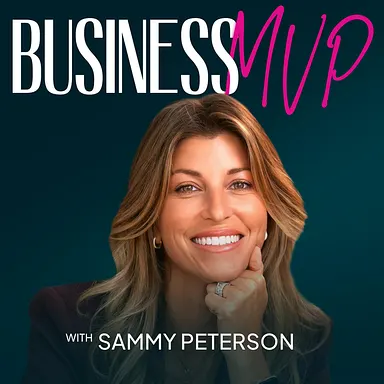
This episode features former Milwaukee Brewers president Wendy Selig-Prieb discussing how the small-market club pursued a new ballpark, Miller Park, after a long political and economic fight. She describes her path from corporate lawyer to general counsel and team president, the challenges of being the only woman in MLB leadership, and the 1994 labor negotiations.
She also explains her move into fashion as president of Worth New York, and offers advice on protecting a business with a good lawyer and seeking board seats. Listeners will hear her view on personal success, risk, and career pivots.
In this episode Sammy Peterson, Wendy Selig-Prieb
This transcript of the Business MVP interview with former Milwaukee Brewers president Wendy Selig-Prieb was made with HappyScribe's human and AI transcription.
Ads in this audio differ from the text. Tap the sentence you're hearing to follow along.
Synced: the text now follows the audio.
In a way, I had 3 strikes against me. I was a woman in leadership at a baseball team. I was relatively young still, and I was the boss's daughter.
My next guest was known as one of the most powerful women in Major League Baseball. Wendy Selig Priebe spent 15 years with the Milwaukee Brewers, rising from general counsel to president and chairwoman.
For the Brewers, Milwaukee is the smallest market in Major League Baseball. I believed that we could draw 3 million fans. We had averaged $1.5 million in the 10 years leading up to the opening of Miller Park. But the reason we believed we could is because that's what elite teams did. We wanted to be an elite team.
Let's talk about Miller Park. So you oversaw the construction of Miller Park, now American Family Field. So what did putting together a deal at that scale teach you about how money and power actually move?
Well, first let me tell you, I was a poli sci major in college and they didn't teach me any of what I experienced.
My next guest was known as the most powerful woman in Major League Baseball. Wendy Selig Priebe spent 15 years with the Milwaukee Brewers, rising from general counsel to president and chairwoman. When that chapter closed, she became president of Worth New York in luxury fashion. Today, she's sharing what she learned negotiating with baseball's most powerful people, building an industry she had no background in, and earning a name that had nothing to do with the one she was born with. Wendy, welcome to Business MVP.
So happy to be here. Thanks, Sammy.
So Wendy, you've had careers in law, baseball, fashion, and now advising and building businesses. So what connects all of those chapters?
Well, first of all, I think it sounds like a crazy title, right? When I hear like baseball to fashion. So I know we're gonna get into it. Yeah. But it's actually not as crazy as maybe it sounds. So there are some common threads. that connect my story. And it's everything from following my passion to taking risks and also realizing that as you get older, your opportunities and your priorities change. And that is not the mindset I had as either a student, young adult, Early in my career, I was that person who, you know, I was on a path, if you will.
Yeah.
So I can relate. Yeah. But, you know, life ends up with pivots and, and interesting changes and opportunities. But you have to be willing sometimes to also take a risk.
You grew up as, you're growing up as Bud Selig's daughter, who, you know, was the longest serving MLB commissioner in baseball history. You had a front row seat to baseball as a business. So what did you see as a kid that shaped how you lead today?
So let me say that when you have a famous or successful father or parent, people think that you're lucky. I'm gonna tell you, there is not necessarily a direct correlation. Okay. In my case, I was lucky, but not because my dad was successful. or, you know, necessarily in baseball. But I was successful because he gave me a front-row seat to his life. And I think an inherent advantage that I had was that I loved baseball. And going to the office with my dad meant going to the ballpark. Right. And I loved that. And so, I learned about the game of baseball. I learned about the business of baseball. I learned curse words that most people don't learn from their own father. But, but, you know, being able to do that is really what I think has had more influence on me probably than any other thing. And I like to say my dad was sort of the ultimate girl dad before girl dads were a thing.
Right.
Right. I mean, he really encouraged me to be around the office. And I often would sit, you know, sort of towards the back of his office as he was on phone calls, as he was in meetings, and I would just listen. And that's an education unlike you can get anywhere else.
Yeah. So then you started off as a corporate lawyer. How did you know you wanted to get into baseball, or was that always the plan?
If you had asked me back in my college, law school, early days of practicing law, did I think at some point somewhere my career might take me there, I would've said yes, but no grand plan, not really knowing when or how it would happen. What really changed things for me, I do believe, and I know you are, uh, were a practicing lawyer too. And I think starting in a large corporate law firm, at least for me, was great training.
Yeah.
But I also never really thought it would be my end spot. And really what changed for me was at that point, it was 1990, it looked like the Brewers were going to move forward with a new ballpark which we badly needed, and I'm sure we're gonna talk a lot about.
We are, yeah.
But I had to make a decision, and that was, you know, my dad and I, we had conversations about it, and I knew if I wanted to play a meaningful leadership role in the development of that ballpark, you gotta be there on day one. You know, you can't parachute in. So I had to make a tough decision because I was just getting to the point where I was really liking the work I was doing. I was, I guess, gaining some confidence around it. And so I had to question whether it was the right time to make that move. And I remember going and talking to the managing partner of the firm, and I wanted him to tell me what to do. Of course, he didn't. He told— I went and talked to him on a Friday. He told me to, you know, think about it over the weekend. And it did give me things to think about, but—
Mm-hmm.
At the end of the day, you know, it was a decision I had to make. And I will say this, I agonized a bit over it. I never should have. It was absolutely the right thing for me.
Yeah.
And it turned out to be— I don't know if I can say the right time, but a time that was well-positioned me for the role that I ultimately grew into with the club.
Yeah. So did you come in as the general counsel or was it a different role?
Yeah, I came in as the general counsel. And interestingly, I was the first in-house counsel that the Brewers had had. And just to take people back in the early 1990s, most sports teams were just starting to have in-house counsel. Some teams already did. Now every team has in-house counsel and they have multiple lawyers. So when I say that to people, they kind of look at me and I say, well, let's rewind. to 1990.
When things were simpler.
And that in and of itself was a challenge. So now I went from a big law firm where there were lots of associates and partners that I could ask when I needed help with things.
To a one-man shop.
And now there I was as general counsel by myself. Yeah, that's a lot. In a new role. So it was a lot.
Yeah, that's a lot. So how did you earn your own credibility then and separate, you know, being, you know, his daughter, you know, ultimately from being president of the team? You know, how did you, you know, make your own path
So in a way, I had 3 strikes against me, especially if we go back to 1990. You know, I was a woman in leadership at a baseball team. That was not a common thing. Right. I was relatively young still. Now I think I was really young when I look back at it. And I was the boss's daughter, right? That's the reality of who What I brought. Yeah. And what I would tell you is I really never thought about it or worried about it. There's nothing I could do about any of those 3 things. Right.
I love that.
They are what they are. Right. Out of your control. And so what I realized— yeah, I mean, you know, you try to focus on the things that you can control, the areas that you can get better, the things that you can learn. But I couldn't change any of the 3 of those. And so What I realized, you know, I knew that in some instances, maybe a lot of instances, people would have preconceived notions of what, what that person's going to look like. Right.
Mm-hmm.
And the reality is, that's where I think my upbringing helped me because I knew baseball. I knew people in baseball. I loved being around it. Everything from players to executives, fans. That was not a new world to me, and that did probably help. Um, but otherwise, you know what, I realized, you know, you put your head down, you work hard, you build relationships, all the things that everybody does when they're young in their career. What I would say is I think those 3 attributes had people looking at me earlier than I would have ideally liked. Right. But I came to understand, and of course, one of the things about being in sports, whether you're an athlete, whether you're in the front office and an executive, you have a public accountability. You matter. And so I love that about sports. I love what sports can do for a community, for people.
Mm-hmm.
But it's a two-way street. And so the people who don't get comfortable with that ultimately get eaten up by the business.
And for a long time, right, you were the only female president and chairman of an MLB team, right? So that's an interesting thing too. So what did that actually feel like day to day?
You know, it's sort of the same thing I'm gonna say about my 3 strikes. And that is, I didn't know any different. And I will say that I knew in every interview, media interview that I did that was more about me, uh, as opposed to an issue, uh, that we were dealing with as a club or a speaking engagement, I was going to get that question. And what I found interesting about it during that time, and again, I'm going to take you back to, you know, the 1990s. I had been on a corporate transactions team at the law firm I was with. There were no female partners. I never dealt with a female client. I would sit at a conference table with all men. So you were used to it. But I— so I didn't know any differently.
Yeah.
But also, Interestingly, Sammy, nobody ever asked me. Nobody ever asked me what that felt like. The day I joined the Brewers, I could predict for you speaking engagement interview. I didn't know which— whether it was going to be one of the first 3 questions or the last question, but I knew the question would be asked. And so I used it and the platform that it gave me as an opportunity to say, look, in baseball— and, you know, I wasn't the only woman in baseball. I was the only woman in that position. Right. But there were, you know, senior women in a number of roles within Major League Baseball at the league level and clubs. And so I would point those out because I think it's important for people to see that there are indeed opportunities. But I also thought, if anything, baseball was ahead of the game in terms of looking at other businesses. And so I would like to point that out. And when, particularly when it was a media person, I'd always say, I'm going to answer your question, but before I do, I'm going to ask you about the leadership team at your newspaper or your TV station.
Right. And they would do just what you did. They would laugh. And they would say, oh my God, you know, like, we're the worst. Are you kidding? And I always thought it was interesting because they would ask me the question, but not their own leadership team. And so— Yeah. It gave me a platform to talk about that really were a microcosm of society. But when we looked at that issue and diversity and, and, and creating opportunities, and I'm going to go back to You know, one of the proudest moments for Major League Baseball came in April of 1947 when Jackie Robinson became a Major League Baseball player. And people now look at that and they say, well, you know, of course, because again, it's what we've all grown up with. But at that time, it was so beyond where society was.
Yeah.
The United States Army had not yet been integrated. Brown versus Board of Education had not yet happened.
Mm-hmm.
And so baseball was really a leader in changing society. And that is part of what I think makes baseball so special. So the fact that I was different, the fact that maybe people hadn't seen it before, that's not necessarily a bad thing.
Yeah. I love that perspective. I love that. That's a great story. Thank you for sharing that. So, and then tell us a little more too about how you went from, you know, you were a lawyer, so general counsel made sense. And then how did, what did that look like from jumping from general counsel to actually being president, you know, of the, of the MLB team?
Yeah. So it, and again, when I joined as general counsel, I thought, okay, this is it, right? Like I had, I am so happy. This is the way I worked so hard in law school to get to this point. Right. Like, what could be better? And my father, it was the only president and CEO that we had ever— that the Brewers had ever had. And he was still a young man. So the idea that he wouldn't be there and be in that position was unimaginable to me and probably everybody else.
Right.
But what happened is, so I started a major focus of mine was both to work on the legal affairs of the club, but also to take a lead in the development of Miller Park, which is now American Family Field. Yeah. And so that's really where my focus was. And a couple years after joining the team, 1992, Major League Baseball made a commissioner change and Fay Vincent left, and baseball decided not to move forward on a commissioner search immediately because we were just about to enter into labor relations. And for people who follow sports, you would know that you wouldn't want to have a change in leadership as you were just positioning to that. So my father became the executive of the or the chairman of the executive council, and essentially served as the commissioner without the title. And as such, his focus became much more about Major League Baseball and much less about the day-to-day operations of the club. Right. So organically, I started to take over more. And people would ask me sort of, you know, people internally and people who dealt with us sort of knew, but people would ask me, what my job was.
And it was very hard to describe at that point. So I would just answer it honestly, which was to say, I do whatever my father doesn't want to do, really, maybe have time to do. And that's really how it happened. My dad and I never sat down and had a conversation about it.
It just organically happened.
Yeah, just sort of organically happened. And then in 1998, he became— he was elected full-time commissioner. And up until that point, he had still officed at our ballpark and at County Stadium, and he still held the title, and he certainly was involved in leading the effort for the new ballpark. But now, once he became full-time commissioner, that obviously was going to change, and I was then appointed president and CEO. But I'm gonna digress for a minute to tell you my circumstances at that time.
Yeah.
So I had just had, um, my, my daughter. She was born at the end of May of 1998. And, you know, maternity leaves then were not what they are today, um, but I very much wanted to take some time and be able to step away. Well, now I've told you what was going on with my father, and it became apparent. So within just a couple, just over 2 months, I became the president at the same time that I became a new mom. Wow. Not ideal from my standpoint. But you know, I like to say if you wait to be perfectly prepared or for the perfect time, it will never come.
Yeah. Yeah. So I wanna talk about Miller Park, but first I wanted to ask you, I know you were the first woman to represent the MLB in collective bargaining with the Players Association. So tell us about that and what did, what did negotiating at that level teach you about business?
It was an amazing experience. I became, Very involved because the '94-'95 negotiations with the players union were all about changing the economic system of Major League Baseball, which was not working. It's part of the reason that we needed a new ballpark. Now, baseball economics had changed with Camden Yards and all the new ballparks in a good way, But for the Brewers, Milwaukee is the smallest market in Major League Baseball. And what that means is we were particularly, and they still are particularly dependent on our stadium-related revenues because our media dollars are never going to compete with New York, Chicago, Philadelphia, LA. Got it. And so So that was a major part, but so was changing the economics. At that point, there was no revenue sharing in baseball. It was actually kind of ridiculous now when you look back at it, but the only sharing was you shared a percentage of the gate. And ironically, it wasn't even the same in both the American and the National League. And back then, we were an American League club. So But it was crazy because it was just a sharing of the gate, which meant, great, when we played in Yankee Stadium, we got a portion, you know, a small percentage from the Yankees.
The problem was when the Yankees played at what was then Milwaukee County Stadium, they took a percentage of our revenues. So it really, while there was in theory some kind of sharing, it was not a sharing that was designed around enhancing competitive balance. And when you're a league, at the end of the day, that's what you sell. So, you know, I guess when you're a Yankee fan, it was fun if you win every year, but ultimately even that, right? You, you need some competition. And so I became very involved because no team needed change more than us. There were certainly a big group of us as small markets who worked together. San Diego, Minnesota, Pittsburgh, Pittsburgh.
No.
There were a whole bunch of us. Montreal, back in the day. Of course, they don't even exist anymore. But there was a group of us, and then the group got bigger. And ultimately, when it was time to assemble the team that would represent Major League Baseball at the bargaining table and serve as that role for management and ownership, There were, I think, about— there were 8 or 10 of us that were on the committee. You know, I won't tell you that I don't have self-doubt. I call her my nasty roommate, and she can be nastier than the nastiest of Twitter wars. And so were there times, and that certainly was one, I'd sit around this table and there was Gerry McMorris and there was you know, Jerry Reinsdorf and Andy McPhail and, you know, a lot of very, very accomplished people. Mm-hmm. And I'd sort of sit there and say, yikes, like, do I belong here? And that's hard. I mean, we all have that at times in our lives. It could be about our career. It can be, you know, sometimes you feel that as a parent. Am I doing the right thing? And so did I sometimes have those doubts?
And yeah, sure. But, you know, what I guess gave me the confidence, uh, was I work hard. I'm— and I know you are always prepared. I know you do your homework. I do too. And that's— that helped me overcome maybe when I would sometimes question myself.
Yeah.
I knew my stuff. I knew why I was— right. I knew why I was there. I knew And maybe sometimes had to remind myself, but it was an extraordinary opportunity. It was extraordinarily difficult. I mean, you know the strike, you know that we lost the postseason in 1994. It's something you would never want to live through. It was torture. Yeah. If I could tell you, every week when it went off, we always met in Rye, New York because both, well, at that point, Barry Rona was the lead negotiator for us and Don Fehr for them. And ironically, They both lived in Rye. So I'd fly to New York, I'd take this taxi from LaGuardia to Rye.
Yeah.
And each time you went, you thought, okay, we had a new proposal. This is going to be it. We're going to make progress. That's what you believe when you're in collective bargaining. And sadly, we'd meet for a few days, whether we thought we made progress or not, and then we'd get back together, and sometimes we'd go backwards. We didn't move forwards very well, but it was a long process. And then ultimately, the president— it was President Clinton at the time— got involved and he appointed a mediator, which just goes to show the importance of baseball to this country and now globally. Mm-hmm. Right? President of the United States has a lot of things to worry about. Right. And the idea that he interjected himself and appointed Bill Usery, who, you know, certainly at the time was one of the most highly respected mediators. And being able to experience that, I mean, in a million years, you know, I— we talked early about the decision, should I leave the law firm? Was it the right time?
You're right.
I mean, the experiences that I had,
Or unbelievable. Yeah.
I never would've had, right?
Yeah. No, that makes sense. So let's talk about Miller Park. So you oversaw the construction of Miller Park, now American Family Field. So that's a massive project, public funding, taxpayer money, political negotiations, I'm assuming. So what did putting together a deal at that scale teach you about how money and power actually move?
So what I would tell you is our ballpark project, which ended up being a 10-year mission. None of us ever thought it would take that long. But if you study other ballparks, stadiums, they almost always have a lot of stops, starts, and political machinations. And we had more than our share, is what I would tell you. Yeah. And so, look, people have different agendas. whether it's about location, whether it's about financing. And ours was a public-private partnership. And so complex and difficult. Yeah. But having said that, once we got going, what got us to never give up, first of all, I don't know if you know this, but the history of how the Brewers got to Milwaukee, the Braves, Played in Milwaukee from 1953 to 1965. By the way, they never had a losing season, but they did leave after '65 to go play in Atlanta. And so our community had experienced what it felt like to lose Major League Baseball, and that's really how my father got into baseball. So the one thing I can tell you, he never going to do was move this team.
Right.
But having said that, we were also in a ballpark that had become economically obsolete. And so we believed to our inner fiber that this ballpark would be a game changer for both our community and our ballclub. Yeah. And in fact, 25 years later, right, the numbers don't lie. But what I would tell you is when we were doing this, and, you know, I'd talk about why we needed it and what we believed we could do, I would always— one of the things I would say is I believed that we could draw 3 million fans. And if I was talking to a newspaper reporter, He'd take out his pen and paper and he'd write down that I had said that we could draw 3 million fans. And he'd warn me, you're going to see that in the newspaper tomorrow. Of course, there was no internet in those days.
Right.
So it all sounds so quaint now, right? But I understood it because we had averaged 1.5 million in the 10 years leading up to the opening of Miller Park. We had never come close to drawing 3 million fans. But the reason we believed we could is because that's what elite teams did. And we were building this ballpark and fighting to change the economics of the game and rebuilding our baseball operations because we wanted to be an elite team. Yeah. And I am proud to say that the Brewers have drawn 3 million fans, not just once, not just twice, but 3 times. And I can't help but say the Brewers in 2026 were the best team in Major League Baseball with 103 wins.
And that's your legacy there, which is amazing. So I'm assuming that's probably the biggest deal you've ever worked on though, hands down.
Yeah. I mean, you know, if you said to me, I'm gonna put together a highlight reel for you. I'd like to put, you know, being a mom maybe first, but, um, but from a career— None of that. Yeah, correct. But from a career standpoint, uh, I've done a lot of great things, and I've loved them all. And, uh, but, but certainly, that would be at the top of the list. Because that was important, not just for fans then, but for generations to come.
Yeah. And I think you've done a lot too with, you know, paving the way for women in baseball. I know you kind of undersell that piece in the, in some of the other parts that we've talked about. You know, you just were, you know, you just showed up, you're used to being the only woman in the room. But I, I also read that you were part of the commissioner's initiative on women in baseball. So, you made the business case. I was. Yeah. I was. For making, for bringing more women and families to the game. So, I think, you know, you shouldn't undersell that as part of your legacy as well, 'cause that's pretty cool.
I don't. I don't. Believe me, I'm very proud of it. I always speak about it because it gave me a voice, and I like using mine to empower and mentor others. And, you know, I look back to one of the community programs that we established. It was a Girls of Summer program. It still exists. today. At its time, it was very forward-thinking because it— we worked with— it was us and it was the Milwaukee Public School Systems as well as the Girl Scouts. And it was the first time the 3 had collaborated to do a leadership skills kind of thing. So you bet. You know, I care about those things. Yeah. I care about promoting opportunities for women as fans, as executives, as athletes. It all matters.
Yeah. So what was the hardest business decision you've had to make during your time with the Brewers, and what did it teach you?
Well, I'm going to tell you that the hardest decision was the one that came at the end. So the last thing I did was I oversaw the sale of the team to Mark Antonazio, who is still the owner of the Brewers. And I knew the team was in great hands. And so at that point, my husband, who's also in baseball, his job took us, was gonna take us to Phoenix. Got it. And I was at a place where, you know, I told you my daughter was born in 1998. The ballpark opened in 2001. And now fast forward to 2005, For the first 7 years of her life, um, I, uh, you know, I tried, I loved it all, but I found myself at a place where I wanted to be more family-focused. Yeah. I didn't know exactly what that would look like for me, but because we were moving, it was sort of the perfect time. But I will tell you, as a Type A person, there is There's nothing comfortable about leaving something that you love without knowing where you're going to. And while I wanted to be more family-focused, I love working.
Yeah.
And so, you know, I knew I still wanted to have a career. I didn't know what that career would look like. And then ultimately circumstances, you know, I was looking at all sorts of opportunities and
And
all of them, whether they were entrepreneurial or executive, they really, you know, I would be excited and then I would realize it wasn't going to meet my needs. And I'm a big believer that knowing your why is more important than knowing what you want to do. Yeah. And I had a very strong why that helped me to figure out what my next chapter should be. And ultimately, of course, that took me to a women's fashion company. Yeah. And in a million years, if you had told that law student that she was gonna even be affiliated with a women's fashion company, let alone become the president, I would've said, you are nuts. But again, One thing led to another, and I initially got involved having my own business with Worth, which is what Worth— it's how it was sold. Yeah, through private trunk shows. People had their own businesses, and I did it truthfully. I thought I'd do it 6 to 12 months and that it would give me a great opportunity to meet other businesswomen in Phoenix. Because that was something I felt very challenged about. And while I wasn't the quintessential prototype of what Worth looked for, I was pretty confident I could figure it out.
And again, 6 to 12 months, and then I'd sort of figure out what was next. Well, P.S., I ended up falling in love with the business, becoming very successful, and ultimately getting recruited to be the president of the company. And people think that that's what makes that story such a big success story, but truthfully, It's not the success that I think was important. The success that was important for me was redefining what personal success looked like.
Mm-hmm.
It was the first time in my life it wasn't the upward trajectory, but that was success. And that's something I never understood until that
So a couple questions. How did you go? But I guess still explain to me, how did you go from buying the product to running the company? Because I think people are probably like, well, how did that happen?
Yeah. So I, I actually was a customer, but then I became, so, uh, as, uh, Worth New York, uh, representative, you own your own business, you set up your own business, uh, you have the support of the corporate office. And obviously they design the team, the, the product, they produce the product, you sell it. And so while I wasn't the prototype, I guess I know something about building a business. And so I ultimately built the business the only way I know, which was really— I'm a businesswoman through and through. So for me, First, I wanted to meet businesswomen, but I also knew from my own experience, the last thing you have time to do is shop. Right. And so I had known that from shopping it, I loved the idea that in 1 hour I could go and I could get work clothes, I could get, you know, party clothes, I could get a great leather jacket. I could do it 1 hour and I was done. So when I was building my business, That's the kind of woman that I looked for. And so I had success. But it, you know, it's not only what I did.
Worth New York was a great company with great sales leadership, with a great design team. And so ultimately, I guess it was the high achiever in me. I built my business into the biggest. within the company. Of
course you did.
And so when they were looking for a new president, uh, I, I was approached. And, you know, at first I wasn't sure. I loved my business. I loved my life. I had worked so hard to get to the point I was at, not just with my Worth business, but with my life, right? My personal life was flourishing. My family life was flourishing. And the idea that I was now going to be president of a New York-based company, yes, I was gonna be able to work primarily in Phoenix, but it would be a lot more travel. It was a whole different cadence than what my business had been. Right, exactly. Um, and so ultimately that same thing about the perfect time, perfectly prepared. Sure. Sometimes you just have to do it.
Just go. Yeah. So I wanna take it back though, just before you became the executive. So what surprised you about being an entrepreneur that you didn't experience as a top executive? you know, previously?
Oh my gosh, so much. It's so hard. So it's funny because I do some consulting in the entrepreneurial world as well. And so I, I've lived in both. And the truth is entrepreneurials always lust after a little bit of what the corporate world looks like, and the corporate world lusts after the excitement of the entrepreneurial world. You know, the truth is, right, it's the entrepreneurial world is messy. And so for the first time in my life, I didn't have a big staff. Like, before that, if I had needed a press release, I called up our VP of public relations and I got a press release. I had— we had an IT department. I had IT problems, I called the IT person.
Right.
Uh, you know, I was used to a lot of corporate infrastructure, so what I learned about being an entrepreneur is that I like learning. Maybe I knew it before that, I don't know, but I like learning. And when you're an entrepreneur, you have no choice. You can't afford to pay someone to do all these things. Right. So you have to learn. And that for me was probably the biggest learning and the most uncomfortable part of being an entrepreneur in my earlier entrepreneurial days.
Yeah. Did you make any big mistakes that, you know, you think the audience listening could learn from?
I've made a lot of big mistakes in my life, and I've had setbacks and all the rest, but, you know, As I reflect on my WORTH days, did I make mistakes? Did I hold myself back sometimes in some ways? Yeah, sure. But no really big ones. Mm-hmm. Because I think that it was a business in which you also had a lot of support, a little bit like baseball. I talked about how all of the small market teams were aligned around our economic interest. When you're playing on the field, you want nothing more than to beat that team. You're fierce competitors, right? But off the field, you're partners. And it was a little bit the same at Wurth. All of the other businesses around the country— look, did everybody want to be number one? Did everybody want to get certain awards and rewards? You bet. Yeah. But we had a culture of women supporting women, and we had a, a culture of collaboration which started with our co-founders. And so I think, um, that all of those things helped me from making any really big or catastrophic mistakes.
Yeah. That makes sense. So I wanna pivot a little bit just to your, uh, to you as a lawyer. So as a lawyer, what's the one piece of business advice you'd give every entrepreneur about protecting themselves?
Get a good lawyer. I think a lot. I, I, I'm really serious. Truly.
Yeah. No, it sounds good.
I think so. The thing is, an entrepreneur, you don't wanna spend money where you don't need to spend money. And so I understand that, right? And look, with AI, are there certain documents and answers that you can get today that are reliable? Absolutely positive. Yeah. I didn't have that advantage, but you certainly have it today. But, uh, and I'll use, you know, even the Brewers as an example. When I first joined as general counsel, so there was sort of old thinking, but there was always— there was a thinking among some of the business leaders that, well, we'll let their side draft the contract first so that we save legal fees. Well, you know, as a lawyer, you always want to, if you can, on
your
paper, you want to provide the first draft, right? So I said, don't worry about those legal fees, don't worry about that work, that's on me. So I think that that thinking, there is a time in which you need legal advice to protect yourself. It might be if you are going into partnership with somebody, which most businesses and most successful businesses are not sole entrepreneurs. Now, there certainly are some, but most are not. Mm-hmm. And so the one question nobody ever wants to think about in the beginning, what happens if this partnership dissolves?
Yeah.
The time to think about that is before, but it is before. But nobody wants to do that. It's messy and you don't want to spend the money. But the truth is, if you wait until it's gotten to the point that you need to dissolve, it's a lot harder. Yeah. If you haven't already created the rules of engagement. So there's a myriad of examples like that where I would say, do a risk-reward analysis. I get it. If it's a risk that you say, okay, maybe I didn't, you know, catch everything in the contract, but I can live with it, okay, no problem. But are you willing to lose your business because you didn't decide what that exit is gonna look like.
Right. Yeah. Great advice. Yeah. So after Worth New York, so now you've kind of shifted into more, you know, you said consulting advisory boards. So you recently joined the advisory board of Laura's Gourmet Granola, which is a totally different world from baseball, law, and fashion. So I wanna talk a little bit about that. You know, what made you say yes, you know, to something that was not necessarily in an industry you had been in before? You know, was it the founder, the product, the opportunity? So how did you evaluate, you know, getting involved with that?
All of that. So first of all, I'll say that in addition to, you know, I, I'm not the, the expert that she is. She is actually a trained chef, and I'm gonna tell you how it came about, but I also have served on the board of Delaware North, which is a big food service hospitality, uh, company since 2010. So for a long time.
Mm-hmm.
So I had a little bit of relevant experience, and I certainly, more importantly, um, know about scaling a business.
Mm-hmm.
What it's like to be an entrepreneur. And so I knew Laura from the first time I lived in Phoenix. She was a professional chef and she was amazing and did amazing catering. And I used her for my Worth events and various things. And I always really admired her. I lived in New York for 10 years and she had reached out to me once or twice about some business issues. And I, you know, I'd always liked her. I didn't know her particularly well. And when I moved back to Phoenix a couple of years ago, I was just looking to reengage with people and she was one of them. And she and I— she, she asked me at that point to serve as a strategic advisor. And the other thing that entrepreneurs often need is, um, that's the, the issues that go around scaling a business, leadership issues. So the reason I like working with entrepreneurs— I also do a fair amount of mentoring, and I do it because the one thing I miss in being a corporate executive. I love recruiting, leading, and retaining a team. If you said to me, what's the one thing you're good at?
I can do that, right? I know how to align a team. I love to do that. And in the roles that I serve in today, I don't get to do that. So I get a little piece of it by mentoring, by being a strategic advisor to someone like Laura. And Laura's Gourmet, she's amazing. So she, she's also— she thinks big. And I, you know, I'm probably not your person if you don't want to think big, if you don't want to be challenged. Right. And the thing about me is I always have a lot of ideas. So they're not all good, believe me. But it's no problem because if you don't like an idea, I'll have more. But she's now developed this amazing product for use in your kitchen that only a chef could do. And what makes her brand unique is that it truly is chef-driven. So all of those attributes are things that really also play into my strengths. And I like her. I believe in her.
Right. Yeah. And then she— and so, and then I think we talked about this earlier, but she recently got a partnership with United Airlines. They're serving her granola on the flights to Hawaii, which is Amazing.
Isn't that so cool? Right. From Phoenix.
That's so cool.
Which is a great branding opportunity. Exactly. The product is great and it's sold in a number of, of places nationwide and online. But as you know, an entrepreneur is always looking to raise their visibility. And that was, uh, you know, an amazing opportunity and says a lot, not just about her product, but about her business.
Yeah. So for entrepreneurs who wanna get into board work, especially in industries outside their own, which, you know, this is, you know, you had a, not a roundabout way, but you had a little bit of a connection into this, but it's still not, you know, baseball or fashion, call it, right? So for those listening that want to get into board work, maybe not in their own industry, how do you go about that?
First of all, I would tell you, I've been on a number of nonprofit boards. And nonprofit organizations are also corporations, they're just nonprofit. And so at least well-run ones, in terms of getting experience, understanding how a board works, what's within the board scope as opposed to management, understanding how succession should happen, understanding what the role of a nominating and governance committee should be, having good governance. You can learn all those things in the nonprofit world as well. Yeah. And I think a lot of times people dismiss that. But, you know, I didn't do it for that reason. I do it, you know, I follow my passion. And, you know, there were opportunities I just couldn't say no to. But those things certainly helped me. And I did them, or some of them, very early in my career. So those things probably helped me 'Cause I had exposure. But it's like anything, I'm a big believer in relationships, right? I knew Laura, she knew me.
Right.
And it organically flowed
from there. Yeah.
And it just organically flowed. And when I went on the board of Delaware North, I knew one of their businesses is sports service and they provide food service in a number of ballparks around the country. And our ballpark was one of them. So I knew that, but they have many other, you know, several other business lines, which I didn't bring expertise to. And so, you know, again, that nasty roommate of yours saying, are you really gonna, you know, do you have enough to add? Yeah. And I had been on the board of a bank, you know, I had, you know, some board experience. But I also think it is about looking at what can— it's not enough to just want to serve on a board. What can you bring to the board? What does that board need? What expertise do they need? Expertise in manufacturing, in direct-to-consumer, and really figuring out what expertise do you bring Yeah. To the table, and then trying to have conversations with people and organizations that could benefit from your expertise or experience.
Yeah, that makes sense. So kind of seeking those out and figuring out what you bring, the value you're going to deliver upfront, which I think is good advice, rather than kind of flying blindly into, you know, an organization you think you might want to be involved with.
Yeah. And if you just call someone up and say, geez, I'd like to be on a board, well, I don't know what to do with that. Right.
Interesting.
It's too broad. It's too broad. Why? And I'm going to go back to your why. Why do you want to be on a board? Because for me, the why is more important than what board you might serve on. So what is your why and what is it that you bring to the table that might make you the perfect candidate for a board, and then you can go out and start to look for it.
Great advice. So I love this question and this framing, but you call yourself the ultimate hyphenate. So mom, wife, general counsel, chairwoman, entrepreneur, board member, advocate, the list goes on. So how do you decide what gets your best energy?
Well, first of all, let me tell you that that name, actually, I didn't come up with it initially myself. It was a speaking engagement and they sort have used something. And then I realized, yeah, my name is hyphenated, right? My life is hyphenated,
right?
So now I really lean into it and I use it for a lot of things. And here's what I would tell you. Not— you know, I used to keep a note by my desk when I was in what I call the messy middle, and that's the stage where you're building your business, you're building your family, you're building your life. And sometimes done is better than perfect. That does not come naturally for me. I am a perfectionist. Me neither. I call myself a recovering perfectionist because I know it's— being a perfectionist actually will hold you back. So there's some element of going after excellence that's great, but perfect is, you know, done is sometimes better than perfect, Sammy.
Yep.
And I needed that note right by my desk to remind me, and now it's in my head. So what I would tell you is my priority— the day shifts, right? So something that might be my priority today, this week, this month, this year, I love it all. And I am at a place in life Again, I go back to my why of why I'm here, and if something aligns to it, then I'm gonna find time for it. And the truth is, I like working. I like being busy. I like learning. Mm-hmm. I like growing. I like being challenged. I like being around other people who are aspirational. That's when I'm at my best. And so how do I do it? I don't know. It just sort of— how do you do it? You know, you get up every day, you do the best you can do.
I'm in the messy middle, so I don't know.
I get it. Just do the best you can do. And if I could say one thing, and I'm not good at this, so you can remind me when I need it.
Okay.
Stop beating— stop beating yourself up for what you don't do, especially when you're in the messy middle.
Yeah, I agree with that. So further to that, if you could go back and tell your younger self one thing about what building a career across multiple industries actually requires, what would it be?
Uh, I, I guess I would remind— or I guess I would try to tell her that sometimes a step back, or what looks like a step back, might be the right step. And I talked earlier about when I went from baseball to fashion. Can you imagine what my baseball friends thought? And a lot of people, they didn't understand. How could I leave the glamor of Major League Baseball and something that I left to go and be an entrepreneur? And that's where I knew why I was doing it. I didn't know where it would lead and, you know, who— I didn't have all the answers. But I, but I knew what I was doing and why. And so I guess I'd say, to use a baseball analogy, you know, stepping up to the plate to be the woman I wanted to be. If I look at all the various, you know, iterations, pivots, reinventions, whatever you want to call them, each one has been driven by what I wanted and what I wanted to be. at that point in my life.
So Wendy, this has been amazing. Thank you so, so much. One last question. What does it mean to you to be a Business MVP?
Well, first, I'm honored to be here with you, and I love what you are doing.
Thank you.
Because I love listening to podcasts. I mean, I'm a big learner.
Yay.
And so I think we, we can all learn from other people's experiences, and they don't have to be in your same field to learn. And so I guess I'm going to go back to something that we talked about earlier. And that is, I've often been the only or the first woman in the room in my career. And what I learned is that gives you a voice. And I like using my voice to mentor, to inspire, and to empower others. And that's what I feel like this show is all about. So I am so happy to have had a chance to share my hyphenated journey with you, the ups, the downs, the sidesteps, and everything, because I believe everybody has an interesting journey. But it's the journey, not the highlight reel, that I love.
Yeah, thank you so much. This has been awesome. Definitely inspiring.
Thank you, Sami.
And that's how champions think. Here are the key takeaways from my conversation with Wendy today. You don't need permission to reinvent yourself. She went from law to baseball to fashion to advising brands in completely new industries, and every chapter required starting over. Building inside someone else's institution and building on your own are 2 completely different skills. Know which one you're doing and what it requires. And being the only one in the room who looks like you isn't a disadvantage. It's a perspective nobody else at the table has. If you got value from today's episode, share with someone who's ready to think bigger, compete harder, and win in business. Make sure you're subscribed so you never miss an episode. And if you haven't, leaving a 5-star review on Apple Podcasts podcasts goes a long way in helping us grow and reach more leaders like you. You can also watch every episode on YouTube and follow along on Instagram @thesammypeterson for more behind the scenes and insights. I'm Sammie Peterson. Thanks for being part of the Business MVP Community, and I'll see you next time as we continue building you into an MVP in business and in life.
No team in Major League Baseball plays in a smaller market than the Milwaukee Brewers. So how did they build a franchise that draws 3 million fans a year and just won the World Series?
In this episode, Wendy Selig-Prieb, former president of the Milwaukee Brewers, talks about the risks she took that set the Brew Crew on the path to becoming the best team in baseball. She also breaks down how she used her platform as the only female MLB president in the 1990s to expose gaps in diversity and inclusion in other industries. Plus: the value of media training and why she pivoted from sports leadership to fashion.
In this episode, Sammy and Wendy discuss:
(00:00) Introduction
(03:46) When Your Career Outgrows Your Plan
(09:15) The Reality of Being the Only Woman in the Room
(18:19) The Promotion She Never Saw Coming
(22:54) What High-Stakes Negotiations Teach You
(31:08) Turning a 10-Year Battle Into a Legacy
(37:29) Why Walking Away Was Her Hardest Decision
(41:35) The Challenges of Being Your Own Boss
(50:41) How to Earn a Seat on a Board
(59:30) The Truth About Having It All
Connect with Wendy:
X
Connect With Sammy:
Instagram
LinkedIn
YouTube
Become a Business MVP:
Ready to level up the way you lead, build, and grow? The Entrepreneur’s Boardroom is where ambitious business owners come together to sharpen their next move, unlock bigger opportunities, and become the MVP of their business.
Join Sammy Peterson today at www.theentrepreneursboardroom.com/