
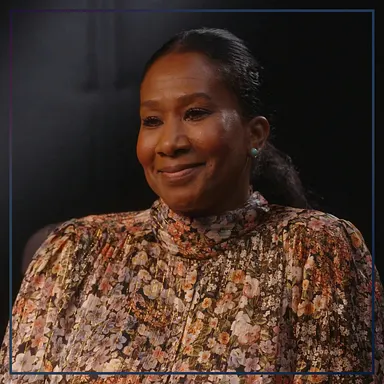
In this All There Is episode, Anderson Cooper talks with producer, former diplomat and author Nicole Avant about the 2021 murder of her mother, Jacqueline, in her home. Avant describes how the killing changed her grief, leading her to research Jacqueline's childhood, and how her father, Clarence, moved in with her before dying peacefully at 92.
She explains how faith, prayer and music helped her cope, and how she came to forgive without reconciling. Listeners will hear her reflections on her mother's lessons about kindness and accountability, and on finding ways to keep talking with her parents.
In this episode Anderson Cooper, Nicole Avant
This episode's transcript of Nicole Avant's conversation with Anderson Cooper was made with HappyScribe's AI note taker.
Ads in this audio differ from the text. Tap the sentence you're hearing to follow along.
Synced: the text now follows the audio.
Welcome to "All There Is." Wherever you are in the world, and in your grief, I'm glad you're here; you're not alone. I've rarely taken time off from work over the last 20 years or so, but now with little kids I'm trying to, so we're going to be taking a break during the month of July. This will be the last podcast released until August 6. "All There Is Live," my companion streaming show, is also going to be on break until August 13. I'll continue to check in on our website and read your messages, and we'll continue to receive voicemails from you. If you want to leave us any, the number, as always, is 404-827-1805.
My guest today on the podcast, lost her mom to violence. Her name is Nicole Avant. She's a producer, a former diplomat, and an author. In 2021, Nicole's mom, Jacqueline, was shot to death by an intruder in her home. She was 81 years old and had been married to Nicole's dad, Clarence, for 54 years. Clarence Avant was a legendary music executive, producer, and businessman. He was 90 when his wife was killed, and he moved in with Nicole and her husband, Ted Sarandos, the co-CEO of Netflix.
He lived with them for two years, and he died peacefully in their home at 92. Nicole has written about her experiences with loss in a book called "Think You'll Be Happy: Moving Through Grief with Grit, Grace, and Gratitude." It's been now several years. How is grief different for you now than it was maybe at first?
I would say it's not as in my face and intense every day. A lot of really positive memories have now taken over versus the shock and the trauma. The grief is still there, but it shows up kind of with a smile instead.
The violence of your mom's death, did it alter the way you grieved? Did it alter the way you thought about her?
Yes. All of a sudden, I wanted to know. I felt like I jumped back into her childhood. I wanted to only call her friends from high school that she still had, and her friends from a very young age. I needed to talk to them, asking, you know, what was her favorite song in 1957? What was her favorite song in high school? I wanted to go back to those moments. I felt, for some reason, that that was a part of her that I did not ask enough questions about. And I was grieving the young Jacqueline Avant before I was even born.
I was grieving.
That's so interesting.
It was very interesting that I went there, and it just completely fulfilled a hole that I didn't even know that I had in my heart.
Was that because you wanted to have a different image of your mom in your.
I think so.
In your mind's eye?
I think so. There was something about connecting with her childhood that was going to heal the younger girl in me, and I didn't understand it until I started asking around, and I did start to feel better. It was something about knowing her at 10 and 12 and 16 and 20, and it helped with it. You know, grief is so different with each person. My father died at 92 and a half. It was a very different goodbye. My mom's, there was really no goodbye.
She died in a hospital, and so I wasn't with her, and I didn't get to watch her close her eyes. I didn't get to hold her hand. I didn't get to kiss her goodbye. It was just ripped. It was gone. Everyone was so in shock. Anderson, I mean, my brother was wailing. I mean, like, like.
Your brother Alex.
Yeah. I had never heard that. It was just from a deep place. And my dad was just so in shock.
He had found her.
Mm-hmm. I didn't know what was going on.
Your husband, Ted, had given you a call, woken you up.
He said, "Nicole, you have to get to the hospital." I said, "What are you talking about? What's going on?" And I'm thinking, my dad, oh, did he have a heart attack or something? He goes, "Your mom's been shot." Now, mind you, I had just spoken to my mom six hours before. I go, "What are you talking about? She's been shot." "What?" He said, "I don't know anything. I just got the call. Get to the hospital. I'll meet you there." And because he was on a work retreat, not too far, thank God. And when I got to the hospital, my dad was kind of telling me what happened, and he said, "I heard these noises." And he felt so guilty because he said, "You know, Nicole, I'm 90 now.
I don't move as fast as I used to move, and I couldn't " He was almost blaming himself, like, "I couldn't get to your mother," you know? But he was with her.
Your husband wrote about the moment you all as a group learned that your mom had died. He says, "I watched her," speaking of you, "I watched her transform in every way after the surreal experience in that hospital when she was told by doctors that Jackie hadn't made it, almost like metamorphosis, but instant. My wife, Nicole, became the matriarch of her powerful and influential family and the keeper of their legacy." It's so interesting that he saw that in that moment in you.
Yeah. He said, "Nicole, I just saw you sit up, and something changed. There was this determination in your eyes, and you thought, 'I'm not going to let this fall apart. I'm just not going to let this fall apart.'" And I really do feel that I became Jacqueline Avant. I became my mother.
In that moment.
Yes. My mom was so disciplined and focused. You know, she would always say, "Pay attention to the details, Nicole. Pay attention to the details." And of course, it drove me crazy as a child. But all of a sudden, because she had trained me that way, I was able to pay attention to the details, talking to the police, talking to this and that. And I had to remember a lot of things and hand over things to them, and I thought, right, the details. I have to understand the details.
Your husband, his dad has just died.
Yeah.
And he's grieving his father when your mom is killed.
We were already in a state of grief for his dad. You know, Papa Ted, Ted the Junior, and his dad was the greatest, kindest man, really kind soul, and he had a heart attack in his sleep. And that's what made it so difficult was, I can't believe we're planning a funeral, and my mom is picking the flowers, and then she sent me a note around 8 o'clock, and we said good night, and I was planning on seeing her the next day.
And I took my bath and went to bed, and then Ted woke me up and.
After your mom died, your dad moved in with you.
Yes.
Directly from the hospital.
Yes. After a while, maybe a couple of weeks, my father said, once we cleaned everything up, and he said, "I'd like to go home. I want to go to my house." I said, "Okay, but you can't stay there. You're going to have to stay with me now." And he said, "Well, I'll tell you what I want to do." But he accepted it, and I would take him there, Anderson, and help him grieve in his own way. If he wanted to sit in his room, he used to sit in the game room, we called it, with my mom, and they'd watch the news. You. I'd let him do that. Then I'd take him home. We'd go to dinner. I was just trying to keep him in some type of routine that would help him a little bit, and it seemed to help him.
But going to sleep at my house changed everything, and it was good for him because he felt safe and he felt loved, and that was my intention. He needs to feel safe. He needs to feel loved, and he needs to feel taken care of.
He used the word "disappeared."
Yes.
In reference to his wife, to your mom. He rarely said "killed" or "died."
No. Yeah. It was so interesting when he said, "You know, Nicole, where's Jackie? Where's your mother?" I said, "What?" I said, "Daddy, you know, mom passed away." "No, where'd she disappear to? Jackie just disappeared. She just left. She just left."
Was it just not wanting to use those words?
I think not wanting to use the words. It was too painful for him to say she was killed. And when he did, a couple of months after, because he was very afraid of a trial, that was his biggest fear, was, "Nicole, I can't. I'm the only one that they're going to ask questions. Like, what am I going to see?" He was so and I said, "Daddy, I'll be there with you, and you just say whatever you remember." And thank God we didn't have to have a trial. But that was his biggest anxiety, which caused me a different kind of grief.
I was very angry and had a lot of revenge energy inside of me, and.
Understandable.
Yeah. I just was so furious, and even though I know this happens to people, and we're not the only family, a tragedy has happened too, and I understood all that, but I, you know, you go through it. Like, right now, I could feel my voice trembling. I was just so furious and just not caring for a life of just, "Does it matter?" in my way. "Goodbye." And I thought, "My God, not to Jackie." I mean, my mom moved into that house at 29 years old.
You grew up in that house.
I grew up in that house. Yeah. Yeah. My mom was 29. It was nine months. And when my mom found that house, she said, "This is it." And she loved that house, which is why she was always up moving her things. You know, it was like a museum for her and her art and her books, and she but she cared about her books. That was a James Baldwin book that she got in 1969. I mean, that she cleaned it off all the time. I mean, she really cared about her things and her collections that have all been given away, which is great.
She wanted other people to enjoy them, and.
Do you have that Baldwin book?
I do.
Okay. I was going to say.
I kept the Baldwin book.
I hope you kept the Baldwin book.
I kept that one. But she got her wish, and I'm happy that she did prepare us because, as you know, there is a business to death too that people don't talk about, whether they're going to be cremated, whether they're going to be all the meetings that you have to have to bury someone. And my mom was so good about preparing for it. And when she used to show me her will and her plans, I used to say, "Mom, don't show me that. I'm too young. No one wants to see that." She said, "But Nicole, it's going to happen." My mom was really good at reminding me that inside the circle of life is death, and we all like to look at death as being outside of the circle of life, which is why we struggle in our culture a lot to even talk about it.
I remember my mom took me she used to volunteer at this place, a center in Watts for children. She'd teach kids how to read and do basic math, things like that. One of her students was killed during a hit-and-run, and this girl was about eight years old. My mom took me to the funeral, and I was not ready for what I experienced with these strangers and screaming. And I remember my mom saying, "Go to the volunteer line. You know, we're going to put food on the plates. We're going to be here." And I remember being very angry at my mom, saying, "Why would you take me there?
Why did you " I didn't even know her. That's what I kept saying. I didn't even know her. And my mom said, "I want you to see that there are really good people even in the worst of times." There were people volunteering at the church. People helped pay for the funeral. Again, people were serving the food. And she always reminded me, "In the worst of times, you will find really good people, and I needed you to see that. I wanted you to understand and make it a habit for you to look for the light in the dark."
Your mom sounded.
She was very remarkable.
Like a rehearsal person.
Yeah. She really was remarkable. She was quite extraordinary. When I was little, I didn't understand her, and I thought, "Who are you? Why can't you be like all the other moms? What are you talking about?"
I know the feeling.
You know, it was just a different.
My mom used to show up to report card day, like, in fourth grade. One day, one time she showed up in, like, a purple Zandra Rhodes beaver skin coat. I was like, "Mom."
What?
"Can you not just tone it down?"
That's what I was.
And, like, the next report card day, she showed up in, like, this tweed waspy suit. She was like, "Is this what you want?" And I would try to usher my mom in and out of the school as fast as possible.
100 percent.
With the least interaction with anybody else.
100 percent. I was like, "Mommy, can you wear jeans like everybody else?" "I'm not like everybody else." "Okay." But I get it now. You know, I do understand her, but, you know, our moms were very it's a different time, and they were also very different, but they were extraordinary.
Extraordinary. Yeah.
Extraordinary.
Yeah. It's the kind of thing as a kid, and it was embarrassing to you, and now it's like.
Oh, yeah. Yeah. But now.
How cool was that?
Oh, it was the greatest.
What you wouldn't give for another day of their life.
100 percent. I say it all the time. And when I married Ted, I would tell him about my parents. I'd kind of warn him. I'd say, "Think of Queen Cleopatra marrying Archie Bunker, and that's the conversation that you're going to have tonight." But he loved it, and he said, "I've never met a woman like that." She always wanted me to be consciously aware of my actions and behavior, not saying that I had to be perfect all the time, but she wanted me to have the consciousness of knowing that when I stepped out of line or when I missed the mark, that my intuition, my soul, would tell me, "That wasn't cool, Nicole."
She really believed that every soul will be held accountable for their behaviors and their actions and the good deeds too. And she goes, "And that's all you really want is to take accountability and responsibility for yourself."
Oprah said that she called after your mom was killed. She called you up, and Oprah was crying. And do you remember what you said to Oprah?
I think, "Standing in my faith."
"I'm here standing in my faith."
"Standing in my faith." And she said, "What?" She said, "What?"
I love that line, that idea.
Yeah. My mom, one of the best gifts she ever gave me was real faith, not, "Oh, if you have faith, everything's going to go right." No. When you have faith, you call on it, especially when things go wrong. You have to believe that this trauma or this terrible thing is not going to last forever. There is a higher power, and the more you tap in and the more you ask for help and the more you surrender, you'll see things get easier for you.
In that moment when you said, "I'm standing in my faith," was it also part of a wish of, "If I say it, it will be true"?
Both. 100 percent both. I said it to myself over and over again, hoping, like, "Maybe this is really going to feel like this," but it felt good to say it. I noticed the more and more I repeated scripture, the more calm I felt because I knew I had we called my dad the 91-year-old baby, and I said, "We have a 91-year-old child in this house that we have to take care of." And we did. And it didn't mean that I didn't grieve, but I wasn't hysterical in front of my father. I was hysterical at times, but it was early in the morning and late at night, and in the middle of the day, like, the 10 to 6, it was, "Okay, let me get it together as much as I can."
And my dad had his ups and downs, and I was able to help him. He said something about, "I don't know what to do after she disappeared. How do I talk to her?" And I said, "I " I go, "You could still talk to her." He goes, "Well, how?"
He asked you how to talk to her.
Yeah. He goes, "How do I talk to her? I talk to Jackie every day." I said, "Well, you've been with her for about 55 years." He said, "And you didn't really know life without her." And I said, "Just talk to her at night." He goes, "Like, how?" Because he never went to sleep and prayed. And I said, "Just say, 'Hi, Jackie. I miss you, and I " " He's like, 'I'm not going to do that.'" I said, "Well, I don't know. That's what I would do. I do it all the time." And about a week later, he said, "You know, I tried that." And he goes, "It worked." I go, "What happened?" He goes, "I slept better. I felt that she heard me.
I said sorry about some things." I go, "Really, Dad? You? You apologized for something?" And I said, "Give me an example." He said, "None of your business." That's between you and me and your mother. And I said, "Okay, but at least it was the only thing I could offer him." And he did, you know, he heard me reciting scripture, and he'd say, "Of course that's your mother. Your mother gave that to you." I said, "Yes, and so did your mother."
Do you still talk to your mom?
Yes.
Still while you're bathing?
Yes. All the time. Last night, we had a full hour conversation. Being in the water, I noticed that it really helped me. I talked to my mom. I told her how angry I was, how sad I was, how scared I was. "What am I going to do with Dad?"
Are you talking actually out loud, or are you talking in your mind?
Both, but mostly out loud. And the best part of it was I realized in speaking out loud that I didn't have a lot of regrets with her, that there was not a lot of, "Oh, I wish I did this. Oh, I'm so sorry I did this." It was really, "Oh, wow, Mom. We got to a really good place by the end of your life." So the talking out loud was very therapeutic for me. My mom was a big believer in energy, and she always would tell me, "The soul is everlasting.
It never really dies. If you talk to me, I will hear you." And I believe that, and it's helped me a lot. It made a huge difference.
Do you sense that people were wondering about your reaction? People were thinking, "Why are you able to get up and do things?" And you said, "I would always have to explain, 'I am grieving. I'm just moving through it.'" What did that mean?
My mom would always say, and my grandmother gave this to me all the time, "The only way out is through. The only way out is through. There are no shortcuts. You have to feel it because that is life. You have to feel joy. You have to feel pain. You have to feel laughter. You have to feel sadness. That is the gift of being alive. You're going to feel so many different emotions, and the sad ones remind you that you're human, which is a good thing. And it reminds me or reminds all of us, we don't know what someone's going through.
So I used to be so like, "God, what's wrong with that guy? What could be so wrong?" Always thinking, "Why isn't he in a good mood? He's got I don't know what the hell happened to him in his life. What am I judging for?"
I think that's such an important thing, the realization that everybody is going through something, and we have no idea what somebody else.
No idea.
Is going through or has been through, and to give the person some grace.
Some grace.
You wrote in the book, you said, "I've decided to make the pain count and count for something good. I'd face my grief by doing, by doubling down on faith, love, and my family." That idea of making the pain count, I think, is really interesting.
My father looked at me so stern. He said, "Nicole, you cannot let this man who killed your mother take your life too. We're not going to do that. We got to make this count for something. So I think you should write a book, and you should write about Jackie. She lived an incredible life and did so many important things for so many people. And if we don't do anything, are we just going to leave it as some guy walked in the house, tried to rob us, and he shot her and left? That's not her legacy."
That can't be the end of her.
That can't be the end of her story. That's not the end of her story. She had 81 years, and in those 81 years, she transformed other people's lives. She made people feel special and important, and she shared her blessings.
During your mom's service, your dad reached over and held your hand.
Wow.
And that triggered a memory that you had had.
Yeah. It was so interesting how your subconscious just brings up things that have been buried for so long. And he was sitting in the middle of me and Alex, and he grabbed my hand, and he grabbed Alex's hand. And as soon as I felt his hand, I was taken right back to the bicycle store on Beverly Boulevard in Los Angeles, and he was like, "Hey, pick this one. And how much allowance do you have?"
And it was something about crossing the street, him holding your hand.
Holding my hand.
That was the connection.
Yeah. He was always holding me when he thought there was danger. And him holding my hand, it was just reminding me of, "I'm going to take care of you in this situation."
It's interesting how that triggered the memory of the bike store. I had no video of my dad. And about a couple months ago, an archivist at Mississippi Public Television was digitizing old interviews, and she sent it to me in a link, and I clicked on it, and suddenly I saw my dad alive for the first time since I was 10 years old. And one of the things he said was about shopping for bikes, and it triggered a memory. And I just want to play that for you.
Oh, my goodness.
When we are going to buy new bicycles, my kids and I do a lot of comparison shopping. We go around and price the bicycles, and we discuss the cost of bicycles, and I want them to have a sense that things cost. I mean, just as life cost, I mean, one's actions, a payment has to be made, responsibilities. I want them to have the same sense of that the important things are not what is bought with money, but what one feels and what one does, what one is.
Wow.
But I love that.
Wow.
I love that you had this memory triggered about bicycles.
I love that our dads were the same of, "I want them to understand this, and the money, and how much, and what it's going to bring, and you're going to get this joy," but it's about the joy versus.
Yes. He was the frugal parent. My mom was spending wildly, and my dad lived in terror and fear, and that's why he was making sure we got cheap bicycles. There's a video of your dad listening to Peggy Lee sing "Fever."
"Fever."
Let's just.
He loved Peggy Lee.
Let's play that.
Tell me again, what do you like when Peggy Lee says?
Fever.
Never know how much I love you. Never know how much I care. When you put your arms around me, I get a fever that's so hard to bear. You give me fever. When you kiss me, fever when you hold me tight. Here. Here.
Every time she did that, that high pitch, he loved it, but he loved Peggy Lee.
Yeah.
He loved he'd always talk about Peggy Lee, how she was the coolest and the greatest. And I would say, "What's your favorite song?" He goes, "Listen to Fever." Just it just he goes, "It makes you alive, Nicole." I'm like, "Okay." Oh, I love that you found that.
We'll be right back with more. Your dad died in your home.
Yeah. And it was the it was the greatest prayer answered because, you know, you always have these visions of how everyone's leaving. And I said a prayer. I said, "I need peace, a peaceful transition, please. Please, just a peaceful, calm transition." And he was in the hospital for a few days, and then, thank God, his doctor said, "Okay, you could do hospice at home. You could take him home." And it was the best thing that could have ever happened to me, Anderson.
And I was working on a film with Tyler Perry, the 6888. He sent a link, and I was taking a few notes and telling him what I loved. I was trying to keep it quiet for my dad, so I went to his little sitting room. And I thought, "You know what?" And I moved, and I sat next to my father, and I got into the bed with him, and I put my screen up, and I go, "This is what you told me to do. You told me to go forward and continue to create. And so I hope you like this movie." And he laid there, and he kind of knew he was in and out, but that was the last thing we did together.
And then, you know, that death rattle that shows up, his was bad. People had warned me, "The breathing starts getting tough." And I could tell he wasn't leaving if I was going to stay. I could tell that he was trying to hang on. So I called Ted into the room. I go, "We're going to switch places." And I've said my goodbyes. And I told my dad everything, Anderson, everything I ever wanted to say to my dad. And I told him how proud I was of him and that he ran his race and his journey was amazing. And I said to him, "You were picking cotton at 5 years old, and you were picking tobacco at 7 years old with no child labor laws, with Jim Crow running rampant, with all this, and you never quit."
And he had such a rough life that I was so happy that he had a soft landing at the very end. It was going to be a soft landing. And then Ted, he hasn't said a Catholic prayer in God knows how long. And Ted said, "All of a sudden, I remembered everything from school, and I had the rosary out, and I said all these prayers, and I listened to Duke Ellington with him, and we listened to Frank Sinatra, and the picture of him and Quincy and your mom is facing us."
Quincy Jones.
Yes. And it was a whole moment of real peace and a real goodbye.
Ted was holding your dad's hand.
Yeah. It was really beautiful, and they were very close. And Ted never got it with his dad.
Ted says around 2:10 a.m. that your dad's breath became labored and that he switched the music that he'd been playing. He'd been playing Frank Sinatra and others. He switched it to Leonard Cohen's "Hallelujah" and Aretha Franklin's "Amazing Grace."
Yeah.
And I just want to play a little bit of Aretha Franklin's "Amazing Grace" because.
Oh, God.
It is so beautiful.
But it gets me every time.
Let's just play a little bit.
Yeah. What a song to end on.
What a song to end on. Wow. And Clarence is in the room. He's going to get in here somehow.
Do you feel him? Do you feel your mom?
Yes, a lot. They actually work with me through music.
Really?
Yeah. Yeah. If I ask them a question or if I need help on something, and I can I don't feel anything, and all of a sudden the right song will come on. I did ask him that before he left because he didn't believe in he was like, "You and your mother are always talking, but you could send signs." And I said, "Send me a rainbow." He's like, "What are you talking about?" And then I said, "Well, will you send me a song?" And that's when he kind of because you could do that. I go, "Yes. You'll talk to me through songs." And he does. Around Christmastime, I said, "Oh, Dad, I miss you so much.
I'm so sad. Just let me know how you are." And I feel so alone. I kept saying, "I feel so alone." And then out of the blue, and it was not on my playlist, Frank Sinatra's song, "You'll Never Walk Alone," comes on the radio. I knew my dad heard me. I had to pull over the car. I was wailing, but it was so beautiful. Everyone should have it on their playlist for any moment of just when you're in despair or lonely or anything, grieving. You're not walking alone.
Let's just play a little bit of it.
Walk on, walk on with hope in your heart, and you'll never walk alone. You'll never walk alone.
Yeah. Well, as you can see, it gets me every time. Every time.
You've spoken about forgiveness. It seems like early on, that was something which you came to.
Forgiveness is really letting go. For me, it was about giving up the resentment, the anger, not being tethered to it. I knew that my heart could become very bitter and very cold, and I didn't want to be that. I had a lot of hatred and a lot of fury, and I just didn't want it to take over. My mom used to say, "When you forgive, you're giving up the things that you don't want to hang on to." A lot of people think forgiveness means immediate reconciliation. No, it doesn't.
I've forgiven a lot of people in my life. I've never spoken to them again. I wrote to the judge. I don't want this person to be able to do this to anybody else. And, of course, he should be in prison, and I'm happy he is, but I also I don't know his name. I don't care. I don't think about him. I want to think about my mom more. I want the memories of my mother to triumph over the anger I have towards somebody that I've never met before. So that's what it was about for me. And it was a daily thing of, "I release, I let go, I let God.
I release, I let go, I let God." I mean, I said this probably.
Literally saying that to yourself.
A thousand times a day because every time it came up, I felt the anger, but then I release, I let go, I let God, and I just kept going. And then it gets it got lighter and lighter over time. And it doesn't mean the anger doesn't come up, but it doesn't come up the way it used to at all. Nothing like that. When I tell you I was in a very dark space, and the feeling of revenge is kind of scary because you start to see real human nature of you could become anything. And that feeling of revenge and wishing someone ill, it just was taking over my mind.
And I thought, "That's not the soul I am. I don't want to be this way. So I'm going to focus on my blessings and my family and my friends and the goodness that is in my life and not focus on the negativity."
But that takes time.
It takes time. It's like having a white washcloth, and you put it in tar, and forgiveness is trying to get the tar off of that white washcloth. You can't just rinse it out one time. It's over and over and over again and again and again of just untethering myself and not being rooted and grounded in someone else's madness. That's not me, and it's definitely not my mom. And I did it really because she really no matter what happened, she always chose to look at what was bright.
And so to honor her, I thought, "Well, I'm not honoring her by being revengeful and hating this person." There was so much more to be grateful for, and it triumphed hate. And I think it's the hope in your heart that both my mom and father gave me. You have to stay anchored in hope as often as possible, and you got to walk on. You have to walk on.
Thank you.
Thank you. Thank you.
Nicole's book is called "Think You'll Be Happy: Moving Through Grief with Grit, Grace, and Gratitude." If you have thoughts you'd like to share about my conversation with Nicole or about your own experiences with grief, we'd love to hear from you. You can leave a comment on our grief community page at CNN.com/AllThereIs or leave us a voicemail at 404-827-1805. New episodes of All There Is will return Thursday, August 6, where you'll hear my conversation with David Fromm and his wife, Danielle Criddendon. Their daughter, Miranda, was diagnosed with an advanced brain tumor in the fall of 2018.
She died in 2024. Danielle has just published a moving memoir, "Dispatches from Grief: A Mother's Journey Through the Unthinkable."
As a mother and as a father, but I think especially as a mother, you are so used to putting your children first and their needs first. And so when Miranda died, I just crawled under a rock. Our children had to watch me crying, howling crying. It was the first time I felt utterly unable to comfort them. I mean, I tried, but I lost all capacity to be, it felt to me, like a mother.
And not only that, I felt I was being cruel and selfish because the most natural thing in the world is to hold them and tell them it's going to be okay. I couldn't do. And I sometimes miss the early grief, as horrible as it was, because I was still closer to her in time. Nothing physically around me had changed. You could almost touch her. And now, and the analogy is your train pulls away from Miranda Station, and you get farther and farther along, and things get different and things happen.
And suddenly, you're really aware of the world that she is not joining you on.
That episode will be out on Thursday, August 6. Thanks for listening.
Nicole Avant’s 81-year-old mother, Jacqueline, was murdered in 2021 by an intruder in her home. Nicole’s father, Clarence, came to live with her and died peacefully, two years later, when he was 92. She talks with Anderson Cooper about leaning on faith and connecting with her parents now through music. For more of “All There Is with Anderson Cooper” visit cnn.com/allthereis.
Host: Anderson Cooper Showrunner: Haley Thomas Producers: Emily Williams and Kyra Dahring Video Editor: Eric Zembrzuski Technical Director: Dan Dzula Bookers: Kerry Rubin and Kari Pricher
Learn more about your ad choices. Visit podcastchoices.com/adchoices