
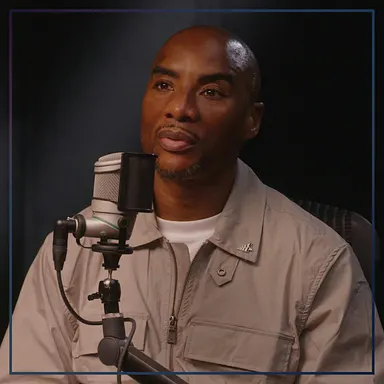
In this episode of All There Is, Anderson Cooper talks with Charlamagne Tha God about grief, anxiety and depression. Charlamagne reflects on the death of his close friend Jazz Waters, who died by suicide in 2020, and on the grandmother and other friends he has lost.
He describes his first panic attack as a child, his years of therapy and how childhood trauma shaped his people-pleasing and his relationship with his father. Both men discuss why feelings are hard to acknowledge and why, in his view, grief cannot simply be avoided.
Listeners will hear how he approaches healing, self-awareness and checking in on friends.
In this episode Anderson Cooper, Charlamagne Tha God
This All There Is episode on grief with Charlamagne Tha God was made with the technology behind HappyScribe's AI note taking.
Ads in this audio differ from the text. Tap the sentence you're hearing to follow along.
Synced: the text now follows the audio.
Welcome to All There Is, wherever you are in the world and in your grief. I'm glad you're here. My guest today is Charlamagne Tha God, a bestselling author, television host, and co-host of the popular radio show and podcast The Breakfast Club. Charlemagne has been very candid over the years about mental health. He started a foundation called the Mental Wealth Alliance to close the mental health gap in Black communities. He's also been open about his childhood experiences with bullying, sexual abuse, and his difficult relationship with his dad. He lost a cousin and two close friends to suicide.
One of them, Jazz Waters, was a writer on the show This Is Us, who died by suicide during the pandemic in 2020. Charlemagne has four kids, all daughters, with his wife, Jessica Gatston. We sat down in New York last year. I saw you being interviewed once, and you were asked, "What are you most afraid of feeling?"
Mm-hmm.
Do you remember what your answer was?
I don't.
You said grief.
Oh, wow, wow, wow.
Instantly, you said grief, the grief of death, 100%. You try not to think about it or speak about it. First of all, you do know this is a podcast about grief.
Absolutely. That's why when you asked me that just now, I didn't know what my answer was then, but the first thing that popped into my mind was it probably had something to do with mortality.
What is it about grief that, I don't know, frightens the right word, or just you just don't want to allow yourself?
I've looked at grief a lot of different ways throughout my life. I've been blessed to lose people that are close to me, but not like others have. I have my mom still here, my father's still here, but my grandmother, who passed away in 2006, my mother's mom, like that was one that was like, wow, you know? But I guess in order to deal with it, you don't deal with it, if that makes sense. Because even with my grandmother, I think I cried like once. I cried immediately when I first got the news, and then I think I cried like a week later because I didn't go to the funeral.
Like I don't even, I would not.
Really? Wow.
Oh, yeah, I can't do funerals.
So how old were you when you, so 2006, you said she died.
2006.
So you were an adult.
Oh, yeah, I was in my 30s.
It's interesting because I didn't cry. I mean, I cried a little bit when I was 10 when my dad died, but I've run from it my entire life, and it has hit me like a punch in the face.
I don't know if grief is something you do or if it's just something you feel. My homegirl, Jazz Waters, who committed suicide during COVID.
Jazz was a writer, a very close friend of yours.
Absolutely. And my homeboy Jerrel Garnett, who actually got shot and killed. It comes in waves, right? Like these are people that I probably do think about every day, but like when you get that feeling of grief, like, damn, I miss that person.
You were talking about, I think it was the day after that your friend Jazz had died, and you were saying that you didn't even kind of know what to think about it, and you haven't compartmentalized it yet. And I'm wondering, is that the way you deal with things, compartmentalizing them, like putting them in boxes?
Not boxes, but trying to get an understanding. You know how they say people feel what they don't understand? So ever since I've heard that phrase my whole life, I've tried to get an understanding of something, just so I don't have a fear of it. And I think that's what it is for me with grief.
You've been incredibly vocal and bravely so about a lot of mental health struggles. You talked about you had your first panic attack, you think, when you were like in first grade.
Absolutely. The first day I got dropped off and my mom left me, I can remember that feeling to this day. Like that uncontrollable, heavy breathing, heart pounding, you know, tears flowing. I just could not calm down. It was just a straight panic attack, and I was just afraid because my mom had left me in the first grade.
When were you actually able to put a name to it?
Oh, that wasn't until much later in life. I had to be like 31 years old, 32 years old, because I had gotten fired from radio for the fourth time, and I was back living home with my mother in Moncks Corner, and my daughter was like one or two. I remember driving down, you know, I-26 in South Carolina.
You were going to a comedy show.
I was going to my man, Lil Duball's comedy show in Orangeburg. I mean, this was a bad panic attack though. Like I've had the panic attacks where I've had to go check myself in the ER because my just heart wouldn't stop beating.
Really?
But this one really felt like it was about to be bad. And I remember pulling over, getting some water, taking a few deep breaths, and I was just like, you know, just let me make it through the night. Made it through the night, went to the doctor the next day, and he was the first person to say to me, "Your heart is fine. It sounds like you had a panic attack. Do you suffer from anxiety?" And I was like, "Anxiety? What is that?" And when he told me what it was, I'm like, oh, and he goes, "Are you stressed about something?" And I'm like, "Hell, yeah, I'm stressed about something. I'm living back at home with my mom. I just got fired for the fourth time. I'm collecting an employment check." So I had a lot of stress though in my mind.
All I had to do was get another job. I just had to get back on radio and everything would be fine. But the next gig I got was The Breakfast Club, five or six years later. I'm having more success than I've ever had in my life, but all of those problems still exist. The anxiety, the bouts of depression, it's all still there.
You still feel that anxiety?
Yes, but I know how to deal with it now. And I think that's the most important thing. Even when you have kids, like I can see those same traits in my kids because my daddy dealt with it, my sister dealt with it, and I deal with it. So when you see it in a child, you're able to recognize it and kind of know what they need to do. I didn't have that when I was young.
That's been so big for me, having kids. My mom had this sadness behind her eyes, and I didn't know what it was for much of my life until I kind of learned her childhood and her story. And when I had kids, I looked in the mirror and I saw that same sadness in my eyes, and I was like, I do not want my kids to see that in my eyes. And I want to, I want to face this stuff.
Oh, that's something I write down. I actually have written down, you know, I want to raise trauma-free kids. I don't know if that's possible, you know? But I at least know that that trauma is not going to come from inside the household. I pray that it doesn't, you know? A lot of the traumas that we probably experienced growing up, I'm 47, came from literally right there inside the house, from right there in our family.
In the house. It's like one of those horror movies. You realize how it's actually in the house.
The family should be a safe space. I got one of my younger daughters, she really does like act out a lot. Somebody told me once that it's because they feel safe around you. Like when your child acts out, it's because they feel safe around you. Because I never would do that to my pops at all. My pops was a heavy disciplinarian. I remember my first breakthrough in therapy was me crying because I realized my daddy used to discipline me for things he never taught me.
What was the moment you decided, "I'm going to do therapy"? Because I think you started, you said, in 2015, 2016.
2015. I just remember I was on vacation. Just like a family thing, and I just remember feeling something I hadn't felt in a long time, and that was just peace. And I was like, yo, how do I feel like this all the time without having to vacation? Because we can't vacation all the time. We got to do this. We got to work, right? So to be able to afford those vacations. And so when I thought about the way I was even living at the time, caught up in the whole hip-hop radio personality lifestyle, not doing right by my wife, still dealing with the anxiety and the depression, experiencing this new level of success, like I just felt like if I didn't, you know, go unpack some of this, which I now know to be unhealed trauma, I was going to crash and burn.
And so I just literally started to go, I started to go just for my anxiety and depression, but therapy, man, you start peeling back those layers. Next thing you know, you're like, "Oh, my God, I hate my mom."
Maybe we should do two days a week.
Yeah. Like, oh, I just thought I came here for anxiety and depression, but I hate my dad. But I didn't. I just, I didn't get from him what I thought a father should give to a son.
The moment I realized I hadn't grieved and that that was the source of kind of a lot of the struggles I'd had throughout my life was I found this essay my dad had written about the importance of grieving in the '70s, and I'd never seen it before, just randomly found it in his files. And in it, he quoted this doctor who said that a child who doesn't grieve or isn't able to kind of express their emotions as a child will end up throughout their lives essentially suppressing their emotions and having, I think the quote was, a melancholy they can never quite put their finger on.
And I wonder, like how much of the depression you felt and the anxiety is from, I mean, it seems like it's all stuff from childhood, as I think most people's stuff is all from childhood.
Yeah. I mean, as you get older, you realize that you're going to spend so much of your adult life trying to heal your inner child. And even when we have these conversations about grief, I'm like, man, what's worse? Grieving when somebody has passed or grieving when somebody's alive. And what I mean by that is, same thing I'm saying about, you know, being a child who felt like I didn't get from my father what I wanted. In a way, I grieved that. There's a grief behind that because I wanted to just be a young kid, young son who was like getting that like love from their dad that they thought they got.
And I'm not saying my dad didn't love me. He did, but my dad also raised me out of fear and not love because he didn't want me to make the same mistakes that he made. And that's when I got older, and he read actually my second book, which is called Shook One: Anxiety Playing Tricks on Me, which is literally me just talking about all the things that I learned in therapy. And he read that book, and it was the same week that my younger cousin, he was 25, he completed suicide that week. And so my dad was in that space, and he called me. It was the week of Thanksgiving in 2018. He goes, "Yo, I just read your second book."
And then he's talking to me about my cousin who completed suicide. And that's when he told me that he was on 10 to 12 different medications growing up for his mental health. He was going to therapy two and three times a week. He tried to kill himself when me and my oldest sister were much, much younger. And when he told me all of that, Anderson, man, it just allowed me to give him a level of grace that I probably hadn't. But I still haven't had those conversations with him the way that I want to. Like there's still so much I'm learning about my dad, even things I'm learning about my mom, and they're still here, right?
So there's a level of grief there.
I think there's grief about lots of stuff. Like it's not just death. It's not having the life you wanted. It's loss of relationships, the anxiety, the stress. You talked about molestation as a child. You were eight years old.
It's the most confusing thing in the world. Like you eight years old. And I don't know if I would have thought it was wrong if she didn't tell me not to tell folks. You know, you know, because you're sneaking around, like, so why are we sneaking for? If it's okay, then it should be okay. Like why do we got to sneak? So, oh, you don't want me to tell my grandma. You don't want me to tell my mom. Hmm, something ain't right about this. Then now you got a Jerry curl, and I don't like the smell of it. You know what? Stay away from me. Like that's literally where my mind was at with it. And so.
That's how it ended. You told her to stay away because you didn't like this.
Right. You remember those little firecrackers? Like they look like little white paper, and you can throw them, and they pop. I just used to throw those at her. Throw those at her. And that's when she was like, oh, you know, and she used to call me ugly, and you got a big nose. And then I started letting her do it again because I didn't want her calling me ugly. That hurt more than being molested, right? So it's just like, okay, have your way. I don't even quite remember when it stopped, but I just know growing up as an adult, I realized, oh, that's why I'm a people pleaser. That's why I will let somebody, you know, get the best of me as long as they feel good.
I'll take the lesser. I'll take the L as long as they feel good because of what I experienced when I was eight years old. Because I didn't want her to call me ugly and say I had a big nose, so I would just do whatever I needed to do to please her. And that shows up, man, that shows up in high school, wanting to make everybody laugh just because you wanted to distract people from what hurt you. If she was saying I got a big nose and I'm ugly, okay, well, let me be the funny person, or let me be the disruptive person.
Let me do all of these different things to just distract from me. Talk about, oh, he's so crazy, blah, blah, blah. But at least you're not touching on my insecurities.
You're not getting to the core of what's there.
Exactly. I always say for men, it is very hard for us just to admit our feelings are hurt. When the last time, Anderson, you've said to somebody, "You hurt my feelings."
When I was trying to get my son to admit that his feelings had been hurt by somebody, I said, "Oh, you know, sometimes my feelings are hurt." But in real life, like not with my kid, never.
How often are your feelings hurt?
A lot of the time.
Exactly. But we don't ever express that. And sometimes, especially in relationships that you have with people, it opens up so much communication when you just simply say, "Yo, man, you hurt my feelings." Straight up. For whatever reason, those four words open up communication in a way that I can't even really explain. It just does. Like somebody that you love, I'm not even talking about like a significant other. I'm just talking about a regular everyday person that's your friend does something that you don't like, and you kind of like, you know, prick your teeth a little bit or clench your fist a little bit.
Like what you really wanted to say to that person, "Yo, you hurt my feelings." And now y'all can have a conversation about it. You might be stewing for three, four days, sometimes a week, acting funny with a person, and, "Hey, what's wrong with you?" And like, "Everything's good. Everything's good." No, that person hurt your feelings, and you want to say it to them. So just say it. "You hurt my feelings." It just disarms people. And then for whatever reason, you're able to just spill your guts and tell this person exactly, you know, how it is that they hurt your feelings.
So many of the people who I know who have become successful in society's eyes are driven by rage or anger or childhood feelings of inadequacy. For many people, it overwhelms them and destroys them. For others, it fuels them.
It's fuel when you don't know any better. It can be poison when you do. And what I mean by that is when you don't know any better, like you don't have any choice, right? Like you don't have a choice but to keep it moving. Like you literally have to just keep going because you don't know any other options. And you think something's wrong with you, so you just keep it moving. Like you can't have fear. Like, you know, even if you grew up in the church, I grew up with Jehovah's Witness. My grandma was a Baptist. They teach you fear and faith can't coexist. So whenever those feelings do come in you of anxiety, you ain't got no choice but to keep it pushing.
But then when you know better and you start to understand what anxiety is, you realize just keeping it pushing can actually kill you. You can't just keep it pushing. You need to go deal with whatever's causing that anxiety inside of you, which is usually just unhealed trauma.
I had read that sharks have to keep moving in order to force water through their gills so they can breathe. And that's why sharks can't stop. They have to keep moving. And I used to imagine myself as this shark, like constantly having to move, constantly having to work. And that idea is really warped, obviously.
You know, staying busy just for the sake of being busy is a response to trauma. Yeah Because you're trying to keep your mind off what it is you don't want to deal with. That's why nowadays I have no problem not doing anything. And that's how I know I've done enough work on myself because I'm not running from anything. Like those moments when you actually can sit down and be still and you don't want to go anywhere, like I want to be at home. That is a great feeling to have as opposed to, "Oh, I got to be going to, I got to fly this place," or "I need to be in the studio doing this," or "I need to be writing, I need to be doing."
That is just sometimes a response to trauma because you don't want to actually deal with what's keeping you pushing through that water like the sharks do.
More from Charlamagne in a moment. Your dad had told you he had thought about or tried suicide, your cousin, your friend Jazz, I think other people in your life as well. The thing to me that's so insidious about suicide is once that word has entered your lexicon, and you've talked about having thoughts like those thoughts come to you and they thankfully leave. But can you talk a little bit about that?
Yes. There have been times where I've thought about that. I remember one time sitting in the backyard, the end of the year of COVID, or maybe the next year, but I remember sitting in my backyard and it was summertime. And I literally could hear Jazz's voice clear as day say, "You still here?" Meaning like, like you still here like on earth. That's how I transfer. That's literally like, you know how sometimes you feel like you're having a conversation with somebody in your mind and it's like, I heard her say, "You still here?" And I'm like, "Yeah, I'm still here." And then she kind of laughed like she was joking, like, "Of course you are.
You know, like you got things to do." Like, but that's literally what I was thinking in that moment.
I heard you also say something about hearing your grandma and you just talked about hearing Jasmine. Do you believe, you know, Jazz is watching you? Do you believe you can really?
Absolutely. Without question.
You feel friends you've lost?
Not just feel, see. I've had bibid dreams. Like when my grandmother first passed away, it was two dreams. I've only had two, but it was two dreams I had of her. You remember Max Headroom?
Yeah, of course.
And remember like it was like the TV screen, like every head was in the TV screen. I had a dream. It was like that, but it was my grandmother's face. And it was just like static. And she was like, and I was like, "Oh, what was that?" But then the next time I had a dream of her, and I don't remember the distance between the dreams. The next time I had a dream, I was sitting in her house in the chair that she passed away in. And it was my grandmother, but she looked very, she looked young, long, beautiful black hair. And we were having a conversation about my niece who had just been born.
And so she literally was having a conversation. I was like, "Yo, have you seen?" And I said my niece's name. And my grandma was like, "Oh, yeah, I've seen her. She's so beautiful." It was literally that clear. I've done ayahuasca. I'm going to do it again, but I did it once a couple of years ago.
What did you take away from it?
It was a few different things.
You did three days?
I did three days.
So multiple teas and.
Multiple. Literally every single trauma, every single thing I feel like I might have done wrong to someone, everything that people have done wrong to me, it's like it was on this table, like these papers and these cups. Like I could see it. And I was being forced to look at it and stare at it. And you know, we talk about grief. Yes, a lot of that comes up. And some of it is for the dead, but not so much as it is for the living, if that makes sense.
Like it wasn't so much the people who are no longer here, because I feel like those individuals at peace, in a lot of ways, they'll be carrying you through an experience like that. And you'll see them in a different way. You'll see them in their spiritual form. But you're more so grieve about things that are going on right now, friendships that you've lost, different ways that you can show up, you know, for your kids better, right? Like, you know, feeling upset because you're like, "Damn, I don't think I'm parenting, you know, in the right way with this particular child."
Did you set like an intention with each journey?
My intention was show me what needs to be seen. And that's literally what I saw. Like, you know, you talk about grief. Man, for me, it came up that I wasn't the greatest friend to people, you know, just simply because I was always so much into my own brain. I was always so much into what it is I want to do as far as my career is concerned. But then I realized I've always been kind of that selfish. And I always haven't been, you know, the best friend to people, right? And a lot of it has to do with my mouth, talking too much or saying things that I probably could have had a lot more empathy for, right?
I think I am not a terribly good friend either. I think a lot of it has to do because I'm so in my own head and have been for so long and have been trying to propel myself to keep moving forward. It's not pleasant to be around.
No. Especially, you know, for me, I've been doing radio for 27 years. And so when you lock in on a goal and I've been fired four times.
Yeah, I've been doing this for 30 years. I mean, it's the same thing.
Yes. And I can't worry about what's going on with people in my hometown that I used to love, like, you know, I still love, right? So they might be going through their different experiences and they may not have gotten the same opportunities that I got or their life took a different path. And then you find yourself judging them and you shouldn't.
One of your books, Get Honest or Die Lion, which is obviously a play on Get Rich or Die Trying. The title, it reminded me of a quote from Elaine Pagels, who's a religion professor from Princeton. And she told me a quote from the Gospel of Thomas, which is one of the so-called Gnostic Gospels. Jesus says, "If you bring forth what is within you, what you bring forth will save you. If you do not bring forth what is within you, what you do not bring forth will destroy you."
You have been so vocal in ways that so few people have in public life about the good and the bad and the fears and anxiety. If you bring that forth, what is within you, that will save you.
Yeah.
And it will save others, frankly. And if you don't bring that forth, if you keep it locked up, as I have for a long time, it will destroy you or can destroy you.
Yeah, because you can't heal what you don't reveal. And so if that's sitting inside of you.
Jesus could have said it like that more succinctly.
You can't heal what you don't reveal. JD said it in a rap, but he got it from a philosopher. But yeah, because all of that is sitting inside of you, right?
I worry so much about all the stuff I don't like about myself, letting my kids inherit that.
They won't because you can acknowledge it. I mean, that was the biggest thing for me. It's like a gift and a curse, right? Anxiety can make you too critical of yourself, but then anxiety can also make you very self-aware. So you or me aren't going to really, our kids aren't going to really have that problem because we have the awareness to look in the mirror and be like, "I'm the problem." And if you can teach that to your kids, if you can teach your kids to look in the mirror and say, "I'm the problem and I know what I need to fix. I know what I need to work on to be better," then to me, you've won in life.
If you can look in the mirror and see what's wrong with you, to me, that's like 70% of the battle.
You said always check on your strong friends. And if you're a strong friend and someone checks in on you, be open to that check-in. If somebody is giving you that check-in, you have to be open to receive that.
Absolutely. That's something that Jazz taught me.
I do not do that. I should do that, but I don't do that.
I do. I live with my strongest friend, which is my wife, you know? But just really just check on your people, period.
Do you let people check in on you?
Yes, but it's tender, right? Because when you are going through something and somebody be like, "How are you?" Like, "I'm good." No, "How are you really?" It's like, "Oh, you see me?" Like, and so that's when I don't have no problem being vulnerable. And I learned that after COVID. After COVID, when you ask somebody, "How are they?" you better be ready to hear a real answer. Because for some reason, us being in that house for that year, when you would ask somebody how they were during that time, you would get an honest answer. And you had to be ready to sit there for a while to hear how much this person was going to spill to you.
So yeah, depending who it is and how I feel in that moment, absolutely, when somebody asks me how I am, I'm going to spill my guts and really appreciate that check-in.
Is there something that you've learned about grief that would be helpful to others?
A lot of times when people pass away or you lose a friend, people always say things to you like, "Oh, you got to give yourself time to grieve." I would say that grief comes in time. You don't pick and choose when it's going to happen. Like I can be driving through Moncks Corner, South Carolina, and pass some place that me and somebody like Drell used to hang out, and all of a sudden, all of these different memories flood my mind. Now you, you know, you're grieving. I go to my grandmother's house whenever I'm home, Moncks Corner, South Carolina, and I sit on the porch just to pray.
And sometimes I'm overwhelmed with grief. Sometimes I'm not.
Do you allow yourself to give space in those moments? Do you allow yourself to grieve?
Yeah. I don't think you really have a choice. I think some people try to run from something that's just not, you can't run from it. So even when you say.
You can run from it for a long time, but it'll still catch up to you.
You think so, but it's on you.
Yeah.
Right? You know what I'm saying? Like it's on you. Like it's like being in 110 degree heat. That sun is beating down on you. You can even stand in the shade for a second, you're still going to feel that heat. So I wonder, like, can you really run from it? I don't think so. I think that people either choose to stop and feel it or they try to distract themselves from what it is they're still feeling anyway. Feelings are the hardest thing for us to acknowledge. And you know why they're the hardest things for us to acknowledge? Because there's just some things that we simply don't want to feel, but you're going to feel it anyway.
I don't care if it's grief. I don't care if it's sadness. I don't care if it's depression. When you go smoke that weed or drink that alcohol or go sit with your therapist, you're still feeling these things anyway. If anything, it just lessens the blow, but you still feel it. So I would rather just feel it in its whole totality. For me, it's just like, yo, just deal with that grief. Like that is a very, very hard thing to do. And none of us understand death past the understanding of one day we're all going to die.
And I think that's what complicates things. Even when you grieve, you're not just grieving because you missed a person. You hope that that person really is in a better place. We say that, but we say that for ourselves. You do know that, right? Because we truly have no idea where our loved ones go after they pass. But we say, "Oh, they're in a better place." How do we know? And I'm not saying they're in a bad place. I'm just saying we don't know. I'm just simply saying we need to all stop trying to figure out what happens after we go and just enjoy this current moment that we're in.
Because that can cause you a lot of grief too, stewing over things that you have no control of. I don't know how this is going to play out after I pass. So how much of this current moment am I missing thinking about what happens after I go?
Charlamagne, thank you very much.
Anderson, appreciate you, brother. Thank you for having me, man.
If you have thoughts you'd like to share about the conversation with Charlamagne, you can leave us a comment on our grief community page, cnn.com/allthereis. And if there's something you've learned in grief that would be helpful for others, we'd love to hear from you. Leave us a voicemail at 404-827-1805. On Thursday, October 8th, I hope you join me at 9:15 p.m. for my streaming show, All There Is Live. It's on every other Thursday. You can watch new episodes live on cnn.com/allthereis. And it's free on our community page for a week after it airs live. Also on Thursday, October 8th, we're releasing a new podcast episode with Sheryl Sandberg.
Sheryl served as Chief Operating Officer of Meta, formerly Facebook, from 2008 to 2022. Her husband, Dave Goldberg, died suddenly at 47 while they were vacationing in Mexico back in 2015. Sheryl was 45 at the time. Their two kids were 10 and 7. Years later, she found love again with Tom Bernthal, whom she met after Dave's brother introduced them. She joined me to talk about finding love after loss.
I could mourn for Dave, and I could thank God that I have Tom at the very same moment. And one doesn't cancel out the other.
The past and the present can be present in the same space.
I think after death, you can love two people at the same time. Tom is with me today, and I feel so lucky. And I love him, like, deeply. And I still love Dave. New love doesn't erase the old.
That conversation is out next Thursday, October 8th, along with a new episode of my streaming show, All There Is Live. Thanks so much for listening.
Charlamagne Tha God, co-host of “The Breakfast Club,” talks with Anderson about grief and his experiences with anxiety and depression. He reflects on the death of his close friend Jas Waters, healing from childhood trauma and why grief is something “you can’t run from.” For more of “All There Is with Anderson Cooper” visit cnn.com/allthereis.
Host: Anderson Cooper Showrunner: Haley Thomas Producers: Emily Williams and Kyra Dahring Video Editor: Eric Zembrzuski Technical Director: Dan Dzula Bookers: Kerry Rubin and Kari Pricher
Learn more about your ad choices. Visit podcastchoices.com/adchoices