
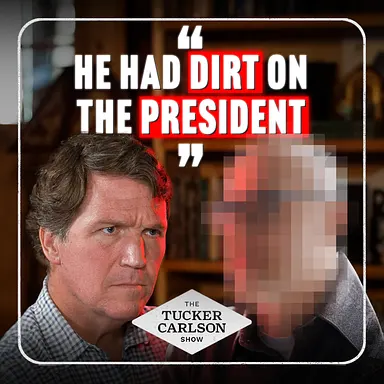
Mark Epstein, brother of Jeffrey Epstein, discusses an independent pathology report by Dr. Michael Friedman that argues his brother was killed rather than taking his own life.
He recounts the initial autopsy, the medical examiner's later suicide ruling, and what he calls gaps in the government's account, including the handling of the crime scene, surveillance video, and the list of inmates on the unit. He also disputes public statements by former attorney general Bill Barr and FBI director Kash Patel.
Mark says he wants an independent congressional investigation, and listeners will hear the claims as his own account, with the government's position largely unanswered.
In this episode Mark Epstein
The transcript of this conversation about Jeffrey Epstein's death was made with the technology behind HappyScribe's AI tool that takes meeting notes.
Ads in this audio differ from the text. Tap the sentence you're hearing to follow along.
Synced: the text now follows the audio.
Mark Epstein, thank you very much for doing this. People often say, "Jeffrey Epstein didn't kill himself," and it's kind of an internet meme, it's a joke. But based on two separate studies of the autopsy results, I think we can say conclusively: Jeffrey Epstein really didn't kill himself. Is that your conclusion?
Yeah, that's been my thinking all along. But now that— now we have proof. Up until this point, it was always a "he said, she said" kind of thing. Some people said, you know, the government's trying to say he committed suicide. And, you know, like— right-thinking people said, "No, he didn't kill himself." And now— now we have proof, basically, that he didn't kill himself. So that only leaves homicide.
So can we—
Go ahead.
Can we start at the beginning? So what— how exactly did the government decide that your brother killed himself in the first place? Where did the ruling of suicide come from?
Well, it's an interesting question, because when they first did the autopsy, you know, the day after he died, you know, I fully expected them to— the two doctors that were there, Dr. Roman, who was a city pathologist, it was her autopsy to do, and Dr. Michael Baden was there on my behalf because I had the right to have my own pathology— my own pathologist witness the autopsy. I thought they would come out of the autopsy room saying, "Yes, you know, I'm sorry, but your brother killed himself." But that's not what happened.
They came out of the autopsy saying that they couldn't call it a suicide because it looked too much like a homicide. Until that moment, I fully believed Jeff killed himself. I had no reason to doubt it up to that point in time. You know, because I heard on the news he was found dead from an apparent suicide, so, you know, why question it? But when the two— two very highly qualified pathologists said, "It looks more like a homicide than a suicide," I started saying, "Well, what's going on here?" And then, in a matter of days, Barbara Sampson, who was the chief medical examiner, she determines— well, she calls it a suicide.
Now, that wasn't a matter of days. It was like 4 or 5 days later. So my question is: how did she come up with that determination? Because on the initial death certificate, the cause of death said "pending further study." And the pathologists I've spoken to have said that when an initial death certificate says "pending further study" for the cause of death, you usually don't get a determination for weeks or months because something's being studied. But it seems like nothing was studied here. Look, Dr. Friedman, I gave him all of the information— the autopsy reports, the photographs, medical records, whatever I had, I gave to him.
He worked on this for, you know, months and months to come up with the determination that this could not have been a suicide. So how did, you know, the medical examiner's office determine it was a suicide in 4 days? It doesn't— it boggles the imagination.
So— and to be clear, Barbara Sampson, the medical examiner who ultimately ruled this a suicide, was not present at the autopsy. And the two physicians— the two pathologists who were at the autopsy— said they could not declare it a suicide. So the people with actual firsthand experience of the autopsy reached a different conclusion. What— do we know why she changed their conclusion to— and ruled it suicide?
Uh, no, we don't. See, see, Michael Friedman's report is backed up by lots of exhibits and evidence showing how he came to his conclusions. We have nothing like that from Barbara Sampson. As a matter of fact, on the government side, they were saying— and it's pointed out in Dr. Friedman's report— they were saying that other than the marks on Jeffrey's neck, Jeffrey's body was "pristine." That's the word they used, meaning there were no other marks, no other bruises. But we know in the autopsy, from the photographs and the actual written autopsy report, that there were other bruises on his body, you know, and that could not have been caused by a suicidal hanging.
So, you know, so again, yeah, I don't know where they came up with it. And then Bill Barr, the attorney general, also— Barbara Sampson, not only was she not at the autopsy, she never saw Jeffrey's body anywhere. So it's not like she had an independent viewing of the body. Because after the autopsy, you know, the body was taken away. That's why we needed the initial death certificate. And she wasn't in the office that day. It was a Sunday. Uh, you know, you know, so— and Bill Barr came out, and then he said that he personally saw the videotape from outside of the tier where Jeff was, and he saw that nobody went in or out of the tier, and that convinced him it was a suicide.
And when I heard that, I said, "This is bullshit," if I could say that on your show.
Yes, you can.
Because— yeah, because number one, he completely ignored the possibility that somebody already on the tier, like another inmate or a prison official that went into the tier, could have done something, you know, so you don't know. And then when the videotape that he was referring to was finally released a couple of years ago or so, you can see that you cannot see the door to the tier in that videotape. And it's been shown, if you— there's a staircase leading to that door. If you stayed to the right-hand side of that staircase, you wouldn't be caught on camera.
So, you know, theoretically, you know, a dozen people could have walked up the right-hand side of that staircase, gone into the tier, sat down and had a tea party, and left going down the right-hand side of the staircase, and they wouldn't be caught on camera. So just what the hell was Bill Barr referring to? I— I didn't— I don't really think he's that stupid.
No.
I hope he's not that stupid. You know, but to come out with that statement saying he saw that nobody went in or out of the tier, that videotape does not show that at all. And then we know now there's that orange figure going up the staircase in the middle of the night. They don't know if it's a prisoner in the orange, you know, prison garb or somebody carrying sheets. But somebody went up that staircase and could have gone into the tier. So he said nobody went in or out. It's a completely fictitious, bullshit statement. I would like to be able to question him in a room, you know? And then also, Bill Barr, under oath, you know, last year in a congressional testimony, when he was asked about Dr.
Baden's comment about it looking more like a homicide, or Dr. Baden's opinion that this was a homicide, he said Baden came after the fact. That was his quote under oath. "Baden came after the fact." No. The fact is Baden was there for the entire autopsy. Barbara Sampson came after the fact. And then the additional— they say there were investigations by the FBI and the DOJ and the OIG. All of these investigations relied on Barbara Sampson's determination of suicide.
So when the New York Times wrote, you know, "various other investigations said suicide," they were all based on her statement. And there's no backup. These other supposed investigations by these other organizations, you can't see a record of anything. You can't see what they, quote, "studied." They just— they deter— they all determined, you know, and all those organizations are part of the DOJ. So you can't believe that. There's no backup. With Dr. Friedman's report, it was done scientifically. I mean, I don't know if— did you see— did you see his presentation?
Yes, I did.
Yeah. I mean, he did it scientifically. You know, they went through the whole process. You know, for your listeners who didn't see it, they created a 3D digital model of Jeffrey's body. And on it, from the photographs and the autopsy results, they put all of the injuries, you know, in his not-pristine body. And they show, you know, that these cannot have come from a suicide. You know, especially the one on the back of his neck, you know, the one happened. It's blunt force trauma. There's damage to the muscles under the skin.
You know, and like I said, it's a very thorough— sorry, I'm not a pathologist, but it's a very thorough report. It's very convincing. Everyone who sees it says it's completely convincing.
So has— just to pause for a second on the initial, you know, now 7 and a half years ago, but, statement of suicide made by Barbara Sampson and then backed up by the then attorney general, Bill Barr, who— and I've said this publicly, I'll say it again— clearly covered up the murder of your brother. He threatened to sue me. He hasn't. I would welcome that lawsuit. But, Barbara Sampson, where— who is Barbara Sampson? Has she ever spoken to this? Has she ever explained in public why she called what was clearly a murder a suicide?
Has anyone asked her?
Well, not to my knowledge. I've tried to speak to her, but I can't get to her. She won't respond to me. I've tried to— tried to email her, tried to call. I can't get to her. Yeah.
It's— she's no longer— she's no longer with the medical examiners' office.
Yeah.
I think she's working for a private hospital somewhere.
Huh. I'm not alleging anything at all, but I just— I keep sticking on the fact that Bill Barr's father was the headmaster of Dalton School and hired your brother. It seems like the odds of that in a country of hundreds of millions of people are very, very small.
Uh, yeah. I— you know, we spoke about that once before. I understand that that's the case, but I don't see that. Because I remember when Jeffrey first started teaching at Dalton, I mean, he was just, you know, done with college and stuff, and, uh, there was— I was— I'd be really surprised if he was getting involved with anything with FBI back then. I mean, he didn't mention anything to me about then— about that back then. Uh.
Right.
I mean, you know, there's no way— you know, there's— again, it becomes a he-said-she-said. There's no proof of anything. So, uh, I just—
Yeah, no, but I'm speaking more of Bill Barr. I mean, I just— I just think the odds that the attorney general who covers up the murder of Jeffrey Epstein is the son of the guy who first hired Jeffrey Epstein, I'm not alleging anything. I have no knowledge at all, but I just think the odds of that are— have got to be infantessimally small.
Yeah, but, you know, but coincidences happen.
Yeah, they do. You're right. Yeah.
You know, it's just, uh, you know, it's Bill Barr. It's not his father. And, uh, I don't know. You know, Jeffrey was hired at Dalton at the school. I don't know if it was Mr. Dalton the father who actually hired Jeffrey.
Right.
Or was somebody from the death department who hired Jeffrey? You know, I have no idea what the process was there. So, you know, again, I really can't comment on that.
Right.
Because I don't know.
Yeah. Well, I don't— I don't know either, and I don't mean to suggest that I do. So this new investigation, led by Dr. Michael Friedman, a pathologist, how did this come about?
Well, he contacted me about a year ago. Uh, I— up until that point in time, I had never heard of him. I didn't know about his work or anything. But he had seen what was out there, you know, and he saw, like, the pictures of Jeffrey's neck. And, you know, when I first saw Jeffrey's body and I saw the marks on his neck, I thought, you know, this is not a hanging. You know, it's too low on his neck for it to be a hanging. You know, it's sort of like— I'm not a forensic pathologist, but it was one of those, like, obvious views that if you know about bodies and how things go.
Yeah.
It just became obvious. It doesn't look like a hanging mark, more like a strangulation.
Right.
But I can't make— you know, it's like I give the example, you know, when you walk out of your house in the morning and the ground is wet and there's puddles and the cars are all wet and water's dripping from the leaves. You might not have seen it rain, but you know it rained.
Right.
You don't have to be a meteorologist, you know, to say it rained. You know, there's enough evidence. So that's how I felt about Jeffrey's body, you know, about the marks on his body. But, uh, yeah, so he— Dr. Friedman contacted me. He wanted to look into this because this is his life's work. He— he goes through these cases where there's been bad determinations on cause of death, you know, and he wanted to look into it. So I realized that he was a serious guy, and I gave him all the information that I had. And then we had not much contact between then and now.
I mean, we'd speak once in a while. I would text him or email him to find out if anything new's coming up, if he's found anything. Uh, you know, and I was waiting for this. The first time I saw the report was Monday night when he gave it. I didn't see the whole report prior to that.
Yes.
Yeah. And it's independent. You know, people think I didn't pay him for this. This was not done on my behalf. You know, he did this for the science of it, to keep the— like, the industry pure.
Yeah, well, it's clearly not— it's clearly not pure. And if the medical examiner who ruled against the judgment of the attending pathologists won't even answer questions about why she did, then I think we're looking at pretty obvious corruption. I can't think of another explanation for it. So I'm—
Yeah. And then even more— what I find comical is, more recently, Tesh Patel, the head of the FBI, also under congressional testimony, under oath, when he was asked about this, he said, "You know a suicide when you see one." And he has said that in other venues as well. And I thought, just how stupid is this fuck? How many suicides has he actually seen that he can compare this suicide? And also, he was not there when Jeffrey was killed. He didn't see Jeffrey's body. So you know a suicide when you see one.
I mean, just— just how ludicrous is it for him to make a statement like that?
So let me ask just a couple of details.
Sure.
So if you're investigating a suicide, one of the key pieces of evidence, of course, is the noose that the deceased used to kill himself. What happened to the noose in your brother's case?
Well, your guess is as good as mine. It's gone. We don't know— we don't know for sure what was— the whole crime scene was destroyed. You know, no pictures were taken of Jeffrey at any time, you know, that we know of. But when he was found, he was clearly dead. You know, he had been dead for quite a while because if you saw the picture of the groove in his neck, that alone is an indication he's been dead for a while. Because in order for that groove to stay in his neck like that, you know, rigor mortis is said the skin is drying out. He was— they said he was cold when they found him. You know, so why this, like, charade to make it look like he was survivable?
You know, they intubated him. They're blowing air into him with the balloon. It's like a charade, as far as I'm concerned. You know, he was dead. So, yeah, and so the noose is gone. We're not sure anything about it. Although in the room on the side, there was this knotted loop, which Dr. Friedman thinks that might have been what was used to strangle him. And he shows it in his presentation.
There was a note found in your brother's cell, and I think a lot of people assumed it was a suicide note. Now we know roughly what was in it. What was in that note?
Uh, well, it appeared to be a suicide kind of note, you know. But even— look, that was— note was supposedly written when he was in the cell with the taglioni, which was weeks ago, weeks prior to this. And that's a July 23rd event when they said he tried to kill himself. Jeffrey told his attorneys and other people that his roommate attacked him, his cellmate attacked him. It wasn't a suicide attempt. You know, he was initially put on suicide watch because they thought it might be a suicide, but he was quickly taken off of suicide watch, which means they felt he wasn't suicidal.
You know, if he was truly suicidal, they would have kept him on suicide watch for quite some time.
Right.
It would have been irresponsible for them to remove him from suicide watch if they truly thought he was suicidal. So— so the note— like I said, the note was— look, Dr. Baden told me that sometimes when they find a true suicide patient, they'll find a suicide note in their wallet that was written quite some time ago. So the note doesn't— even if Jeffrey wrote the note, which I question, you know, it doesn't mean he killed himself.
Right.
Maybe— maybe he thought about killing himself, possibly, or whatever. But the autopsy shows he did not kill himself. Simple as that. Now, you know, you know, up until this point in time, it's always been a debate. Did he kill himself or not? Well, we now know the answer to that. He didn't kill himself. So now the thing to focus on, well, who killed him? Or who had him killed? That's the new question.
So how do you imagine— because I know you've reconstructed it in your mind— how do you imagine his final moments went? Like.
Well, I believe that there was somebody already on the tear that killed him. Because I don't— I think the other— you know, on the other hand, if somebody could get to that tear, go inside the tear, you know, kill somebody, and then leave from the tear, you know, completely undetected, other than, you know, if the cameras were working, is— would be foolish. You know, because to get to that tear, there were, I think, six levels of security, because that's the maximum security tear. Each level has its own guards and cameras and gates.
You know, so I think somebody might have been planted on there as an inmate to do this. Now, also, in the prison, there's the miscount. Like, the night or so before Jeffrey was found dead, I think there were, like, 73 people in that ward, not just the tear, in the ward. And, like, the night after he was dead, there were, like, 72 people. You know, there was— there's a missing person. And it's not Jeffrey. You know, there was a missing person, uh, in the counts. So why— how did the counts get mixed up that particular night?
You know? That's— that's a more interesting coincidence than Jeffrey dealing with Barr's father, you know, 40 years ago.
Yes.
Or 50. Yeah.
So I remain fascinated by the obvious fact that the Attorney General of the United States helped cover up the murder. That— that seems like, uh, like something we should care a lot about. You can't have an Attorney General covering up a murder of an American citizen, even a convicted felon. It doesn't matter. You can't murder people.
Absolutely.
So, yeah.
That's why, you know, what I've been saying, you know, a lot of people think there were a lot of people that wanted to see Jeffrey dead. I don't necessarily believe that. Because I know he was well-liked and the people that I— I didn't meet a lot of people that he knew because we didn't see each other. But everyone I met that knew Jeffrey, everyone seemed to like Jeffrey, and they got along well, you know. Uh, but even— even if there was a number of people that wanted to see Jeffrey dead, you have to win all that out. Any investigator would win all that out. Who can orchestrate this? Who amongst that list can orchestrate having somebody killed in a federal prison and having the DOJ cover it up?
Because it's clearly a cover-up.
Clearly.
You know, so who would— who would be on that list? It's a very small list.
Well, why don't— why don't you tell me who would be on that list?
Well, if I was an investigator, I would say the President of the United States would be a person of interest.
Yes.
Yeah. I'm not accusing anybody, but he would have that kind of authority to sign off on some order to have somebody killed with the Black Ops people and have the DOJ cover it up. Like I said, who else would the DOJ cover up for? You know, Bill Barr, Tesh Patel, they all work for the President of the United States. So he would be— he should be asked— he should be questioned about this. Any good investigation would point towards him.
And what.
And there may be others, but that's the only one I could think of.
Well, Jeffrey obviously had dirt on him. That's what he said in 2006, you know. And I don't know. And— and also, I wouldn't put it past him to do something like this. You know, he's happy, you know, just killing people randomly on boats off the coast, you know, that he claims are running drugs. Even if they're— even if they're running drugs, you don't, you know, I think legally you're supposed to capture him and try him.
Yeah.
You know? But, you know, so like I said, I wouldn't put it past him. We'll see what he does.
So, um, he said that he had dirt on the President in 2006.
Yeah. He said if he said what he knew, they'd have to cancel the election. Because we were talking about the elections, and I asked him what he thought was going to happen. He said he didn't know, but he said if he said what he knew, they'd have to cancel the elections. He didn't tell me what he knew, but that's a statement he made. And he wouldn't just say that to me, you know, if he didn't know something.
This was the 2016 Hillary versus Trump election you're talking about.
Correct. Correct, yeah.
Um, and he just— he just said that to you? They'd have to cancel the election. Do you know that he was speaking about Trump? Because, of course, he also knew Hillary.
He said the— he said if he said what he knew about the candidates, he didn't weigh it to one or the other. But it may have meant both. He said if he said what he knew about the candidates, they'd have to cancel the election. That's what he said. That's a quote. Like I said, he didn't tell me what he knew, any details about either one, but that was his line. If he said what he knew about the candidates, they'd have to cancel the election.
Could you tell from the context what kind of things he might be talking about?
Absolutely not. No.
No.
You now know as much about that conversation as I do. Because that's— I asked him what he thought was going to happen. He said he didn't know. But if they— if he said what he knew, they'd have to cancel the election. We chuckled, and then we went on with the rest of our conversation. So that's— that's all I know.
Huh. But it is.
But I do know.
Interesting that he knew them both as well as he did.
You know, a lot of people— I'm actually surprised at the vast network he had. I mean, I know he knew a lot of people, but all this stuff that's been coming out, uh, has been surprising to me. I mean, you know, it's not— I didn't see Jeffrey for seven years, you know, before he died. We were always in communication. We were always emailing and phone calls. Uh, but we didn't get together. I mean, we both have different homes in different cities, so we weren't in the same place frequently. And we just— we were communicating, and that was enough for us. You know, and, uh, yeah.
And like I said, you know, the night before he flew home and got arrested, he called me he was in Paris. And it was just a normal, you know, brother-to-brother, what's new kind of phone call. And then he flew home and got arrested. And that phone call that night was the last communication I had with him.
Yeah. He was dead within a month.
Uh, a little— just a little over. I think he was arrested on July 7th or something.
Yeah.
And, uh, he died, uh, well, it was declared dead August 10th, I think it was.
Yeah.
So just a little over a month.
Did he mention to you in that last conversation— so you talked to him the last day he was free as a man.
Yeah. Yeah.
Did he mention, um, being worried about being arrested when he got back to Teterboro Airport?
No, not at all. Not at all. After he was arrested, his attorneys called me to tell me that he got arrested, and they— they were surprised. They didn't— they didn't know this was going to happen.
Yeah. I mean, in retrospect, it's a little strange, um, the way that unfolded. Because he was basically indicted on the federal version of the same charges he'd been convicted on in Florida 13 years before.
Right.
Which technically is not double jeopardy, I guess, but it is still sort of double jeopardy. I mean, he'd already been convicted of the— and it's the same charges. There's nothing new that I know of. And then a month and a couple days later, he's murdered.
Right. And he had a non-prosecution agreement from the 2006, 2008 period of time.
Yep.
What part of his plea deal was that, you know, he had this non-prosecution agreement. And now I know that was going to be a big part of the defense. Because they were looking to defend Jeffrey, you know, because he was in jail.
Yeah.
And that, you know, and, uh, like, they didn't know why he was arrested.
So but maybe if you look at this holistically, he's— he comes back from France, he's arrested and then killed. Maybe the whole point of reindicting him was to get him in a federal holding facility where he could be murdered.
Well, the only way things happen, that's a logical theory.
But it's just the theory.
No, I don't.
I have no other information.
Like I told you before, I don't like speculating.
Yes.
You know, I like to stick with facts. So yeah, I mean, if you're going to speculate, that could be a possible, you know, cause of action here, a possible scenario. But, you know, that's only— that's only an opinion. I like to stick with— stick with facts.
Yeah. No, I agree. Well, here's— here's a fact, um, that would be interesting to know. So I think Occam's razor suggests if he was murdered— and now we know he was— he was likely murdered by someone already on the tear, who was already— who was locked up with him in this most secure of portions within the federal prison. So.
That makes sense.
The first question you would ask is, who was there that night? What were the names of the inmates? Where are they now? Who are all the staff? I called the Department of Justice back then and for— for that information, uh, when, you know, Bill Barr was Attorney General, and could not get— they refused to release the names of any of the inmates who were on the tear with your brother when he was murdered. Have you ever received that information?
We were able to find some lists. Uh, I had some people that were interested in this, and they were looking in and going through computer records. They were able to get into some of the computer records from the Bureau of Prisons. And there was a name that came up that didn't, like, appear on the official list. You know, maybe that was the missing person. Uh, we don't know. You know, because most of the people on the list, you know, they're prisoners. They have numbers. You can track where they are. But there was— there was one name that didn't show up, and it didn't show up in court records. You know, if you find out who was on the tear and you Google them in the court system, you know, you can see what they were charged with.
You can see, you know, what court they were in. Uh, because that's all public. But there's one name that had come up. Uh, there was— there didn't seem to be a trace of it. Uh, you know, it was not easily found in— in wherever they looked. Yeah.
Did you find out who it is?
No. No.
Huh.
No. Because, of course, you know, look, I— when I try to get information from the government, most— I get stonewalled. You know, months after the death, I had a meeting with some people from the Justice Department. I was there. Dr. Baden was there. An attorney was with me. And every time I asked them a question about this, all I got was, "After a thorough investigation, we've determined it was a suicide." And I would say, "But what about this?" "After a thorough investigation, we determined it was a suicide." "But what about this?"
"After a thorough—" that's all I got. It's like when somebody pleads the Fifth Amendment, you know, time and time again, when they're being interrogated, you know, no matter what they're questioned, you know, I— I don't know the exact wording, but, you know, they plead the Fifth Amendment. It was like they were pleading the Fifth Amendment with— "After a thorough investigation." And there's been no description of what their thorough investigation is. I mean, Dr. Freeman's investigation is documented. The photo— everything's online now. You know, if anyone questions his thinking, he welcomes people to question his thinking. Like he said, he's an academician, so he has an open mind.
If somebody can show where he might have made an error, he's open for that. You know, he's not going to try to stick behind an opinion that might be wrong. Because that leads— that damages his credibility.
Of course.
Yeah. And as far as I know, he has impeccable credentials.
Yeah.
They've never told anybody what the investigation was, and you have not been able to get them to answer that question.
Right. And the main thing is they're basically relying on Barbara Sampson's determination that it was a suicide. Because other than that, there's no determination of suicide. I mean, Bill Barr's ridiculous statement that because nobody went in or out of the tear, it was— it convinced him it was a suicide, when in fact he could not see if anybody went in or out of the tear. You know, that his conclusion wouldn't hold up in a court of law. And I've said it. It wouldn't hold up in a kindergarten class. If my children gave me an excuse that was that lame, you know, they'd get a time-out and a big lecture about bullshitting.
Yeah.
You know.
I feel the same way about my kids.
Right.
No, I strongly agree. So did this change under Biden? So, you know, he died under Trump, and then we had Biden. Now we've got Trump again. Did— did the DOJ's posture change under Biden?
Uh, no. Because I don't think anyone in the government was pushing for this. I think if I wasn't pushing for this, I don't know how much of these studies would have been done. Or I don't know if Dr. Freeman would have heard, you know, the other— or I don't know how it would have come in front of him to, uh, to question it. You know, I don't— I don't know where or when he initially decided to do this. I don't know. We haven't spoken to him. I only met him for the first time Sunday night, the night before the presentation in London.
Hmm. How much media attention did this get?
A lot. My phone— my phones have been— the batteries in my phones have been dying.
Yeah.
Quite a lot. All the calls and interviews people want to do. Yeah. It's getting a lot of attention.
Why— why are—
Right.
Why are you doing this?
Well, because I— I know my brother was killed. You know, look, my life would have been a lot easier if, in fact, he committed suicide. You know, I would— like I have said many times, when I first heard he was dead from an apparent suicide, I fully believed it. I had no reason to question it. I know he was in jail, facing a potentially long time in jail, probably the rest of his life. I mean, he was 66 at the time. And in my family, the males don't usually last to 100, you know, so he'd probably die in prison if he was found guilty of everything.
Uh, he didn't have any children to worry about. Our parents were already gone. I knew that he knew he didn't have to worry about me. So if he decided to take himself, I basically respected that decision. You know? Because I know, look, if I was in that kind of a position where I was facing the rest of my life in jail, and I've had a nice life, and I didn't have children, my parents are gone, uh, chances are I might want to kill myself. Because I wouldn't want to spend the rest of my life in jail just merely to stay alive.
You know, I don't think I— so I respected his decision to kill himself, if that was his choice. But then after the autopsy, when they came out and said they couldn't call it a suicide, that's when, you know, things got flipped over. You know, it was like, you know, what's going on here? And why I push this? Because somebody killed my brother. And I don't just want to walk away from that.
But I mean, I— and I'm sure you've thought this. Anyone who can have someone murdered in the most secure tear in federal detention in Manhattan is, by definition, a powerful, capable force. And so does— I mean, it would probably be better for you if you just kind of let it pass, no?
Uh, yeah, you might say that. But, you know, look, that's one of the reasons I don't appear on camera anywhere. I don't need to be recognized. I don't want to be seen. And this is not about me. You know, I don't want the story to be about me. It's just somebody— it happened to be my brother— was killed in a federal prison, likely by the government. And the government's covering it up. I think people should be aware of that. Because if he could be killed in prison before he wasn't convicted of anything yet, right? He was— he was charged, whatever his crimes were.
Uh, then it could happen to anybody. So this should not be allowed to happen.
I agree with that completely. Completely. So let me ask you. You've— you said you hadn't seen your brother in a while, but you spoke regularly. But in the last seven years, you've talked to his attorneys, presumably people he knew. Um, do people who were in touch with your brother before he died think he killed himself?
No.
No.
No. People that knew Jeff, uh, don't think he killed himself.
And I spoke to at least one of his lawyers, um, when you and I first talked some years ago, and that lawyer was convinced he was murdered. Do you think all his attorneys feel that way?
Uh, likely. I didn't speak to all of his attorneys, so I can't, you know, verify that. But likely.
Yeah.
Because I think, like, again, any thinking person— you know, put it this way. If you take the predetermination of suicide off the table, take Barbara Sampson's initial claim of suicide off the table, and you look at the autopsy like Dr. Freeman did, there's no way you'd come up with the conclusion that he committed suicide. No way.
Yeah.
Okay? So everyone's, in their mind, they got this thing that he committed suicide because of what she said and what Bill Barr and Kash Patel— with those idiotic comments. You know, so they— you know, so people think that, like, sort of it's in their mind that it was suicide. But if you look at it objectively, from day one, from square one, the Freeman report shows that it could not have been a suicide.
Yeah.
It could not have— it contained those other injuries to his body. And again, in the DOJ or the medical examiner's report, they said his body was pristine. Other than the ligature marks on his neck, his body was pristine. It was far from pristine. He's got other marks around his neck, his back, his face, his mouth. I mean, one of the pieces of information is Jeffrey's mouth was bruised up. There's photographs of it. You know, so this is not opinion. This is fact. And they showed signs of bleeding. Okay?
Now, the government story is that his mouth got damaged when they were intubating him and they had a mask on him. Although I don't know how you damage somebody's mouth by putting an oxygen mask on somebody. Uh, and that's their excuse. His mouth got damaged when they were doing their work. But we know he was dead for quite a while when they found him. Even if they roughed up his mouth when they were intubating him, it wouldn't bleed. Because you have no blood pressure anymore.
Yeah.
You wouldn't bleed. So the fact that there were signs of blood— and, you know, if someone punches you in the lip and your lip hits against your tooth, you know, the tissue inside your lip, the capillaries break, and you get a bruising, like a discoloration from the blood leaking inside of your lip from the veins or capillaries. Well, when you're dead, if someone punches you in the mouth, you don't bruise. Because there's no more blood pressure. There's no blood getting to it. So Jeffrey's mouth bruises show that he got those bruises while he was still alive.
And we know he was dead for hours before he was found.
So if he was dead for hours, if he was cold and going into rigor mortis, which I think the evidence proves he was, why would he be taken to the prison infirmary and intubated?
That's— that's one of the excellent questions out there. Well, if they want to make it look like a suicide, right? I mean, you got to— you got to understand. He was killed with the assumption that they can make it look like a suicide.
Right.
They didn't kill him to leave him there as a murder victim, because lots of questions come up. So they kill him to try to make it look like a suicide. So, you know, they follow the procedure of what you might do with somebody who tried to commit suicide. And it was still revived. They thought, like, as if he was revivable. In the cell, they tried to use a defibrillator on him, you know, to start his heart again. And the machine said, like, you know, like, don't bother. You know, when they put the paddles on somebody, you could tell that nothing's going to happen. You know, there's, like, no activity at all.
So.
And he was dead. Also, he was dead. He was dead. They should have not moved the body. They should have taken pictures. They should have called the medical examiner's office. You know, Barbara— excuse me, Kristin Roman, one of the reasons she was holding off on making a determination early on, she said she wanted to go see the crime scene, you know, to determine if it was a suicide. She was prevented from going to see the crime scene. That's highly unusual that the medical examiner's office can't go to the crime scene.
You know, add that to the list of things that, you know, just aren't right.
So the cop killer, the former— the former— I mean, the cop, former cop from New York who had multiple murder convictions, who was in the cell with your brother, who your brother said assaulted him. That guy, has he ever answered questions about this?
Not as far as I know. Be clear. He wasn't in the cell when Jeffrey was found dead.
Yes. This was back in July, the first.
Yeah. Years ago. They were cellmates weeks ago. Yeah.
Yeah.
Was he questioned? I don't know. You know, in most cases, or in any case, if there's a crime like this, all of the other prisoners on that tear would have been questioned.
Yes.
All of them. There's only, like, 12 or something like that.
Right.
So it's not like— it's not like thousands of potential people. Look, if Jeffrey was killed, it's either by another inmate in the tear or somebody planted there to be an inmate, or some prison official, some guard, a correctional officer. You know, it's a list of maybe a couple of dozen people that would be on the suspect list of who actually committed the murder. You know, I mean, who ordered it, who orchestrated it, that's a different list.
Yeah.
You know, but who actually was able to be there to actually kill somebody, that's a relatively small list. And it doesn't seem like they really looked at it that much. And also, like, the guard, you know, they said Jeffrey was hanging. The guard that found him, Michael Thomas, he's the only person that supposedly saw him hanging. When he called for help, supposedly the other guard that was there, uh, Tova Noel, she didn't go into the cell, supposedly. I mean, how odd is that? He finds a dead prisoner, you know, and he calls for emergency help.
He says he was hanging. And nobody else saw him hanging? Nobody else went into the cell? That doesn't make sense.
So has he answered questions from anybody, Michael Thomas, the guard who says he found your brother hanging?
No. That's another thing. Dr. Roman, not only did she want to go to the cell to see the crime scene, she wanted to talk to the guard that supposedly found him hanging. He didn't talk to anybody for two years. Because he— the guards were under investigation, under indictment, because they forged the prison records. They said they made the rounds to check on prisoners when they were shown that they didn't. They were sitting at their computers, you know, surfing the web and napping or whatever. So they were being charged, you know, with that. Because that's a crime.
So that guard, Michael Thomas, didn't speak to anybody for two years?
Right. Yet they made a determination of suicide in four days.
Do you know where Michael Thomas is now?
No. I've tried to talk to him. He won't talk to me. I've spoken to his attorney. I tried to get to him through his attorneys. He or Tova Noel will not speak to me.
Do you think they're afraid?
You'd have to ask them that.
Yeah. Yeah. All right. Um, let me just ask you one final question, obvious question, once again. Do you have any sense of why someone would go to the effort like this to kill your brother? I know it's speculation, but.
Well, I think it would be to shut him up, you know, so he couldn't tell what he knew.
Yeah.
I don't see any other reason. You know, I don't see anybody would hate Jeffrey enough to kill him just because of who he is, you know? And also, it's, again, whatever list there might be of people that might want to see Jeffrey harmed, who would have the ability to do something like this and have the— why would the DOJ cover it up? You know, contrast this to the case of Whitey Bulger.
Yep.
You know, the criminal guy who was on the land for 20 years. You know, they found him. They put him in jail. He was supposedly brutally murdered by three other inmates. It turns out he was, like, a rat for the FBI or something. So, you know, they brutally murdered him. Well, the DOJ is not covering that up. They found the three guys that beat him up, you know, killed him. You know, they charged him appropriately. No point of— no sense of a cover-up there. No mystery.
Yeah.
But with Jeffrey, there's nothing's being answered. They're not doing anything. And they're obviously lying. I mean, I actually laughed out loud when Kash Patel said, you know, it was suicide when you see one. I actually chuckled out loud. I said, "This fucking idiot. How many suicides has he seen?"
Yeah.
And he wasn't there. So again, it's like people say, "Well, Kash Patel said it was a suicide." You can't put any weight on that opinion. He has no knowledge. He has no experience. I said Jeffrey was killed. I'm not a forensic pathologist, so no one's going to believe me. Because I don't have the credentials. You know, I could say it rained when I go outside and everything's wet. You know, I'm not a meteorologist, but if it's something like that, people will take my word for it. But in this particular case with pathology, no. I'm not a pathologist.
So it's just my opinion. But you get professionals. And there's other pathologists who also believe that Jeffrey was killed.
Yeah. Mark Epstein, I appreciate your taking the time to have this conversation. I think it's important. And at some point, we will have a DOJ, I hope, that is willing to tell the truth about this. And I hope we live to see that. So thank you.
Well, I'd like— not the DOJ. You know, some members of Congress now, and more are getting on board, want an independent investigation of Jeffrey's death and autopsy. I don't trust the DOJ to do it, because they've been covering everything up.
Yeah.
So I believe Congress should put an independent investigative body together to investigate the circumstances of Jeffrey's death.
Yeah.
You know, reviewing Michael Freeman's work and let the medical examiner make her argument of why she thinks it's a suicide. That would be a very interesting show.
Yes, it would be. I'm not holding my breath. But.
Right.
Well, thank you very much. Good to talk to you.
You're welcome. Thank you for the time.
Thanks.
Jeffrey Epstein actually didn’t kill himself. He was murdered. A new pathologist’s report proves it. Epstein’s brother, Mark, thinks he knows who did it.
(00:00) Proof Epstein Didn't Kill Himself
(14:44) The Destruction of the Crime Scene
(25:50) Why Don't We Have the Names of the Other Inmates?
(35:36) Does Anyone Think Epstein Killed Himself?
Paid partnerships with:
Wisewell: Turn your tap into a plentiful source of safe, great-tasting water. Always fresh, always plastic free. Special TCN listener deals and promos at https://wisewell.com/tucker
Mars Men: For a limited time, our listeners get 50% off FOR LIFE, free shipping, AND 3 free gifts at Mars Men at MenGoToMars.com
Last Country Supply: Put your fears at ease. Stock up on survival essentials at https://lastcountrysupply.com/tucker
Learn more about your ad choices. Visit megaphone.fm/adchoices