
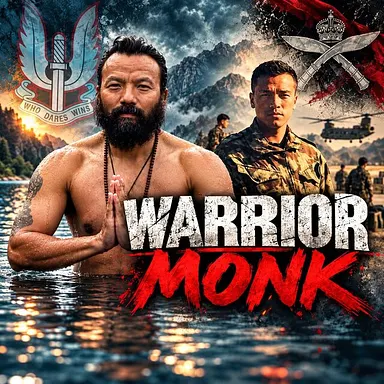
“The Gurkha Who Made It Into the 22 SAS | Krishna Thapa” was turned into text by HappyScribe’s speech recognition. Related tool: transcribe video to text.
Ads in this audio differ from the text. Tap the sentence you're hearing to follow along.
Synced: the text now follows the audio.
Hey, Jack.
What's going on?
Guess who our new presenting sponsor is? Tell us about it.
We've heard a lot over the last few years about whether it's possible to build things in America. Our presenting sponsor today, Verra Watches, is putting that question to the test. Verra was founded in Venice, California in 2016 with a simple goal: to rebuild US watchmaking while producing watches tough enough to withstand the toughest outdoor environments. Today, Verr is the largest independent watch assembler in America, assembling watches in California, Arizona, Rhode Island, and Alabama, while also manufacturing its leather straps in Illinois and Florida. Every Verr watch is built for active use with a guaranteed waterproof warranty, scratch-resistant sapphire crystals, and high-quality materials and components throughout. That combination has helped Verr earn more than 10,000 5-star customer reviews. including thousands from people who rely on their watches every day in demanding professional environments. All of us here at the TeamHouse have been wearing Arvira watches for a while now, and you can check mine out right here. This is the Meridian diver watch in navy blue. It's a very classy watch, and this is the actual rubber, um, dive watch band if you wanted to, you know, take it in saltwater. But it also comes with a normal silver band and a nylon band if you prefer that.
And D, what kind of watch are you wearing there?
I have the C4 Tactical Field Watch. It's solar powered too. I'm loving it. And it's funny because I had this laying on my coffee table the other day, actually, my homie came in and to watch football or whatever. And he's a watch guy. And he's like, oh, is that that Vare one? He— I'm not even making this up. Like, I'm not even bullshitting. I'm like, holy shit. Yeah, like, they're gonna be presenting sponsor for the Team House. And they sent us all a bunch of watches. Like, yo, I love this watch. And I literally sold the watch. I sent them the link, the Team House link. And I'm like, yo, buy a watch from this, from this link. Because if you do buy a watch from that link, which is verawatches.com/theteamhouse, you— when you purchase a watch, you get a free watch roll that you could fill up with 3 watches so you could travel with your watches and stuff like that. It's really cool. It's leather. Yeah. And I was so excited when he was like, yo, is that that Vare watch? I see it all the time. I was like, so amped that he came up with that.
Yeah, it's nice. I really like the like nice big watch face.
You can find them at varewatches.com/theteamhouse. That's varewatches.com/theteamhouse. And if you use our link, you'll get a free watch roll worth $59 with your purchase. Also, Vayr does offer a 20% discount for active duty military, veterans, and law enforcement and first responders. So you could check that out at any time if you are any one of those. Yeah, I'm excited about this sponsorship. So I really hope people go and check out Vayr.
Yeah, absolutely. Hey folks, this is The Team House. I'm Jack Murphy. And tonight's guest on the show, we're very happy to have Krishna Tapa on the show. He served in the Nepalese Gurkhas and then went on to serve in the British Special Air Service and a very unique career and unique background. And I'm really glad to have you here today. Thank you, Krishna.
Thank you, sir. You know, it's my honor and privilege to be, to be on your podcast and having a, you know, talk with you. And I have to say, this is my first, you know, US-based podcast and very excited. And it's my privilege and honor
Thank you. Thank you. And we'd be honored to have you here. We're in Brooklyn. If you're ever coming through New York City, you should come say hello.
Absolutely. I think that would be great.
Yeah. So Krishna, let's start at the beginning. Tell us about your childhood, your upbringing.
Yes, obviously I born in Nepal. Those who've been to Nepal in the Annapurna, the land of highest mountain. Oh yeah, it's beautiful. Everest. Mount Everest and very famous for the Buddhist philosophy, Buddha, and also the warrior, the fighters, the Gurkhas. So yeah, I am from there. And in my tribe, the first child, especially the son, is responsible for the spiritual and the worship. And my tribe, I'm a Mogar. my real tribe. And Mogher is the— my 5th and 6th great-great-grandfathers was the bloodline, the Gurkhas. However, we are growing up as a nature wisdom and day-to-day prayer for the nature, the way of life, and we worship our parents as our kind of basis of God. And that's why my grandfather, we lost him in Second World War, and then that has the bloodline of the warrior, but yet again have the understanding of compassion for the prayer and offer. And especially me being a first first son, and my responsibility from early age is to every single day waking up, you know, the, and the offering the connection with the nature and the, you know, the culture we call the Prakriti. Prakriti is a nature and we source and base on the nature and the yet again has the day-to-day standing and for our duty and responsibility.
So could you tell us a little bit more about your grandpa? Because I know the Gurkhas were very active in World War II. Somewhere in the studio, actually right there, I have— I got in Nepal.
Oh, awesome.
This is the, as I was told at least, this was the style of kukri that they carried in World War II.
Yeah, very, very, yeah, this is the kukri. We call the kukri. It is my childhood is seeing my grandfather who I lost in Second World War and seeing his kukri hanging in my wall as a childhood, you know, growing up into the Nepal Himalayas, foothill of the Annapurna. Yeah, that's how we, our blood were, you know, and part of the Gurkhas and the kukri. And when I joined the Gurkhas in the UK in 1996, and we had the 3 sets of Gurkha kukris issued as part of the, you know, compulsory from the British Army. And then the one is for the day-to-day, you know, just walking and chopping the, you know, in day-to-day walking. And other one is for ceremony when, you know, like number 2 dress and, you know, VIP. And other one is just a spear. So that's part of the military suit as well. Yeah. And then the kukri is the, you know, essence and also the representation of who we are and is draw the blood. Not only our generation, but the blood is the same, it's the same color, same elements, it's come from 1,000 years, and that DNA is who we are today.
And our job is to protect that bloodline so that the generation, still the blood gonna be continued. So it is the very much of who the Gurkhas and who— and the— I am here today as well. That is the reason. Yet again, we bow and with the gratitude and offering and, you know, for our ancestors.
Correct me if I'm wrong, but does it also play a special role in Nepalese society because it's both on one hand an agricultural tool, but also a weapon of war?
Absolutely. You know, let's be honest, you know, Jack, we are all, if we find the core of our human, we are the peace and we are the war and we have the ability to think and react and if need be, we became the warrior, we became the danger. And I think that's what they signify, the, you know, we can use for our survival part at the same time, if need be, that same thing, became our weapon as well. Yes, absolutely.
And so as you're growing up, you're seeing your father's— or I'm sorry, your grandfather's kukri up on the wall. And you mentioned you're the first son in the family. What was sort of your parents' idea of sort of what your role was going to be as you came into adulthood?
Yeah, so thank you. It's a very good question. And because my grandfather and great-grandfather was also in the Gurkhas, but my father, He tried to join for 7 years, 7 years to join the Gurkhas, but he couldn't. He wasn't able to join. It's pretty tough, about 30,000 applicants each year. And to be joining the British Gurkha from Nepal is about 180 plus. So out of 20,000 applicants, and it is the hardest passing rate apparently is harder than Harvard University. So, and then because of that, my father and my mother, before I born, they had a dream for me to be a Gurkha, to continue the legacy of our, I know, of Grant's Gurkha's bloodline. And they had a dream again before I born. I am the Gurkha. And that's their wish and dream. At the same time, our ritual and culture, being a boy, first boy from Nepal, is born with the responsibility of offering and gratitude in nature and became the priest. We call the Pujari. Pujari is a person who carried away our culture and traditional as responsible for whatever we believe. So yes, they had that dream before I even born, basically.
Yeah. I mean, as you're talking, I'm thinking about when I was in Nepal, I visited the Gurkha Museum and got to see, what is it, like 4 or 5 wars of the history. I mean, I read a book about the Gurkhas fighting Pashtuns in Afghanistan during the British colonial wars. I mean, it's an incredible history, like a history of warfare, and you can kind of find Gurkhas all through it. Could you tell listeners a little bit about the history of the Gurkhas?
Yes, absolutely. So Gurkhas were started in 1814 when the British invaded and start occupying India. And on that, during the time they coming to capture the land of Himalayas up in a mountain. And during the 1814 and 1815, and when they come across the very intense and then fight with the Gurkhas in the border. And then what the British force realizes, the young small guys from mountain is so hard to fight. And they couldn't gather the momentum as much as you like, even the massive number and massive outsource. And they realize it wouldn't have been the really nice to become friends so that then rather than fighting them, we can become friends and then they will fight with us and we can go and explore the other part of the world. That's how the Gurkhas started in 1914, '15s. The word Gurkha, the word Gurkha is also very, when you speak the sound, you has the sound of rrr, sound of lion, sound of animals. That's the real science about the world itself. And then history began, the Gurkhas with the British forces around the world in the Second World War. And then the— wow, altogether 26 Victoria Cross, which is one of the highest number of, as a unit, get, you know, from First, Second World War till now is, you know, with that number, you know, we are not that big, but in terms of Victoria Cross and award and then in honor, and it's my privilege and honor to be in the same shoes with those legends and then the warrior from my bloodline.
And here I am today, you know, talking about them. And, you know, it's been the most— uttermost respect and an honor to be in the same shoes.
So it sounds like your parents had basically decided you were to be a Gurkha. When you did turn 18 or whatever the age limit was, when you reached adulthood, what was it like joining the Gurkhas? What was sort of the selection process like?
Yeah, to be honest, it's pretty tough. One of definitely on the young age when I just turned 17 and a half is the legally allowed And 17 and a half when I applied. It's pretty tough and challenging as well. But the young boy, you know, just tried to, you know, can-do attitude. But yet again, when you face with the mountain of challenge and the processes, you know, when that thousands of the young boy have the same dream, you know, same desire, same bloodline wanted to protect. and move on in their life and career. It's pretty tough, but at the same time, you know, we have to willing to do more and give up, never give up. And then one of the hardest part is we call the doko. You must have seen doko carrying the load on our forehead and run in about 5 kilometers uphill. And then the hardest thing is, it's not how fast we run uphill with 25 kg on your back, but how— it's not about time, it's about the first second thought. If you are in the group, first second thought, you have a chance and you might— the time, it doesn't really matter.
Are you in the leading pack of your group? Are you willing to work hard? You know, it's all about the grueling and hard and harsh and grafting, you know, to next level. I think that's the hardest part when you are young, just, you know, just turned to 18 years old. And yet again, you know, the driven force is our attitude and aptitude. to gather the momentum and the dream, not only my dream, but my parents' dream for the legacy, my grandfather's dream, who I still saw his cookery hanging on my wall from the young boy and when he's not here. Those are the driven hook, psychological and emotional hook we grown up and that And that's why I realized actually death is not the defining moment, but how we live in this life and how we live now is more important for us. That's why our slogan is, it's better to die than to be a coward. I think that's the Gurkhas' motto, and we truly live by all the Gurkhas and also still I do.
I wanted to ask you if you found or you felt that you were well prepared for the Gurkha selection process from growing up in the Annapurna region where the terrain is very difficult, the air is very thin. Did that kind of help get you ready for this?
Yeah, I think definitely there is the advantage, you know, advantages being in the high ground, being in the remote and more harsh condition. But if I have honest with you, no amount of preparation, no amount of training will ever to be ready. And when the challenge hit in our face and then start running and start moving, I think, as you know, no matter how much we prepare physically and mentally, but nothing and not amount is enough. But I think that's where The importance of our psychological and emotional hook is so important in life. What is a dream that's bigger than who we are? You know, what is the reason you are fighting and you are protecting? What is the true reason? And that, what I found is the reason is beyond us. And that is what we are physically and mentally drained. And that is the something outside will pull up and give us even more deeper meaning. And I think, yes, I think that's even though I thought I prepared and I failed the first time as well, you know. And after the years of preparation and carrying the dokho on my back every 4 AM, you know, morning up and down, and when I turn up, I still failed the first time.
But you know what, in life, what I realized is actually sometimes stepping back is actually in life we move forward.
Yes.
And in that moment in time, we have to learn to accept our functional mind and accept what is— what can I do right now? And that's what's important. I wonder what can I learn, you know, when I'm— can I learn to stepping back? In the moment, that means we might moving forward in the life.
And so the second time you made it through, but presumably you are still a pretty young guy, like 18?
Yeah, so just past 18 and a half on the second time, but then I think in the second time I realized more than my physical and the mental preparation, I think I had gathered my confidence and courage within me. And definitely I felt that the, you know, this is me this time. You know, I have, when I'm stepping into the Gurkha camp in Pokhara, and then rather than with full of doubt and then uncertainty, I think I have this courage and the confidence, this is my time. You know, I'm into the arena now. And then, you know, I'm— And I prepared very well, but at the same time, I didn't have a doubt on me. I think sometimes having a doubt is good, but not too much. But this time, 'cause I was very, you know, bring the courage within me, and I did prepare very well as well. And yeah, I think I've been very lucky as well. And then I managed to get into Gerges, yeah.
And then what is the sort of like basic training? when you begin?
So first and foremost is the education, because obviously when I joined, to be honest, I couldn't speak one long sentence in English because obviously I don't— still today I don't have any formal education as such. And that is one of the biggest challenges and And to be able to understand the language and culture and all the values. And once you do that, I think mental aspect of preparation and educational knowledge is so important, especially for the Gurkhas. And because our physical elements and physical being born in the Himalayas and grown up We're pretty much there, but it's just having the attitude of understanding the, you know, it's 9 months, 9 months of training, physical, emotional, psychological at the same time, especially for the Gurkhas, it's education. I think that's probably the biggest battle. And we have to compete, and then when you come to the UK, and we have to compete with the wider British Armed Forces. And the coming over that part psychologically is probably quite hard. But yet again, you know, when you have the will, will to do, will to live, and, and will to die, what you believe, and I think that any other obstacle can be overcome.
Shopping for a mattress can get overwhelming fast. Too many options, too many opinions, and no clear way to tell what's actually right for you. That's why GhostBed built their online mattress quiz. It's quick, it's simple, and it helps narrow down the right GhostBed mattress based on how you actually sleep. You answer a few questions about things like your sleep position, whether you tend to sleep hot, and the feel you prefer, and the quiz gives you a clear recommendation from the GhostBed collection. And if you're shopping with a partner, you could take it together. The quiz factors in both of your preferences so you're not guessing or compromising blindly. It's an easy way to land on a mattress that works for both of you without overthinking it. Behind the quiz is a family-run brand with more than 20 years of experience making high-quality mattresses. Plus, you'll get these best deals with GhostBed because the mattresses are priced up to 50% less than comparable brands. And there's no pressure either. Every mattress comes with a 101-night sleep trial and long warranty and fast free shipping. Most orders arrive in 2 to 5 business days. Right now, as a Team House listener, you can take an extra 10% off your order.
Just go to ghostbed.com/house and use the promo code HOUSE at checkout. That's ghostbed.com/house. Code HOUSE for an extra 10% off sitewide. Some terms and exclusions apply. See site for details. GhostBed, we love you. Thank you for sponsoring the show. Football is finally back and PrizePicks is bringing out their best offer yet. New users who sign up will get $150 in lineups if you win your first $5 lineup. That's right. If you win your first $5 lineup, you get $150 in lineups. And now PrizePicks is available nationwide. So what are you waiting for? Lock in for kickoff because everyone and everything is on PrizePicks. PrizePicks is going crazy with deals to start this football season, giving users a new promo every day during Stack September. Make sure to sign up now for guaranteed picks every Monday along with profit boosts and daily discounts throughout the month. Plus, the app is simple to use. You just pick 2 to 6 players and pick more or less on their projected stats like pass yards, rush yards, and fantasy score. It's the best way to get more locked in on game day. You can make all the picks you want across any sport, all in the same app.
Did you know PrizePicks invented the injury reboot? If a player in your lineup gets injured in the first half and doesn't return, your lineup can still cash. PrizePicks always has improved search functionality and live box scores to track your picks without having to leave the app. Plus, with their social feature, you can find popular picks that users love and copy them in just one click. The PrizePicks app is better than ever, so pull up this football season. Download the app today and use the code TEAMHOUSE to get $150 instantly in lineups if you win your first $5 lineup. Download the app right now and use the code TEAMHOUSE to get $150 instantly in lineups if you win your first $5 lineups. PrizePicks, run your game.
And I wanted to ask also, what is sort of the role of the British military in the Gurkhas today? Were they your instructors? Were they commanding officers? What is that relationship like?
So pretty much all the command elements and officers are the British, British Gurkhas, but they have to choose during their officer cadre and they will have to choose they want to be Gurkhas. And that's why our officer, like senior officer, colonel, major, and the officer commanding are pretty much the British Gurkhas again, but they can't just switch from or that they have to make their career when they applied for the Sandhurst, and they will say that, I want to be a Gurkhas. And then if they selected and being going to the Gurkha as officer is one of the hardest from the British, you know, Sandhurst officer is like 0.001% chance. Only 1 or 2 have able to get in from the Sandhurst. And when they choose and if they pass, and they will fly to Pokhara where you've been. in the Gurkha Museum, and there's a Gurkha camp, and they do maybe 3 to 4 months of cultural education and understanding the Gurkha mindset, values, and our ethos. And they come back and then they start commanding the platoon commander and then the officers. So still today is pretty much 100% is manning by the British officer.
But now lately, those who are a little bit more educated Gurkhas, then they can be selected in the future, you know, the late entry early Gurkha officers. And that is now slowly coming to the, you know, the later on the stage, some Gurkhas are selected for the officer now as well. But still our chain of command and the, you know, the colonel and then key posts are still the British officers.
Do they send those gentlemen, the Nepalese officers, do they go to Sandhurst also and then come back?
Yeah, yeah. So now the very few, those who are especially the, you know, like the educational, if they have able to meet the criteria for the education, now they are channeling through the, you know, very specifically, very less percent to the Sandhurst and they can come back as a Gurkha officer as well. Yes.
That's pretty interesting. And so which Gurkha unit was your first station?
I was the 1st Royal Gurkha Rifles, which is, we call 1 RGR. And at the moment, we just have 2 infantry regiments, which is 1 RGR and 2 RGR. And they're based nearby the Sand Cliff and down the south border to the Dover. And UK, and one infantry is in the south, which is nearby Dover, and other one is Brunei, you know, into the Borneo jungle. So we are the 2 units, and each 3 to 4 years we change the unit.
And what was life like in 1 RGR at that time? What year was this, by the way?
1995, 1996. Yeah. So yeah, being a Gurkha, first of all, it's great, you know, when you are passed to the Gurkhas and the boy, a dream, you know, every single boy from Nepal, especially, you know, for me, the legacy of grandfather. And it's not only my dream, it's my legacy of my great-great-grandfather's and my parents' dream. And it's been great. And then, and routine, you know, obviously Gurkhas are very routine and then our training. And we care about our colleagues. And we, essentially, actually, we have our own Nepalese Gurkha cookhouse and we still maintain the culture, still have a traditional. And then, you know, I enjoy it. You know, I had a great team and still after 40 years, or sorry, after 30 years now, still we are very close. And then everyone knows, not only our friends, but our families and kids, we live in very much our core families. And also we celebrate every month, we have some sort of celebration and we still live by our values and very close so that we can look after each other when needs time comes. Yeah.
Did, uh, did you get deployed anywhere during that time frame? I imagine there were some peacekeeping operations during that, those years.
Yeah, there was, uh, there was a peacekeeping operation in that time, but I didn't have any, um, you know, operational as such deployment from, you know, 1995 to '03, which is, you know, my, uh, actually my, you know, I spent very few years with the Gurkhas, unfortunately. So in that time, you know, there's few peace operations, but not much operational, I guess.
I mean, that is a good span of time. It's 8 years or so, 9 years. What did kind of— how did they occupy your time during those years?
Yes, I think 90% of my Gurkhas, obviously almost like 1 year plus, is recruit training. And when I came to the 1st Royal Gurkha Rifles, and then majority of my time being occupied by the courses and training and building up. So I was obviously trained for volunteer for the parachute, you know, combat para, and then I also trained for the PTI. And then, you know, like shooting the 100, you know, we call the Army 100. I was in the shooting teams. And I was pretty much doing all the language training. And pretty much, I would say my 6, 7 years career with the Gurkhas, 90% is on the course. So I just run around and then doing all the courses. And yeah, that was my career with the Gurkhas.
And did your unit switch out with the unit in Brunei at one point?
Yes, so I spent maybe 2 years, first 2 years in the Dover where we was 1 hour there. Then in 2002, in that time, we went to Brunei, then took over the jungle warfare there. I spent a lot of time in jungles and Borneo and then little bit of peacekeeping and then with the locals. in Malaysia and Brunei. That was a little bit kind of not operational, but just security, stability training and tasks.
And so by the time you get to 2003, how does the Special Air Service come into the picture?
So yes, I think if I'm honest with you, just out of the blue. So basically, you know, of course, you know, if I'm honest with you, and, um, of course everyone heard about the SAS. And then, uh, just out of blue one day, my OC, uh, called me in, uh, British officer OC called me in office and said, uh, and then I was like, you know, young, very young guys, very keen on the career and course. And I was actually afraid and then, you know, shattered myself, you know, why, you know, we, you know, why the officer is calling in his office. Normally, often, 99% is something you done wrong and then there's a punishment. So I was just thinking quite a lot and in his office and he said like, oh, Chris, sit down. And first question he asked was, did you hear about the SAS? I said like, of course, you know, every soldier is, you know, everyone heard about the SAS. And he said like, oh, how much you know about the selection? I said like, You know, I have no idea about the selection. And he said like, oh well, um, yeah, I think all you have to do is carry your Bergen backpack and start running in the Brecon Beacons.
And I said, oh, you know, I think, I think I can do that. And he said like, no, I think it's the first time from the, you know, Royal Gurkha Rifles, uh, we wanted to send, send a trial, the Gurkhas, you know, how, how the Gurkhas will do on in the special forces, um, you know, selection, and then we choose, you know, you are one of them. And I was like, to be honest, I was pretty shocked and surprised. And first and foremost, you know, I genuinely think I'm not that, I'm not good enough, if honest with you. But on the other hand, you know, being a soldier and being a Gurkha especially, and one of the key principles is we listen to the order, you know, we learn to survive through the authority growing up, my father, my mother, and we, we devout and gratitude and for something beyond ourselves. And when my OC said that, yes, you are a Dhamman, and I said like, okay, you know, if you have a trust on me, then I can only do my best. Yeah, so that's the, you know, very by chance, by sudden, and the, you know, the SAS came to came to my picture, I guess.
That's very interesting. I mean, so you were almost an experiment in a way. And do you think they selected you because of your language abilities and your good physical training scores and that sort of thing?
Yeah, 100%, because from our unit in that year on the first trial from the RGR, we have about 40 40 different individuals were selected. And then the— and, you know, then I, you know, then I couldn't drive. And still my English was— I was learning, you know, over the last few years to be, you know, try to be, you know, good at it. But I didn't think by that time I'm good enough. And then the— then, you know, but he said like, okay, next week we got your, you know, Land Rover The one green Land Rover will outside for you. It's yourself and then 30 other Gurkhas will be jumping in there. And all you have to do is carry the backpack and start building up your muscles. And I say like, you are the OC, you are the commander, I'm here to serve. So if you send me, I will do and I'll do. That's kind of my attitude, I guess.
And what was the selection course like when you got there?
Oh yeah, I think especially, I think for me was, uh, those are the moments and, and the, uh, time I can't comprehend with my mind. Because what I mean is when I turn up and my selection was one of the biggest, is about 375. And when I turn up first thing in the morning, 4 AM, And all I can see is like giant, you know, all the Marines and commandos and paras and, you know, all this big muscle and tall. And now here I am, this small guy on the side, like carrying the backpack. I'm like, what? You know, it's one of those things I couldn't comprehend myself where I am and what I'm doing. But at the same time, What I realize is sometimes not knowing and then being small, yet again, just show up is enough in life. Just show up on time and with the right dress. And then it's okay to feel small. I think it's okay to not know everything. But what I learned is I show up and yet again, my mind couldn't comprehend. those days and time. And yeah, it was pretty much a wow moment, I think.
From the day— every day for me was new. Every day I was— I didn't have any idea about what selection to be like, if honest with you. But however, I think I was very eager to listen. I'm very eager to, you know, at least when the time and place is given, and I promised myself You know, because in my mind, always have in my back of my defense was my legacy. You know, it's not my only dream. I am Gurkhas because of my parents' dream. Then my officer selected for me to go on the SS. Then my only duty of care is what I left behind, you know. It's not more than what I am seeing. It's something I have a very fundamental base within me, and that is the reason I'm so up. And all we can, need some time, you just move from there. And I think that is the only thing on my mind, if honestly, still. And yeah, every moment when I receive the brief and then they will give me the, obviously, you know, the distance and direction and, you know, and all we can do is, you know, just move forward and do our best, I guess.
It sounds like, you know, you had a good attitude going into it. And also, you know, sometimes not knowing all the specifics is actually a good thing. Yes.
Yeah, I definitely falling by that, Jack. I think I have no— again, I was like, oh my God. Anyway, that's, that's the only thing I can imagine. And also, you know, uh, sensory overload, I think, you know. And but, and then I think, but he's still, I think, sensory overload, but still my heart and my feet were stable to move forward, I guess.
And so, how did you feel that you were doing on the selection course as time goes on?
Oh, yes. I think that's one of the things what I realized is the selection is very uncertain. No one, they wouldn't brief you, they wouldn't interact. It's just like kind of, you know, you are there almost like on your own and no one, and then you only arrive into the checkpoint or a test point and some DS will show up and just give you the minimum information and you just look around, you know, that, you know, not much of a feedback. So bad, actually, the only moment you will find out is either you failed and you're VTOF'd to yourself or at the end of the week or end of the day and DS will come up like, okay, you know, you pack your bag, go home. But then the very hard actually mentally, of course physically is very definitely one of the hardest thing I have done in my life and as more harder, I would say from physically, I think, sorry, mentally as well because we don't know. I wasn't sure every single day how I performing. Only thing waiting for for my dears to every night, or you are in or you are out, I guess.
And when the time came, how many of the Gurkhas from your group were selected?
So we, 2. So out of 30 on trial, 2 of us, we managed to passing into the, get the belt and beret.
Which that's probably statistically not very different than, you know, the Marines and the paras and everyone else that goes there. I mean, the attrition rate is pretty steep.
Yeah, it's pretty steep. But what we actually found was still Gurkhas is the highest rate pass in terms of number and the— in going to the SF. But still, because in terms of number, we are very small, you know, that's why, you know, that is the first trial. After that, we didn't have that much. And then lately, the few Gurkhas, they start coming in. And what they found is still the highest rate in the British going from the Gurkhas. Wow. Yeah, going to the SF role. But purely, I think our number is so small and then still managed to, when they put in the bigger picture, Right. Right. You know, what is the number? And now we have got maybe 8 or 9 after our lot. And then in terms of number and passing, it's still apparently the highest rate there.
And then what was it like going through SAS training after all of that?
Yeah, it's the— yeah, I think it's very obviously, you know, like I say, it's the hardest thing I have done in my career. And also, So I think especially for the girl, 'cause I know a boy like me, and to nurture and understand the, you know, British SAS culture is very unique, what I found. And understanding the psychology, you know, understanding the, you know, 100, about 100 years of culture of SAS, the way, the life, the way of SAS is what I found is very unique and the, you know, hard to master sometimes. But at the same time, what I realize is those are the very 1% or less than 1% of the whole British Army and being in the SAS selection. And what I realize that they are very, very sensitive person and they are very helpful and they are very trust. And actually I struggle, if honest with you, I struggle maybe for maybe 4 to 6 months. And especially I couldn't leave the bacon and beans and toast. I never had that, you know, growing up in Nepal. And then even though when you are in the Gurkhas, then we still have a Gurkha curry.
Then when I went to the Hereford, then first thing I struggled was the food. And second thing was the culture and, you know, understanding the, you know, the, you know, the, you know, understanding the real way of the SAS life. And then the culture is far different. than being a Gurkha as well.
Yeah.
So I think I struggled, I struggled quite a lot there. But however, I think my sergeant major by that time, and he noticed that, and then they didn't actually— he didn't tell me off, but he told my colleagues and surrounding, if I am not, you know, feeling welcome, it's not my fault, it's actually the colleagues who were with my— and then which I didn't aware of that time. After 3 to 4 months' time, and my colleagues and all the friends were around me, they were like taking me to the gym, taking to the pub, and bring me, they welcome me in a way. They welcome me in the group and they groom me, they put under their wing. And that's what I sometimes, it took me many years later how they bring me me up rather than put me down. And that's why I think he's the best man of the comrades I ever served. And I still feel honored and very gratitude to be part and pack of this man, very unique and experienced and very sensitive human being. And yeah, I think that's the only reason I think my experience with the guy
I imagine they sent you back to Brunei for the jungle warfare training portion?
Yeah, as part of the selection, we have to go to the jungle, but not after the service, but yeah, during the selection process, there's a massive part, about I think 6 weeks in the Bruneian jungle. Yes.
It's really tough from what I hear.
My God, yeah. You know, that's one of the eye-opening times for me, you know, being a Gurkha and then spending— born in the jungle in Himalayas, and I spend myself in the jungle with the Gurkhas before the selection. And then in my mind is I turn up on the selection, I said like, you know what, jungle is I am the jungle and I am the jungle warrior. I born in jungle. I saw with the Gurkhas and I had that attitude. The first thing I realized is I was wrong. If the SAS selection is so hard and sometimes what we comprehend in our mind is only that what we experience. But when I turn up on the selection and the first day my DS said to me, Syed, we have got about 25 students in the group, but he said, I just need 12. So 12 of us need to either VW or volunteer or the felt or give up during the tap. And I was like, my God, this kind of briefing is already— Already your mind is like, Like, shit, you know, you look, and then the worst thing is you look side, either side, you know, right center, everyone's better than you.
And it's like, oh, this is me now. It's my turn to go down. So yeah, it is. And then it's like 40 degrees, you know, constant sweating. And then, yo, man, raining and mud, living in the, you know, hammock. Oh man, it is like crazy. And that's why I think whatever— that's another thing as well. Whatever I thought in my mind, I saw, and I was completely shocked. And that's where the— definitely for me, jungle is one of the hardest things I think I have done, yeah.
And if I recall correctly, the SAS is broken up into— each troop has a different specialty. Which one did you end up going to?
Yeah, so yes, you are right. And I went to the mountain troop when I went to the squadron. And that's another story in my life because I thought I'm from Nepal, I'm from mountain, and that's the reason I choose the mountain. But the one, the first When, you know, welcome to the troop and then, oh, Mountain Troop. And my staff sergeant said, oh, Chris, welcome to Mountain Troop and sit down. And I sat down and his first question was, have you done any mountain training? No. Do you know ice climbing? No. Do you know how to ski? No. Do you know anything about the mountain? No. And it's like, fucking hell, my boy, you choose the Mountain Troop. I said, oh shit. I thought I'm from Nepal. I'm a mountain. It's just like, I have no idea. And it's like, my God, you know, it never stopped. And then he said— but, you know, he looked after me very well though. He said like, Chris, boy, you know, welcome to, you know, 22SS Mountain Troop. But yet again, you have no idea. But if you show up and if you're willing to learn, you have got the opportunity.
And I said like, you know, I'm here to do my best. And he looked after me very well and he sent me, you know, with other guys, attachment with the J2F2 and then on my squadron and obviously with the guys, Norwegian SF. And I've been very honored to be, you know, constant fast-tracking and with his help and gratitude, I think it helped me. He basically, you know, helped me to survive.
Did they have to send you to a bunch of different mountaineering and mountain warfare schools?
Yeah. Yeah. So, basically, how it happened is once you choose your troop, and then within the 2 to 3 years, and then they will put you on that troop infill skill course from the SAS. Then if you fail, that's it. You're gonna have to RTU. You know, it's not good enough. But what he'd done for me was, then before the course, you know, 2 years' time before I'm starting my SAS mountain course, then he realized, shit, Chris has no idea about the mountain and skills and awareness and understanding. Then best way to prepare in that time is to give the maximum opportunity for me to expose and to understand, and he did it. Then my job is to just to keen and wanted to do and learn every Christmas leave leave, every, you know, block leave. And Chris, do you want to do that? I said like, yes, sir, send me. And it's like working come up like, okay, we got the 2 weeks coming up with the J2F2 in Canada. Do you want to do it? Yes, sir. You know, I was just doing it. And I think, and that's what, you know, brings some time, you know, the essence of time and the value.
And not only from myself, but also our senior, you know, our commander and colleagues has so much impact who we are and that changed the course of our life and then career.
Could you explain to listeners, people who don't necessarily know, some of the difficulties in mountain warfare, um, how difficult it is to move soldiers and equipment through this sort of terrain?
Yeah, it is actually, I have to say, it is one of the hardest craft for the soldier because a lot of the modern-day name and fame are given for those who climb the high mountain and became the shortest way of becoming the name and fame in the world, apart from the fighting. But for the soldiers, for the soldiers like us, is we are there not to name or fame, but to survive or to protect. And that come with loads of extra preparation and skills and living day and night and grafting, not only ourselves, but like we say, weapon and ammunition, then how to make it serviceable and how to sustain in the harsh condition and altitude. I think that's Yeah. Climbing mountain, especially in operation as well, operation in Interdict in the high mountain when they are trained is harsh. The climbing and the skills and rope and on top of your personal kit and equipment is one of the hard things, man. And also you hanging on the 9mm rope and trusting everything and then you shaking, you can't see it. and then like 1,000 feet either side. And then after that, you are just standing yet to fight, yet to ability to go and do your job.
It's not started yet.
Right.
So I think that's actually, I would say, if honest with you, in so many decades with the Sorbonne frontline and being all the missions around the world, I think I have to say Mountain Drew is probably the grafting and most harsh. You have to earn it. You can't just fake it. You have to do everything right before you actually starting your job, actually.
Right, right. The mountaineering is the infiltration portion.
Yeah, yeah, absolutely. Yeah, yeah.
Another thing that I wanted to ask you about was the SBS and if they had a similar program or a similar sort of idea of recruiting Nepalese into it, because I did read about Nims, the mountaineer who sadly passed away recently in an avalanche. Did you come across the SBS guys? I mean, were there fellow Nepalese that you met during your travels through the SAS?
Yeah, absolutely, because obviously, uh, you know, Nims is my younger brother. He's very close to me, and then he's— he came a few years after me, actually, you know. Uh, sadly, you know, we have lost him because then I, I was, I was a mentor for him, and I, I did, uh, uh, taught him how to climb. I did actually take him to the Nepal mountain with me many times. We summit Everest together. We summit Dhaulagiri, you know, another mountain together. Then I actually, I found he has a true strength. And I was the guy who actually advised him to change the troop from his, you know, the diving force to the mountain troop back in the SBS. Yet again, you know, sometime I think Sometimes, you know, very hard, you know, to be the mentor and losing your young guys, you know, passing away before you. I think that, you know, let's be honest, that's life. And sometimes, you know, with the big responsibility and big decision, imminent and ultimate decision in life, we're going to have to take it. And, you know, that's a part of who we are as a soldier, as a father, and, you know, as a business owner.
I think that's just a part of life, I guess.
Yeah, I mean, as sad as it is, I mean, at least we can say, I think truthfully, that he died doing what he loved.
Absolutely. 100%.
Yeah.
Yeah.
I want to ask you a little bit more about sort of the culture shock in SAS. From what I understand, it has a very, like in the United States, you know, in the Rangers, we'd say sua sponte, like it means of your own accord, that you're expected to be self-motivated to go out, know your job and do things, which is very different than being in a very regimented military organization.
Yeah, I think what I truly realized is being a Gurkha and told as you do, you know, the command and the mission command and the instruction come from your senior and you're a fully crew sergeant and the officer. And then what I realized in the SAS is almost like thinking soldier, you know, can do, and then you have the voice and you are welcome to participate. I think this is what my biggest learn, especially, you know, boy from Nepal, not having any education, yet again, be humbly welcome in the group and then be a part of expression. And they welcome my expression, they welcome, and essentially bringing our true strength, who we are. And my strength was the communication. I could speak the 9 different languages and my strength was the mountain and my strength was the, you know, I could— The language. I could go in the war in the day, and I could go and have a curry and then, you know, and a roti with the enemy in the night. I think that's the unique of the Gurkha warrior. And that culture we grown up is part of who we are in the bloodline.
We can eat together, but if the line is crossed, then we can kill each other as well. I think that's sweet. mind of the, you know, very unique strength I would say maybe Gurkhas have, I guess. And that is the essence of the understanding and that actually essence of who I am as a Gurkha actually flourished and able to, you know, became who I am is definitely through the SAS mindset and SAS psychology. that allowed to express more than who we are.
Right. It's sort of like a culture where they ask for everyone's input and they want you to bring your expertise to the table.
Absolutely. Absolutely. Yeah.
And when you were with the SAS, did they deploy you anywhere?
Yeah, man. I was about 12,000 days on the ground operational and I would say it's one of the— you count my operational days on the boot on the ground is about more than 1,200 days. And then the— yeah, I've been, I think maybe 12 operational tours. And the Iraq— started from Iraq, Afghanistan, and lately, and the training in Eastern Front and some of the kind of Lebanon and stuff like that. Yeah, I've been with privilege and honor as a duty of care and responsibility as a soldier. I think that's kind of my duty and punctuality, turn up on the time, do as I told, but also express and think on our feet, I guess.
And so you started off in Iraq, it sounds
Yeah. Yeah.
What was that like after going through all of this training and coming from this lineage, this family of warriors, to now find yourself actually in it?
Yes, I think this is the moment of truth. Moment of truth. Sometimes we dream, and we dream big, and then as a soldier, as a warrior, and then This is the moment. You're waiting for many years and many years of preparation, and with the best, best of the best guys. And that's where I had the opportunity to see and learn, to grow, not only with the British SAS, but have managed to work with the USSF and Canadian, had a huge amount of— you know, knowledge and then, you know, learning, learning through that as well. And yeah, yeah, those are my days. I, you know, I honor and then, and, you know, treasure my days on the ground.
I mean, yeah, it sounds like you spent a lot of time abroad. Are there any operations that kind of stand out in your mind as particularly, you know, historically significant or personally significant for For you?
Yeah, I think definitely many, I guess, many operations has— we are there to do our job, our responsibility as a soldier, as elite forces. But I think for me, the significant moment of the time is more than achievement in life, fighting, and I think I have realized a lot of things about life, internal realization, internal struggling. And I realized that conflict we fight in our mind is harder and stronger than the fight with enemy. And that moment is definitely missing my own colleagues and the colleagues who gave the life for me. And I think those are the moments I think has a lot more impact, lesson learning in my life.
Those are the moments that sort of stay with you.
Yeah, 100%.
Yeah. And then also getting deployed to Afghanistan, I mean, were you able to use some of these mountain warfare skills that you had spent so long learning?
Yeah, absolutely. Many, you know, many times has to deal with the, you know, HR option in the mountain. And yeah, very, very useful. And the, you know, still, you know, still today in life, you know, now, you know, I use those knowledge and skills is, you know, I think very, very important in the day-to-day life. And I use many times. time in Afghanistan and around the world, basically. The skills of climbing and fixed lining and day and night, harsh conditions, snow and ice. And essentially it's life, isn't it? Like life, we can constantly battling every single day. You go a couple of feet up and you go down and you go up. But fixed Climbing skill is the only one who you assist and take you further up and plan better and then come up with a deception plan, come up with the safety first. I think I definitely used, not once, not twice, but many times.
And so, I mean, were you on the mountain troop the entire time?
Yeah, I was the mountain troop my whole career and that actually became the chief of the mountain winter warfare for whole unit and head up the whole selection and run the courses, not only for the UK Defense and Hereford, but also So multiple different nations, you know, had ability to work, uh, maybe about 14 or 15 different SF guys around the world and be part of the, you know, learning and be part of the sharing, I would say.
Interesting. So you were running the school?
Yeah. So I, I ran the whole, yeah, whole, whole, uh, uh, mountain warfare winter courses for the, for the guys.
Where, where is that conducted, by the
So it's all the, you know, thread-specific, but the general course, we start from the UK, North Wales, and then we go to the Alps like France, Germany, Switzerland, Austria, Norway, Sweden, and also we go to the US and then Canada as well. Wow.
What was it like for you to kind of, after an extensive career in the Gurkhas and the SAS, to kind of, you know, come and be an instructor and teach students and kind of pass these skills that you learned down to them?
Yeah, I think that's the, you know, moment, moment of realization in a way. You know, you never thought— I never thought, you know, I will be— I'll be in— I'll be SAS. I never thought I will be heading of the, you know, chief of the regiment. 3, 4 years. I think, but that's why I think it's very important for us to realize every day whatever achievement, it's not only me. I think I was always very fortunate to thank you, thanks, and to gratitude all the colleagues who gave their life for us and to put that mind and also to my seniors and my, you know, seniors, my staff, and then my Sergeant Major who supported me in my career. And that's the reason for me to every single day, it's not only my job and responsibility of the, you know, all this, you know, our life has to be realized in that way. Mm-hmm. And I think that's what I find very privileged and honored to be in their shoes and in that group.
Was that sort of your last assignment before you retired from the military?
Yeah, no, I did the— that was my second last career post, and I was a warrant officer for the chief of the Mountain School. Then my last post was working with the Director of Special Forces forces and the, you know, looking after the winter warfare and then the, you know, admin and, you know, operational support for the wider, you know, UK defense, UKSF. Yeah.
Interesting. And, oh, I mean, I guess like I'm curious also, I mean, when you go and have a career track like this, you become a Gurkha, which they have their relationship with the British, and then you actually were joining the British military itself. Do you get British citizenship during the process of this? Is there some sort of like— I'm trying to ask also about how you envisioned your future after the military.
Yeah, so answer is no. So basically when they signed the treaty in 1914, sorry, it's like 1814 or 1914, somewhere around in the wartime between India, Nepal, and British. And when they signed the treaty, the only by law Nepalese citizenship is, has to be Nepalese in order to be a serving British Gurkha. That's the law. But however, I think then after leaving the serving, then if you're willing to become the British citizenship, then you can get the British citizenship as well as part of the service from the British military as well.
And so what was your thoughts as you get to retirement age? What are you thinking about sort of your future? And I mean, you've spent your entire life in the military at this point.
Yes, to be honest, my initial thought was the, um, you know, uh, after retired, go back to Nepal. Because what happened was in my career, uh, maybe, you know, well, well during the operational tour, and my, my way of life was changing quite a lot, and my spiritual journey of the, you know, has taken— took slightly over as I, even though as I'm in operational frontline, but I was always connected with, you know, let's call the God or whatever you believe in the system. I truly believe into the energetic field. And then so those are the moment in time I was start doing more and more before I do playing to the, you know, mission. I always sit down and close my eyes and visualize the stuff I'm going through? How can I comprehend in my mind because this could be my ultimate night? All these things, every operator actually has to go through. And then it is quite tough for the boys every single night, day and day, to have that, the mind and battle and conflict within us. But then I find the way of my day-to-day dealing life was, through only realizing and meditating and connecting who I am and try to find.
So as the career broke, going, I still fight in the frontline for many years, but that was kind of my secret weapon within me to comprehend my daily conflict in my mind. Then that decided after the— then my thought was before I even leave, I said, okay, I'm going to go back to Himalayas and spend many years, many days in the jungle and became one of these meditation, understanding the— not the logical mind, but illogical emotion and how can I understood the way of life? What is the way of life? And then that was my decision. But however, I'm married, I got daughter, and my wife told me like, oh, Chris, you're going nowhere. I said, oh shit, what I'm gonna do now? So life hit, you know, that's life. And then, yeah, so that was my initial thought when I decided to leave the service.
So since you retired, I mean, what did you end up doing?
Yeah, so I actually just left regular 2022 and then the part-time SF 2024. And then what happened was since I retired, then the— because that's why when I left the regular 2022, then my job is I wasn't sure how we're going to do in the world because I can't go back to Nepal because I have a daughter in UK and because of education, everything. Then I was just back paddling, oh shit, you know what I'm gonna do? I have no idea, if honest with you. And then one day, uh, thus I, uh, one of couple of friends from, from the London civilian colleagues over the years, and they said like, oh Chris, can we go walk and talk with you? Because you are one of those guys, you know, been in the battle, you know, many days, many months and years in battlefield. But when we have, you know, coffee and get together You always give us some sort of advice in life, how to manage the stress and how to go with the day-to-day. And then the— and can we go walking and talking? And I said, oh, okay, you know, I can happily do that.
We are friends anyway. And we started going walking just nearby the park, you know, a park in London. And it became the theme that every week, a couple of guys come up and then we go for coffee. coffee and we just sit down and talk in the forest and tree. It's just normal with the coffee. And then that's why they gave me the name, this warrior monk, oh, he's the guy who is really, really, really been in this so many days and months and years in operation, but he talk like this calm and give us a lot of advice. And this became a thing. And then they were like, oh, you both. You can give us the— you can tell us how to kill, but also you can teach us how to heal. So I was just like, oh, I wasn't expecting that. And they gave me the name Warrior Monk. And then they started, oh, we're gonna bring a couple of guys together. Can you run the session, 2 hours for us so that we can, you know, help us do day-to-day life in a bank, day-to-day life in a day-to-day, how can you co-op?
And then I said like, okay, let's talk. And then slowly started, and then that became kind of at the moment. So my day-to-day life is just not by my choice, but by the demand, by chance. And then now I'm now talking quite a lot about the warrior monk mindset. How can you still fight the battle, still fight the dream, and still earn the money, but yet again, you can be calm and collective and truly fine in connection with you? I think this is now I'm sharing sharing kwalas, so that they call the Wild Yet Again Mindful Retreat with the warrior monk Chris Thapa. So literally I just came back today, you know, after the 4 days wild retreat in Manchester. So I think, again, I don't even know, you know, sometimes just life is calling, sometimes, you know, this thing happen and I'm, you know, I say like, okay, you know, it's something I I can be part of. And then actually it's a way of my service. And then I still can serve the people and anyone. And if anything is better, and then that's kind of my duty today and now. So yeah, that's kind of my work at the moment, sharing how to manage, how to deal with the situation.
And it's called the Wild and Mindful Retreat.
Do you do this for soldiers or veterans, or is it kind of for everyone?
Kind of everyone at the moment. It's kind of also on kind of demand, you know, like some people just call me in the family house and then also quite a lot involvement with the soldier and veterans, especially the disabilities and the PTSD and mental. So I got the huge chunk of my time still with the veterans and the injured soldier, and I still work that. And then this kind of demand with the stress management and life, and then it's kind of a lot of, I think, quite a lot demand by the public and civilian as well.
And where can people go to find this? Is there a place that people can go to sign up or
Yeah, it's definitely, uh, Warrior Monk Tutu. Uh, it's all the media and the warriormonkmindset.co.uk is the website. And I know in there is, uh, you know, you can see the retreat and then the boot camp and the, you know, uh, and the, um, uh, all the media is, is there as well. Warrior Monk Tutu. Awesome.
And we'll put some links down in the description for the listeners if they want to go and check that out. Krishna, I mean, thank you so much for sharing your story with us. Is there anything else you would like to bring up? Are there any other questions that you wish I had asked that maybe I didn't?
No, I think you've been very smooth, and thank you. Thank you for listening, and thank you for the great opportunity. I'm very excited You know, it's one of my first reach out in US, and I hope, you know, if anything from my side is that, you know, all we can do today and now is that's what we have. And then all our responsibilities come not to hide, not to go under the seat, but come more sharpened, more calm and collected. Thank you. Not to hide, but to fight. I think that's kind of my attitude. And thank you. And I'm very honored and privileged to be with you here.
Oh no, we're honored to have you on the show. And people can go find you at warriormonkmindset.uk. Please go take a look. And thank you everyone who joined us for this podcast. And thank you, Krishna, for your time. And we will see all of you guys next
Thank you and have a great day. I think there is quite early morning.
We'd like to thank Vehrwatches for presenting this episode. Please go to vehrwatches.com/theteamhouse and you can get a free watch roll with any purchase you get. And if you're a veteran, active duty, first responder, law enforcement officer, you can get 20% off additional to your purchase. Thank you, Vehr, for sponsoring this episode. That's vehrwatches.com/theteamhouse. You can check out the link in the description. Thank you, guys. Hello everyone, if you're hearing this, you are not a member of the Patreon. You can get your hands on ad-free episodes that come out early, and you can ask us questions, maybe we'll answer them. You can also watch the Team House podcast completely ad-free and early, and you can also watch it live as we interview our guests. And it's the best way to support the channel. So if you can, if you're open to it, you can go to patreon.com/theteamhouse. That link is in the description. We appreciate the supporters and we hope you would consider being one. So it's patreon.com/theteamhouse. Thanks, guys.
Krishna Thapa looks back on his journey from growing up in Nepal and earning a place in the Gurkhas to passing SAS selection and serving in Iraq, Afghanistan, and other operations around the world. We also discuss mountain warfare, the culture of the SAS, the loss of fellow operators, and how meditation and the “Warrior Monk” mindset helped shape his life after military service.Today's Sponsors:VAER Watches ⬇️https://www.vaerwatches.com/theteamhouse get a free watch roll with your purchase.20% for active duty, veteran, leo, & first responders GhostBed ⬇️https://www.ghostbed.com/houseFOR 10% off! PrizePicks ⬇️Visit https://prizepicks.onelink.me/LME0/TEAMHOUSE and use code TEAMHOUSE and get $150 if you win your first $5 lineup! For ad free video and audio and access to live streams...JOIN OUR PATREON! https://www.patreon.com/c/TheTeamHouseTo help support the show and for all bonus content including:-live shows and asking guest questions -ad free audio and video-early access to shows-Access to ALL bonus segments with our guestsSubscribe to our Patreon! ⬇️https://www.patreon.com/TheTeamHouse___________________________________________________GRAB JACK'S NEW BOOK "THE MOST DANGEROUS MAN" ⬇️⬇️⬇️⬇️⬇️https://www.penguinrandomhouse.com/books/803651/the-most-dangerous-man-by-jack-murphy/paperback/Subscribe to the new EYES ON podcast here:⬇️https://www.youtube.com/@EyesOnGeopoliticsPod/featuredJack Murphy's book "We Defy: The Lost Chapters of Special Forces History" ⬇️https://www.amazon.com/We-Defy-Chapters-Special-History-ebook/dp/B0DCGC1N1N/Or make a one time donation at: ⬇️https://ko-fi.com/theteamhouseSocial Media: ⬇️The Team House Instagram:https://instagram.com/the.team.house?utm_medium=copy_linkThe Team House Twitter:https://twitter.com/TheTeamHousePodJack’s Instagram:https://instagram.com/jackmcmurph?utm_medium=copy_linkJack’s Twitter: https://twitter.com/jackmurphyrgr?s=21Team House Discord: ⬇️https://discord.gg/wHFHYM6"Karl Casey @ White Bat Audio"00:00 – Start01:04 – Growing Up in Nepal & the Gurkha Bloodline04:56 – His Grandfather, World War II & the Kukri07:21 – The Kukri: Tool, Symbol & Weapon08:07 – Being Born Into a Gurkha Family Legacy10:37 – The History of the Gurkhas13:03 – Attempting Gurkha Selection at 1714:10 – The Brutal Doko Race16:14 – Growing Up in the Himalayas & Preparing for Selection17:50 – Failing Gurkha Selection the First Time18:36 – Coming Back & Making It on His Second Attempt19:55 – Gurkha Basic Training & Learning English21:39 – British Officers & the Gurkha Command Structure24:22 – Joining 1st Royal Gurkha Rifles25:09 – Life Inside a Gurkha Battalion27:27 – Years of Training, Courses & Preparing for War28:41 – Jungle Warfare in Brunei29:32 – How the SAS Suddenly Entered the Picture31:07 – The First Gurkha Trial for SAS Selection33:41 – Arriving at SAS Selection With 375 Candidates37:05 – The Mental Pressure of SAS Selection38:33 – Only Two Gurkhas Make It Through40:10 – Adapting to SAS Culture43:16 – Jungle Selection in Brunei46:08 – Joining SAS Mountain Troop48:00 – Learning Mountaineering From Scratch49:36 – Why Mountain Warfare Is So Difficult52:08 – Nepalese Operators in the SBS52:40 – Mentoring Fellow Nepalese Special Operators54:12 – The Culture Shock of Joining the SAS56:56 – Deployments With the SAS58:03 – Going to War in Iraq59:16 – The Missions That Stayed With Him1:00:44 – Using Mountain Warfare Skills in Afghanistan1:02:02 – Becoming Chief of Mountain & Winter Warfare1:03:29 – Teaching Special Forces Around the World1:05:01 – His Final Assignment in UK Special Forces1:05:40 – Gurkhas, British Citizenship & Life After Service1:07:09 – Planning for Retirement1:08:06 – Meditation as a Secret Weapon During War1:09:58 – Leaving the Military & Starting Over1:10:33 – How the “Warrior Monk” Began1:12:00 – Teaching People How to Fight and How to Heal1:13:50 – Working With Veterans, PTSD & Civilians1:14:37 – Warrior Monk Mindset1:15:08 – Closing ThoughtsBecome a supporter of this podcast: https://www.spreaker.com/podcast/the-team-house--5960890/support.