
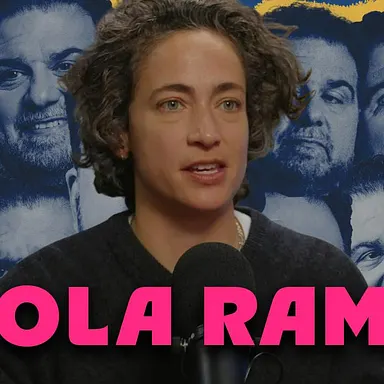
In this South Beach Sessions episode of The Dan Le Batard Show, journalist Paola Ramos talks with Dan Le Batard about her reporting on the far right, Latino voters and the 2026 midterm elections. She discusses her book on Latinos who have moved toward the right, her time embedded with groups such as the Proud Boys, and the personal toll of long reporting projects.
The conversation also covers her podcast with her father, Jorge Ramos, the Texas and Florida results, and her argument that anger rather than fear drove Latino turnout. Listeners will hear her views on the American dream, immigration and why she believes people are increasingly trusting independent journalists.
In this episode Dan Le Batard, Paola Ramos
This episode's transcript of Paola Ramos discussing the 2026 midterms was made with the technology behind HappyScribe's automatic meeting notes.
Ads in this audio differ from the text. Tap the sentence you're hearing to follow along.
Synced: the text now follows the audio.
You are listening to Draft Kings Network.
I love that. It's, it's a, it's a overwhelming and dangerous time in journalism because of the realities of Trump, and because of some of the, even self-censorship that I've noticed in some newsrooms across the country. And so I'm, I'm deeply aware of that, but I'm still very much optimistic in knowing that this is, like, one of the most important things to be doing now. Not forever, but, but right now.
I haven't done one of these before in New York. We're moving South Beach up here to get closer to the people that you want to talk to, like, La Señorita Paola Ramos, as my father would call her. MS Now, MSNBC, Del Mundo. Used to be with Vice, used to be with the Obama administration, and has written a couple of books and has more on the way, I'm sure. It's nice to see you.
Unfortunately. Thank you, Dan, for having me.
You said, unfortunately, you have more on the way?
I think I'm crazy enough to, to write a third book that I'm thinking about, but I would not. I told myself this was the last one, and here I am.
Because what happened? I've, I've talked about this. It's my biggest demon. I've not gotten to the point where I can write a book because it seems too sprawling, too consuming, and I need rewards faster than that.
The last ones, I feel like I didn't enjoy the process because I was covering midterms, I was traveling, I was with Vice at the border.
Well, the subject matter, the subject matter is also, like, excruciating.
And that, right? I mean, I spent, like, two years immersed in Trump world, learning so much, and then thankfully the thesis was right, right? That we were going to see this massive rightward shift within Latino. So at least, I mean, it could have gone really wrong, right? Like, had I published the book and, and it would have been a different story.
Well, for those who don't know, you have written books about, you've done a lot of journalism at the border, and you're also somebody who's been sort of embedded with extremist groups.
Yeah. I mean, the story for me starts when I, you mentioned President Obama. I was full in the Obama world, worked for Hillary Clinton, moved to New York City to work in the 2016 Hillary Clinton campaign, and I very much was part of that bubble that believed that Latinos were at the core of this multiracial, multiethnic, democratic coalition. I believed it for many years. Only to find, starting in 2016, when less than 50% of Latinos showed up to vote in the face of someone like Trump, only to find that, you know, we've talked about this before, there were so many signs around us pointing to something very different, which then is eventually what led me to, to work with Vice, to work with MSNBC, and to really try and understand the nuances within Latinos, that, yes, eventually led me to write my latest book, Defectors: The Rise of the Latino for Right, where I spent two years with the Proud Boys, with Moms for Liberty, with ordinary Latinos in the Rio Grande Valley, Latinos in the Central Valley in California, simply painting a way more complex picture that I think today, weeks after the midterm elections, is still being reinforced, which is simply that Latinos don't like to know one.
You're a Democrat, you're a Republican. If you are a Democrat right now and you think that Latinos are back with you, I think they're wrong.
All right. I want to cover some of that with you, but I just want to know about sort of the toll to your relationships when you're spending two years with extremist groups and you're bringing that, or trying not to bring it home at night, but you're embedded in something that's wildly depressing, and then you have to be consumed by the book writing process that is also, it can be tedious.
It costs me relationships. It cost me my own, like, personal relationship. But I think I, you know, I grew up with two parents that are journalists that have been covering wars, have been in newsrooms. And so I, I understood that this is a choice, you know, this career is a choice, that there's no kind of, you know, leaving your work at the door, that the work tends to consume you, that it's really hard to, to not think of these conversations.
To do it well, to do the work well, it, it has to consume you, right? Like.
It does. But I think, I think watching my dad, who, who was working in Indonesia for 40 years, who, you know, would sometimes call me from the airport saying, "Meoy Afghanistan, Meoy Iraq." I, I've understood that it's a privilege, you know, and that whomever is in my orbit knows that this is, you know, it's, it's, it's part of me, it's part of my being, it's part of who I am. But it does consume you, and it consumes you in weird ways because I at times find myself having empathy for a Proud Boy or having empathy for an insurrectionist.
And I think what drives my, my work, and oftentimes people will ask me this question, right? Like, why give them a platform? Why spend so much time with these extremists? I think when I'm able to put the politics to aside and, like, sit in front of them and find something in common, find a deep insecurity in this person that I've been so scared of online, someone like Enrique Darrio, right? Someone that completely disavows of who I am, when I'm able to, to kind of understand that point that made him find some type of belonging or power in the Proud Boys, like, that's, that's when I love my job, you know, when I can, like, humanize it.
There's connection there. There's connection there because you've gotten to the thing that they're hiding with all the armor, like all the things that they've wrapped around the insecurities that may, like, there's a commonality in humanity that you can find in just about anybody, how they get scarred and stuff, but you just sort of matter-of-factly blew through. Yeah, it cost me my relationship. Like, the doing of the book and the, the depressing subject matter and the need to have the book be great?
I think so. I think, I think I've gotten better at, at finding this so-called work-life balance, but I think for the last eight years, if I'm being honest with myself, and I never talk about this, I, I think, and I think this, this often happens with, with Latinos and it did with me, I think I, I always felt like this job and these platforms were such a privilege that any opportunity that came in front of me, I said yes, right? Anything, whether it was go and be deployed, go to Atlanta, go to Texas, cover this election, write a book, I always said yes.
And I think I'm learning later in life just how to say no or just how to be more precious with my time. And yes, it did. It, it, it cost me some relationships. I missed a lot of things with my family. But like I said, growing up with parents, I've seen through them these journalists that I think now they look at me and, and, and are ingraining in me the importance of, like, you know, being with your family and, and that it's okay to, to not be consumed by this all the time.
But I'm learning as I go. I don't, I never have a good answer for that.
Well, I want to talk to you. Your, your father is the Walter Cronkite of Latin America. You do a podcast with your father.
Yes.
You've been doing for a year. He's doing it in his second language. And the commonality that we have is I did that with my father for eight years. He was doing it in his second language. It came with an assortment of frustrations I couldn't have expected. It was also.
I'm sure we share some.
But the lovely, it's also the loveliest thing I could have done professionally.
You know, my dad and I were living apart for, for the majority of my life. Like, I grew up in Madrid with my mom. My mom is Cuban. And so when my parents separated when I was very young, I moved to Spain. And so my dad was in Miami as he was rising in his career and, and, and kind of becoming who he was in Univisión. And so I spent 16 to 17 years kind of going, crisscrossing the Atlantic between Madrid and Miami. And so I think when we were given this opportunity to, to have a podcast together, like, the first thing that we thought about was like, oh, this is, this is in a way, like, recovering all the time, you know, that we spent apart.
And so in that sense, it's, it's, it's beautiful. I know that, like, when my father is gone, I think of mortality a lot. Like, this, this will be something that, you know, that I'll, it's so precious. But then you're right. I think that it's, it's also kind of bizarre to see my father, whom I've seen in Univisión interviewing dictators and presidents in Spanish, right, with such command and with this, like, seriousness in his voice, when he now speaks in English in this podcast, it's different.
It's, it's a different Jorge Ramos, right? It's a little bit more vulnerable Jorge Ramos.
Well, he can't be as confident. I, I'm not funny in Spanish. I can't, I can't do, I don't have the command of the language that I need to be funny in Spanish.
Right. And I, I, I would argue that he probably feels similar. Like, you can't, you're right. Like, he can't conduct an interview in English in the same way that he does in Spanish, right? But it's been, we're both learning. Like, I keep learning from him in terms of like, oh, like, how do you start the first question? Like, how will my father do it? How does he do it? And I think he's, he's learning from me, you know, simply because obviously I, I, I navigate the language better than him and, and kind of some of those nuances.
Oh, but you got to help him be more modern too, right?
More modern.
I mean, you got, you're helping him keep up, no? Like, it's.
Yeah, but he's kind of killing it. Like, it's been, I mean, yeah, like, I, you know, I grew up, I'm a millennial. Like, I, I grew up with the TikToks and the, and the Instagrams and, like, that's just part of my blood now. But I have to say, it's been fascinating to see this man, like, reinvent himself, right? Like, obviously he leaves Univisión, he leaves this newscast, and my dad spends every single day in this, like, makeshift, you know, closet turned into a studio, now giving the news in, in, in YouTube, on, on YouTube. And the beauty is that he's almost getting the same amount of viewers there that he was in Univisión, right?
Like, we don't have to tell anyone, like, cable news is dying. And so I think it was really hard for him to transition. I think for any news anchor, anyone in journalism, I think, you know, when you're given so much power in these platforms, when all the cameras are in front of you and the lights, people underestimate how hard it is not to leave. And there's a grief in that. There's a big grief in that. And so I think at the beginning it was hard, but it's, it's been amazing to watch him, like, just lean into it, you know, and, and, and, and with not much. And he's, he's killing it. So it's cool.
Did you think you were going to be proud of him? Because what you're, what you're articulating is.
I knew he was going to be okay. I don't think he knew. I, I knew that, I mean, my dad, my dad is, is not just such a hard worker, but my dad loves being a journalist. Like, he loves it so much. One of the things he taught me in life was just if I could ever find a job or it doesn't feel like you're doing work, like, hold on to that. You know, that's, that's a privilege, you know, that feeling, like, chase it always because not everyone gets that in life. My dad wakes up every single day and he, he thinks about communicating the news to the world.
And I know it sounds cheesy, but, like, he, he just loves his job so much. And so I knew that when this transition would happen from Univisión, that he would find another way to communicate and to do what he, what he does best. But now my dad is approaching 70. So now the question is, like, when does one, does a journalist ever retire? Like, I mean, do you ever think about this?
Well, I mean, but in his case, you're talking about a legend, right? And I don't know if he's noticing, right? Because I'm noticing it when I'm in the Cleveland room. I'm like, that guy doesn't belong here.
Really? Yeah.
This, this is too small for him. And now it's a closet. You know what I mean? And so the whole thing shrinks, shrinks around you. But no, it's a closet, but he's still got his audience. He's got, he's, and he's got his credibility.
That's true.
And, and, and people are really down on the media. And when they find somebody that they trust, he's got a connection with an audience. It's what he's built over 50 years.
And that at the end is, it was kind of the, the lesson for me from, from all of this, this, this whole tumultuous, like, media world that we're in. You're right. You said the word credibility. Like, that's it. Like, that's his biggest weapon. People have followed him. And I think that's where things are pointing towards. Like, people are following personalities. You know, they're following the truth. They're following credibility more so than these channels and then legacy media. And I think my dad is a, is a good example of that. I was with him during the last Emmy celebration where he was up against Univisión, Telemundo, these big networks.
And my dad was, as an independent journalist, now part of the same category of best Spanish language newscast. I've never seen my dad nervous, truly. Like, not even before he was about to interview Maduro, not even before any interview. He was really nervous because I think he, he felt the stakes and he wanted to prove a point and he won. And, and I think because of what you said, because at the end, I think in this world where there's so much disillusionment and mistrust, and I see it every day when I interview people, when they see my dad, they believe him.
And I don't even take that for granted anymore.
What did he have to tell you about your books?
He's, I mean, my dad is a man of few words, actually. He speaks for a living, but he said, he says, like, the only reason, I know this sounds silly, but it's true because everyone wants to write a book, everyone wants to, you know, have a podcast. You only do it in his words if you have something to say. If you don't, if you're not adding to the conversation, don't. When I was talking to him about these things that I was seeing on the road, you know, in 2020 and 2021, as I was noticing these nuances and these shifts, he was like, yeah, there's, there's, there's something there.
There's something to tell. And, and then his advice is, is always, well, those, those words live forever, you know, like these things that you're writing, like that is, that's like, that's there forever. And like, this is a story that deserves to kind of be marked in history. And so I'm, I'm, I'm glad that I took his, his advice then. So I think, I think he's proud.
You didn't say that with a great deal of confidence.
No, no, no, no.
The reason, the reason I asked the question, my father is prototypically Latin as well, and I've told the story here before that he, I don't hear from him pride. I've had to sort of do a bunch of translations to know that it's so, but not since a baseball when I was very young.
Yeah, yeah.
Did he say that he was proud of me? The reason I asked the question is because it seems quite the standard that you would want to hand someone like that a, your book, a life work and, and wonder and want that, want the approval.
My dad is the worst critic because everything I do is amazing. Like, I could be, I could be the worst writer. I could be doing something wrong. I don't know if, if it's because I'm like his first kid or it's because of this, you know, this like very unique relationship that we've had. But my dad is like, if it's shit, he's like, no, it's amazing. So I do what I say. So he's always proud of me. And, and I think it's, it's, it's really cute. My mom now is like a hard, like she's, she, she tells me the real deal.
But I think with my dad, it's like he's just always so proud.
But did you have much of an option, like realistically on what you were going to do professionally, given what the two people who raised you?
I started thinking that I would end up in, in politics, right? Like I, I graduated from college at a time when, when Barack Obama is like rising to the White House. And I do think I was shaped, my whole life was shaped by two journalists, by my grandfather who was a Cuban exile, also a journalist. And I think it was either going to be politics or, or journalism, right? Those two things were always intertwined. You know, politics was in, in, in everything of, of my life. My, my parents' stories is, is a, a product of, of, of, of politics.
And so it was either going to be politics or, or journalism. To be honest, like I studied politics. I went to grad school for public policy, but it wasn't, like I said, until Hillary Clinton in that campaign where something, something happened where I would be in the Hillary Clinton campaign and I too, like everyone else in that campaign was looking at these surveys and these numbers that were pointing to her victory. No one questioned that except for my dad. My dad was on the road. My dad was speaking to everyone. And my dad would call me and say, you guys are wrong.
Like, you're not seeing what's happening out there. And I didn't believe him. And my mom similarly was saying the same thing. And so I, I, I do think it was in that moment, in that election where I was like, no, no, I got, I have to ask better questions. And the transition was very seamless. And the transition was also very hard because I, because rightly so, coming from politics, it took me a while to gain my own credibility with people that thought that everything I did and said and questioned was infused with bias, right? And so it took me a long time to kind of distance myself from these like democratic political bubbles and just spend time with people in the field, right?
And so probably maybe it was, you know, my destiny in the sense that, you know, I, I, I feel like I'm, I'm just building on their journeys, but I love it and I do it, you know, because I, because I, because I love it, because I wake up loving this career.
Did you love the other one?
I think they're similar in the sense that I think in, in these presidential campaigns and in journalism, I end up feeling the same thing, which is what I felt when I was covering the midterm elections in 2026 as I was feeling it in the Hillary Clinton or the Obama presidential campaigns, which is like this, this rush and this like adrenaline and this intensity. And I think I live intensely and I, I, I think, I think I, I crave that feeling like where, where it's this like, this rush. And I feel that in journalism in the same way that I felt in politics, but I know that I am where I have to be, right?
Like I don't miss, I don't miss politics anymore. I don't want to be in that bubble anymore.
When you're, you're describing something in the rearview mirror that seems to be sort of seminal, though. Did, did something in you fracture with the idea that, oh my God, my parents, because they're simply talking to people, are getting a purer truth than what I'm getting in politics where I'm living inside of a lie?
Yeah. I mean, I wouldn't say a lie, but I think so much of, of what we're seeing now, right, in these midterm elections is kind of this story, right? Where it's if you spend a little bit of time outside of these quote unquote establishment bubbles and you talk to people, oftentimes the answers are very different from what you're being told in politics, right? And oftentimes you need people from the outside, right, to kind of start reflecting the realities of people, which I think is why we're kind of seeing this, this big historic and monumental change now, because people from the outside, people that look like others, that are diverse, that are younger, that curse, that are just saying the things that they think about, like those type of voices are now in, in politics.
And so I think, yeah, I think breaking, like breaking these walls and these barriers between, you know, the outside world and, and, and politics is kind of the, the story of, of the moment.
But you say it was seamless. I'm sort of asking you, did something inside you break with the knowledge? I'm working inside of a campaign. I'm looking at the data. I'm more informed than you, mom and dad. And they're like, no, you've got this wrong. This isn't how our people feel.
You mean if, if something inside me broke.
Just that you changed careers, that, that you, you're, that your father's the only one telling you something. You're living inside of a bubble, a power bubble that looks like it's about to win the White House and the information's wrong. And so I don't know if, if you felt betrayed by like.
As you were saying, yes, I, I did. And, and, and that's maybe why I've never missed it ever since, right? I've, there's, I've, ever since that moment, I never, I've never woken up feeling like, oh, I need to go back to politics or I need to work for this.
Well, you're closer to the truth now.
That's what it feels like. Yeah. And, and, and, and I, and I feel like there is no, and my dad always said that to me. I remember in his career, there were some moments where he would at times casually talk about, well, one day running for office in Mexico, like one day I'll go back. And he would talk about this openly. And then I remember years later, I asked him, well, what's going on? And he said, you know what? At the end, there's no better power than like having a pen and then being able to question someone and question someone's credibility.
And like my power is in the questioning of the power and not so much in being in the bubble of the power. And I was like, huh. And, and I do think I, I feel similarly. Like I, I feel when I'm interviewing people, when I'm immersed in these bubbles, when I'm far away from my own home, like I feel like I'm, to your point, I'm getting the truth, right? I'm, I am, I, I'm talking to people, I'm asking the questions that I want to. And I often feel like the people that are doing that have a lot more answers typically than those inside of DC.
Yeah.
And in the learning, you mentioned before the idea of empathy. I'm wondering if the stuff you've been covering lately, where you're seeing Hispanics being mistreated by ICE and not at all in the America that they thought they were in, if you're not just heartbroken and hopeless inside there, not empathy, you don't have to summon something that's empathy because you're trying to understand something. You just see that this is not what our people signed up for in this country.
In this country.
You know, I, I, I waver with that. I mean, I think oftentimes people say, well, this isn't what we voted for. We only voted for Trump because he was only going after the bad guys, not us. I'm not so sure about that. I mean, I, I think Donald Trump was so clear from the beginning. Like when we imagined mass deportations, this is exactly what it was supposed to look like. Maybe he said the word bad guys once or twice, but they always said that they wanted the largest deportation in American history.
And so that 47% of Latinos that voted for Donald Trump voted for this. And so I do feel empathy at times because I think there's been this, this like reckoning with a lot of them where they're like, oh, wait a second, right? Like he also was talking about us. And a lot of these people are starting to feel like foreigners in their own land. And I can empathize with that. And I can empathize with the fact that they're, they're, they're having these like emotions that are awakening that weren't there before. And, and, and I get that. But I am always very cautious about even now this, this alleged embrace for immigrants that you're seeing within the community.
How much is that a rejection of the cruelty versus an embrace driven by self-interest, right? Is it because it's affecting your job? Is it because they're taking away your workers around you? Is it because you were promised something and then it ended up being something different? And those are very different things. I'm not saying I know which one it is, but, but I'm always just like cautious about the way in which this country is always kind of, you know, the, the pendulum is swinging so violently from one way to the other.
And it does, I think to your point, like I'm just, I'm just very grounded in, in the like ugliness of, of the United States that is, that is capable of one day wanting mass deportations and the other day saying like, no, no, no, not so much.
Do you take any inventory of how far you are now when you're on the border or in these, in the dirtiness of the truth, how far you are away from the, the, the campaign headquarters?
Yeah. I mean, when, even when I was in, in, in politics, like I, I never, like I, I, I rarely ever stepped into like the border and was having these conversations. In fact, oftentimes in like a 2016, I, I always think about this, they would say things like, well, if you go to the border and you go to the Rio Grande Valley and you're talking to Latinos, don't mention the word abortion because they won't like that, right? And so there's all these like stereotypes that we kind of believed in. And, and it's not true.
I've been at the border and I've talked to conservative Latinos that are dealing with the reality of, of what it means to, to live in a, in a near total abortion ban, right? And so, yeah, like I said, like I'm, I'm so happy to be there and not in a campaign headquarter always.
Why is this your last book, the one that you're working on?
No, no, I don't know. I'm being dramatic.
But, but what is the, what are you talking about there? You're talking about the suffering of how much it hurts. It's much easier to do when I, when I tell you it's my biggest demon, I prefer the laughter. I prefer the daily non-loneliness of doing something and then being done with it and putting it away. I'm not, I'm putting the day away. What you're talking about in the two books you've, I don't know what your third book is about, but what you're talking about are immersive experiences that will have those two years of your life be different than any of the other two years where you're tackling books.
And I wouldn't blame you if you wanted to flee the premises.
But you, for instance, you don't think you have one in your brain right now?
I'm sure you do. I've got it.
I know.
Over four decades, I've got notes in boxes. I've got it in my late brother's stuff. I've got it in storage. I've got it in drawers and everywhere else. But, but what you've just described of two years that can test your relationships 'cause you gotta be in it. Like you gotta, I, I had a relationship fall apart a long time ago and what it was called was the cocoon, the writing cocoon where I just, I can't be bothered there. I'm not available there.
And it wasn't, it did, it not only lonely, felt unhealthy.
Yeah.
Felt, laughter felt more like medicine than, than spending time in there. But it's also the most fulfilling work I do because it's the hardest work.
It is. And I think this, this third book that I'm thinking about, I want it to feel very different from the other ones. Like the last book that I wrote, like I said, I wasn't enjoying the process, right? I, I woke up and I was like, there's a deadline. I, this book needs, needs to come out before the November 2024 election because I, I need people to understand that there is a shift happening. And so there was a very clear deadline. And so I, I didn't, I don't even think I allowed my brain to be creative enough, right? Or to kind of deviate from the things that I wanted to write about.
It almost felt like a very like journalistic exercise, right? Like I'm reporting, I'm writing about the reporting and it needs to come out before the election. This new book that I'm thinking about, which, which is, I think it, I'm dealing with a more like profound question around whether or not this like so-called American dream is like over. And I've been following people that are, that are self-deporting and that are reckoning with that question, right? Like, is it worth it to stay even if Democrats are winning? Like how much longer, how many more years, how many more decades do I have to wait for Congress to pass comprehensive immigration reform?
How many more times do I have to hide? It's Trump now. Maybe there's a Democrat tomorrow, but what if they come back again? And I think that is leading people to really ponder these like big existential questions about the United States that I grew up with, right? Like I grew up thinking with, you know, my Cuban exile family, my Mexican family, like this is where you're dreaming, like this is where you're supposed to be. The dreamers and the immigrants campaign is always, you know, here to stay. And so I think part of the conversations that we're having is like, what, what if that's wrong?
And so I think if I end up, you know, yes, following through in this writing process, like I want to allow myself the time to like follow journeys from beginning to end and there's no deadline for that, you know? And that I'm excited about. I'm excited for that process.
Well, it sounds, yeah, you're describing something very anxiety riddled if every day you're up against a time crunch because, yeah. And if you can write something on your own time, it, it'd be easier, more fun, and have more balance in it. I wanted to ask you though about the Latino shift as you see it. I find our people generally, not a monolith, but just generally grateful for what this country offers because many people are fleeing from experiences much less free and much worse than this.
But I do think the, the horror of what you're reporting on the last two years where innocent people are being sent away can disillusion a grateful people, make them angry, and then change the way Texas votes because it's like, no, that's not what this is supposed to be. Like that's not, we come from bad places. We come here to escape bad things.
Yeah. Yeah. What's interesting even about this question of, of the American dream is that when you look at the numbers and the surveys, still given everything, giving Trump, giving deportations, like given the ugliness of the moment, Latinos are still the ones that are more likely to believe in the American dream than anyone else, right? Like we still hold onto that, I think to your point, right? Because we know what it looks like to not even have that, right? Or to not even have the aspiration of something. So I always find that fascinating.
And I think what we saw this past November, yeah, it was, it was more than anything, I think something similar to what happened in Arizona under Gerard Pio, right? Where you had these young generations of Latino kids, many of them US born, that grew up watching their parents being racially profiled by Gerard Pio and grew up watching them deciding to self-deport and watching the racial profiles and the traffic stops and were so pissed. And then it took a long time, but slowly that young generation turned 18 and then 21 and then 24 and they were the ones that I think drove Arizona to become a purple state to at least be competitive.
And I thought, I think you saw that at the national level in a place like Texas, it makes sense what happened, right? Like I spent the last two years in the Rio Grande Valley in the border. I spent a lot of time with these younger mixed status families. The kids would tell me that they saw their parents being inside their homes for months at a time. Parents that maybe were conservative, but were unable to go to their evangelical churches and to mass on Sundays because they were too scared of ice. And I saw the way in which I think this fear that everyone was feeling, I, I literally saw it turn into like real anger.
And it all came down to this one thing, which is like we deserve better, right? Like we, we like this isn't what it's supposed to be like. And I think that's what drove millions of people that had never really understood their political power to vote. Coupled with, and at Texas, good candidates, good messengers, younger people, and just also like really bad Republican candidates, right? And so I think when you have that formula, like it, it, it worked really well.
What do you think there was more of in the Hispanic vote during the midterm if you had to choose fear or anger?
Anger. And I think those are very different things. I think fear can paralyze you. Fear can feed into the, I think, very real disillusionment that a lot of Latinos feel with the system, with both parties. And to be fair, this isn't about them, you know, overwhelmingly choosing the Democratic Party because they're happy with them. Is I, I think fear, yes, will paralyze you, but I think people were just so angry. And I think the, the thing about this election is that it, it was something that went beyond Trump, right?
Like it wasn't just a resistance vote. It wasn't just a rejection to Trump. I think what connected the disillusioned Latino voter and the Trump voter and the establishment Democrat and the, you know, brown and black person was that there was this almost like this like centrist populist like movement where everyone was just pissed at the system. They were pissed off at Elon Musk. They didn't like the fact that Donald Trump made $2 billion within his first year. And so they were mad around the status quo.
And I think that, that really drove a lot of people. And I think this kind of like populist wave is different. It feels different than just about Trump. Like that's a group of Americans that are, that, that want to like fundamentally change the ways in which this country has always functioned in. And I think that that is always necessary when you're thinking about change. It can't just be a rejection to Trump. It has to be something more. And I think we're finally there.
How do you personally feel differently now than you did two months ago or three months ago based on the midterm results?
I mean, I think from, from my perspective, when I'm asking questions, I, I find, you know, okay, when I was watching the election results on in November and I was like just observing people that were in the James Talarico Victory Party, it was the first time in two years, truly, where I found people like beaming with pride and like hopeful.
And I, and then it dawned on me. I was like, man, I've spent the last two years just like doing these horrible stories, almost like this like porn trauma, you know, where like people, and, and, and also like I always think about this and we're always like feeding the public these like horrible images of like pain and suffering. And I remember looking at the screen and there was this moment where in the Talarico Victory Party, I see this man and I think it was like Telemundo that comes up to him. And he, this brown man, he has an American flag wrapped over him and he starts speaking in Spanish like with so much pride.
And then he looks at his, at his wrist and he has an ICE monitoring bracelet and he shows it to the camera and he's like, no, no, this is coming off. Like it's time for change all in Spanish. And he was just so happy and unafraid because he probably was just so angry, you know, that he was there. Typically those people are in the shadows. Typically they don't want to show their faces. Typically they are hiding from the fact that they speak in Spanish. But this man was just there. And I was like, that's different, right?
We're like finally there's like a different story and a different face. And that at the end is like kind of what our job is, my job is. It's not just to kind of make Americans feel bad about what's happening. It's to remind them that like these are humans with dignity, with like real lives and real people that are worthy of those moments. And so I think that feels different. Like people are feeling some type of hope. I'm scared of what that means though, 'cause the victory for Dems feels very fragile, right? Like people are literally trusting.
They always blow it.
Politicians with their lies. Yeah, they do for sure. And so that, you know, that scares me because if they are disappointed, then I think we're up against something way worse than what we've seen.
But I think the subject matter of your last two books makes almost no matter how factual you want to be, no matter how detached you'd like to be as someone who's attempting to be objective, the subject matter of your last two books could spawn a mushroom cloud of hopelessness.
Of hopelessness.
Just the, the sub, just the, the things that you're talking about.
Sure.
That are, are extremist, hateful people and then also an America falling apart at the seams with Hispanics being either disillusioned, afraid, or angry about this isn't the America we signed up for. Like you, your reporting, your reporting was being surrounded by a hopelessness.
Yes. Or just a, just a, a reality, which I think is, is just, I, I think it's, it's always important for us to ground ourselves in like what are our expectations of this country and what, why did we get the Latino vote so wrong? It's not hopeless. It's just a, a reality of where these like urges and patterns come from. But, but even you, you talk about these extremists that I've spent time with, I spent the morning of election day with Enrique Dario in Miami, who he was monitoring is the wrong word, but he was making himself present in the polling sites and these polling locations.
I should say the head, the head of the Proud Boys.
Yeah.
And a, a far white, far right. I was going to say white, but he's not white.
He's not white.
No, it was very, it was very confusing to see him as the head of the Proud Boys.
Right. Exactly. So for, for everyone, right? Enrique, former chairman of the Proud Boys. He's a Afro-Latino, Cuban, the son of, of Cuban immigrants, lives in Miami. He was a former chairman of the Proud Boys. He's still a Proud Boy in Miami. I saw Enrique when Donald Trump pardoned him and I was in Miami and with, you know, the press corps there and kind of saw the city welcome him with open arms. And in Enrique in that moment, I remember thinking like, man, he is again beaming with pride because this was his moment.
He was just pardoned by Donald Trump and he's free again. And he was feeling the moment, right? He was, if you think of Latinos for Trump in Miami, like Enrique comes to mind, right? But it was fascinating because like I said, a couple of weeks ago, it's the November 2026 midterms. Enrique is still playing this role of he's still a Proud Boy, right? But even in him, his demeanor was completely different. He wasn't feeling it as much as he was before. I don't know if he would ever acknowledge this, but I could tell, right? Even, even his presence and his, his like his body language felt weaker than it had.
And so this was a man that I think like many people in Trump world were promised many things. And that's where I can empathize, right? Where I can see the way in which he was so radicalized because people were promising him things to the point that he himself orchestrated the instruction. He paid. He was supposed to be there for 22 years. But to see someone like him kind of now burst that bubble of money, like that says something to me.
So walk me through some things about Cuban politics that I don't understand and have never understood.
Will we ever understand?
Well, I grew up, okay, with an assortment of my father's dad and all their brothers. They were a famous orchestra in Cuba. And all they were talking about, about how communism spread in Cuba was what happened is the government just started giving a bunch of power to people who weren't used to having any power and they would do anything to keep that power and it would just be in the neighborhoods and it's how it would happen. And so as I try to understand how that person becomes the head of the Proud Boys and I'm like, wait a minute, how do you guys not see that?
How, how do my people call me Gusano the worm? Because I, because I don't understand how you don't see how everything Trump is doing is wrong.
Yeah.
How you can believe that that is something that would bring hope to Cuban people is something that I don't understand. Your home was your, you had Mexican dad, Cuban mom. So the home was what?
That combination never works, by the way. The Mexican and the Cubans don't get along. So my parents lasted for a year. But I, I grew up with a Cuban exile side in Miami where I have to say my grandfather was always like very pragmatic. He was never like sucked into the like very Republican Cuban Miami world, but he never, he never liked Trump. But I guess to your question, like why, why does this happen?
I think for many reasons. Number one, I think Cubans, we've always had a very different immigrant experience than the rest of Latinos in this country where we kind of have been very privileged, right?
Not kind of, not kind of. We're very privileged.
Until now.
If Cubans get on American land, they get to stay if they want to. If Haitians do, they've got to go back.
Exactly. Yes. You're right. Not kind of. We've had a very privileged experience in this country. And so I think that's a huge part, right? Where we can't really.
That's where it starts. That, that Republicans are at the forefront of granting Cubans that kind of freedom is a generational seed that has been handed down.
Absolutely.
But when, when I tell you the example of this person being the head of the, Enrique being the head of the Proud Boys, it's sort of like, yes, give people like that power. They will hold onto the power and then they'll fall apart and it'll, you'll recognize the costume and the posturing as soon as the whole, the mask falls apart. But the idea that Trump was giving people like that power is what my grandparents and my uncles were warning that was the spread of communism. So you can't vote for that.
But if you, which Republicans have done really well, if you're always playing the red scare tactic, which they do in Miami, right? Which is decades and decades of.
Spanish radio, ungoverned Spanish radio.
But it works. It does work. Until now.
Well, it did work. You're it, before Rush Limbaugh, there was that in Miami. That's, that's of my age. That's not of your age, but that's, that before Rush Limbaugh started spreading his word, Spanish language radio was that.
A hundred percent. And it was very much like, I mean, just, I mean, even for me growing up, right? Like I remember family members and, and even like kids that I went to school with, like people saying, if you vote for Democrats, estás votando por los socialistas, por los comunistas, right? Like that, and that's been just that mis and disinformation has been spreading.
But never thinking we'd be next.
For decades. Never thinking we'd be. Right. But, but, but always with the hope that Trump gave to these Cuban Americans that somehow he presented himself as the strong man that could take out the other strong man. And that also worked really well, right? Like we as Latinos and as Cubans, like we pretend like we hate strong men and authoritarian figures, but we have been conditioned many times by the United States government to believe that there are times in which one necessitates strong men to take out the wounds and ulcers of communism.
Like we've been conditioned to think like that's okay at times, right? Like when things get messy, strong men are okay. In fact, if you look at Latin America, that's kind of the pattern, right? These like right-wing populist figures that do present themselves as strong men that are doing really well in the seven out of the last eight elections, like, you know, from Bukele to Milei, like they're, they're kind of these authoritarian figures and Latin Americans love them. Brazil is now an exception, right? But I think we're not immune to that. And I think when Trump presents himself in a very similar way and promises the Cubans and the Venezuelans like I'm, they're, they're going to get out because of me.
Like we like that. But what is fascinating of the moment we're in is that these words, democratic socialism, that I think have always been, you know, banned in Florida among Cuban Americans, anything to do with the word socialism, people had an allergic reaction. But then you have someone like Angie Nixon, a Democrat and a democratic socialist who loses Florida, sure, but she wins in Miami-Dade County. I would have never thought in my entire life, ever, that a woman, that a black woman with the label democratic socialism behind her would win in Miami-Dade County and in Doral, Doral Suela, where it's full of Venezuelans and Venezuelan Americans that voted for Donald Trump because he would be the one to rid the world of socialism.
Angie Nixon wins in Doral. And so I do think there is something different happening there.
So you named your podcast with your father, the moment, and you've mentioned the moment a couple of different times. You've been doing it a year yet or you haven't been doing it?
It's been a year and a couple months. Yeah.
Okay. So you objected to me saying hopeless because you've seen this moment coming for 14 months, right? Or, or longer. This moment, however long it is that makes you decide I'm going to do this with my dad at ostensibly the end of his career.
Yeah.
I'm going to do this with my father in English as we transition generationally to he's lending me his voice. He's lending me his credibility. He's, I'm, and I'm getting to work with my father here on the front lines of what, of the things he really believes in.
Yeah.
Why'd you call it the moment?
I think we were trying to, I think we understood both in our different like media bubbles that, that people were really overwhelmed with the information and with the political changes. And, and I think the reasoning was that we wanted people to understand the moment, to break down the moment that we were in, and to also somehow in the midst of those conversations and interviews with people, somehow get them excited about the moment too, you know, and, and, and make them believe that they too are part of the moment, right?
That yes, you can listen, but hopefully from those conversations, it activated someone to register to vote or to ask a question that they weren't comfortable asking before, right? And so I think we were trying to, yeah, just like galvanize the moment we're in. I don't know. Is it a cheesy name?
No, I think I, I wasn't.
Everyone is the moment that I know. So I can't take credit.
I, I believe, I believe that you and your father saw this coming because you were closer than the truth to the truth than.
That's really kind. I don't.
But I, I don't think I have this wrong because there, we are in for the moment. It seemed like something changed at the beginning of November. These things are fleeting. I thought something had changed after the George Floyd riots.
Yeah.
And, and then we went back to, went back to normal. But you're getting to chronicle it with your father at the time, having, you know, gone through a path that I've had great pleasure working with my father. It was in adulthood, the a much stronger relationship than I had with him as a child.
Really?
Yeah. Well, just because my father was always at work when I was growing up. And so he'd coach the teams. And so I just had to perform for my father. And that's sort of what my childhood was throughout. So having a different relationship with him in adulthood and being able to work with him professionally at those times when you're talking about mortality. And now I see him so frail and I see him, you know, he's 83 now. And it, it's just what your, what you've chosen to do when you have some choices is to do something with your father here that can and will reinvigorate both of you in terms of being able to do it together is much better than being able to, than doing it apart.
No, you're right. I do feel, I feel so, I feel so lucky. And you, you mentioned something, you know, which is like seeing anything about mortality and also when, when you start to see your, your parents just weaker and use the word frail. I'm not saying my dad is that at all. My dad, I mean, he would kill me if he's, he'll probably listen to this, but he, he's not, he's still, he's, he's, he's está fuerte. He's fine. But, but yeah, like it's, it's very, it's very strange to see your, your parents getting older.
I don't know. This is like such a, you know, cheesy, simple statement, but like it is, it's overwhelming, right? To, to see them, yeah, like slowly like fading and, and thinking about just what life will be like without them. Like I've only experienced death like that with my grandfather. I've been incredibly privileged and lucky to not have had these like, you know, these big deaths around me just yet. I know it's coming. I'm a hypocondriac. I'm always thinking about death all the time.
But I, you know, I, I feel the, the clock ticking. And so I'm, I'm very keen on like just holding, like holding onto the podcast and like holding onto him and like learning from him as much as I can. And so I, I appreciate you saying that about your dad because I, I feel like I'm going to be feeling that a lot.
Do you think though that he's doing any of that or is he just working because.
No, he is. He's thinking about it. Definitely. My dad is really organized. My dad, I'm, I'm, I'm, I don't know, but I'm sure he has like a folder with like here's what's going to happen when I die. Like, and so I think, yes, I, I, I know with certainty that he's, he's looking at this as like, you know, the last phase of his life. And he's thinking really well around like how he wants to spend his time. I think my dad learned later in life, like we were saying before, like how to say no to things.
And my dad is really good now, really good now around like just, you know, having boundaries and, and how, and thinking intentionally around like how he wants to spend his time. And so I think, yes, I'm like lucky enough in the family that like I get to be one of those people, you know, that.
Whose idea was the podcast? Like, did you have to sell it to him? Like, how did this work that he decided to.
It was, honestly, it was, it was both. Like I, I, it was, it was both of us. Like, I think, I think originally we were like, is there a world in which we can bring in, you know, like the younger millennial audience and the, you know, all the ladies that grew up and watched my dad and the.
La Huela.
Now it's getting older though.
La Tia.
La Tia. See, is there a world in which we can kind of like merge everyone? And so I think that was, that was the original exercise. But then I think it's, it's fascinating because I think we're both, we're still both very like TV trained. And so I think at the beginning, I think this format is really hard. I think people underestimate what it takes to be in a table and to like let go and converse and let it flow. It's really hard.
Well, I was going to wonder how controlling your father is thinking that he might know best just because he has.
Oh my God, it took him a while.
His way of doing it and he does know how to do it.
It's been a learning curve. I mean, I think at the beginning, like I said, my dad speaks for a living, but he is a man of few words. He's like a very, he can be very reserved. And so I think to have a whole hour with a guest, I think forces you to, you have to be more personal and a little bit more vulnerable and you have to kind of like allow the conversation to flow. And so, yeah, I think at the beginning, and I'll include myself, I think we were both a little bit, you know, like robotic and stiff and kind of doing it.
Doing television.
It's not scripted and doing television. Yeah. And, you know, there's like, there's no prompters or anything. You're just, you're just chatting. And so I, I, I think, I think it was hard for him at first, but I, I think he's, he's like now really enjoying it.
Oh, but you, you guys actually have a chance that me and my father didn't actually have in that you would have enough understanding of each other and the choices of commonalities of thinking and that you'd have genuine chemistry with your father with like if you were doing it daily, if you were, if you were getting, if you were getting the reps of like really cutting it up with your father, then what the most beautiful thing would come out, which is people would get to see this, this was the popular, the popularity of my television show such that it was with, with my father was the, the oddity of seeing an adult male with an adult father figure who's in his 70s on television.
And so that chemistry would come out. But you and your father would have a better chemistry there because you have commonalities of thinking in the way that you do the work, right?
Yeah.
My, my father wasn't just doing it in his second language. He didn't really know anything about sports. So we were kind of, you know, Andy didn't take instruction well at all.
He didn't.
Andy didn't know. Andy, Andy didn't think, he didn't think I was the boss either. He thought I was, I was his son. So in fact, I, this isn't going to happen to you, but I, I have a very, a terrible memory that is going to plague me with great guilt many years from now. But there was one time that I was so frustrated with my father for not taking any instruction from me that he was standing there and I slammed a door in his face. Like, yeah, I slammed it in his face. And I'm laughing about it now because it's just horrible to think about.
But he was that frustrating. He deserved.
Oh man.
He absolutely deserved it. You gotta, you gotta listen to your son when he knows something about sports and you don't.
Yeah. Wow. Do you, how did people, I mean, I'm curious, I'm, I'm even thinking of like of my brother, right? Like my brother, he's a sports dude. Like he played college football and, and I wonder and I like what I'm always thinking like what would it be to, for us to like include him, you know, because I, I, I think it's, it is, it's not often that you see that, you know, a son and a father like being playful and vulnerable and like having that dynamic.
And I'm always curious about like the effect that you think that has had on younger men.
I mean, I think it was lovely for some people to see on television two people who just clearly loved each other.
Right.
Like you don't see a lot of that.
You don't.
And I would imagine that, I would imagine that you would have that, like whatever your father and your sense of humor is, the things that make you laugh at the dinner table, whatever it is, whatever it is that about him that might be funny or might be funny about your dynamic, might be funny about your dynamic though, right? Like you can, I don't know that the two of you can be funny because you're presenting, I mean, the way that you both present is serious subject matter told and, and received credibly. Like there aren't a lot of jokes in that, but I don't, I don't know what the chemistry is between you two on air.
No, I think it's, I think it's, it's very, it's just very loving. Like I think that he's, I can, I can sense he's just like so full of pride every time. And I think for me, it's funny, right? 'Cause I, I feel like I'm learning, I'm, I'm teaching him some new things, but I still find myself always like learning from him. Always. Like even in the moment, right? The way he structures an interview, why he chooses that question instead of that one, the tone of an interview at the beginning, right? Like he's taught me so many things.
And so like I, I think, I think most of the feedback we get is like that. It's like really evident that like he's just just so, you know, like cheesy, cringey, you know, proud dad moment. And I'm still like, I have this moment where I, where I get to like teach my dad things, but I'm still obviously like the student, you know, and I'm okay with that.
That whole thing though, just what you're describing, anybody, I don't know what your audience is. Like if you've had, if you've done enough interaction with the people who are listening and watching you to know what your audience is, but that interaction where that the, the televised newsman who delivers everything credibly, look at what is, his daughter turns him into a puddle. People see that. People see that on, on television. And that's, that's lovely. What, what a gift for you to give him at the, at the end of his career, not just to do it with you, but to have people see that side of him because he's always, he's got to be the objective guy who's asking the dictator the hardest questions.
That's right. That's right. No, I know. I know. I think he's, I think he's, he's having fun. And I know he's, I know he's enjoying it. So yeah.
What traits of your parents do you have?
Hmm. I think, I think both of my parents are really curious people. Like I think at a dinner table, one of my biggest pet peeves is when no one's asking questions or like no one's like intrigued by someone else that's sitting next to you. And I think from an early age, like I sat next to two parents that were always just like genuinely curious about like people's lives. And so I think I, you know, I'll, I'll pride myself with that, right?
Like I think what drives me and most of my work and relationships is like a, a true curiosity. I think I, I'll talk first the good stuff and then the bad stuff. Then I think I, yeah, I think I, I have like empathy for, for, for people, which is why I, I try and kind of break people's like stereotypes and like transcend the labels and like I want to get to know you even if you and I have nothing in common.
I think I can be, like I said, I'm a hypocondric. That's my dad. I think I can be self-driven to a point that is maybe a little bit toxic, right? Where I'm just like, what's next? What's next? What's next? Right? I'm like always chasing something. And I think actually, I think my dad and I are very similar in that, right? That we're like, we're always chasing a story and we're chasing that feeling.
Like I said before, I think my dad uses this word a lot of, of living intensely, right? And I think I'm, I've, I've learned that that's like the only way to live. No, you have to be like feeling and chasing and like being out there and being in the story, then delivering the story. No, you have to care. Like it's, it's like an intense thing. And I think that's a beautiful thing. But like we were saying at the beginning, that may come with some costs.
You love journalism still in the state that it's in or you love the doing of it?
I love the doing.
The practicing of it.
I love the doing. I love the practicing. I love the moment that we're in, which is that there is a wave of independent journalists that are doing things outside of the norms and outside of the big corporations. And there's like enough examples now for us to be like hopeful and optimistic about that. So I, I love, I love that. It's, it's a, it's a overwhelming and, and dangerous time in journalism because of the realities of Trump and because of some of the even self-censorship that I've noticed in some newsrooms across the country.
And so I'm, I'm deeply aware of that, but I'm still very much optimistic in knowing that this is like one of the most important things to be doing now, not forever, but, but right now. So.
You nailed the dismount. Thank you for being one of two people in the world who care about journalism still. 'Cause it's, it's getting increasingly lonely out there.
I know.
But it is exciting though, what you're talking about, the independence of it, the.
I think so.
It, it must be very cool for your family to be doing this project at this time in your life when you get to make some of your choices about what the future of journalism looks like for you, which is going to be very different. You, you have the old school sensibilities obviously, but it's going to be very different from where it is that your parents came from. So you're going to be able to modernize. And it's what, what this is, what Pablo Torre is doing in this space that we occupy here.
But you've been doing that for a long time.
Well, we're funding it. We are, we are funding what, we're funding what Pablo's doing. Now it's just snorts and giggles every day. But what he's doing here is, is more representative of what it is that you do.
No, but you guys, all of, all of you, and obviously Pablo too, it is, when you've been leading the way for a long time, right? Like we're kind of just stepping into this world and, and, and, and, but I think you, you have showed many of us that there's like many different ways to communicate and you can look many different ways and then people can feel it many different ways. We're just like, we're just kind of stepping into this world now. So I will truly.
Good afternoon.
Thank you.
What happens when political experts can’t tell the difference between a wave and a tsunami?
Paola Ramos, the award-winning journalist and bestselling author, has spent her career focused on understanding the shifting Latino electorate, the rise of the far right, and how all of it led to the unprecedented 2026 midterms. Paola unpacks Trump’s influence, how Elon Musk’s backlash led to the historic victories for Democrats in Texas and what the concerning future looks like for Florida. She also gets personal about the strain on her relationship with her parents having to grow up between Madrid and Miami following their divorce, and how teaming up with her legendary father, Jorge Ramos, on their podcast has given them a new way to take pride in each other’s work - and grow closer than ever. Watch and subscribe to “The Moment Podcast with Jorge and Paola Ramos” on YouTube and listen wherever you get your podcasts.
Learn more about your ad choices. Visit podcastchoices.com/adchoices