
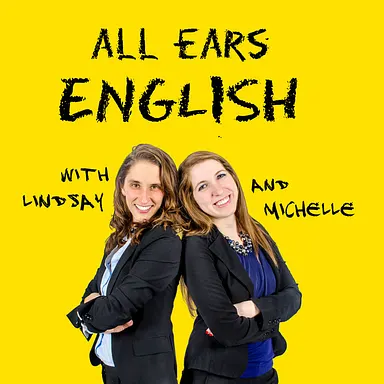
In this All Ears English episode, Aubrey Carter and Lindsay McMahon examine how Americans talk about getting older and why some phrases sound polite while others come across as harsh. They explain why neutral wording like 'getting older' is generally safe, while 'getting old' can sound rude, and they cover idioms such as 'aging like a fine wine,' 'aging gracefully,' 'not getting any younger' and 'older than dirt.' A role play set at a high school reunion shows how these phrases work between close friends.
The hosts also suggest that cultural attitudes toward aging shape this language, a point listeners are invited to discuss.
In this episode Aubrey Carter, Lindsay McMahon
This transcript of the episode on how English speakers talk about aging was made with HappyScribe's Zoom transcription technology.
Ads in this audio differ from the text. Tap the sentence you're hearing to follow along.
Synced: the text now follows the audio.
This is an All Ears English podcast, episode 2710: "Should You Tell Someone They're Aging Like a Fine Wine?"
Welcome to the All Ears English podcast, downloaded more than 200 million times. Are you feeling stuck with your English? We'll show you how to become fearless and fluent by focusing on connection, not perfection, with your American host, Aubrey Carter, the IELTS quiz, and Lindsay McMahon, the English adventurer, coming to you from Arizona and Colorado, USA.
And to get your transcripts delivered by email every week, go to all-ears-english.com/subscribe. Is aging stigmatized in your culture? Today, find out what Americans think about aging, and learn what to say and what not to say when it comes to commenting on someone's age. Do you ever start speaking English and suddenly the words disappear?
You pause too much, you hesitate, you know what you want to say, but only later, not in the moment when it matters. This is where your fluency is breaking down, and it's fixable. That's why we created our 2-minute fluency quiz. It shows you your exact English level right now, so you know what to work on next. Are you B1, B2, or C1? Find out. Go now to all-ears-english.com/fluency-score and get clarity on your English level and how you can improve this year, starting today.
One more time, go to all-ears-english.com/fluency-score.
Hello, Lindsay. How are you today?
Hey, Aubrey. I'm feeling good today.
How are you feeling? How's it going?
I'm great.
Great question. You're going to love this one. How do you feel about getting older?
Oh, I know. Speaking of getting older, how I feel: my knees today are a little crickety and.
How do I feel about getting older?
I feel like we live in such a culture where it's like, no, don't get old or don't look old, right?
I know. It's true. This is—I'm really curious if that's how it is around the world, how much that's emphasized in other cultures, but in the States, especially in certain pockets. Here in Arizona, it's really big. Scottsdale especially, I feel like so many people are getting Botox and fillers, and they're really trying to avoid wrinkling. And of course, with celebrities, so many celebrities are trying to avoid looking older. So that trickles down to society, right?
Yeah. I think we've mentioned this before in the podcast. I also have people in my social circle who are 8 years younger than me that have already gotten treatments, and I'm like, oh my gosh, if I'm the only one that doesn't get it, you'll be the only one looking old.
It's crazy.
It's interesting. I'm excited to talk about this because it's also cultural how we talk about this, the phrases we use if we want to be polite. Because a lot of ways we can talk about getting older can come off really harsh or rude. Because a lot of people are like, we don't want to be told that we are old or we're looking old.
Yeah. And it's especially important because let's get down to some real truths here. I don't think, sadly, that American culture is a place that respects the elderly. I'm just going to say that flat out. You could disagree with me if you want, Aubrey, but compared to other cultures that I've seen and lived in, and maybe that you have, I think people are respected in different cultures more than in the US when they're older.
That's such a good point. So we're dreading getting older because we worry that we won't be treated with the respect that a younger person is. That's terrible, actually.
I think in the beginning, maybe we're afraid of becoming maybe professionally irrelevant, for example, right, as we get into maybe our 50s or 60s or something. But then, as people get old and frail, it's just, yeah, we don't have the same truth.
You're worried you'll maybe be a burden to your family rather than being still a fun presence at the dinner table.
So it's very loaded. So as a way to compensate for that, it's really important in American English that we know the right things to say, right?
Yes, definitely. So we got a great question from one of our community members named Kin, who is asking, "What is the best way to say someone is getting older? Are there ways to say that that have a negative connotation?" And there definitely are. This is such a great question because some of the language around getting old, getting older, does have this sort of negative connotation implication. It's amazing how just slight changes to the phrases can have a whole different feeling.
Slight changes to the words we choose, and also I think the way we deliver them, right? And we're going to show you the correct delivery here today too, not just the individual words. But just be aware, guys, that there is a whole cultural narrative, cultural value kind of against aging. And I think it's almost worse for women aging than men, at least in the workplace. But maybe we'll get into that a little bit later.
Yeah, that's interesting to think about. But yeah.
So what do we need to know here before we get deeper, Aubrey?
Yeah. So we are going to share some phrases, positive and negative, that refer to getting older. And we're going to talk about which feel a little rude or a little harsh in American culture. And then this is one of those episodes where we would love to hear from you, what is this like in your culture? So come back to YouTube, leave a comment. Definitely hit follow, subscribe to the podcast. We want to hear from you as well.
Yeah, let's get a conversation going. I also could see this becoming a nice, robust conversation inside of Open Conversation Club. Aubrey, what is Open Conversation Club? Just so our listeners have some context.
Yes, every member of our community, so that's anyone who's taking any of our courses, is invited to become a member of our community. And then they're all able to come to weekly Open Conversation Club meetups. This is bonus live speaking practice that we provide for our students because it's not always easy to find people to practice speaking with when you're learning English, especially if you don't live in an English-speaking country. So we like to provide Zoom calls where community members meet each other. They get to know us, the hosts of All Ears English, and they're having conversations. They're building fluency.
It's really the best place to build language fluency.
Yeah. And we've also just recently, this summer/fall, added Asia Time. So Asia-specific times, weekends in Asia. So if you have joined a course before and couldn't make the time work, maybe check out another course because now we do have a broader range of times.
Yes. I'm glad we're able to offer more times because it's a global community here at All Ears English. We have listeners and students all over the world. So we want to do that. We want to try and provide this speaking practice at a time that's convenient for all of our community.
You got it. Guys, before we go any deeper, hit the follow button right here on the podcast so you don't miss a single episode of the show. Okay, Aubrey, I think we're ready. Let's get into it. What do we need to know?
Yes. Okay. So the best, really, and simplest way is what we said many times at the beginning of the episode, just getting older. This is kind of matter-of-fact and neutral, but it's interesting how it really doesn't have any kind of accusation or implication. It doesn't feel negative to say, "I'm getting older," or, "Someone else is getting older."
Yeah, getting older. Right. I agree. I think it's pretty neutral. Is that what we're saying here?
Pretty neutral.
It's just a natural part of life. It's just kind of more a statement of what's happening rather than a judgment of anything about it.
It's just nature. That's what happens, right? Things get older. People get older. Every year we're older. No big deal, right? You might say that. Yeah. But it's interesting how, and we'll talk about this in a little bit, but when we compare it to phrases that are so similar, like just getting old, if we don't add that "er," ooh, suddenly it sounds a little harsh. So I'm excited to dive into that. But this, just like this, getting older, where we have the "er" there on the end, that doesn't seem so bad. That's doable.
That would actually make a fantastic episode. Adding "er" to adjectives and when and why it's needed. We'll touch base on this today a little bit, but guys, hit the follow button because I think we should definitely.
Oh yeah. Old is definitely not the only adjective that this is the case for. So I love that idea.
Really good. That'll be a great episode.
Yeah. Let's do a mini role play to kind of show how this might look in a little conversation. I'll start us out. How's your mom doing?
She's doing well, but she's definitely getting older. She's not quite as active these days.
Yeah, perfect, right? That's kind. It's just neutral, right? Oh, she's getting older. Or, wow, he's getting older.
I know. He's almost in college now.
Yeah. So whether we're talking about a grandparent, ourselves, a child, to say someone's getting older, it just is so sort of matter-of-fact and neutral. There's no implied judgment. There's no negativity there.
There's no negativity. And these two are also very different scenarios here, right, when it comes to the loadedness of the word "old." So if we said, "But she's doing well, but she's definitely getting old," that would be very rude. And I wouldn't want to talk about my mom that way, right? I mean, maybe I would with my partner or my very close friends, just to be totally frank, but to be polite. Whereas the second scenario, it's okay. It doesn't make sense to say he's getting old. Why, Aubrey?
This is interesting. We're going to dive into that because there are a few ways to say this that do have this judgment, sort of an implication of something negative or a judgment of it being negative. So we're definitely going to dive into that as well. But let's share a couple of other positive phrases that, right, there's no negativity, there's nothing implied here. One of them is to say someone's aging like a fine wine. This is kind of a fun idiom. Just like anything improves with age, people do as well, right? So this isn't really something that kids would say, but adults will use this idiom, probably for people over 35 or 40.
It's a compliment. It says that someone's aging gracefully.
Yeah. I just was somewhere with multiple generations. I think I was with my in-laws or something, and someone used this term to refer to someone else or maybe to refer to themselves. That could happen too, right?
Oh, yeah, right? Yeah.
Maybe.
And they might even say it sarcastically. Or they might be like, "Yeah, I'm not exactly aging like a fine wine, but here we are."
Or you could say, "I'm aging like a fine wine here with all these wrinkles," right? Yeah, there's a lot we could do here.
We could be playful with it.
Yeah. So this is interesting. It is a little cheesy, and maybe it's a little more likely to be used by the older generation because it is maybe a little less common right now, but I don't feel like it's rude or offensive.
No, no.
It's interesting how, depending on who said it, if someone said it to me, it might make me uncomfortable because there is a little bit of an implication that it's a comment on my appearance, right? Because if you say someone's aging like a fine wine, really, you're commenting on whether they look older, if they have wrinkles. And we've talked about this on the podcast before. If it's not someone you should be commenting on their appearance, you also wouldn't want to say this about them.
Yeah. So there's some nuance here. We have to have a lot of cultural insight and knowledge. So be careful with this. Just observe around you, hear, listen if someone is using it around you. Let's do an example, Aubrey, here.
Right. So I might say, "I'm turning 50 this weekend."
Wow. Well, aren't you aging like a fine wine?
Yeah. I would not say that to you.
You probably wouldn't. It's interesting. If we were really close friends or sisters, right, then maybe you could say this to someone. But it is interesting.
Yeah. I wouldn't use it at work. I wouldn't use it with people. Honestly, anyone, if you would not comment on their appearance, I wouldn't use this. Because really, that's what it is. It's commenting on someone's appearance.
Yeah. And we've done a lot of past episodes on this concept of commenting on someone's appearance. So guys, go into our archives. The best place to do that is probably in the app, all-earsenglish.com/app, to find our old episodes and listen in to get your base of knowledge for this episode.
Love that. Yeah, right? Because we sure compliment what people are wearing. Things they can change, but you could make someone uncomfortable if you're complimenting something they can't change, right?
Yeah. What about the phrase "aging gracefully"?
Yeah. What about that one?
"Aging gracefully." So very similar, right? It means you're just aging in a natural and beautiful way. But just like aging like fine wine, this also is sort of an implication about what you look like.
Exactly. So again, also not for kids because kids aren't really aging. I mean, they are getting older, but they're not aging. There's a difference between getting older and aging. Aging is starting to show signs of, well, wrinkles on your face maybe, or hair is getting dry or whatever those symptoms are, right?
Exactly. It's interesting how I feel like when I hear these used the most is about someone that you have no relationship with at all. You might say this about a celebrity or someone that you just don't, right? You might say, "She or he is aging like a fine wine." You wouldn't say it to their face, but you're sort of making a judgment about how they're aging because you have no actual connection to them.
Yeah. I mean, you also might say, "Definitely aging gracefully, aging like a fine wine." I often would say, "Oh, that person's aging well," right? Just very basic but straightforward. I might say that to a friend commenting on the movie star or something.
Yes. Same. Yeah. Or you might say, "How was your aunt's birthday?"
Great. She looks incredible. She's really aging gracefully.
Okay. Yeah. And this is the same where I probably don't know your—we don't have that connection. This is a kind thing to say about someone. This is interesting because I do think it's used more about women. And this is sort of what you were talking about, Lindsay, that it is kind of gendered sometimes, the language we use about aging and how much it's prioritized for one gender over another.
Oh, yeah.
It's interesting.
If we have time to get into it, we can. But yeah, there's a lot there. There's a lot there. We'll take a quick break, and then we'll be right back to keep going with this conversation. This is good stuff today. Yeah.
Have you ever walked out of a meeting thinking, "I could have said that better"? You understood everything, but your response came out short or unclear or not quite like you. Maybe your ideas are strong, but your English doesn't show it yet. You forget words you know. You can't explain things naturally, and fast conversations leave you quietly catching up. That gap can be frustrating, but it's also very specific and very fixable.
Our two-minute fluency quiz helps you understand where that gap is and whether your level is B1, B2, or C1. When you know your level, progress feels lighter and faster. Take the quiz now at all-earsenglish.com/fluencyscore and move closer to speaking English the way you think. One more time, go to all-earsenglish.com/fluencyscore.
All right. Now let's get into kind of the more negative side that we're obviously going to want to be careful of. So it's kind of a what not to do or strategically use these at the right time.
Right. Exactly. And the other one, we couldn't help but mention it because it's so close to getting older. If you just drop that "er" and say someone's getting old, all of a sudden, there's a negative connotation. It's kind of fascinating.
Yeah. It's kind of the thing where maybe a kid that doesn't have the social awareness of this whole issue, if his grandparent comes over and he might say, "Oh, you're getting old," right?
Right. Exactly. They don't realize what that sounds like. It's just much more blunt and harsh. So this is one we definitely recommend avoiding. You certainly could say it again about a celebrity or someone you have no connection to, but I probably still would say just getting older because first, it would just sound so harsh to say they're getting old.
Yeah. You can use this to refer to yourself if you want, if you're looking in the mirror and you're like, "Oh, I'm getting old," and you start using anti-wrinkle cream or something, right? But just be really careful when you are speaking to other people because it is pretty offensive, Aubrey, right?
Exactly. Yeah. Good point.
Let's do an example.
Okay. So I might say, "Oh, my back hurts all the time."
Oh, same. We're getting old. Now, this is probably okay, right? Because it's a "we," and I'm empathizing with you. I have the same issue. And maybe we're the same age.
Yeah. This is interesting. It still implies a close relationship, though, I feel like, because it's so playful. Be like, "Yeah, we're getting old." Even though you're lumping yourself in there with me, this is still kind of implying a relationship where there's banter. You can tease each other. Because otherwise, I still probably would just say like, "Oh, it's difficult getting older" if I have more of a formal relationship with someone, right?
Yes. Interesting. And then another example here, what would you say?
I might say, "Oh, he's getting old."
I know. He can't keep up like he used to.
I think about just saying this about someone I play volleyball with. If I say to you this about someone else, I certainly wouldn't say it to his face. "You're getting old." That's so rude. But I might say it about someone.
For sure. For sure. And now I love the phrase "not getting any younger." Now, this is pretty different, right? The way this is used for different strategy kind of.
Yeah. This is interesting. It's like about losing youthfulness. It's often about more like not having energy, right? If I have insomnia, then I might say this about myself, like, "Ugh, not getting any younger." But we also will often use this when we're meaning we want to take advantage of an opportunity, right? Be like, "Well, we're not getting any younger, so let's do it today."
Uh-huh. For sure. Or the more serious or offensive ways of referring to certain sensitive topics. You shouldn't wait too long to start a family. You're not getting any younger. Now, this sounds like something that a mother-in-law would say, right?
Right. This is interesting. Sometimes people will get frustrated if they're hearing this over and over. So two things here for us to be more careful to not say it, to recognize. Not only is this a cliché, it's rude, right? So to avoid that, we should be careful of who we say this to. "You're not getting any older. You're not getting any younger." It means the same as "you're getting old."
Yeah. Right. It's really implying it's kind of masking it a little bit, but it's not because we know exactly what you're saying.
Exactly.
What else, Aubrey?
All right. Another phrase is "getting up there," right? And so this is kind of implying the years are piling on. You're approaching old age. So it also is slightly negative, but it can be used playfully, right? So be like, "Oh, you're getting up there" to a good friend to imply that they're getting maybe on a birthday, you'll say this.
Or sarcastically. I mean, the sarcasm is always an option. We like to show you how to use sarcasm in English. Maybe you have a friend who's much younger than you, right? You're 30, and their friend's turning 24 or something. And the friend complains they feel old. He's like, "Oh, yeah, you're really getting up there."
Yeah, right.
Right? Yeah.
And what you mean is you're still young, so.
You're still young. Don't complain about it, right?
Exactly. Yes. And then the last one is "older than dirt." My grandpa used to say this about himself. He'd say, "I'm older than dirt," right? It's more playful, dramatic. It's just a fun way to describe. And we'd mostly say it about ourselves. We probably wouldn't say this about someone else, right?
Definitely about ourselves. And also to kind of in reference to maybe we're not keeping up with certain things, maybe technology, right? Maybe we're still wearing clothes from another time frame or something, right?
Right. And be like, "Oh, I must be older than dirt to still be wearing these skinny jeans."
Right. Exactly. Exactly. All right, Aubrey. This has been a very rich episode, but let's squeeze in a role play. Shall we do that? What do you think?
Let's do it. We are friends that went to high school together in this role play. I'll start us out.
Okay.
It is crazy seeing everyone after so long. The 10-year reunion didn't feel like a huge change, but 30 years, we're really getting up there.
I know, right?
But some people look amazing. Did you see Jenna? She is really aging gracefully.
I know. I heard Danny tell her she's aging like a fine wine.
Classic. He was always flirting with all the girls.
That definitely hasn't changed, but he's getting old now.
Yeah. To be fair, we're all getting older.
Yeah. But he's still single, and he's not getting any younger.
Honestly, I think he's happy that way. But I guess we'll see at the 50-year reunion.
Oh, wow. By that time, we'll be older than dirt. Okay. This is great because this feels real.
This is the perfect scenario, right? We know each other well. We went to high school together. We're close friends that can banter with each other about this and kind of poke fun at the other people our age. We're all getting older.
Exactly. So the first thing you said is, "We're really getting up there," right? And this is not sarcastic. This is real, right? I'm not being sarcastic here. Have you been to a 30-year, 20-year reunion?
I haven't actually gone to any of my reunions ever, but I imagine it would be just like this.
Okay. Yeah, yeah, yeah. I went to, I think, my five-year, but that's sort of worthless because nothing's changed for most people. Just college. People went to college. But I've never been to any other reunions. I've always wondered if I should go or what it would be like.
I feel every summer, though, when I'm home because a lot of people never left my hometown. So it kind of feels like that. The 4th of July thing, I'm always running into people from high school.
Okay. So you have a reunion every year.
We usually have a reunion every year.
Yeah. All right.
But I like this one. We're getting up there. It means the same thing as we're getting older, but it's playful. It's fun. I like that one.
Yeah. We're really getting up there. And it's also okay to say because we're together in this. We're in this together, right? We're in this together. We're all experiencing the same thing. We're the same age. And then you said, "But some people look amazing." Did you see Jenna? She's really aging gracefully.
Yeah. And this just feels kind, right? I might not say that to her face, but to say it to you, I'm just saying like, "She looks great for her age," right?
Yeah. Absolutely.
And then this is interesting to say. I heard Danny tell her she's aging like a fine wine. And we point out that that's flirting for sure because he's commenting on her physical appearance.
Yeah. He's flirting with her, right? Exactly. And then I said that definitely hasn't changed, but he's getting old now, right? He's getting old now. I wouldn't say that to be flirting.
He's getting old. No.
You would never go up to Danny and say, "You're getting old," but we can say it to each other because we're friends and we're sharing that experience of observing people, right?
Exactly. And then I'm like, "Oh, we're all getting older." Yeah. It's interesting. And then I like this one. You're saying he's still single. He's not getting any younger. This is implying like he should be dating. He should be trying to find a partner.
Yeah. And in our script here, there's a dot, dot, dot after that because our tone of voice changes, right? He's not getting any younger. Just note that tone of voice change, guys. This is really high level, but important.
Yes. We're saying that he should be getting married or something here, right?
Yeah.
It's high time he got married is what we mean by that. So that's why you want to be careful if you say this to someone. It's not polite, for sure.
Exactly. Exactly. And then we're talking about our 50-year reunion, and we say, "By that time, we'll be older than dirt." You know what I think would be interesting, Aubrey, is to see if our listeners have because I feel like this is kind of what reunions are in the US. They are sort of like people looking to see who's gotten old. I mean, I'm sure it's fun, but I feel like that's the narrative around reunions in the US. And I wonder if part of that.
It's true.
I wonder if part of that is because we have such a stigma against aging in American culture, even though it happens to everyone. I wonder if in other cultures that respect the elderly more, there's not as much of a stigma, and so there's less of this, "Let's see who has better skin." What do you think?
That would make sense. I think there probably is a correlation. I would be fascinated to know. Guys, definitely come back on leave us a comment on YouTube. We would love to know what this is like, where you live in your culture. Are the elderly respected more? Do you feel like there's a correlation between that and the way you talk about aging?
Super interesting. This is connection here, understanding cultures, understanding what we can share with the person next to us depending on how well we know them, right?
Yeah. Interesting.
Guys, yeah, go over to a Saturday episode. Can you use "yet" with past simple tense? That was just, I think, last Saturday. Go and check that one out. Don't miss it. Getting into some grammar stuff here. All right.
Scroll up to check that out. And just as a takeaway, getting older is pretty safe, but fascinatingly, drop that "er" and you say someone's getting old suddenly. That seems so rude.
Yeah. That's a great takeaway. Because this was a robust, complicated episode, so good to leave our listeners with that takeaway and always default to connection. But to do that, we need to know what is okay. Don't break those norms, right? Love that.
Exactly.
So yeah.
Awesome.
All right. Aubrey, talk to you soon. Have a good one.
Thanks. See you next time. Bye.
Bye. Thanks for listening to All Ears English. Would you like to know your English level? Take our two-minute quiz. Go to all-earsenglish.com/fluencyscore. And if you believe in connection, not perfection, then hit subscribe now to make sure you don't miss anything. See you next time.
Black Month bei Autohaus Ostmann. Jetzt 1.000 Euro extra Nachlass auf Lager und Vorführwagen sichern. Auch bei Gebrauchtwagen lohnt sich's. 500 Euro beim Kauf und nochmal 500 Euro bei Inzahlungnahme Ihres Autos. Entdecken Sie Ihr Wunschauto an acht Standorten in Nordhessen oder auf autohaus-ostmann.de. Die Aktionsbedingungen finden Sie bei Klick auf das Banner. Und jetzt viel Spaß beim Weiterhören.
The Business English Course is available for a special price this week only! Speak up with confidence in meetings, impress your colleagues on your next conference call, and build real connections at the office in English. For a limited time, get the course for $199 (regularly $249), or choose Personal Coach for $299 (regularly $399) to get teacher feedback on 12 exercises plus our Live Weekly Q+A.
Every buyer also gets a live kickoff workshop with Lindsay and Aubrey to start strong. Y
ou’ll have lifetime access and a 30-day money-back guarantee.
Go here to enroll now.
Offer ends Sunday at midnight.
Learn more about your ad choices. Visit podcastchoices.com/adchoices