
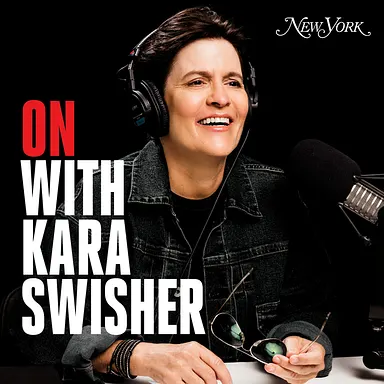
Kara Swisher's panel of journalists examines the business interests behind Elon Musk's political spending, which has reached nearly half a billion dollars in the midterms. The guests discuss his role in restricting Starlink service in Ukraine, the bipartisan calls for an investigation, and the threats he made against Swisher on X.
They also cover a possible Tesla and SpaceX merger, his record of unfulfilled promises, and the stakes of the Texas Senate race. Listeners will hear differing views on whether a post-election reckoning could bring accountability, with the guests arguing that subpoena power and state prosecutors could matter more than federal action.
In this episode Kara Swisher, Catherine Rampell, Faiz Siddiqui, Kirsten Grind
This transcript of the episode on Elon Musk's midterm spending and Starlink controversy was made with the technology behind HappyScribe's AI note taker.
Ads in this audio differ from the text. Tap the sentence you're hearing to follow along.
Synced: the text now follows the audio.
Well, I will say that you had perfect timing with your launch of a podcast with Hillary Clinton now that lock her up is back in the headlines.
We're going to room together. We're going to room together, and Rachel Maddow is going to bring us a file and a cake. That's the plan.
That sounds quite cozy.
It's on. It is on.
Hi, everyone. From New York Magazine and the Vox Media Podcast Network, this is On This is Bloomberg Green with Kara Swisher. And I'm Kara Swisher. We've got less than one week until Election Day. And once again, Elon Musk is at the center of American politics. No, he will not go away. How can we miss him if he won't go away? The world's richest man has spent nearly half a billion dollars on the midterms. It's an astonishing figure, much of it a last-ditch effort to stave off potential Democratic wins. Meanwhile, Republican and Democratic lawmakers are calling for an investigation following revelations that Musk restricted Ukraine's access to its Starlink internet service. On top of all this, last week Elon attacked me on X and threatened me with jail time for saying that he could face an investigation when Democrats return to power. And by the way, Democrats soon said that's exactly what they're going to do. And also that included some Republicans. There's a lot going on. So I've assembled a panel of experts to help parse what actually matters when it comes to Elon Musk. I think it's important. I mean, the threat he made was kind of ridiculous and performative, but it was also dangerous because he didn't just threaten me, he threatened Congress.
He threatened all manner of people. And When the world's richest man with a huge social media following does this, it makes you wonder what's going on. And by the way, I think it's all about the money. I've always thought that. He's an irritating presence in politics, but most of it is about not just self-aggrandizement, but becoming even richer than he already is. And if you follow the money, you'll understand a lot about Elon Musk. Kirsten Grind is an investigative business reporter at The New York Times covering Silicon Valley and tech executives, including Elon Musk. Her reporting on him has been really spectacular. Katherine Rampell is an economic editor for The Bulwark and an MSNOW contributor. And Fez Siddiqui is a tech reporter at The Washington Post and author of the book Hubris Maximus: The Shattering of Elon Musk. So stick around, it's a great panel.
Ripple has been powering modern finance for a decade. We're leading the charge to bridge the gap between existing financial systems and the future of finance. You can have it all: legacy, stability, and digital innovation. Systems that work with your other systems. Because with the right partner, the question isn't crypto or traditional finance. The question is simply, why choose? A new standard of modern finance. It's happening with Ripple. For informational purposes only. Availability of products can vary and may be provided by different Ripple entities.
Support for this show comes from CoreWeave. Everywhere you look, AI is expanding what we thought was possible, and at the center of it all is CoreWeave. Medical research and diagnosis, education, complex visual effects for movies, science and technology breakthroughs. CoreWeave powers AI pioneers around the world with purpose-built tech. Building what's never been built before. CoreWeave is the essential cloud for AI. Ready for anything. Ready for AI. To learn more about how CoreWeave powers the world's best AI, go to coreweave.com/readyforanything.
The biggest changes shaping the world don't start in the headlines. They start on the ground inside businesses driving the future. I'm Christine Anderson, and welcome to Inside Blackstone, our new weekly podcast. We're bringing you conversations with leaders navigating change in real time and insights into what's happening across the real economy. New episodes drop every Tuesday. Subscribe to Inside Blackstone on YouTube and wherever you get your podcasts.
It is on. Kirsten, Katherine, and Fez, thanks for coming on On.
Thanks for having me. Thanks, Kara.
Thanks.
So let's start with the money. The Washington Post reports that Elon Musk is now the largest individual political donor in modern American history, having spent $446 million on the midterms. He and other billionaire donors left and right have collectively spent more than $2.7 billion combined. A big chunk of that is Elon. We're going to get to everything that he's been up to. But since we're a week out from the midterms, let's start there. Have we reached a tipping point of billionaire and influence on elections, or have we just unlocked a new level? Kirsten first, and then Katherine and Fez.
It feels to me like we've really unlocked a new level here. And, you know, I think everyone probably on this call remembers Elon saying last year that he was not going to give any more this year. And yet here he is at $400 million, which is an amount that is just—
Close to $500.
Close to $500, right.
And probably more if you really, really did a little digging.
It's hard to really wrap your head around that number compared to his wealth. It's obviously not a lot, but to insert in these races and just all over the country, it's not just a single race. It's his influence has only really grown since last year.
Right. Katherine?
Well, look, can you put a price on freedom? I think that's what this is about. As you and I spoke about last week, apparently Elon Musk is worried about a reckoning that may be coming when Democrats presumably take control of the House and/or Senate because there's a lot that they can investigate, a lot that they can dig into, and not just for political reasons. I'm sure that there is some political advantage for them to do so, but because he's gotten a bunch of shady contracts and he and his Doge goons infiltrated plenty of agencies with, at best, dicey legal standing to do so. That's what this is about. He has money to spare, and this is definitely worth it. This would have a huge ROI for him if, in fact, it pays off.
Fez?
Yeah. And Kara, I have reported on the willingness of Democrats to investigate Musk if they take power. And on the question of the money, I think a lot is made of dark money, right? And this is just out in the open. And so Elon, I think it was just today, I was just pulling it up. He responded to someone contrasting and comparing the amount that George Soros has given, presumably to Democrats, compared to what Elon's given to Republicans, or at least to getting Republicans elected. And, you know, You know, Musk responding to this essentially favorable comparison where Musk is the bigger donor than Soros says, yeah, I'm trying. I, I, he's trying, he's saying to save Western civilization. And so, so much is made of, you know, sort of post-Citizens United of the influence of this money in politics. And Elon is doing it essentially out in the open and saying, yeah, like this is what I am attempting to do. I am trying to steer this election in one particular way with my massive campaign war chest.
Right. He doesn't hide it. He absolutely doesn't hide it. And he'll probably do the same for the presidential. But let's step back and talk about SpaceX Starlink, its military-grade service Starshield in Ukraine. After some confusion— there was no confusion, by the way. I said he lied 2 weeks ago and he lied. Musk admitted over the weekend on X that SpaceX restricted Starlink internet service in Ukraine. But he also said the US government was responsible for any changes made to Starshield, which Ukraine uses for drone operations and defense. This came after The Wall Street Journal reported last week that Musk ordered the slowdown and later discussed the matter with Trump. Trump has denied interfering with Ukraine's Starshield access. I don't know where Pete Hegseth is in all this. Kirsten, for listeners who don't follow this closely as you do, why do you think SpaceX restricted Starlink service? Not their reason, which is they broke terms of service. It sounds like they said a dirty word on Facebook or something. What was his justification for it and what's the significance of his admission? Because he lies frequently. Let me just be clear.
That's the problem is we don't really ever know what's going on here. Right. But I mean, what he's saying is that Basically, Starlink was being used for drone strikes, which is against their terms of service. So one of the big issues here is the difference between Starlink, which is supposed to be for normal people, and Starshield, which is for the government, right? Mm-hmm. And so the interesting thing about what he said over the weekend is he was trying to put it on Starlink, which is the service that all of us can use, the internet communication service. And he's sort of saying, well, it's not supposed to be used for the military, But the problem is, first of all, no one really understands Starshield and what it's doing at all. It's very classified. No one has any insight. But at the end of the day, all of this comes back to him, right? Like you said, SpaceX is the one in control of these systems, and especially Starlink. And over the years, he's had issues on and off with who has the power to turn Starlink on, who has it to turn it off, and it's just going to keep Explain the differences.
Say Lockheed decided where to turn off the bombs, right? Or if in World War II, you know, whatever company decided to not let the planes work.
That's right. What's extraordinary here is, again, Musk's power in this situation, right? It comes right back to him at SpaceX. They're the ones in control of the satellite system. And so it's giving him this you know, entryway into conflict zones that really no private citizen should have any control over. And yet even he is saying our terms of service say you can do this and this and that, right? And that's— those are his terms of service, right?
He makes it up. It's a little bit— yeah, it's echoing William Randolph Hearst. That's what it feels like a little bit with his newspaper. But that was just a newspaper. A CNBC commentary recently suggested no matter what actually happened with Starlink's services, suspension. And Musk may now face customers diversifying away from the total reliance on SpaceX as his ultimate reckoning. You're already seeing Europe doing that, Canada. He's having some beefs in India. Talk a little bit about this, Fez. Last week you reported that SpaceX had a $4.4 billion profit in Q3. A lot of that has to do with data centers and compute.
Does this new stand impact SpaceX's bottom line as Every time that you provide competitors a reason to sort of insulate themselves from your business, yeah, I mean, you stand to potentially lose from that. SpaceX's profit, which was— it was remarkable how quickly they turned a profit after going public. But once you dig into those numbers, you can see that a lot of that is based off of customers, Anthropic, Google, potentially others, basically leasing compute from SpaceX. And so when you have sort of a business that's operating with sort of thin margins, on the basis of, you know, the different products that it offers. If you give competitors or if you give potential customers an opportunity to insulate themselves from your business, that's not good for you. And we've seen this, I think, more broadly with the Trump administration, right? That there's an argument that it strengthened Europe and strengthened Canada in terms of their ability to insulate themselves from doing business with the United States. Is that happening on a more micro level with Elon and his businesses? Right.
And again, he's fighting in India, in Europe, Canada. and others who don't want to rely on him. And in fact, the Delta CEO got a lot of flak, and now he looks pretty smart for not wanting to use the Starlink service on their planes. Catherine, last week on Receipts, the podcast at Bloomberg, I pointed out that Musk will likely face congressional investigation if the Democrats retake the House. Not a big guess in any way. Politico has reported this, and Fez has reported on it. Still, Musk posted about me on X saying, quote, live by the sword, die by the sword. Sounds like Swisher really wants to go to prison. Although I have to say, Walt Mossberg had the best where he said the only way Kara's going to prison is if she's interviewing Elon Musk there. Musk has joked about possibly going to prison himself. He talked about it with Tucker Carlson. And now bipartisan lawmakers are calling for an investigation into Musk following the Starlink incident that we just talked about. Katherine, what do we know about the plans to investigate Musk? And how realistic is it, even if the Democrats retake the House?
Well, I will say that you had perfect timing with your launch of a podcast with Hillary Clinton now that lock her up is back in the headlines.
We're going to room together. We're going to room together. And Rachel Maddow is going to bring us a file and a cake. That's the plan.
That sounds quite cozy. Look, there's a lot of material for Democrats to dig into. Whether that actually leads to any sort of indictment is a totally separate question, because who are they going to refer the findings of their investigations to? At the federal level, it's Trump-controlled DOJ. So it seems pretty unlikely that in the next couple of years, that you would see any sort of indictment/prosecution that might potentially come from whatever Democrats dig up. That doesn't mean that there aren't state-level prosecutors who would be potentially salivating at the idea of, of getting handed material over potential lawbreaking from Elon Musk. Again, if, if there is lawbreaking, but there's plenty of investigative journalism to date that suggests That again, he and/or his Doge underlings crossed the line many, many times, even before you get to the Starshield stuff, right? Like, there's plenty of material to date. So I do think it is likely that Democrats are going to dig into this, and not just Elon Musk, by the way. There was another good story in the Washington Post looking at how Democrats were likely to be investigating other sort of collaborationist Quisling-esque actions from corporate America in which CEOs and other C-suite executives decided to canoodle with the president, you know, donate to the ballroom or otherwise facilitate potential corruption.
So I think that there are a lot of execs on the list, and Democrats are certainly motivated to dig into those records. And then again, what happens with that, whether anything materializes in the form of prosecutions, will really depend on who's in office.
Can I just add that, I mean, the subpoena power is vast. And for a Musk business, you know, Kara, Catherine, Kirsten, you guys know this well. They're so opaque, right? And people are tight-lipped. And so any amount of transparency is a little bit of, you know, potentially damaging for Musk. The subpoena power essentially means that, okay, so these investigations and inquiries that have been happening into Doge already, those have been taking place without the ability to compel witness testimony, without the ability to compel the production of documents and records. And this is, again, whether it's into his companies, whether it's into Doge, whether it's into Elon himself, you are going to potentially learn so much more about Elon Musk than you've ever been able to because of the opaque nature of private enterprise versus his government service. So I think that has tremendous potential impact. The last thing I'll say is that the momentum in the past few days, especially after what's gone on with Starlink, has been— I mean, there's just been a ton of momentum. And so you've heard from, I think today it was Senator Alex Padilla, You've heard from Ruben Gallego.
You've heard from Richard Blumenthal. You've heard from Representative James Walkinshaw. It seems like they are eager to pursue this, and there are activists who are pushing for it.
I've heard from Republicans. Some Republicans are getting ready. You know, it depends on what happens. Now, Musk appears to be panicking over the midterms, especially about James Tallarico. That's another sidelight. Lashing out at Democrats, making threats. This is par for the course, Kirsten. You and I know this. But what do you make of his behavior? Because it appears to be growingly demented, especially the Tallarico tweets. Like, he's sort of Trump-like. almost in his desperation. I know the saving Western civilization, thanks a lot. We're okay without your help. But what has happened here from your perspective? I know you're working on a book about this. What is occurring here?
You know, I don't know if anything has really changed. And luckily, Tallarico was a middle school teacher, so I'm sure he's seen it all, right?
Right, right. This is nothing for him.
But this is— it just really feels like the same playbook in going after Tallarico and then going after you, his fury at the Democrats. I think it's really important to remember here why he jumped in on Trump to begin with, which was the vast investigations into his businesses ahead of the 2024 election. That was a real reason why he jumped in to begin with. And you see him, I mean, we've all seen it over and over again. He gets more agitated and starts lashing out more when he feels backed into a corner or when his businesses are being threatened. And that is all tied in with his election spending, with his going after Talarico. You can't separate the two, in my opinion.
So it's just extra loud because he has a louder platform for certain things.
Exactly.
I will point out that it's— he acts this way. He, you know, throws out these threats even when he is in a position of power.
Oh, yeah. You notice that?
You know, like the last time I was on the receiving end of an Elon Musk threat threat was shortly after Donald Trump was inaugurated when Elon Musk gave the, not a Nazi salute, but a Nazi salute. And I mentioned it on TV and he and his mother actually threatened to sue me as a result of all of that. And that's when he was riding high, right? He was in a position of power at the time. Donald Trump had just ascended to office and he was Doge. So you don't even need to have him backed into a corner and to be running scared to be lashing out this way. It's just maybe He's willing to put more money behind it.
Oh, definitely. I, I meant to make the distinction. I mean, he's also lashed out at me for reporting on his drug use when things were riding high. It's more that you see this kind of spiraling behavior to make a distinction between his normal lashing out and his sort of like extensive lashing out when, you know, you saw it, for example, with OpenAI when he felt like, you know, Swindly Sam was backing him into a business corner with AI. It's when he feels really sort of trapped, I guess, that you see it more.
We'll be back in a minute. Hi, everyone. Kara here. I was just on Katherine Rampell's podcast, Receipts, and I'll tell you, she and the rest of the team at The Bulwark, Tim Miller, Sarah Longwell, JVL and the rest are doing the work that matters. If you aren't familiar with The Bulwark, and you should be, it's an independent political media company that isn't afraid to call bullshit on the people in power, something you all know is close to my own heart and something that I do hear quite often on On. While other outlets are busy shilling for the red team or the blue team, The Bulwark isn't interested in playing that game. Instead, they call out corruption, challenge the powerful, and aren't afraid to piss people off in the process, which as far as I'm concerned, are— it's usually a sign that you're doing something right. So go support my friends at The Bulwark. I love them over there. And head to thebulwark.com. That's B-U-L-W-A-R-K.com for their newsletters, podcasts, videos, and unbeatable political reporting and analysis. Because democracy doesn't work when the people in power get a free pass. Head to thebulwark.com.
There's the economy you read about in the headlines, and then there's the one taking shape inside companies every day. I'm Christine Anderson, and this is Inside Blackstone. From the technologies transforming industries to big trends shaping the economy, our goal is pretty simple: fun, engaging conversations that make complex topics more accessible. Tune in every Tuesday and subscribe to Inside Blackstone wherever you get your podcasts.
Support for this show comes from NPR's Machine Gods podcast. AI news comes at you nonstop, but what does any of it actually mean for you? Machine Gods from NPR helps you make sense of it. It's hosted by my friends Kevin Roose and Casey Newton, 2 of the best tech journalists on the beat. Well, except for like me. They give you unmatched access to the industry and they're fun to listen to too. Casey and Kevin take an AI real They report on AI as it is. They don't cheerlead for it or panic about it. The show explores what AI means for work, for life, and for all our futures. Weekly episodes mix interviews and industry news analysis so you can be in the know from all the angles. And you don't need to be an AI expert to listen to Machine Gods. It's made for smart, curious people who want to understand what's happening without the hype. Because regardless of how you feel about AI, we can all agree it's important to keep yourself informed. You might as well be self-informed, and you might as well be entertained while you're at it. That's exactly what Casey and Kevin are committed to doing.
Listen now to Machine Gods in the NPR app, wherever you choose your podcasts. And Kevin and Casey, thanks for the money. I'll spend it well. This all comes on the heels of other news around Musk's 2 biggest companies. As we mentioned earlier, SpaceX reported earnings last week, as did Tesla. Musk confirmed that both companies are discussing a possible merger, which could be the largest merger in corporate history. and SpaceX already share resources, sometimes not on the up and up, and Twitter too at the time. So break it down for us. Why does Musk need this merger to happen? And what do the talks signal about AI ambitions and his plans for these companies? And I will say, I said he was gonna do this a year ago or more, almost a year ago. And I got like eviscerated by Elon stans saying how stupid I was. And I was like, it makes sense 'cause he wants to get first the weakness of Tesla in there, the data. He wants full control of it and he can hide. all manner of things. But Fez, how do you look at this?
So there's this idea that, you know, Tesla, Tesla is in the relatively low margin business of selling cars, right? And so how do you spice that up? AI, because AI is, you know, everything. The economy is underpinned by AI. And so you turn Tesla effectively into the physical manifestation of artificial intelligence. You say we're going to build the robots and they're going to be AI powered. And it becomes clear that there are to use the tech buzzword synergies between those businesses. And you no longer have a company that is sort of dead in the water, or at least a company that is not exactly exciting investors the way it once did. You have an AI company. And so for these companies to merge, obviously there are areas where it would be helpful for Tesla to have the expertise of SpaceX and vice versa. But Kara, as you point out, we know there's already resource sharing between Elon's companies. And so you essentially have this one big firm that's going to do it all. And that's what Elon's always wanted. He's wanted the everything app.
Yeah. Yeah. I call it a turducken. He's building a turducken.
Can I take a slightly more cynical view of that situation, which is just that this is just the last move in a long line of financial engineering that Elon has done at the helm of these companies and his, all of his companies had been private in the past. And as soon as they were doing badly, he would merge one into the other. He would move one into the other. You know, there's been lawsuits about this resource sharing and all of this. And so, you know, I don't know. I'm not the expert on a SpaceX-Tesla merger for sure. And I'm sure there are synergies, but I also just wonder, you know, Tesla car sales are falling. He doesn't have a fresh car. Is that car really flying? I can't really tell. And when will it be delivered? And so I don't know. It's just, this is what he does. He's very good at maneuvering his businesses to his advantage.
Kirsten, to your, to your point, I mean, his $1 trillion payday relies on, I think, getting trust— Tesla's valuation to $8.5 trillion.
Exactly.
Oh, that's exactly— always go to the money. But after nearly a decade of delays, you mentioned the Roadster. Tesla recently unveiled the Roadster, which was supposed to come a decade ago, at a flashy event in Texas where it did a few tricks, including leaping over 5 cars, which, by the way, happens in Fast and Furious every single movie. Tesla called it the arrival of flying cars. I called it A stunt. My son, who's an engineer, explained it to me. It's just a lot of air, a bunch of suction, and a very light frame. But it's— you can't do it very much, and you can't have passengers, and it's also not legal. Anyway, on and on. Musk also recently pledged to give every child in America one SpaceX share next year. That would equate to about $10.3 billion in stock, according to The Wall Street Journal. I also said this would help SpaceX, not the children of the world. If he really wanted to help them, he'd give $10.3 billion to alleviate poverty or anything else. Now they're stuck with a share they can't sell, and it will help keep SpaceX aloft, presumably. Katherine, to what extent are both these moves a distraction on Musk's part?
And what's the endgame? And also, who's he fooling?
Well, he's always got these stunts that he does, right? That he was going to have the Hyperloop. He always promises some whiz-bang new invention, some innovation. And sometimes he delivers on something impressive. I mean, Tesla is an impressive company. It's been the number one selling EV in this country, and the legacy auto companies have not been able to compete. So he has done some impressive things, but he also promises these almost surrealist or science fiction-y new developments that That are meant to dazzle the public. And even if they don't actually materialize, in the meantime, they're a very useful distraction from all of the other icky things that he is doing, whether those are icky things related to destroying our civil service and the functioning of our government, or foisting these SpaceX shares upon the children of America, which, as you point out, they are legally prohibited from selling. for 5 years, which will effectively create a price floor for SpaceX because you have this like base of shareholders who are unable to sell. So, you know, there, there are a bunch of things that he's doing that have this like gloss of public service, or at least gloss of super entrepreneurial, and that helps hide the ball a little bit.
But I don't know how effective any of it is at this point. Like it would work if he were doing the P.T. Barnum stuff stuff and he were a new player on the scene. But I feel like people have gotten kind of used to all of the crazy stunts that he does. And I don't know, I don't know who it's for, I guess is what I'm trying to say.
Yeah. Speaking of which, Kirsten, this summer ahead of SpaceX IPO, you reported over 600 goals Musk has laid out over the years related to his businesses. You found that his goals came to fruition only about 19% of the time. It's not a great number. And that his annual rate of success declined over time even as he made more promises. Talk about some of the takeaways from your reporting. Do these broken promises have material impact on him and his companies?
Oh, they definitely have an effect on his businesses. Yeah. Earlier this year, I became obsessed about actually tracking how many times he's followed through on all these promises. And I co-opted my poor coworkers into really searching out, like, since 2011, how many of these promises has he actually followed through on? And he does 2 things that I think a couple of which you kind of mentioned, Catherine, Which is the first thing, he says all these things and then he never follows up so that, you know, people have short-term memories. They don't remember what he said. And then the second thing is he changes the goalposts. So my favorite example is Mars. You know, how long has Elon been saying that we are going to colonize Mars? Said it to me. Yes, probably like a decade ago, right? And then suddenly, was, was that this year or last year? I've lost track. I think it was earlier this year. Suddenly we weren't colonizing Mars. We were gonna colonize the Moon, which was, to anyone who's followed Musk, like, wait, what? Like, he's been saying Mars for 15 years, but it's because we're still not at Mars.
And so it's just this repeated pattern. So anytime he's saying something like, I'm gonna give, you know, SpaceX shares to the children, or whatever he's saying, I always have the actual numbers in my head of what his achievement rate has been during that time. Right.
And this, if he, by the way, if he does these things, he will get a payoff, this payoff of this guarantee from the board.
Exactly. If he does those things.
The acting board of SpaceX and Tesla. Right. These are certain benchmarks he has to reach.
The benchmarks are pretty high too, but we'll see if he reaches them right now. Right.
Which, if he can reach them. When you think about the 19 number, why make these promises? He doesn't have to, 'cause he certainly has accomplishments. Because look, the rockets, cool. The car, cool. Not anymore, but you know, it's in Cybertruck. But why? Because he has justified accomplishments. Each of you comment on that.
Yeah. So Catherine, I think you mentioned the main reason, I think, which is in the early days that strategy kind of worked. Like people were not onto him. He can say like, we're gonna have this amazing Hyperloop and it's gonna run from LA to San Francisco in And everyone sort of believed him. Unfortunately, now more people are onto him, so the strategy doesn't work. But also the more he says, and we didn't get into this in that research, but it definitely is in some ways correlated to the stock price of his companies, right? I mean, I looked at certain examples where Tesla's stock jumped after he said, you know, Something's going to happen here or something, or the car is going to do this or that or the next thing.
Right. Fez, what do you think is— because he has accomplishments, real significant accomplishments.
You don't become the world's richest person selling cars, you know, especially cars. Like, I'm going to stick to Tesla here, like the company that propels him to becoming the wealthiest person on Earth. It's not valued like a car company. It's valued like an AI company or a tech company. an AI company now. And there's a reason for that. It's because of everything he has promised, even if at this point investors— and like, there are plenty of fanboys even who are at the end of their rope with the idea that they're just going to sort of spout these, like, these timelines and just like repeated promises and miss the deadlines, by the way, on these calls. Elon even admitted, I think it was last week, to being like quite grandiose, like in an attempt to excite investors. And still it's just sort of like that is built into the valuation of Tesla. And that pattern continues with SpaceX. He continues to say that they're going to colonize Mars, even if it's no longer the short-term goal. He says a million people on Mars. It's in the IPO documents. That's a wild thing to put into an S-1, right?
But that's how these companies get valued differently.
Catherine, why don't you explain why he wants to pump the stock essentially?
Why does he wanna pump the stock? Fuck, because he wants to get rich. I mean, he wants to be richer. I was going to say get rich, but he's already the world's richest man. I think this is to your initial question about why does he promise the moon or Mars. I think it is partly about aggrandizing his own fortune. I think it's like, I would not be surprised if he believes some of these wild and crazy things that he says. I mean, he's kind of a narcissist, and maybe emphasis on the narcissist and not the kind of. It would not surprise me if he has convinced himself that he is able to achieve the unachievable. I think that's very much the Silicon Valley way, right? Like, you've been working with these people for far longer than I have, and part of the way that they build their fortune is that they do take big risks and they convince themselves that they are the only person who can get those risks to pay off. So it would not be surprising to me if he genuinely believes— He's very—
he's much beyond. I mean, none of them are like this. None, none, none.
But I think it's partly out of self-interest, but I think it's partly that he just believes it.
Yeah. Jobs would go like, yeah, we're going to have a phone that's in your pocket, and then it would appear, and then it would be the best-selling phone of all time. He would make things on his promises, even if he was speculating, which is fine. Speculation is fine. But one of the most popular movies in the country right now, she goes to jail for it and he does not. He does not and never will, probably.
Well, I was just going to say that because I definitely, I'm sure you guys have too, fielded a lot of questions about what is the difference between this strategy of Musk's and what Elizabeth Holmes went to jail for. And I honestly don't have a good answer to that.
Well, she pissed off powerful men that like him because they're getting money elsewhere. She didn't have another thing to give them, like a SpaceX or something else. That's That's why. I mean, it's the same guy, Larry Ellison, right? It's a similar group of investors who are backing Elizabeth, and it's very easy to cut her loose, I think. But they were stuck with her for pretty long, and she did a lot of damage to their reputations. But let's shift to the midterms again, which could prove, as you noted, hugely consequential. I mentioned earlier that Musk had poured this half a billion dollars into midterms, and I suspect it's more, mostly aimed at supporting GOP's control of Congress. Let's talk about how this approach is different than what he did ahead of the 2024 presidential election when he held the lottery, giving away $1 million a day to registered voters who signed a petition, which was of course controversial, and he faced legal action in that way. He settled it. How is this different?
He's not on the campaign trail. And, you know, I think there's just been this sort of recent streak of like weird self-awareness from him. And I'm sure you all can weigh in on whether that's actually the case, but it's, it's like, I, I think he at least realizes that, you know, messaging directly from him is is unpopular or just hasn't landed. So he's more, if you can even do this, it's not quiet, but he is seeding sort of these individual groups as opposed to standing up America PAC to be this one all-encompassing group basically promoting the causes of Republicans. He is weighing in on his pet issues, his obsessions or whatever we're calling them. Talarico has been one of them lately. But he is not out there directly campaigning for Republicans. And there still seems to be this degree of iciness between him and the president. I mean, that's just an observation on my part.
I would agree with you. I would agree. Yeah.
I mean, it just seems like politics was not for him, and maybe it's not his choice, but he's certainly not being trotted out there as a surrogate.
No, it's interesting because I do feel like— I can't believe I'm saying this, but Trump is not nearly as weird as Musk is. I think he has levels of normalcy. Like, he isn't normal in any way, but, you know, I have a feeling he gets, even on the base level, his lizard brain level, that this is problematic, him standing next to people. And I suspect they don't want him on the trail. That would be my guess. Nobody wants him jumping up and down showing off his tummy. Musk is especially focused on the Senate race in Texas between Democrat James Talarico and Republican Ken Paxton. He has donated $158 million to Senate Republicans' super PAC last month, according to federal filings. By the way, Musk, he's posting quite a bit about Tallarico, quite a bit. And he's fomenting, of course, anti-trans panic, which is one of his favorite ways. Hillary Clinton and I are doing a podcast, and she said, money will have an impact, but I don't know what their script is going to be. Like, for Ken Paxton especially, it might be wasted money, even though there's a lot of it. So what impact do you think it's having on the race in Texas?
Katherine, why don't you go first? Fez, why Texas in particular is so important to him?
Well, look, the balance of power in the Senate is obviously at risk here, and Democrats do have a shot at picking up a seat in Texas. Ken Paxton is a terrible, terrible candidate. You know, I think obviously there are a lot of things going in Democrats' favor this year, but candidate quality in this particular race really, really matters. And so if you are Elon Elon Musk. And, and by the way, you have a base of operations in Texas. This is your home turf. This is pretty important to you. And Ken Paxton can use all of the money he can get. So I think it's kind of as simple as that. Yes, there's all of the weird trans fixation as well, and maybe that's motivating it to some extent, but I think it's really about this is a vulnerable race. This should not have been a vulnerable race, but it is one because Fez, why is Texas so important to him?
Is it because he lives there?
For one, yes. But also it seems like the, you know, if, if Musk puts so many things into sort of extremes where he's like, you know, if this falls, then this consequence comes out of it, and he sees everything as sort of existential. So when he is throwing his hat into the ring, he's probably saying Texas is sort of the last Like, chance for us, or, you know, if Republicans lose Texas, then a whole bunch of consequences follow that are ultimately disastrous for America. That's how Elon puts things.
And Talarico is throwing back at him directly. He's articulating Musk over and over again, taking advantage of this money.
He's extremely unpopular and polarizing to the everyday American. I think we saw this toward the end of Doge. The polling suggested that, you know, Musk being in the White House was essentially untenable. It was not only there was backlash to Tesla and the Tesla takedown movement, there were all kinds of demonstrations happening in Tesla showrooms, but Musk himself was becoming an unpopular person across the aisle, and he ultimately had to leave the administration.
I think it was the cheesehead in Wisconsin, but that's just me. Kirsten, how could Republican losses in midterms in places like Texas affect his AI ambitions, and how does his competitive edge depend on on his political influence? It certainly seems to.
Oh my gosh, it depends on it heavily. And I, I really don't think you can understate how crucial Texas is to Elon. It's not just the homes he has purchased there, of which he tries to hide through private companies so that he can pretend to be poor, but also all of his businesses are there. AI is obviously a huge growing part of the infrastructure, and right now he has a lot of relationships with the Texas lawmakers there. You know, there's even been some overlap with his political ambitions there. He relies on those relationships to pass various things that his businesses need in Texas. So all of this is tied up in his businesses. It always is. No matter what he's doing politically, it always comes back to his business empire.
Yeah, where could he move? Hmm, be hard. Who would suck up to his Arkansas? I mean, he owns the courts in Texas.
There's just really no facet of Texas that Musk is not taking advantage of right now. And it's been much better to him than California ever was. Much easier to operate his businesses, easier to hide what he's doing there, just the whole 9 yards.
He reincorporated from out of Delaware to Texas too. And it's, you know, he has businesses in, I mean, obviously xAI has Memphis. And so, you know, there's Tennessee, there's Arkansas, there's Mississippi.
But he could be going, that's not exactly going his way either, that facility there. Republican pollster Kristen Soltis-Anderson was just on the show, and she described corruption as voters' issue 1B to affordability 1A. Katherine, from your perspective, how much is concern about corruption shaping this election, and how do Musk— and not just him, other billionaires' behavior— play into that?
I think that voters were willing to forgive or look the other way or just not pay any attention to a lot of the corruption in Trump 1.0 because the economy was good. Trump 2.0, the corruption is even more blatant. Donald Trump, of course, was selling off the presidency while he was still running for reelection via his meme coins and everything else. But I think that the real reason why voters are mad about it is that they're so frustrated about their own economic circumstances. It's that split screen that is really pissing off voters, that they were told Donald Trump was going to get into office, lower prices, work on the behalf of the common man. And instead, prices of course have gotten even higher. Donald Trump has juiced inflation through his main policy agenda of tariffs, the Iran war, some immigration measures are probably pushing up housing prices, interest rates pushing up housing prices, et cetera, all driven by his own policies. And so That frustration, that rage at the fact that he has not delivered on the promises to them, coupled with the completely flagrant ways that he is enriching himself, I think that's really what people are motivated by and are furious about.
If he had done the one without the other, if we had had a really good economy, if he had just sat back and played golf and inherited the Biden economy and not messed with anything, he probably would have been able to enrich himself, Donald Trump, without facing a lot of blowback from voters. But it's him, it's the other oligarchs who are in cahoots with him that I think has really driven home the sort of conspiratorial nature of some of this as well. That voters are like, it's not just that these guys are getting rich, but they're getting rich at my expense and they're doing it with their friends and laughing I think that's what really gets voters angry.
We'll be back in a minute.
Support for the show comes from Superhuman Go. AI tools are designed to help you sort through the chaos, but when those tools live in another tab, they never make it into your actual workflow. Superhuman Go, from the makers of Grammarly, is different than the AI you've tried. Go already has all the context it needs, handling the repetitive stuff so you can focus on the work only you can do. It's right there when you need it. No switching tabs, no losing your place. Try Superhuman Go from the makers of Grammarly. Find out more at superhuman.com.
Running a business shouldn't feel like surviving a software group project. One app for accounting, another for inventory, another for sales, and somehow none of them talk to each other. That's where Odoo comes in, an all-in-one business management software that brings every part of your business together, from sales and accounting to inventory and marketing, all in one powerful platform. No messy integrations, no bouncing between tabs, and best of all, no spreadsheets. Stop managing software and start Managing your business with one unified system. Try for free today at odoo.com/vox. That's odoo.com/vox.
Support for today's episode comes from Delta, official airline of the National Women's Soccer League. Traveling is basically magic. It creates opportunities, it fosters understanding, it expands horizons, It connects people and communities to each other and to their own potential. Those are the values that drive Delta. With up to 5,500 daily Delta and Delta Connection flights to more than 300 destinations on 6 continents, Delta is committed to helping you explore your world. Whatever gives you the travel bug, Delta is here to help you get there. Visit delta.com for more info. Delta, wherever the journey takes you.
Let's end by looking at what could be next for him after this, depending on what happens. Again, we don't know. New York Times reported earlier this month that Defense Secretary Pete Hegseth, who I think is gone girl if this turns out the way it does, invited Musk to join a Pentagon advisory board on the future of war, raising potential conflicts of interest given SpaceX's billions in military contracts. Kirsten, realistically, there are no checks here. He's also part of an AI advisory board, which includes nobody who's a critic of AI and only people who have financial interests. He's back in the orbit, but this orbit might fling out of control. I mean, Hegseth seems to be on the top of the list of everybody to get rid of, probably Lutnick after that, and then they'll move on down the incompetent line, allegedly incompetent.
It's funny that you mentioned the Department of War appointment because I had actually already forgotten about it. And that brings up a really good point, which is, remember going into 2024, I know you know this, Fez, we were all obsessed with this conflict of interest issue because it's massive. No private citizen has ever had more conflicts of interest with the government than with Musk. I mean, SpaceX has so many contracts. Tesla got all this money, you know, the whole 9 And now we're sort of like, oh, there he is again, you know, in with the government. I guess that's what we do now, you know? And so, I do also agree that his, you know, his relationship with the White House, while back, seems cool to me. You know, it's sort of like a symbiotic relationship, but they're both wary. And he's obviously not in there the way he was before.
No, he's not staying overnight in that Lincoln Room, and they're not breaking into the safe. He's not camped out at Mar-a-Lago.
Yeah, he's definitely not.
He's definitely not. I remember when he was there, one of these Republicans was like, oh, he's just great. I go, 2 weeks, you'll call me and you'll say, how do we get rid of this crazy person? And literally 2 weeks later, they're like, Kara! And I'm like, yeah, thank you. Thank you. Katherine, the Pentagon has said there will be, quote, appropriate conflict of interest and information safeguards. I just laugh my ass off on that. Potential conflicts like this have become a signature signature piece of the Trump administration. I do think people care. Or are they so routine they no longer draw the same kind of scrutiny from the public? I honestly think people care. I don't believe they don't.
It depends on what you mean by this. What is the this that we're asking, do they care about this? I think that they're not paying attention. They're not scrutinizing every single potential Yeah, every contract, every ethical disclosure, every financial disclosure. I don't think most Americans have the bandwidth for that. I think they have accurately a broad impression of lots and lots of corruption going on and lots of grift and lots of graft and various favor trading. And again, potentially at the taxpayer's expense, at the voter's expense. But whether any particular financial disclosure was filed or whether know, like something was open for a no-bid contract or a regular RFP process or whatever. I think people have no concept of, and understandably, they don't have the bandwidth for that. They shouldn't have to. There should be some sort of like baseline expectation that we have the systems and processes in place in government to ensure that oligarchs, billionaires are not ripping off taxpayers, are not ripping off the voters.
Or just getting in the front of the line, like pigs at the trough. Right? Essentially. Yeah.
So I think that, you know, there's no like self-deception on the part of voters like, oh, we can trust these guys. We know that they're looking out for our interests. I think that they do have obviously some awareness that these guys are just stealing everything that isn't nailed down. But to be fair, I do think if you look at polling, voters tend to think that about like pretty much all politicians and all donors to politicians, Democrat and Republican. So their general impression is that all of these guys are on the take, they're all corrupt, but it's especially galling that you have these flamboyant figures like Donald Trump, like Elon Musk, and some of the others, but maybe particularly those two who are kind of rubbing it in our face that they're siphoning money out of the government when they're supposed to be helping normal people.
Listen, let's get back to the, you know, point from the beginning, which is like there is the potential for all of these investigations, all of these looming potential inquiries. And if somebody just takes a, you know, literal reading, letter of the law on ethics law, like you open yourselves up to all kinds of trouble. And because the actions are so deliberate, they're out in the open. They don't take a deep analysis. A little microcosm of this question, at least, is, you know, I had a story on, you know, ex-DOGE members and how many of them are in the government contracting portal seeking, you know, government contracts. And how soon after serving in, you know, these administrations should you be seeking that money? And can you seek that money? Uh, DOD had I think it was a 2-year moratorium on that sort of lobbying activity for senior officials. Is that being enforced? It sure doesn't seem like, you know, there's any momentum behind that. But then what if there's a changeover after the midterms? Are you now opening yourself to all kinds of trouble by sort of seeking these contracts, even if you are not breaking anyone's rules under the current administration?
Right, right. I mean, you reported on lasting impact of DOJ and the fact that the department has, quote, proved remarkably hard to kill. I'm curious, on that note that you just said, how it has evolved since its official end date in July. What are the enduring effects though of Musk's influence on government? Or is it just gone and we all go, well, that sucked, essentially?
I mean, the Doge era sort of, it demonstrated a playbook that, you know, it sort of shifts the Overton window where suddenly like red tape is no longer and obstruction. These processes that everyone has become so used to, whether it's for canceling a contract or canceling a lease or getting rid of a program that you dislike, why should you go through the necessary layers of red tape? Why should Congress be a check on what you want to do? Just go ahead and do it. And that's what this administration has sort of demonstrated at every turn. So I think that's a lasting impact. And then 2, there is sort of an emphasis on technology for this administration's ends. Obviously, there are the deliberate ones like the social media strategy, which can often seem mean or insulting and just go against— they'll use IP from some of people's favorite companies or pop culture trends. There's that. But then there are programs like the Trump accounts or like Trump Rx that get this sleek website. Joe Gebbia is in charge of the National Design Studio, and so tech is deeply embedded Yeah.
Last question. Musk snapped at me on X after I said he will likely face a reckoning, as we noted, when Democrats are back in power. I've also said we're at a moment when big tech is facing an overdue reckoning. That said, I worry that there won't be one, that the tech will then come over to the Democrats, the Democrats will be like, okay, bygones, that kind of thing. What should that reckoning look like for Musk? What reckoning do you think there'll be? I have great worries that Democrats are they're going to just be like, okay, come back, give us money. Just get rid of Musk, that one, you know, or one or two of them essentially. And does it hinge on Democrats winning New York City? Because there's a broad pushback against tech all across the country led by voters more than anything, I would say. They're the first people to really speak up. Kathryn, you go first, Fez, and then Kirsten, you get the last word.
Well, again, the DOJ is controlled by Trump, so there will be no consequences. There may be lots of embarrassing things that come light via these investigations, but there will be no legal consequences unless and until a Democrat retakes the White House and we have a DOJ that hopefully is independent, not actually politicized as this one is, that looks at the facts and says, hey, it looks like there were some laws that are broken here. My view is I'm not looking for a, a new executive branch that is just like out to punish big tech. I don't think that's a good objective. I think that there should be a reckoning for anyone who facilitated corruption, anyone who donated to the ballroom in pursuit of favors of various kinds. Certainly there should be a reckoning there, but I do not think it's going to be coming anytime in the next couple of years other than a lot of, again, embarrassing, maybe incriminating material coming out, but nobody's going to face actual consequences until— Go ahead, Fez.
Yeah, I mean, I, I pointed out like earlier that the subpoena power is at least some— something that they possess the ability to do that they didn't before this. And we'll see how the midterms actually go. Um, I mean, I look forward to covering this, um, if it comes to be, just because of, you know, the amount of information, the amount that we're going to learn about what went I mean, if what they're saying actually holds up, there is a strong chance, and activists are worried that the Democrats are simply going to move on and decide that it's unpopular to litigate the past. What I think about when that question comes up is sort of what the reporting showed was the consequences of these wanton cuts to life-saving aid around the world, what people went through, what kids went through, what their mothers went through. And that's something that just seems to get easily looked past. And I have real questions as a journalist about what that process of cutting off that aid looked like and what informed it. So the information that potentially comes to light will certainly be really revelatory. But Katherine, as you point out, are there, are there actually any teeth?
Is there potential for there to be teeth? It seems unlikely in the next 2 years.
One of the things, let me just click on that. They could just pick a few people. To me, that's the way you go. You pick like a Hegseth, a Musk, I don't know, Big Balls, someone like that. Like, pick someone like that and then, you know, show what they did, right? And rather than go for Trump, go for everybody. Make it so broad that it'll exhaust people who just do want to move on in a lot of ways.
You know, this is such a basic thing to say, but I still am just waiting for regulation, just generally. I mean, I remember when I started covering these billionaires and these companies like 8 years ago, I covered Wall Wall Street before that, and I just could not believe how little regulated it is out here. And I, I've been super encouraged by the recent court decisions and the AGs against, against these social media companies. So maybe we're moving in the right direction there. But I mean, they've got to get their act together, not just on Musk but on AI. I mean, that, that really has to start happening, and I'm not No, not at all.
And do you see a reckoning? You get the last word on this.
I am mixed on whether there's going to be a reckoning. I mean, I covered the financial crisis and almost no one went to jail for that. So I just, I'd like to believe there will be one. I'm a little bit cynical about it.
Right. But maybe regulation's the way to go because certainly voters have spoken about data centers and other things, you know, social media on kids. And the lawsuits, same thing. There's other places where reckonings are happening. It just might not be from our government, which should be the one in charge. Anyway, thank you guys so much. I really appreciate it. Thank you so much.
Thank you.
Thanks, Kara.
Thanks, Kara.
Today's show was produced by Vicki Vergolina. Michelle Aloi, Catherine Millsop, Megan Burney, and Madeleine Laplante-Dubie. Nishat Kurwa is Vox Media's executive producer of podcasts. Special thanks to Bradley Sylvester, Jim Mackel, and Manolo Moreno. Our engineers are Fernando Arruda and Rick Kwan, and our theme music is by Trackademiks. If you're already following the show, you could definitely beat Elon Musk in a sword fight. If not, have fun tilting at windmills with the ketamine. kid, allegedly. Go wherever you listen to podcasts, search for On with Kara Swisher, and hit follow. Thanks for listening to On with Kara Swisher from Podium Media, New York Magazine, the Vox Media Podcast Network, and us. We'll be back on Monday with more.
The biggest changes shaping the world don't start in the headlines. They start on the ground inside businesses driving the future. I'm Christine Anderson, and welcome to Inside Blackstone, our new weekly podcast. We're bringing you conversations with leaders navigating change in real time and insights into what's happening across the real economy. New episodes drop every Tuesday. Subscribe to Inside Blackstone on YouTube and wherever you get your podcasts.
Support for the show comes from Fetch Pet Insurance. If you have a dog or cat, here's something you need to According to Forbes, 1 in 3 pets will need emergency treatment this year, and every 6 seconds, a pet parent gets hit with a vet bill over $1,000. Vet bills don't have to hit that hard. Fetch is pet insurance that covers accidents, illnesses, and emergency visits, and pays back up to 90% of eligible vet bills. No wonder pet parents give Fetch an excellent rating on Trustpilot. Get a free quote in minutes.
Running a business shouldn't feel like surviving a software group project. One app for accounting, another for inventory, another for sales, and somehow none of them talk to each other. That's where Odoo comes in, an all-in-one business management software that brings every part of your business together, from sales and accounting to inventory and marketing. marketing, And it's all in one place, so you can focus on what matters most. all in one powerful platform. No messy integrations, no bouncing between tabs, and best of all, no spreadsheets. Stop managing software and start managing your business with one unified system. Try for free today at odoo.com/vox. That's odoo.com/vox.
With less than a week to go until Election Day, Elon Musk is once again at the center of American politics. The world's richest man has poured nearly half a billion dollars into the midterms to stave off Democratic gains. Meanwhile, Republican and Democratic lawmakers have called for an investigation following revelations that Musk restricted Ukraine’s access to Starlink. And last week, Musk threatened Kara with jail time on X after she said he could face investigations if Democrats return to power.
Kara brings together a panel of experts to unpack the business interests behind Musk’s political bets: why he's spending big on the Texas Senate race, what’s driving a potential Tesla–SpaceX merger and whether a post-election reckoning could bring accountability and check his power.
Kirsten Grind is an investigative business reporter at The New York Times covering Silicon Valley and tech executives, including Elon Musk. Catherine Rampell is the Economics Editor for The Bulwark and an MSNOW contributor. Faiz Siddiqui is a tech reporter at The Washington Post and author of the book Hubris Maximus: The Shattering of Elon Musk.
Questions? Comments? Email us at on@voxmedia.com or find us on YouTube, Instagram, TikTok, Threads, and Bluesky @onwithkaraswisher.
Learn more about your ad choices. Visit podcastchoices.com/adchoices