
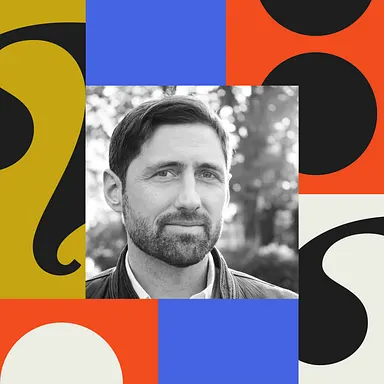
David Brooks and Phil Klay, a Marine veteran and National Book Award-winning novelist, discuss what masculinity should mean for young men today. They trace historical ideals of manhood from Achilles and the Renaissance courtier to the cowboy of early American fiction, then weigh them against the warrior image promoted by Pete Hegseth.
The conversation covers how military training forms character, why honor depends on one's role, and whether war can be separated from moral purpose. Klay describes the disillusionment many veterans feel and argues that purpose and love matter more than narrow ideals.
Listeners will hear a debate on balancing idealism with realism and on which virtues matter most.
In this episode David Brooks, Phil Klay
The transcript of David Brooks and Phil Klay on masculine virtues was made with the technology behind HappyScribe's Zoom AI notes.
Ads in this audio differ from the text. Tap the sentence you're hearing to follow along.
Synced: the text now follows the audio.
There are at least 3 important things going on in America right now. The first is men are struggling, and lots of young men are out of labor force entirely. Lots of young men are depressed. Suicide rates for young men are vastly higher than suicide rates for women. So that's one thing going on. Second, we're living with the consequences of probably 3 failed wars in the 21st century. There was the war in Iraq, the war in Afghanistan, and currently the war in Iran.
And that means there are a lot of young men and women who've been through those wars, who fought in those wars, and they're trying to live with the consequences. And so this is a culture that is hurting in a lot of different ways. And along comes Donald Trump. And sometimes I think the Trump administration is a big advertisement for a certain sort of masculinity. And it purports to be a solution to our cultural problems, that we're going to have a bunch of manly men and womenly women, and we'll return to a kind of gender relations that, according to some people, were healthier.
Personally, I'm not particularly thrilled with what Pete Hegseth and Donald Trump are selling. I'd like a different social ideal, especially for guys. I'd like a different masculine ideal than the ones being offered today. And so to figure out how we could get there to a healthier masculinity, I'm going to hash it out with Phil Klei. Phil is a Marine veteran of Iraq. He served as a public affairs officer in the Anbar province between 2007 and 2008 during the surge. When he returned home, he became a writer.
His collection of short stories called "Redeployment" won the National Book Award in 2014. His most recent book of nonfiction essays is "Uncertain Ground: Citizenship in an Age of Endless Invisible War," and he was recently selected to become the president of PEN America. It's a real pleasure to welcome Phil Klei to this table. I'm David Brooks, and this is "The Permanent Questions." Phil Klei, welcome to "The Permanent Questions."
Thank you for having me.
Manhood is in dispute. What should men be like? What should people be like?
Yeah.
How do you be honorable?
It seems to me there have been a series of social ideals that young men in particular were supposed to follow. And this was like, held up as your social ideal: if you want to be a young man, be like this guy. And so you go back to ancient Greece. You've got Achilles. He's a rageful warrior. Then you've got Pericles who's a magnanimous man. The magnanimous man serves his country. The magnanimous man is kind of a Lutheran sand office, like George Washington is our version of this.
Yeah.
Then you go to Jesus and Saint Francis. You get a very different masculine ideal, which is about compassion and peace. Jewish prophets and sages, which is like an intellectual ideal.
Mm-hmm.
And then you go to the Renaissance. You've got the courtier. There's this book. I've always wanted to write a book like this.
Casting guests.
Castiglione.
Yeah.
And how to be.
I've read that.
Courtier or something.
Yeah.
And how to be elegant and graceful and.
Sprezzatura.
And do everything effortlessly.
Yeah, right, right.
Civil rec knights, like the Lancelot. And that's an ideal. Then you get the 18th-century Enlightenment. You've got a Ben Franklin kind of guy who's like studies everything on the earth. He's curious about things.
Yeah.
And then you get my hero, the gentleman in Trollope. And Trollope novels always revolve around a gentleman who is not highborn necessarily, but who has a virtuous life. And then one of the most interesting cases in American history, it's the end of the 19th century, and America seems to go through a moral panic every time a war generation starts dying. And so the Civil War generation starts dying in the 1880s, 1890s, and people decide, we're not tough enough anymore.
We're losing the best of us. And so they start football. We're going to train people. And then Teddy Roosevelt, who was part of this masculine revival, gets together with his friend Owen Worcester. And Worcester writes a novel called "The Virginian," which invents the cowboy, the strong, silent type. And that's another version of the Gary Cooper, John Wayne type.
Roosevelt thought that, I mean, he thought that warfare was deeply important to the creation of American identity, right?
Yeah.
Like, I mean, this is his book about the West. Like, how do you make one people out of all these different ethnicities from different regions? You know, what is the heat for the melting pot to actually melt these people into one? He thought it was warfare, right?
Yeah. And William James writes the moral equivalent of war around this time.
Right.
And so I think that view was harder to take after World War I because war became so horrible. But I look around today and I think, if you ask me what is our version of a masculine ideal today, I'm not sure I could point to one that would be, well, nothing's universally accepted anymore. Maybe Donald Trump in Butler, Pennsylvania, standing up with the bloody ear. But if I was a young kid, male or female, I'm not sure what I would look to.
Right. I mean, part of the thing too is that we have these cartoonish ideals. So, you know, Hegseth, right? He seems to be performing a kind of masculine role. And this is very sort of image-focused. I mean, he talks about how he's going to restore warrior culture, and this is important for restoring warrior culture after supposedly wokeness has destroyed it. You know, it was bizarre to me when, in the midst of the Iran war not going well at all, Hegseth takes the time out to produce this high-level production video about how they're going to inject testosterone into troops and we're going to be the high-T department of war.
And, you know, that's quite different than, say, the speech in the symposium where we get Socrates as a masculine idea. And warfare is a part of it, that he is a successful soldier but also loves wisdom and he's, you know, a much fuller human being and man. I don't think it would be a good thing to have one narrow image of masculinity anymore than I think it would be good to have any one narrow image of what it means to be a good person, right?
You know, I'm a Catholic. I like the fact that the saints are a very bizarre and raucous group of people who, you know, so many of them seem to share almost no qualities with the others except for love of God. Right.
And so you do need that. But people do need models. And it does seem like the model that is on offer is not actually a kind of traditional model of masculinity, but a kind of cartoon amalgam of things.
Does it even make sense to talk about a masculine ideal? Have we entered a world where we used to say we're not beyond race? Are we beyond gender? And should we just talk about a human ideal? Or is it important to think, well, men probably need some different role models than women?
I think we experience ourselves as bodies.
Yeah.
And, you know, the bodies that we're in are the way in which we experience the world. We're not just sort of like abstracted intelligences that happen to be attached to particular types of meat of different types. So I do think it's important for people, you know, growing up to think like, how do I be a good man in this society? How do I be a good woman? It's just that that needs to be a diverse range of things and not simply, you know, sort of narrow, high-bound categories.
Yeah. I think, you know, there are some people who say, I don't see race, and some people say, I don't see gender. But I think those are both bad ideas. When you see somebody, their race or their gender are part of who they are. And they're.
Part of how they're treated in society.
Yeah.
It affects them.
And there are studies that show if you don't see gender, you have a more dehumanized view of the person. You're not seeing who they are as humans. And I think we would have common agreements about what honor is, for example. And I think of honor as taking virtuous action under risk, including sort of confidence from command. How do you think about, well, let's start with honor. How do you think about that? Presumably when you were in the corps, honor was a big deal.
Yeah. I mean, honor is, it's also about the role that you have. So it's not simply an abstract category, right? Like if you're a Marine, there are certain types of virtues that you are meant to have. It's perfectly fine, you know, to be somebody who is physically cowardly but tries to exhibit virtues and honors in other ways. But then you probably shouldn't join the Marine Corps.
You know, there are certain types of roles that demand certain things. So, you know, if you go into public office, right, there are certain ways that you should comport yourself and behave that are very different than if you're a writer, if you're a commentator, right? If you're a general commanding troops, right, the way that you speak about military politics and policy needs to be very different than if you're me throwing spit balls from the sideline.
And that's because the role that you have imposes certain obligations upon you. And I do think that, especially in the current era, there's a way in which sort of everything becomes flattened. And we're not always attuned to the way that institutions have their own ethical codes that for people inside them to be honorable, they have to live up to. I don't think that the sort of apolitical institutional ethos of the military necessarily jives with, you know, your average person's opinion of what the military is supposed to do, what it's supposed to achieve, whether they should, you know, there was this sort of perpetual, I think, especially in the first Trump administration, like maybe the generals will save us kind of attitude.
And, you know, my issue with that is the generals are not supposed to save us. If we're in a democracy and you're relying on the generals to save us, then we're not a democracy anymore. And so there's a kind of internal professional code which is very, very important that is importantly separate from the sort of broader political conversation or broader sense of like where we should be going as a nation and kind of what moral horrors we're doing or, you know, what good things we're doing.
And someone understanding their obligations in that sense is, I think, a part of honor.
There are certain institutions that are thick and certain that are thin. And thin institutions, people pass through and they're not affected.
Yeah.
You meet a Marine you know in five minutes. Somehow it comes up in conversation or you can tell.
We have been accused of being a cult.
It's cult-like, but I find in a very admirable way. Like you've got all the things that you want in a thick institution.
Yes.
You've got an origin story. There's that cabin where you guys were founded.
Tunned Tavern.
Tunned Tavern. And then there's all the history, but then there's sacred rituals.
Yes.
There's a phrase, Semper Fi. There's everything you would want. There's like ordeals people go through. And so.
There are also models, a diverse set of models for you to look up to, right? You know, you get told when you're going through training, you get told all these stories of, you know, Medal of Honor recipients and great Marines of the past who have done important things and that offer you a kind of guidepost of what you're supposed to be like.
Yeah.
Right?
And there's a saying, it's probably G.K. Chesterton or somebody like that, that every man who didn't serve feels inferior.
Johnson, yeah.
Thinks meanly of himself for not having been a soldier.
Yeah.
I feel that. I graduated from high school in 1979 and we were all watching MASH and the military seemed absurd at that time. And it never occurred to me to serve. And now I regret that. And I feel a little less for it, actually. Not that I would have been a great soldier or anything. But how would you say you were formed? Like going through this process, whether it was officer candidate school or service abroad?
Sure. I mean, one of the funny things about the military is, in some ways, like you think about it, it is the most practical, straightforward thing that we're doing. You know, like the military engages in things that are like hard power in the real world. And yet, precisely because of that, because the stakes are so high and so immediate and so direct, military training is a lot of moral formation. Yes, there's like a code of ethics.
There are ways you are supposed to be as a Marine that will mean that other people can count on you. There's a certain type of American individualism that needs to get broken down, right? Being called an individual by a sergeant instructor.
That's not a good thing.
Not a great thing in the military. You know, Samuel Huntington said, "If modern man will find his monastery, it will be in the military." And so it is one of these anachronistic institutions which has not faced this relentless pruning of all of those things that don't seem immediately utilitarian and practical, but it's actually deeply interested in that kind of formation of people. And, you know, look, some of that formation is more iffy than others.
I remember we got history classes when I was in OCS and I remember the U.S. involvement in Cuba in the early 20th century was described to me by a sergeant like this: "Cuba was a baby bird and America was the mama bird helping it fly towards freedom."
That's exactly how the Cubans put it.
Is that, yeah. Is that how the history professors here at Yale describe the early 20th century involvement in Cuba? I'm not sure.
Right. You know, sometimes when I'm embedded with troops or around any Marines or soldiers, sailors, whatever, I always think, six months ago, these kids were hanging around the 7-Eleven parking lot.
Right.
Like they somehow they are radically changed. And would you say it was actually true that your individualism, we live in a pretty individualistic culture, was, I don't know if I want to use the word beaten out of you, but somehow formed out of you?
It's not beaten out of you. And let me tell you, there are some individual characters in the Marine Corps.
Right.
But it's changed. And, you know, your sense of yourself as being a lone individual capable of changing the world, the sort of like, I mean, like Ayn Rand, John Galt kind of idea, it just doesn't apply. Like a Marine alone is not a military unit.
Yeah.
In military order, a Marine alone executes the lost Marine plan, right? Because you got to get back to a unit to be meaningful in some sense. Which is not to say that they're not individuals who are especially valuable to the unit. So I do think there is something important that does shift in your sense of yourself and just how you can impact the world, right?
I do think it's interesting that Marines, veterans as a whole, you know, it's not that they come back and they vote more, but they also join civic groups more often. And I think that's kind of a natural sort of understanding, right? Like, you know, we come back, I think a lot of political life we tend to think of as like me saying the things I believe. And that's supposed to be meaningful. And like self-expression is tremendously meaningful, right? It's deeply important.
But I always, as a writer, feel a little bit shamed when I cover people who are doing the real work of change, you know? So, you know, I've been involved in writing about people working on, say, Afghan resettlement. And I've gotten plaudits for writing about that. It's very easy to write about that. It's another thing altogether to week by week, month by month, year by year, to be working on that incredibly brutal and often really depressing issue where you are constantly encountering human misery and trying to make it better.
Where you're one of the people who is tracking legislation and what votes can be changed and what is shifting with the status of people's cases and what leverage points you can use and what people need when they get in and what kind of groups can you reach out to. And that's a lot of work, steady work that only gets achieved by people coming together in organizations over a long period of time.
I want to talk about that struggle to do change in groups.
Yeah.
And it seems to me it requires this weird balance between idealism and realism.
Yes.
There was a moment that really pissed me off. This is not a political podcast, but J.D. Vance said, "People don't fight for abstractions." That is a Republican National Convention speech. People only fight for home. I had read a book years ago called For Cause and Comrade by the Civil War historian James McPherson. He looked at 25,000 letters that Civil War soldiers wrote home. And these people were not bragging in public. They were just writing to their spouses in most of the cases. And the idea that they were not fighting for ideals would have been absurd to them.
It's an insane thing to say.
Yeah.
Right? It's not even something you need to argue at the level of ideas. You can point to examples.
Right. And so like I'm looking at some of these letters, one of them, a Pennsylvania officer, "Sick as I am of this war and the bloodshed, as much as I want to be home with you, dear wife and children, every day I have a more religious feeling that this war is a crusade for the good of mankind."
Yep.
Another Union soldier's wife asks him to come home. He gave her foot enough and he writes back to her, "If you esteem me with a true woman's love, you will not ask me to disgrace myself by deserting the flag of our Union. Remember that thousands went forth and poured out their life's blood in the revolution to establish this government. It would be disgrace to the whole American people if she had not noble sons enough who had the spirit of '76 in their hearts."
Yeah.
So there's this idealism that I think driving most people, and I think you would say in Iraq, most of the people enlisted, the complicated reasons, but you and others thought they were trying to do some good for the world.
Yes. I think that there is a host of reasons that people join the military, right? Some of them like money for college.
Right.
Right? To get ahead. And, you know, some of them, I really, really believe in this war and want to fight in it.
Right.
Right? Some of them complicated. I know a guy who protested the war in Iraq and then joined. He thought that, you know, he had an obligation as an American. And then he ended up going to Afghanistan, right? Because you don't choose where you go.
Right.
But for most people, there's a mixture of factors. And for most people, idealism is absolutely one of them. And certainly, if you have been if you've been a part of warfare, okay, which is it is the most morally consequential thing that a nation can do. If you have been a part of killing and have had people that you know killed, the why of it matters, right?
It matters a lot. And to bleach all talk of moral purpose and idealism out of that, I think is quite awful. And again, I actually do think that this kind of talk is related to the fact that we lost.
It's an interesting I hadn't thought about it that way. Because I had thought this kind of talk is related to something another administration figure, Stephen Miller, said to Jake Tapper about it like a year ago, which is, "You may believe in international cooperation and all those niceties, but war is about power."
Wow.
"Life is about power." And he basically summarized to Sidney's had it in the Peloponnesian War, the Athenians say, "The strong do what they can and the weak suffer what they must." And he's like, "Deal with it." And so it's an amoral view of war and it's almost a super macho attitude. "See how tough I am?"
Right.
And I can see through all this BS that people have surrounded it with, I see into power.
I think that's an unbelievably naive view. So my maternal grandfather was a queer diplomat. He actually he accepted the Nobel Peace Prize on behalf of Henry Kissinger because he was the ambassador to Norway at the time. It was such a contentious prize that Kissinger didn't want to receive it himself. So to kind of blunt the impact.
So your grandfather pocketed the money, didn't he?
Yeah, yeah, yeah. That would have been nice. But his next posting was Czechoslovakia in 1976, okay? The fall of Saigon had been the year before. We'd had Watergate. You'd had America going through military defeat, moral crisis, political crisis. And there were a lot of things that were happening. Czechoslovakia was a sort of interesting country. It was a small arms powerhouse. It actually provided about 10% of the small arms, the Viet Cong and the Vietnam War. It had a school for revolutionaries, was training people from, you know, all different continents in how to do revolution, was had links with the PLO, was a lot of hard power stuff.
But if you were to go back and ask what was the most important thing in terms of world history that happened while he was there from '76 to '78, you would say easily the most important thing was that a group of writers and intellectuals and former politicians put out a manifesto called Charter '77, Arguing for Human Rights. And essentially what had happened was there'd been a conference where the Soviets wanted the final borders in Europe sort of solidified. And the Europeans asked them to agree to Helsinki Final Act, a commitment to human rights, which nobody who was a realist thought meant anything, right?
Because the Soviets aren't going to give people human rights. They'll say, "Okay, we'll sign this document." George Keenan, the great diplomat, just said it was a bunch of wrangling, you know? Kissinger dismissed it as a sob to the left. Within six months, there's a group documenting abuses in Poland. Soon after that, the East Germans are asking the Soviets for support because East Germans are using the Helsinki Final Act to argue for human rights and other things. And then in Czechoslovakia, similar thing where they're asking the Czech government to live up to their own promises, right?
And one of the authors of that document, Václav Havel, is the president, right, 13 years later. And you cannot write the history of the fall of communism without talking about that.
Right.
And it's funny, during that time, my grandfather met with the Vatican foreign minister. And he said, "You know, it's really interesting, but in the wake of all this, there's been a sea change in foreign affairs where Russia, which was accustomed to playing the role of judge in international relations, now stands in the position of the accused." I think you, in terms of geopolitics, ignore the moral factors at your peril.
And if you think that the only thing that matters is power, hard power, you're a fool. How many divisions has the Pope? Ask Stalin, right? But the Catholic Church is still going strong, much better than Stalin's project.
Right. Yeah, I covered the end of apartheid in South Africa. And I once asked somebody there, we had this big debate in the US about sanctions. And do you think they helped end apartheid? He said, "You know what really did it?" And the effect of sanctions, it was not the economic sanctions. It was the sports sanctions that our teams could not play and we felt shame, like we're being we are worthy of shame. And the same in the Soviet Union. I covered that too. But the question I wanted to ask you, and this is in the military, but also you're doing anything. You're doing any kind of social change.
And you're driven by and partly by ideals. But then life is just hard. And I think every soldier in every war thinks these idiots are fighting this badly. They're not protecting our lives, right? When you're doing social change, you know, you're trying to tend to the homeless. And homeless people, like all humans, make stupid decisions some of the time. And so you win some and you lose some. And it's easy to get ground down and lose your idealism because the reality is so hard and everything takes so much longer than you think it was.
So how do you maintain idealism within circumstances that are almost tailor-made to disillusion you?
I think it's quite a painful process. I do think it's an important one. You know, Derek Walcott in his Nobel speech says, "Shadow of Oz and the love that pieces it back together is greater than the love that admired its symmetry when it was whole." If your ideals can't take a battering, then they're not much. So forging a hard, realistic idealism, it's the task of anybody who wants to take American citizenship seriously because I love this country passionately.
This is a complicated country with a complicated history that's done a lot of evil and is doing evil and also has done a lot of good and has the potential for doing a tremendous amount of good, right? And so taking that seriously and thinking it through and also understanding that the evil that we do as a nation, even if I disagree with it, does reflect on me.
I've always admired the way the Greeks who did a lot of fighting developed this tragic sensibility.
Right.
And they wrote a lot of tragedies and they thought tragically that we're all flawed and we all do stupid stuff. We are all tempted to do really savage stuff and people around us are going to do savage stuff. And it gave you a sense of humility, I think.
Yeah.
It also gave you a sense of caution because, as Thucydides argued in politics, the lows are lower than the highers are high, which means when you screw up, the pain is much worse than the benefit you get from when you do something right.
Yeah.
I've always been impressed that Albert Schweitzer was this he was an organist in the 19th century. He decides to become a doctor and serve the poor in Africa and goes down there. And he says, "We never hire anybody who thinks they're doing something wonderful. We only hire people who think this is a job that has to be done the way you have to do the dishes."
Yeah.
And I've always admired, again, that sensibility is a sturdy form of idealism.
Yes.
That can survive contact with reality.
I remember talking to a veteran teacher, like 30 years in a very difficult public school in New York City with very disadvantaged students, a lot of issues within the school. And she hated those movies where like some like new young teacher goes in and saves everybody. And she's like, "I never saved anyone," you know?
She goes, "I'm creating a space," right? I think it was like my porch.
Yeah.
And sometimes there's a student who's all the way on the other side of the road. And it's not even like a normal road. It's like a, you know, eight-lane highway. And my dad's like, "Come over to the other side of the road," you know? You hear that from a lot of people. This is no work for Messiah.
Yeah.
Right?
I want to get a little back into your autobiography because there are decisions you made and conditions you now live with that I want to ask you about. The first is when you enlisted to go join the Marines. And the war starts, the Iraq war starts in 2003.
Yes.
And I was a supporter and wrote columns about why it was a good idea. I lived through the democracy in Europe, Soviet Union, and South Africa. And I thought, why should the Arab world not get to enjoy what the rest of the world is going through? And that was my basic rationale. I wrote in April 2004 a column confessing I was wrong.
Yes.
And this I mean, I can't complain. It was hard. It was even for me, I'm not over there serving. I'm not doing anything, but I'm just writing. But it was really hard to admit that I'd made a mistake on this big issue in which people really did suffer. So that was 2004, April.
Yeah.
You joined May 2005. You joined at the bottom of the war.
Yeah.
And I wanted you to talk about that. But then you come home after service and you have this moving passage, I think in one of the essays here in Uncertain Ground, where you walk through Arlington Cemetery and you go through the Civil War graves and you think, "Oh, they ended slavery." You go through the World War II graves. You think, "Oh, they defeated fascism." But then you go to some of our more recent wars and it's more problematic, complicated, let's put it that way. So first, what drove you to enlist at the bottom of the war?
And second, when you come out, a war that we lost, sort of.
Yeah.
How do you live with that?
The feeling was anger, okay? Anger looking at those graves.
Because of the way the country had treated.
Because of waste. You know, it's very funny. Probably at that time, I thought of those people as like my peers. I have three kids now. So I think of them as children now.
Because a lot of them are so young. And some of them died in efforts that, you know, I remember there was a journalist who was with a Marine unit in Afghanistan during the surge in Afghanistan. And one of the Marines there says to him, "This war is stupid, so what? Our country's in it." And you know, that's a guy who thinks this the second we leave, the second we leave, this is going back to the Taliban, you know?
And they're out there walking over ground where there could be an IED any day. And they're losing friends. And that's not the failure of that young Marine. That's a collective failure and it's a failure of leadership. So yeah, what do you have after a failed war except regrets and rage at the waste and suffering caused? But you asked about why I joined. So I never wanted to join the military as a kid.
I was never one of those kids. I wanted to be a diplomat like my grandfather. But family has a big respect for service, much of my grandfather. My dad had been in the Peace Corps, which is not quite the Marine Corps. My mother worked in international medical aid for a long time. And actually, I'm one of five boys. And three of us end up joining the military, two Marines and one Army. And so I go to college September 2001.
So 9/11 happens. I'm actually in the woods. So while all of America is experiencing this kind of in real time, it's this like horrific media event. We have these images on repeat and you're waiting to see what happened. And I'm in the woods. And then we meet people who are like, "Somebody flew a plane into the World Trade Center." We're like, "You can't fool us just because we're out in the woods." So I come out and the world has changed. And very quickly, we're at war in Afghanistan. And very soon, we're going to be heading into war in Iraq.
So I decide that if I want to serve my country, the thing to do is to join the military. So I do my training in the junior summer, so 2004. And then when I graduate, you can either accept your commission or turn it down. And I supported the war in Iraq for actually much of the same reasons. I was sort of compelled by the, I guess, the humanitarian case for war. You know, this is an evil dictator. There's only going to be continued suffering under him.
And even after he dies, there's no good option and blah, blah, blah, blah, blah, right? And so therefore, this is, you know, the evils of war are going to be weighed against the evils of the perpetuation of this regime, which is not just bad for its own people, but for their surrounding regions, so on and so on. So I found that compelling at the time. And then, of course, we go in and very rapidly becomes clear that this was not well thought through, that I think Donald Rumsfeld is a pretty disastrous Secretary of Defense who never really seriously grappled with or tried to source resources for dealing with the kinds of issues that were foreseen.
And so we have an escalating insurgency. And in a way, that made things easier for me because when I joined, it wasn't like, "Should we be at war or not?" It was, "What do we do now?" And I thought I could make things better or be a part of an effort to make things better. I certainly felt that we had a clear obligation to Iraq to try and bring down the level of violence. So yeah, so that's what I thought at the time.
Yeah. You were in Anbar, which is where the surge was happening. And if anything was successful in that war, I would say the surge was successful.
Right. So we left feeling like we were winning, right? We went into a very violent place. And I was not doing anything. I was a public affairs officer. I was a staff officer, you know? So I was doing a very safe job in a very dangerous place, right? Would probably be the way to put it. But I saw a lot of the region. I saw, you know, a certain range of things. So when we came in, Anbar was the lost province, right? And the unit that was doing base security for us, which was this National Guard unit, I remember they arranged like a video teleconference to a town hall back home. Their families back home, you know, the families are all excited.
And I remember the battalion had hand-picked guys to represent the battalion to their community. So these are not like, you know, your worst sergeant or whatever. And they were all just like, "What do we tell them?" You know, because these guys have been through all 2006 and they're like, "What lies do we tell them?" Because we can't tell them the truth, right? And then they start like, "Well, we'll tell them the truth when we get home." Will we tell them the truth when we get home? How long, you know? And then the unit that replaced them came in mid-2007. So violence was just dropping off a cliff in Anbar and they left feeling like rock stars, right?
And I left feeling like we're winning and we've cracked the code and we've got the data scientists to show and the strategy is sophisticated. And I remember in 2009 talking to a Marine who was heading over to Helmand Province, Afghanistan, and asked him, "How are you going to be successful in Helmand Province?" Right? And he said, "Through cultural effectiveness," which is, of course, what he was being taught, you know? It's like a young kid. And of course, you know, he goes into a very violent deployment.
You come out of that and you mentioned the rage you feel, which I assume is rage not only for leadership, but there's some disillusionment.
Sure.
That you go through. And one of the things that struck me is this disillusionment, the sense of bitterness, and I've encountered it in many veterans of that war, both those wars, is somehow overlapping with a larger male disillusionment. That you look at the male statistics, they're not great. And I mentioned some of them, but, you know, the number of young men who are committing suicide, the number of young men who are out of labor force, the number of young men who, you know, are graduating from college is much lower than women.
And so there's a general sense of disillusionment and which in some ways, you know, if you went through the war, that's a different and stronger form, but it is grappling with a country that has let you down. Let's put it that way. And so how have you experienced that? And I think and when you talk about the rage, I imagine it's not only Donald Rumsfeld and George Bush, but you talk a lot about just the whole system, the way we are, the military is so divorced from civilian life these days.
So I think there's alienation, which is a little bit different than disillusionment, right? Alienation is just, I think, part of that divide between soldier and citizen that people can sometimes feel, which is important, I think, which happens after every war, right? And also, I think alienation from the person you used to be in the community that you're from. I mean, Odysseus comes back to Ithaca and doesn't look like he remembers and the only person who remembers him is his dog.
Right.
So this is not unique to modern warfare. But the disillusion, it does come from being offered the most meaningful thing and then having it mean nothing.
What do you mean by that?
So, you know, I have a friend who's talking about like everybody wants purpose, right? You don't just want states of hedonistic pleasure, right? That's not a life. You want a meaningful, purposeful life and a sense of identity. And the Marine Corps offers you that. It offers you an identity and it offers you a war that is supposed to achieve grand things.
And when you are overseas, the stakes are life and death. What could be more meaningful? I have a friend, he's a novelist and essayist, Elliot Ackerman, who served in the Second Battle of Fallujah and Special Operations. And he talks about war as like it's like free basing on purpose. It's like the pure, raw, uncut heroin of purpose, right? You know, the decisions you make could mean somebody alive or dead. And then you come back. And it's not just that civilian life feels not that freighted in every interaction, though that is a problem, right?
I mean, I think that there is a kind of thing where sometimes in the military, and it's a dangerous temptation, there's this contempt for civilian life. You know, it's almost like, you know, you come back to civilian life and if you just put a mountain of salt on everything that you ate, I could take you to the greatest restaurant in the world and you would take a bite and you would say, "It needs more salt," right? But it's not that it needs more salt. It's that your palate's messed up, right? So there's like this sort of thing of like, all right, like civilian life is really important.
And also, it's really hard in different ways. You know, one of my friends, his hardest leadership challenge was when his National Guard unit, when the deployment to Afghanistan was canceled. Because there were a bunch of guys who were like, "I was really looking forward to putting all the issues of regular life on hold and being like, you know, sorry, babe, I'm in Afghanistan."
Right.
So there's that, which is the way in which you can sort of alienate yourself from civilian life, can lead to a kind of disillusion or an inability to see the fact that the only reason that you fight in the first place is because a normal, boring, unexceptional civilian life is a beautiful thing of infinite value, right? We used to say in the military, like, "America's at the mall while we're, you know, while we're at war."
And I remember being in a Bye Bye Baby not far from Walt Whitman's house. And, you know, trying to figure out the difference between like 6M and 3-6M onesies and thinking like, "Huh, we're at war and I'm at the mall," you know? But like my baby needs clothes.
Yeah.
So there's that. And then there's the sort of broader question is you're in war. You're making decisions over life and death. You know people who died and then it failed. So even though it felt like the most important thing, none of it mattered in terms of that higher purpose that you were supposed to be fighting for that was the only reason to send you there.
Yeah. And I would say you had purpose and then sort of had it taken away.
Yeah.
And I would say a lot of young guys never had a sense of purpose.
Yeah.
If you know why you're here, then you can handle whatever setbacks. But if you don't know your why, then you really don't know.
Yeah. It's purposeless suffering that's unendurable.
And, you know, 58% of college students say they have no sense of meaning in their life.
And also at a broader level, I think that there's a kind of general question about like, you know, America has always been a project towards the future, towards a more perfect union. There's this sort of question of like what America is in terms of the sum total of its parts is not what America is, right? What America is, is that collective effort towards something. And I feel like that is an undernourished idea in American political life.
This sort of idea of these founding ideals, abstractions, feels less present for us, right? What kind of nation are we trying to achieve at the broadest level? And then, you know, there's the questions of individual purpose within our lives in, you know, modern America.
Yeah. And I would say, you know, it's famously said that what is true of America, that we're incredibly cheerful and optimistic and upbeat. And that is no longer true after maybe because of the defeats we've suffered. But I think that sort of that sense of pessimism and alienation, which is quite widespread.
And also another thing about education, you know, there is a kind of relentless utilitarian pressure on education, right?
Right.
Which, of course, makes sense because like it's a tough world out there. You got to get a job. You got to make a living, right? If you go to college, you got to pay for it. College is unbelievably expensive these days. But for a young person, it's like, all right, there's this somewhat meritocratic system that you're going to put an unbelievable amount of effort into, right? And the education that we're giving you bleaches out the sort of humanistic disciplines day by day, which are the ones that are all about what life is actually for, that are trying to attune you to notions of meaning, purpose, and beauty.
But that kind of division is all I feel like it's only more intense. Education has become more utilitarian, has had more of that pressure put on it. And yet it is the humanistic disciplines, right, that are ultimately so important for giving us a reason to want to do any of that stuff.
Right. And I think that's why I admire the Marines or soldiers, sailors, whatever. For a young person today, I think they need the kind of, and we all need this at no matter what age, the kind of moral seriousness that you mentioned that if you're in the Marines or whatever service and somebody's getting killed, you have to know, "Will this person risk their life for me?" I mean, that is the core of the integrity and that's the core of courage and that's the core of honor. And if you don't put that in front of young people, and I think especially young guys, that, you know, the society may be screwed up in a million ways, but today you can behave honorably or not honorably, courageously or not courageous, compassionately or not compassionately.
And so everything is a moral test. And it seems to me a lot of the alienation we see among young men is not knowing what virtue should I shoot for? What's relevant in my life? And I have this argument all the time with people. What's the key virtue? We all have our own recipe of virtues. I know a lot of people who say courage. If you don't have the courage to overcome risks, you're not going to take chances in life. You're probably not going to ask somebody out on a date. Like things like courage is really important. My own personal favorite is humility. I think that's the core virtue around which all others are based.
And to me, humility is not thinking lowly of yourself. It's having radical self-awareness from a position of other-centeredness. It's the ability to step outside yourself and say, "Well, I'm actually kind of strong in this realm, but I'm actually kind of weak in that realm." And so you know yourself accurately and you know what you need to work on. You know what you can do and how should you divert your life. I think Abraham Lincoln was a humble man, but he also knew he was kind of special in some ways. And so I don't know how you would think about the virtues in your life or the virtues you saw around you or the virtues you see celebrated in civilian society, which you're now a member of.
Love.
Oh, interesting. Why do you say that?
I mean, I think that's what everything decent flows from.
Now I realize I have to update my answer with you said word.
And by the way, you know, it's interesting. I mentioned Elliot Ackerman earlier. He was talking to me about courage, right, which you mentioned as the primary virtue. He was saying like, and Elliot's got a silver star and a bronze star and has done outrageous things. And he was talking about in the Second Battle of Fallujah, a Marine has to cross this highway, right? And it's very dangerous because it opens a lot of places and he gets shot. And another Marine goes out to pull him and that Marine gets shot too.
So now it's pretty obvious what's going to happen if you try and rescue those guys. There's an enemy sniper waiting for you. And another Marine goes out and pulls those guys back. And Elliot was saying like, "Why do people do that?" Because there's fear on the one hand. And then he goes, "On the other hand, there's courage." And he says, "I've never felt the emotion courage, right? That's not a thing. I'm never feeling brave today."
Interesting. Yeah.
He says, "Why did somebody do that?" Because they love each other, right? When you are in this tight-knit unit that's trained together and been through these things, you develop this intense bond and love for one another. And that for him was the opposite of fear.
Yeah. It's so interesting you say that. Again, my head is full of studies. It's not a good way to live. But there's a famous study called the Grant Study, which was done at Harvard. And they took young men. In those days, Harvard was all male. And they followed them through their lives. And among Harvard underclass were people like John F. Kennedy, Ben Bradley, who edited the Washington Post. Because they graduated into the war, a lot of them enter the army or whatever. And they want to figure out what traits correlate to promotion in the military.
And they think, "Well, is it IQ? Nope. Physical strength? Nope. Is it courage to the extent that they can measure this? Nope." The number one factor that correlates with promotion in the military in World War II for these men was love of mother, warmth of family home.
That's amazing.
And basically, the guys who had learned love from mom knew how to extend love to their men.
Yeah.
And, you know, when you talked about the utilitarianism of our educational system, it seems to me we've downplayed like to me, school should be about helping students find things to fall in love with.
Yes.
That by itself would, especially people who are adrift, that would give them direction because, you know, yeah, this is what I love. I don't know. Is it too probing or intimate to ask you if you had to come up with your own list of the things?
Things that I love? Family, right? My wife and kids and broader family, my friends, my country, books, novels, a good sentence. I'm coaching two soccer teams right now, two little league soccer teams right now. And I'm loving that with my mother-in-law as my assistant coach.
Oh, really? Wow.
Yeah.
I think over the last 26 years, we've been in this century, or maybe since 9/11 when the 21st century really started, we have taken some blows as a country.
Yep.
And we've become more alienated and disillusioned. But I do think these eternal verities apply and that human nature hasn't changed. And the seeking of these kind of moral virtues, but just plain old love, falling in love with things, that would go a long way to making young men and young women live in a better society. I don't know if you're hopeful.
I'm sort of short-term pessimistic, long-term optimistic, you know? I say that. I've been writing about warfare for my entire career. Nobody's taken my advice yet. But, you know, maybe my kids will figure it out. They're pretty smart.
Okay. Well, Phil Klein, thank you for being at our table at The Permanent Questions.
Thank you so much.
There was a moment in the middle of this conversation that I will not soon forget. I was talking to Phil about what he felt when he thought about how the lives of him and the men and women he fought with in Iraq were treated. And the word that came out of his mouth was rage. And if you're listening to this without visuals, you may have heard long silences. And that was Phil trying to collect his emotions. It's been a long time since he's been in Iraq.
And it very clearly, those emotions were still on the surface and very raw. Phil once wrote that when you enlist in the military, it's an act of faith toward your country, an act of faith that your country will guard your life and protect you and treat you as the precious thing you are. And I think for Phil and for a lot of people, the veterans of that war, Afghanistan, maybe some of the others, that act of faith has been broken by a country that was not careful in protecting and caring for the men and women who enlisted in these battles.
And you can see the rage at this betrayal still close to the surface in his mind and I think in a lot of people's minds. And I was also struck by when I asked what his core virtue is. And he did not respond with bitterness. He did not respond with alienation. He just said love. And I take that to be a very hard-headed rejoinder to what happens when you begin to lose faith. You find things to love and you remind yourself why despite it all, you love your country.
I found it very moving, that mixture of rage and love. So thanks so much for joining us for this week's conversation with Phil Klein. The Permanent Questions is produced and edited by The Atlantic in partnership with Yale University. New episodes of The Permanent Questions come out on Sundays. You can subscribe on The Atlantic's YouTube page, Apple, Spotify, or wherever you get your podcasts. If you want to support this work and the work of my colleagues, you can subscribe to the publication at theatlantic.com/listener.
See you next week.
One of the things that President Trump seems to admire most about his embattled defense secretary is Pete Hegseth’s vision of warrior masculinity, a vision Hegseth has attempted to impose on the military, through the firing of qualified high-ranking female officers, the denigration of long-established rules of engagement, and even the proposed screening of service members’ testosterone levels. These efforts are taking place at a time when many young American men are facing a very real crisis, but they don’t seem to have landed among their target audience: Male voters under 30 swung 40 percent toward Democrats in the midterms, one of the election’s largest such demographic shifts.
In this episode of The Permanent Questions, David Brooks talks with Phil Klay, a Marine Corps veteran, National Book Award–winning novelist and story writer, and close observer of the effects that our 21st-century wars have had on American soldiers. Klay explains why Hegseth’s version of manhood is bad for men (and the military), why warfare can never be stripped of its moral meaning, and why love is the greatest masculine virtue.
- - -
Get more from your favorite Atlantic voices when you subscribe. You’ll enjoy unlimited access to Pulitzer-winning journalism, from clear-eyed analysis and insight on breaking news to fascinating explorations of our world. Atlantic subscribers also get access to exclusive subscriber audio in Apple Podcasts. Subscribe today at TheAtlantic.com/Listener.
“The Permanent Questions” is produced and edited by The Atlantic in partnership with Yale University.
Learn more about your ad choices. Visit podcastchoices.com/adchoices