
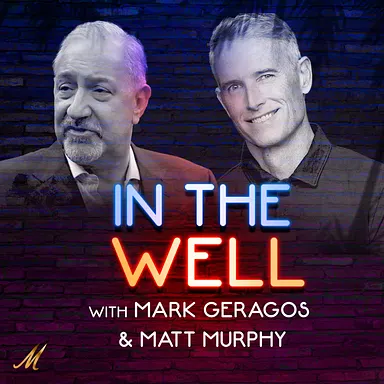
In this episode of In The Well, criminal defense attorney Mark Geragos and former sex crimes prosecutor Matt Murphy discuss the Cornell 7 case, a sexual assault allegation involving Cornell University fraternity members. Murphy explains the two-part ethical standard prosecutors use before filing charges: subjective certainty of guilt and a reasonable belief that a jury can convict beyond a reasonable doubt.
The pair debate the different duties of prosecutors and defense lawyers, the original investigation, a civil lawsuit that named a former fraternity president, and Attorney General Letitia James's role. Murphy also describes his fraternity's date rape education program.
Listeners will hear the lawyers' arguments, which are opinions rather than settled findings.
In this episode Mark Geragos, Matt Murphy
The transcript of this Cornell 7 episode, featuring Matt Murphy and Mark Geragos, was made with HappyScribe's AI note taker technology.
Ads in this audio differ from the text. Tap the sentence you're hearing to follow along.
Synced: the text now follows the audio.
Welcome to In The Well, and I couldn't be more pleased, no offense to Ashley or Lauren or Alexandra. I've been waiting for Matt Murphy to get off of, and I mentioned this, Matt, I remember in middle school having to watch The Endless Summer. Why? I don't know. But they used to play it in the auditorium in public school. And I feel like you've been on The Endless Summer. Welcome back. I've missed you. I purposefully did not call you, even though I said I would when we were texting, because I have so much pent-up demand.
You know, I leave you for like two weeks, Mark, and I leave you unsupervised, and then you're like, you're releasing evidence. You know, and we had, I thought we had an agreement that when we were going to illegally release evidence, we'd only do it on our show. Because God knows Harvey Levin depends on you for releasing evidence. I leave you unsupervised, and all hell breaks loose. You're the one that's supposed to be supervising me, Mark, not the other way around.
Right. Right. I know. That's, it's funny how life has changed. And if you believe Harvey, he's carrying me and blah, blah, blah. Matt, I have missed you. You took off at the exact time when your insight is the most valuable. Because you might remember, I've used this, I use the kind of internal calculation. What would Matt Murphy do? And that's, you know, in terms of a prosecutor.
What would Matt Murphy do with, of course, what we're talking about is Cornell 7?
Well, gosh, Mark, first of all, before we even get into that, let me be that boring guy at the office around the water cooler. I got to show you some vacation photos. So for the audience.
Oh my God. Can you show the one of you with that coming right down?
Yeah, I think we got it. Natasha, can we scroll through some of these? I want to share with the audience, get my surfer credibility in. So for the group, what Mark's talking about, I went to Indonesia. I've got an annual trip with a bunch of guys. We go to Indonesia every year. And this is our 23rd trip, Mark. And I can't believe we've done it this many times. But we go.
Annually? That's 23 years?
23 years with the same group of guys. I love them. I miss them when I'm not with them. And what we do is we charter a boat and we go out and we surf some of these.
Oh, there it is.
Yeah. So that is a place called The Hole that's off Sumatra. And we can scroll through these. So this is, we go out on the boat and the very first day, yeah, here's some others. These are the highlights. This makes me look like a far better surfer than I actually am.
I was going to say, it looked like you got some game there.
Yeah. And one of the guys.
My favorite. Natasha, is there a way to zoom in on his face on a couple of these? Because there's some real determination on that wave.
Yeah. On this one, I think it's pure glee. It is. On that day was as fun as it looks. But I got to share this story with you, Mark. So we're out the very, very first day. We're at a place called Bintang. And Bintang, okay, that's my buddy Mike DiNicola. He's a professional artist, and he used to surf professionally, Mark. So I surf with my buddy Mike, and it's equal parts. Like I'm learning watching him. He used to surf against Kelly Slater. He's a good friend of Kelly Slater's.
And he's Kelly Slater level. I am not Kelly Slater level. So every time I surf with Mike, I am inspired. I'm in awe. And I think I should probably quit surfing because we're only like a month apart age-wise. He's got all the talent in the world. I've got no talent. I've got middling skill, but it's just an awesome trip. So we go out, Mike and I are surfing this place called Bintang, which is the beer of Indonesia on the very first day. And there's critters in the water in Indonesia or tropical places.
Like you see sea turtles that'll like pop their head up, and every once in a while you see like a little shark fin swim through. And we saw something that looked weird. I thought it was a turtle, and it keeps popping up. We did a little scuba diving too. And my buddy Jeff, who's a very experienced surfer, he's like, guys, I think that's a crocodile. And I'm like, it's a sea turtle, Jeff. And play this saw, the next saw, Mark is going to love this.
Wow. So that's at a place called we're surfing Lance's Left. That's at a place called Lance's Right, right around the corner. And it turns out it's a 14-foot saltwater crocodile. It's about 30 feet away from us. And I'm like, oh, it's a cute little sea turtle. Jeff's like, no, man, it was a crocodile. And we didn't believe him. So anyway, I survived that. I'm back.
Well, I was into, you know, you almost opened yourself up. I thought you were going to shark, and then there was going to be a whole professional courtesy joke, a lawyer joke. Lawyer who surfs and sees a shark, you know, that's.
I don't know how crocodiles feel about lawyers, Mark, but I got some of the stuff that's happened while I was gone. I've got some pretty strong feelings.
Well, let's just start, by the way, with what we're referencing is this, well, you start. You start. I won't even ask a leading question. While you were away, Matt, anything strike you? How's that for.
Oh my goodness. So we've got this case, the Cornell 7 case. And what Mark's referring to for the audience is, before I went to homicide, I worked in the sexual assault unit. And sex cases, it's a real niche in criminal law. And a niche among niches would be what we would have referred to back in the day as date rape or acquaintance rape, where you have like vague issues of consent and alcohol and people that are facing.
You're old enough to remember that case, Matt, the case back, I think around 2000 or 2001, where I think it started in the juvenile court, where California basically said that consent really lowered the bar on consent in terms of what it required. But you're so right. You were the, I used to call you the, for those who don't know, Matt and I had many of those cases. And I used to, one of my favorite jokes is Matt would have filed criminal stalking charges on Romeo if he had been around when Juliet was there.
Probably would have, but then the problem is Mark would have talked me out of it, as Mark did plenty of times when I'd, he'd come in and it'd like, it's like, goddamn, and I know that Mark is going to say something on this one. I'm going to hold, I'm going to hold firm. And then Mark would speak reason. And we were almost always able to work out a deal if you got people that are being reasonable. Okay. And that's another thing about, so these cases would actually be presented to me for many, many years where you sit down with the detective and you talk about the potential for a criminal conviction and the ethical standard for filing.
A lot of people don't know this for a prosecutor is number one, you must have subjective certainty that the person did it. And number two, you must have a reasonable belief that you can convince a jury beyond a reasonable doubt under the law of whatever state you're in. Okay. So the first thing that you have to do as a prosecutor, and I kind of want to walk through this Cornell thing, is you must divorce any decisions from your emotions. Everybody's against rape, at least anybody in a prosecutorial capacity. Everybody's against sexual assault. Everybody thinks that behavior, like especially some of the stuff we saw in some of these text messages, is abhorrent.
We're all there. Okay. But you have to divorce emotion and you have to coldly and methodically go through the evidence in a case like this and think, did these young men commit sexual assault? And step two, is the evidence strong enough to convince a jury beyond a reasonable doubt? And if the answer to either one of those questions is no, then you cannot and should not ethically file a case like that. Okay. So.
By the way, just to highlight, is you and I have talked about this countless times, but I'd be remiss if I didn't mention it. The prosecutor has a different ethical north star than the defense lawyer. And you want it that way. Our system is predicated on that. You want a prosecutor who like Matt, if they don't really truly look at the evidence and say, I can get a conviction beyond a reasonable doubt, I have that kind of mindset, then I'm going to walk.
The kind of public blowback be damned. Isn't that correct? As opposed to a defense lawyer who is public blowback be damned, I'm here to zealously defend my client.
It is perhaps the most important job of any prosecutor, Mark, and that is fundamental fairness. And a lot of times that means standing up to an angry mob and you have to make that unpopular decision. And one of the units I rotated through in my career was I went through the gang unit for a brief time before they moved me onto the felony panel. And Mark, you'll remember this, there was a thing called the target program where what they would do, law enforcement would target gang leaders.
That's a good memory. As soon as you said that, I knew where this was headed.
Yeah. Look, and I was a hundred percent for that. And you'd see these older gangsters, the ones that were the real psychopaths, and they would recruit the younger guys. And they were an absolute cancer to the communities in which they lived. And I supported the target program.
And the system created that. You want to explain how?
That's right. The California State Legislature passed Penal Code Section 186 or the Street Terrorism Act, where they would basically go after gang leaders. And I'll tell you, it worked. But when you're a prosecutor using that two-step process that Mark and I were just talking about, sometimes you would have really enthusiastic detectives and you'd have a really bad guy, legitimately really bad guy, and they would put, sorry, I got to swear here, a completely bullshit case on your desk. And, you know, and say, and you look at it and be like, what is this piece of crap?
I'm not filing this. And this is important for the Cornell case. They'd go, yeah, but this guy's an asshole. And I cannot tell you, Mark, how many times I butted heads with detectives. The, yeah, but this guy's an asshole thing is not an element to a crime. You don't get to introduce that. That doesn't come in as big of an a-hole as that guy might be, or in this case, as abhorrent as the behavior was. You know, and Mark, just quick lore story, I had one case that stands out. Remember those Carl's Jr. little plastic numbers?
You place an order at Carl's Jr. For East Coast audience, that's a big burger chain in California, Carl's Jr. You make your order and they give you these plastic number thing that you put it on your table and your order's ready. So like number 47, they did a probation search on one of these gang leaders and they wanted me to file a 496 for the audience. That is a felony possession of stolen property on a plastic fricking Carl's Jr. tag. And I'm like, I am not, I can't do this with a straight face. And I got the, yeah, but this guy's an asshole thing. You can't file a case because somebody's an asshole.
You can't ethically file a case because somebody's an asshole.
The first cousin of that, of the, yeah, but he's an asshole is the, if he didn't do this, he did, we know he's good for something else.
Right. And that's called injustice, right? And that's another thing. Nietzsche has one of my favorite quotes, Mark. You've heard me quote him many times on this. Those who endeavor to fight monsters must be careful, lest they become monsters. And fundamentally, when we're talking about campus rape, the idea that some guy could rape a woman on campus or anywhere else and get away with it, what gets us is the injustice of that. It is fundamentally an injustice. That's what gets our blood boiling. It's not fair. It's not right. And I dedicated my professional career, guys, to going after sex offenders and protecting victims of sex crimes.
Okay. But when you, when in the idea of going and fighting injustice, as soon as you start abandoning due process or fundamental fairness, you are now creating injustice in the idea of fighting injustice. And in Nietzsche's view, in other words, to go fight monsters, sex offenders, you have now become a monster. You are now generating injustice. And that's not the way that this can work.
Well, remember the LAPD Rampart scandal? That became the whole theme for LAPD Rampart is that the, while fighting the monsters, and that's why all of a sudden people were getting phony, you know, evidence put on them, having all kinds of, you know, people were aghast at it. And the argument always was, how could this happen? How could this happen? There's gambling here in this establishment.
You put your finger exactly on it. When you don't rigorously apply the standards that you have to, is when you get to these kinds of basically bowing down to the mob.
Yeah. And you cannot bow down to the mob. Mob justice is injustice every fricking time. It's like my cop case that I just did in LA, Mark, where, you know, Black Lives Matter. It's like, okay, we had a white police officer who shot a black man, who turns out it wasn't a firearm. Okay. But the idea that we're against that, we're against police officers unfairly shooting people, that doesn't mean that then you go convict an innocent man because we're against it. Because we're against campus rape does not mean that you can prosecute a case when the evidence does not establish proof beyond a reasonable doubt.
Okay.
So I want to drill down on that even more because what was driving me crazy while in your absence, and I may have even invoked you, and now we'll see how well I know you after five years. I said, the idea, you know, who am I to, you rarely, do you rarely see me taking up for a prosecutor? I don't know. I mean, this Thompson County, I don't know the Tompkins County prosecutor from Adam. I don't even think I could pick him out of a lineup.
But can you imagine, I used to say, I've told this to so many people, the, somebody coming in, a cop coming in, having a robust investigation to begin with, or at least just getting the text messages and having a text message where the purported complaining witness is saying, everything we did sexually was consensual. A real-time text message that says that. Can you imagine Matt Murphy saying, yeah, I'll just put that aside because she could evolve around that later on?
I mean, you know.
No, it's, look, let's, and let's look at it. He's gotten so much, I saw an interview between him and Jake Tapper, where Jake Tapper clutched his pearls and said, I have a daughter and I can't believe you didn't do more. I have.
How long would that make you? I've got a daughter. I got granddaughters. And Jake Tapper was so ridiculous in that interview that me, who never misses an opportunity to slam a prosecutor, as you well know, I was like in sense. In fact, I don't know why he didn't get more in sense.
That's all, right. And the DA, and I can't even remember his name, he handled that pretty well. And he said, I'm bound by New York law. Okay. So let's talk about that just for a second. What was he presented with? He had a six-page statement, sworn under penalty of perjury, where this woman described a crazy night where she engaged in consensual sex, according to her, with several young men. And her concern essentially was she believed that she had voluntarily consumed so much ketamine that she wasn't capable of properly consenting.
Okay. And this is important for everybody to understand. Under New York law, voluntary intoxication is a significant factor in determining whether or not an intoxicated person can be raped. California has a different law, but, and whether, I bet New York winds up changing their code on this, Mark. I wouldn't be at all surprised, which is fine.
Well, remember, point out that case. Remember the case at Stanford. That is a good way to put Exhibit A, Exhibit B, California, New York.
Yeah. And look, and personally, I think that a woman who is voluntarily intoxicated to the point of unconsciousness, it should not be a defense if somebody takes advantage of that and then rapes her. That's the way it is in California. And Mark, I've argued those before. And just so the viewer understands.
I was just going to say, Matt, I, if they, for those who don't, aren't in the weeds on your history, Matt was truly in Orange County, a take no prisoners sex crimes prosecutor. Before he became kind of, everybody knows you as the homicide guy. I know you as that young swashbuckling, you know, good-looking prosecutor who I hated to have on my cases because.
Dashingly good-looking, Mark.
Trial was always a problem. I'd have to bounce every eligible female and their mothers.
No, but no, that's right. Look, I've prosecuted day rapes before. I've done numerous day rapes. I did 17 trials while I was in the sexual assault unit, and several of those were in fact day rapes. I've lived this. I have listened to the victims. I understand how this works. And I'm going to go even a little bit farther here, Mark. Back when I was at UCSB, I joined a fraternity and I was, I stumbled in as a fall quarter freshman. And the, you know, I'm going to talk about this at the very end of our show today, but I lived in my fraternity for four years.
And, you know, the fraternities right now are so, they're getting so much heat. And a lot of people that walk by a fraternity party during college who are now on CNN bashing fraternities, my fraternity started a date rape education program called Greeks Against Rape. My sophomore year, Mark, and I'll go into that a little bit more, but the idea that fraternities are somehow this, like all these guys twisting their mustaches next to.
A rape petri dish, right?
That it's a rape petri dish. In fact, they are the exact opposite. And I will debate it anytime with anyone. I lived in my fraternity house for four years. They're some of the best people I've ever met in my life. We raised money for the Make-A-Wish Foundation and for handicapped kids. And we kept the Galeta Valley Boys and Girls Club afloat. And we coached Special Olympics. And among the things, my fraternity created a program where we basically, we realized, and let me just back up again, Mark, when I was a fall quarter freshman, we had a woman from the UCSB Women's Center who came in to speak to the students about rape on campus.
And she was angry. And she was, you could tell that she did not like men. And she began basically by telling us some of the statistics and scolding every man in that room for essentially being a de facto rapist. And when she saw my pledge pen, I was the devil in that room. And Mark and I, look, Mark, you and I communicate for a living, right? Our job is to stand up in front of juries and have people have an open mind and follow the law and explain what the evidence and the facts were.
And if you want to shut down a group of people, start by saying, hey, you're all a bunch of rapists. Now let me tell you why. Okay. So what we did is we approached it from a different perspective. This is the day rape education program at UCSB. It was, we're going to gather all the incoming pledges for the sororities and the fraternities. We're going to sit all these young men and women in a room that are all going to be getting drunk and partying together and have an honest discussion about communication when, you know, when you're drunk and horny, like clear communication, understanding what's happening.
And then we'd also explain to these young men what the definition of rape was and how if you go beyond the word no, or you're with somebody who's too intoxicated to affirmatively consent, that not only can you, is that a rape to remove any ambiguity of that, but you're going to bring dishonor on your entire fraternity. There will be guilt by association, like we've seen in this case, and you will bring every single guy that has trusted you with the pen on your chest into disrepute if you cross that line.
And it was a huge success. It was, it started getting adopted by other schools. I worked with Tom Hayden, famous one of the Chicago 8, Jane Fonda's husband, who's in the California state legislature.
Tom, Tom brought me the founder of Homies Unidos many years ago, and we were able to successfully get him out of immigration custody. We talk about a different era, but Tom was, Tom was very ahead of his time, I guess.
He was ahead of his time. And it didn't pass the California state legislature then. I bet it would now, but the idea was like, let's have a constructive education program for incoming students for all UC and state schools. Okay. So that was.
I have a question though. I have a question though, from the framework of Cornell 7, because as you're talking about this, I don't know if you've seen this week, when this lawsuit was filed, kind of everybody was named, including the president of the fraternity.
Mark, it drives me nuts, man. I know where you're going on this. It drives me insane. How, and I'm sorry, guys, for the viewers, I'm told not to swear so much. I can't help it. How do you fuck that up, Mark? You have a responsibility as a prosecutor or filing civil cases. I have filed sexual abuse civil cases as a plaintiff's lawyer before. You have a responsibility before you name somebody in a complaint to do a modicum of due diligence before you ruin the life of a young man.
And what, and for the audience, what Mark is talking about.
At the same time, at the same time that you're arguing, cloaking the accuser in anonymity, you are identifying and misidentifying young men and ruining them. Just think about the amazing hypocrisy, the amazing incongruence, and where, and how you have to divorce yourself from any North Star in order to proceed in that fashion.
It is, Mark, it, this is my opinion here, that conduct represents the worst of our profession, where you are going to willy-nilly, slipshod, throw a name on a complaint like this. You're going to destroy a young man's life. And by the way, being the president of the fraternity, so the viewers understand, it is the most searchable, obvious, easy thing to find. Who was the president of the Kai Fai fraternity in 2024? And there's composites, Mark. Every fraternity sorority has an annual composite.
It's like your book, where the president is right in the middle and their name is right underneath it. It is inconceivable to me that you would not check that before you accuse somebody of being responsible for a vicious gang rape. It is, I can't wrap my head around it. It is not okay. And even, I love our colleague, Jonna Spilbourne. I agree with almost everything she says, but she was like, oh yeah, it's a mistake. Sometimes that happens. It's the only time I've heard Jonna say something that I disagreed with, and I cannot tell you how strongly I disagree with that.
And this is the same guy, and I'm sorry. He's a frigging clown. This plaintiff's lawyer is a clown. He accused my partner, Mark Gyaragos, of leaking information to Harvey Levin on TMZ as if TMZ needs sources, right? He did that, Mark, with no basis. I was 10,000 miles away.
What's offensive is it's almost sexist. He did it because of my daughter.
No. And he's trying to fight. He's trying, it's like he's trying to use you to get to your daughter. That is a scumbag move. I'm sorry. I don't know this guy, but I cannot believe he did that. And another thing, Mark, he is now on this gag order thing that he lost. I saw an interview the day before I left between him and again, Jake Tapper, where he's talking about the Title IX investigation that, and then he came out and said, I've only been responding to what the defense said.
That is a demonstrable falsehood. That is not true. And I'm watching this from 10,000 miles away, Mark, like looking at my computer, just going, I cannot believe that this guy is so ballsy that he's accusing you with no evidence, trying to say, trying to link that to Tenny. How many people did they interview in this Title IX thing? Like over a hundred people, Cornell. And by the way, going back to the prosecutor's job of reviewing this, one of the things that came out in the Title IX investigation, and this is a huge deal, in her statement, she accused two of the young men of doing ketamine off of her body.
And during the Title IX investigation, that they really, they did a pretty thorough job here, Mark. They, part of the evidence in that is those guys said that's not true, and they submitted themselves to a hair test. And for the viewer that doesn't know, the way ketamine and other drugs is metabolized in the human body, there will be searchable elements of that found in hair and root.
Or retrospectively.
Yeah, that's right. You can go back months. And both of these guys said that's not true.
Remember when what's her name shaved her head? Remember when.
Search my hair. Right. And they did, and they were able to conclusively prove that that part of the statement is not true. That's a fact that was not available to the prosecutor when they refused it. From a prosecution perspective, once we, again, divorcing all emotion, taking a step back, this one is not even a close call, guys. And the idea that Tish James in New York would come in and I'm going to offer one tiny bit of criticism here towards a legal move that your daughter made, Mark. And I know this was well thought out, but Tish James was appointed by Kathy Hochul, so this has become overtly political.
Another thing that nobody talks about is there's an ethical prohibition in the model rules. You cannot base any criminal prosecution on political considerations. It's black letter ethics. And nobody seems to have a problem with this in the state of New York. I don't get it. You cannot politically charge people with a crime if politics are playing a role in the prosecutorial decision. Okay. So Tish James already made a series of statements saying, I'm with the victim. And I've got another problem with that too. But before we even get to that, she has already like announced a bias before she is in any official capacity has had an opportunity to review the investigation or the files.
So Tenny, your daughter filed a very proper motion to have Tish James removed. This is my strategic problem with that, Mark. I had a case where I represented a group of women in a very, very similar thing involving a Newport Beach surgeon. I'll leave his name out, where I represented five women pro bono as Marcy's counsel. So for the viewer, that means I represented them through the criminal process. And the Orange County DA, in a move that I totally disagreed with, brought a motion to dismiss that case.
I opposed it. I won, second time in California history, a judge, they agreed with me and refused to dismiss a case based on a motion by the prosecutor. So that means that the California Attorney General came in, Mark, and I will, and I'm here to tell you, they are utterly inept in sexual assault cases. And that they wound up getting like the process went on for two years. They treated my clients like hell. They dragged them through the mud. It was an awful experience. And that is because they were.
Is that Phillip Cohen's case?
Yeah, it was Phil Cohen's case. And as you can imagine, Phil and I went at each other, okay, for about two years.
Oh, I could.
And he's like.
He's one of my closest friends.
Yeah, he is a fine lawyer, Mark. He really is. He's a smart guy. We wound up on opposite ends of that one, but I couldn't, I couldn't, I couldn't prosecute the case myself. And I had to try to convince the California AG how to do this. And I sail this because when Kathy Hochul appointed Tish James to this case, it sounds really heavy, right? Like, wow, the New York Attorney General is coming in as a special prosecutor. Attorney General has this huge ring to it. So for the viewer, it sounds like they actually know what they're doing.
They have no clue. Tish James has never prosecuted one of these cases personally. She has no idea how hard they are. I guarantee to you, Mark, all the King's horses and all the King's men, there is no lawyer in the Attorney General's office of New York. There is no team of lawyers in the AG's office in New York that has the competence or professional experience to successfully prosecute this case under prong number two. And my only problem with.
I'm going to cut you off. You know, you're absolutely right. So guess what she's presently doing.
She withdrawing that?
I've heard this, not from Tenny, want to be clear, not from Tenny, from, it's a very small, I often say New York is very parochial. It's very small. She's out there shopping for independent prosecutors right now.
Of course she is.
And you know my feeling about independent counsel. Tish James is actively searching for an independent prosecutor as we tape this. Because of exactly your point, there isn't a single person that I'm aware of that knows any, like you've forgotten more than the collective office knows about sex crimes prosecution.
They can't win it, Mark. They cannot win it. Tish James can't win it. She could personally do it herself. So that was my strategic, like, ooh, I'm not sure about that. When they, because.
Oh, you wait and see. They've gone to the usual suspects. I can't, you know, it's kind of funny or ironic. One of the people who they normally would go to, I think is obviously conflicted, but I have a pretty good, if I were on the prediction markets and not set for trial in December, defending Mr. Van Dyke, the American war hero, I would probably be on the prediction markets and start a question, resolve whether Tish James appoints an outside independent counsel to prosecute the Cornell 7 case for precisely the reasons you just articulated.
Yeah. And that's the thing is that a good judge would look at her statements ahead of time and say, yes, this has the appearance of impropriety, which is the standard, and say that you're, and conflict her off. My fear there is that then somebody with some game and some zeal might come in and present a much more formidable, you know, opposition to that.
But another thing is I've got two minds for that, conceptually. If I believed, and I'm thinking this through hypothetically, I'd love to get your, but if I believed that, look, it's clear to me that there is an appearance of impropriety, and I've known Tish James, I know her socially, not professionally, but socially. And if I believe that her statements were dispositively an appearance of impropriety, which they just appears to be, I mean, you don't want somebody who comes in, as you said, kind of bowing to the crowd and or, you know, taking a knee to the mob as the knee is, as the mob is coming at you.
If that's the case, I would, and I thought, and rightfully so, that she would file come hell or high water because it's a political football. And then I would want an independent sex crimes prosecutor like a Matt Murphy. If I was Pollyannish and I believed that there was a version of Matt Murphy in New York, I would want you to take the case because as I've said with you in absentia, a Matt Murphy who looks at this case would not file this and he would take the heat.
But that's what worries you, I guess, right?
No, no, exactly, Mark. Look, fairly evaluated, the DA in this case, and that's another thing, like Jake Tapper saying, oh, I can't believe you didn't investigate it more. This is the way it works, guys. The police investigate, the prosecution reviews it. Also, that statement, it's my understanding she had, it was a female detective that interviewed her. She was allowed to make a series of corrections. She made over 20 corrections to the one, this is the original six-page affidavit, I guess we can call it, because it's signed under penalty of perjury.
She was allowed a victim advocate during that and one of her friends to sit in there. So they didn't mail it in either. They got all this information from her. I don't know how you win that after that. And again, for the audience, before I start getting all this, all the hate, this is, I'm approaching this from the position of what a prosecutor sees when it is presented to them under the ethical umbrella of when it is appropriate to file criminal charges and when it's not. And another thing, for the viewer, one of the parts of being a sexual assault prosecutor, that is the toughest part is you see cases all the time.
You see two different, I mean, you see a lot of different kinds, but one is you see cases where you believe fervently that the person is a horrible human being, that they even committed the crime, but you can't prove it, which means you miss that second prong, you cannot file that case. And you know that this happens a lot with little kids, that when you refuse that case, it's the person may become a victim again. It is one of the hardest parts of that job.
It's mind-boggling to me, just the bad information, the misinformation, the coloring of the, what the real standard is, the law is, and everything else. And the frustrating thing about this, to build on your point, this case was, people go, well, it wasn't investigated, you know, the Jake Tapper clutching her pearls. I love that. But have you ever seen as much material? I mean, there was more material and more investigation done in this matter than there is in 98% of the cases that come across my desk over the last almost five decades.
Well, that's the thing, Mark. And you hit the nail on the head there because what the DA can do under circumstances like this and what the DA has gotten criticized for is not doing follow-up investigation. Okay. So when you have a case that lands on your desk, there's three things you can do. You can file it, you can refuse it, and you can refuse it for additional follow-up, or you can make a determination that the person's innocent. Okay. So the additional follow-up, Title IX here, they went through Cornell did an extensive investigation here, including review of all the text messages.
And those text messages are tough. And look, there are cases certainly where legitimate victims of sexual assault will come back and they're hesitant to report. That happens all the time where it's real, where the person really did it. But one of the things you also have to look for as a prosecutor, Mark, is you have to look for ulterior motives. Okay. And one of the most common cases you see in sexual assault is you see custody disputes where there is an uncorroborated accusation of sexual abuse against the dad, right?
Followed right on the heels, right on the heels of the filing for divorce or the custody battle.
You see those all the time. I had an old detective, Don Howe, with Huntington Beach. He used to submit those on my desk, Mark, with a little yellow tab with R and R written on it, and it stood for read and reject because it's so clear it's not true. It didn't happen.
It's so funny you say that. I made a point while you were gone that it's so often one of the kind of, I think, axiomatic practices of criminal law. If your investigator does not want the case filed, the investigator knows what levers to push.
Oh yeah. And especially when you're working in a vertical unit, you have a relationship of confidence and trust with that detective. And these are cases where, you know, like I am a huge victim advocate, guys. I dedicated my career to this. But there are cases that you either can't file because there just isn't enough evidence, or sometimes you encounter ulterior motives and actual reasons to lie. And so one of them is you got a custody dispute. Another big one, Mark, is when you look at the facts of this one, you get a civil suit, right?
And also when you name the wrong guy as the president of a fraternity, ruining his life, and you're so like negligent in the way you do it that you ruin he has been subjected to public scorn, that young man. I don't know him. I don't know any of his lawyers. That is an outrageous thing to do. It's not right. It's not fair. What else is incorrect in this complaint, right? And another thing that nobody's talking about, in the official statement by the DA, he said that after refusing the case, the attorneys never came to him and asked for them to reconsider.
I was really surprised by that, that Jane Doe never came and asked for him to reconsider. And I was surprised by that. And you know this, Mark, there's a thing called collateral estoppel for the viewer where because the burden is higher in a criminal case, as a plaintiff's lawyer, you always want the DA to prosecute it because once a fact.
Because it's a slam dunk.
It's a slam dunk. Once a fact has been proven in criminal court, it is presumed to be true for the purpose. They are stopped from even arguing the opposite regarding the civil case. You automatically win, and the only question then becomes a matter of damages. And Mark, that lawyer never went and asked to speak to the DA. I was really surprised by that because it's such a tactical advantage on that. And I think that they will probably toll the civil suit while this is investigated by Tish James or whoever.
But look, Mark, in my view, any fair prosecutor who reviews these facts that isn't bowing to the mob is going to refuse it just like the DA did. This was a proper refusal. And when you divorce yourself from the passion and the yeah, but they're assholes and that sort of thing, which a professional prosecutor ethically has to do, I don't see how you ever file this because I don't see how you ever win it. I really don't. Unless we drum up a mob. But I'll tell you what, Mark, it was, I took it personally.
That guy took a swipe at you to get at your daughter. And that I just, that pissed me off from 10,000 miles away. It's not okay. And look, when it comes to this like fraternity thing, again, I will debate whoever that faculty member was. I will debate anybody anytime I dedicated my professional life to advocating on behalf of sexual assault victims as Mark knows. And this is one where I don't even see it as a close call. I'm sorry.
I just, I don't. And I'm as anti-rape, as anti-campus rape as anybody could be. And this is one where I see like the mob is making noise. It's not fair. And I worry on this one, Mark. I really do. Yeah.
I appreciate that. You've landed, it's almost like the Amen Choir, and I appreciate it. And it's fantastic to have you back. You can't leave again for three straight weeks.
I got another dive trip coming up, but it's only going to be for one week.
So you're going to have to, you're going to have to figure out a way, or we're going to have to rope in Natasha to figure out a way. So thank you. And before we get, Matt, you add some final thoughts on Cornell 7 and the fraternities. I don't know that he can top what he just did, but I'm going to sign off now. And Matt, I missed you. And like I said, you're not going away for three straight weeks again. Thank you.
No, no. Yeah. Not until next year when these guys make me get on that boat again, Mark. So no, I missed the show, I missed talking to you, and I'm really happy to be back.
This is good.
Before we leave, I just wanted to talk briefly about fraternities. And I wanted to share a little bit of my personal experience. I grew up in a house where my parents were kind of unhappy people, and they had a drinking problem. And when I went off to college, I was never going back home. And I'm not complaining. It just was what it was. But a fall quarter freshman year, I showed up at the doors of Phi Sigma Kappa fraternity at UCSB. And those guys took me in and they gave me a home.
And I lived in that house for four years. And they were then and remain some of the finest human beings I've ever known. So people in college, they walk by fraternity houses and they hear the music on a Friday or Saturday night. But so many of the people that are talking about this Cornell 7 case have never been in a fraternity themselves, and they don't know what happens behind the parties. What happens on the other six nights out of the week, or really the other, you know, 29 nights out of the month when they're not having a party. And what fraternities do, it's an American tradition where it is men and women that live in a house together.
And in my fraternity, it was straight men, it was gay men, it was, we had every race, virtually every race in the world represented. And he put these young men together and they call each other brother. And what you do is you go through life together for those four years, and you deal with breakups, and you deal with the deaths of parents, and you deal with really heavy life things, and you support each other. And you also learn about what professors are best and what classes for your major and what programs are available.
And it was in conversations with my fraternity brothers that made me decide to go to law school. And you take these young men and you teach them responsibility and you learn the history of the fraternity. And you learn things like honor and fidelity and mutual endeavor. And you talk a lot about helping other people. And fundamentally, these are charitable organizations. And as I just talked about with Mark, we raise money for the Make-A-Wish Foundation and for handicapped kids at Devereux School.
And that fundraiser we did with Omega Phi Psi, which is a black fraternity. And we got together and there were black guys in my fraternity already. And we raised money together, working together for handicapped kids. And we kept the Galeta Valley Boys and Girls Club afloat. And then my fraternity started Greeks Against Rape, which was focused on preventing sexual assault on campus. And it worked. It was a huge hit. And you know, you're trying to measure a negative here, but the idea that fraternities are this hotbed, or Mark used the word petri dish, of rape and sexual assault is bullshit.
And I will debate anybody anytime about the good that can come around from fraternities and sororities and how they can help people. And for me, and I didn't drink either. I never touched a drop of alcohol the entire time. I didn't drink and my fraternity didn't care. And they saw potential in me that nobody else saw up to that point. And they funneled me into positions of responsibility that I was over my head in. I became vice president of my fraternity. And it was one of the best, most transformative experiences of my life.
And so for all of those who watch the parties from the distance and think, you know, that's what fraternities are all about, that is, of course, when you throw a bunch of young men together in a house, there is beer and there is fun and there is that, but there's so much more behind it about helping people and helping each other. And they are truly forces for good. And I know this because I lived it. Okay. So I was gone, I was on my trip, and I've heard a lot of people bashing fraternities and sororities.
I think that Cornell's shutting down some of the fraternities. I think that's wrong. And I think that people need to take a deep breath, take a step back from their emotions, and ask themselves, like Jake Tapper said, well, I've got a daughter and I'd be mad if it was investigated like this. I ask everybody to think about their best friend who is a man or their son or their uncle and whether or not you would want them to go through a process where the mob decides their guilt or innocence, where due process is thrown to the side and where people are treated fundamentally unfairly to appease the emotions of a mob that doesn't know all the facts.
So I know I'm going to get some heat for that. I'm okay with it. That's it. Thank you for letting me vent. I missed this whole thing while I was gone. And yeah, thank you for watching our show. And please watch us next week too.
Subscribe now:
Apple: https://podcasts.apple.com/us/podcast/mk-true-crime/id1829831499
Spotify: https://open.spotify.com/show/4o80I2RSC2NvY51TIaKkJW
In The Well hosts Mark Geragos and Matt Murphy join the show to discuss Matt’s triumphant return after his surfing trip in Sumatra, the two lawyers finally get a chance to discuss the Cornell 7 case together, a prosecutor’s ethical standards for filing criminal charges in a sexual assault case, the different ethical north stars guiding prosecutors and defense attorneys, what the original investigation into Jane Doe’s allegations reveal, the misrepresentation of fraternities in wake of Cornell 7 case, the date rape education program Matt and his fraternity founded in college, the insanity of the wrong former fraternity president named in Jane Doe’s civil lawsuit, why the attorney general’s office is ill-equipped to handle sex crimes cases, why Letitia James ultimately may not prosecute the Cornell 7 case, Mark suggests James is already shopping for an independent prosecutor, and more.
Mark Geragos: https://geragos.com
Matt Murphy: https://www.mattmurphylaw.com
Follow MK True Crime on all social platforms:
YouTube - https://www.youtube.com/@MKTrueCrime
X - https://x.com/mktruecrime
Instagram - https://www.instagram.com/mktruecrime
TikTok - https://www.tiktok.com/@mktruecrime
Hosted by Simplecast, an AdsWizz company. See pcm.adswizz.com for information about our collection and use of personal data for advertising.